
Eastern Meadowlark


Eastern Meadowlark (Sturnella magna): Complete Identification, Feeding Guide & Song Library
Quick Answer: How to Attract & Identify the Eastern Meadowlark
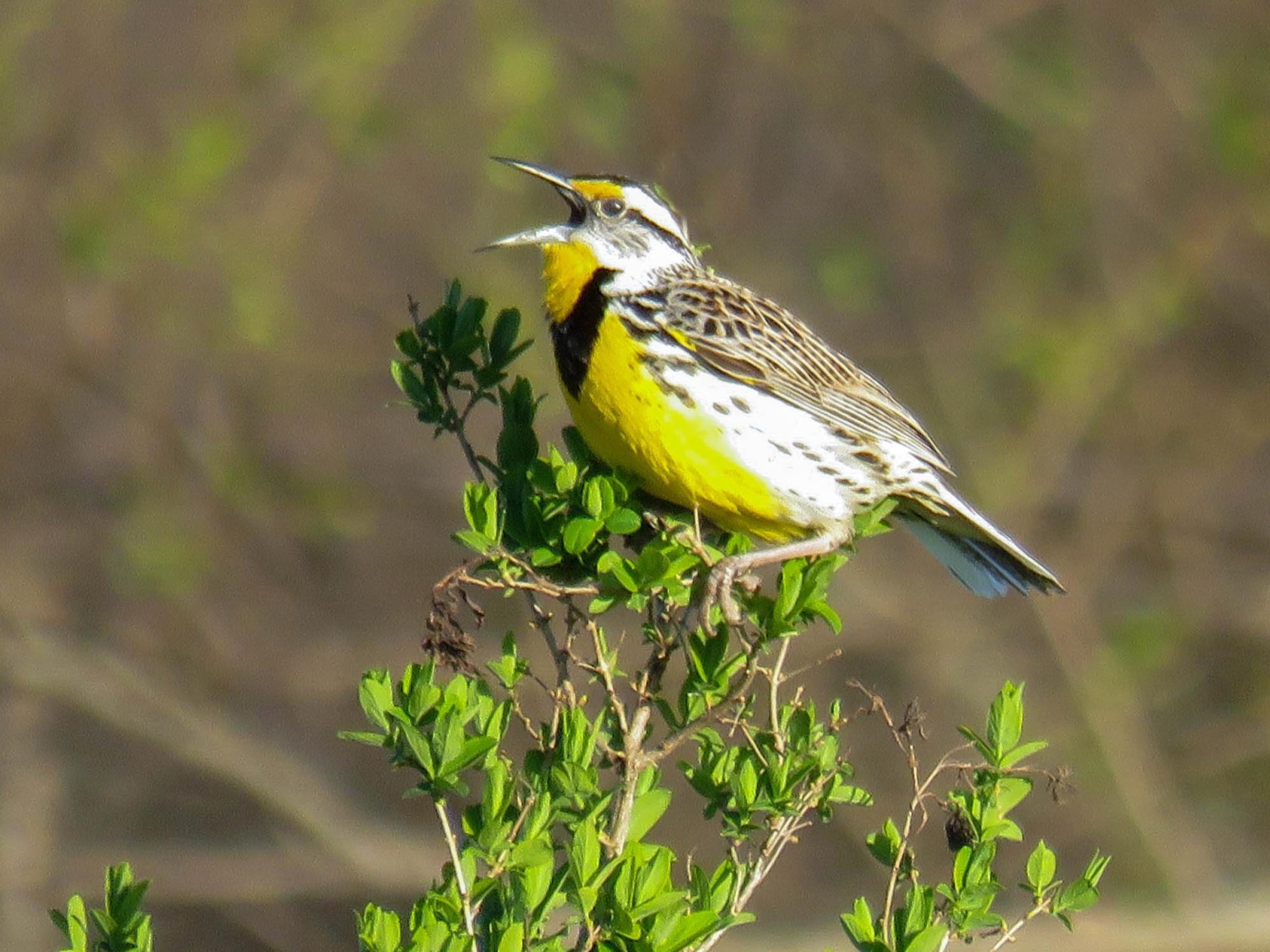
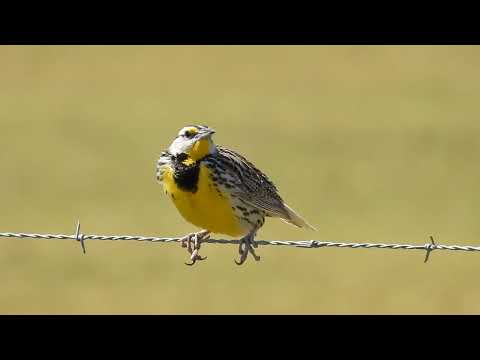
The Eastern Meadowlark (Sturnella magna) is the golden-breasted voice of eastern meadows, pastures, and hayfields — a robin-sized ground bird with a bold black V on a bright yellow chest and a clear, whistled see-you, see-yeer song. It walks (never hops) through open grass and flashes white outer tail feathers when it flushes. Once common on nearly every farm, it has declined steeply with meadow loss — so a rural yard with open ground, cracked corn and millet on a low platform, and an unmowed grass strip is genuine habitat. It shares the pasture-edge feeder scene with the Red-winged Blackbird and the grassland sparrows.
Species Physical Profile & Morphometrics
The Eastern Meadowlark belongs to the blackbird family (Icteridae) — a cousin of orioles and grackles that abandoned the trees for life on the ground in open grass. Stocky, short-tailed, and long-billed, it is built for walking: strong legs, a dagger of a bill for probing turf, and a streaked back that vanishes against dry grass.
The identification formula: bright yellow underparts + bold black V bib + streaked brown back + white outer tail feathers. The lookalike is the Western Meadowlark — the Eastern typically shows white (not yellow) in the cheek area, a richer rufous tone to the back streaking, and above all a different voice: clear, simple whistles instead of the Western’s gurgling flute phrases. In the Midwest and Southwest overlap zone, song settles every doubtful case.
Essential Morphometric Field Marks:
- Body Length & Mass: 7.5 to 10.2 inches (19–26 cm) and 3.2 to 5.3 ounces (90–150 grams) — robin-sized, stocky, short-tailed.
- Wingspan: 13.8 to 15.8 inches (35–40 cm); flight is a stiff flutter alternating with short glides, low over the grass, white outer tail feathers flashing.
- Bill Structure & Color: A long, straight, sharply pointed pale bill used for “gaping” — thrusting the closed bill into turf and prying it open to expose hidden insects.
- Color Pattern: Brilliant yellow underparts with a glossy black V bib; upperparts streaked brown, buff, and black with a rufous cast; crown with a pale central stripe; white outer tail feathers obvious in flight.
- Male vs. Female: Nearly identical in plumage — the male averages larger and brighter with a crisper bib; the female is slightly duller. The bird singing from the fence post in spring is the male.
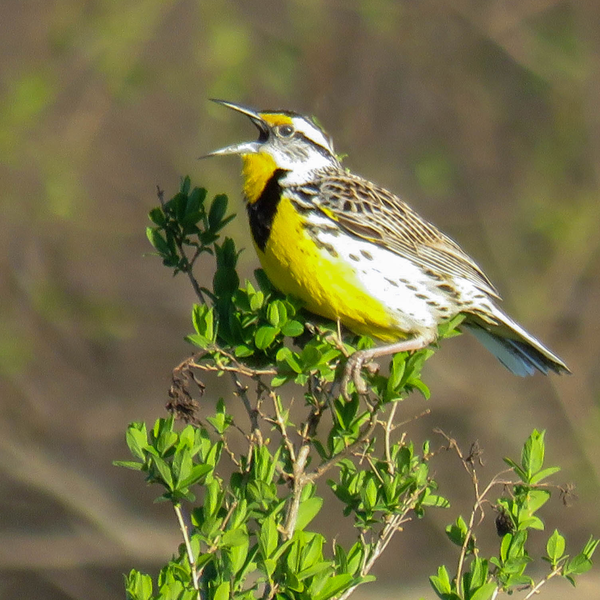
The meadow whistler: brilliant yellow underparts crossed by a deep black V, a boldly striped crown, and in spring a clear, plaintive whistle delivered from the tallest perch in the pasture — fence posts, wires, and shrub tops, hundreds of times a day.
Same pattern, subtler tones — slightly duller yellow and a finer bib, with identical streaked camouflage. She alone nests: a grass cup on the ground, often roofed with a woven dome and hidden in a dense tuft, where mowing machines are her brood’s greatest enemy.
Eastern Meadowlark Vocalization Guide (3 Field Recordings)
The Eastern Meadowlark’s song is a clear, plaintive, whistled phrase — classically rendered see-you, see-yeer — two drawn-out, slurred notes that carry across entire pastures, simpler and sweeter than the Western Meadowlark’s gurgling cascade. Calls include a sharp dzert and a rolling chatter. All recordings below are real field audio via Wikimedia Commons — no simulations. For a deeper library, browse xeno-canto: Eastern Meadowlark.
1. The Whistled Song
2. Song in the Hayfield
3. Calls of the Flock
Habitat, Range & the Working Meadow
The Eastern Meadowlark lives in open grassland east of the Great Plains: hayfields, pastures, old fields, airports, roadsides, and big rural lawns. It wants short-to-medium grass with bare patches for foraging and a few elevated perches for song. A horse pasture edge, a big country lawn beside farmland, or an acreage with a meadow strip is prime backyard territory.

The Voice of Eastern Grasslands
The Eastern Meadowlark breeds across eastern North America from the Great Plains edge to the Atlantic, and from southern Canada through the Gulf states into Mexico and Central America. It is year-round in the Southeast; northern breeders withdraw south in winter.
For backyard birders the map carries one caution: this species has declined steeply across its range as hayfields are cut earlier and pastures convert to crops. Rural and semi-rural yards with meadow strips genuinely help — your unmowed corner is real grassland habitat.
Backyard Behavioral Patterns & Social Dynamics
The Eastern Meadowlark is a ground bird with a singer’s soul — most of its day is spent walking the grass, but its reputation rests on the fence post. Four behaviors explain most of what you will observe:
🎵 The Fence-Post Whistler
Through spring and early summer, males sing from the tallest available perch — clear two-to-four-note whistles, hundreds of bouts a day. A singing male on your fence means your pasture or big lawn is inside his territory.
🚶 The Walker
Meadowlarks walk through grass with a steady, deliberate stride — never hopping. Watch the pause-and-scan: head up, motionless, then a sudden stab at a grasshopper in the thatch.
⛏️ The Gaping Bill
The signature feeding move: the bird inserts its closed bill into soil or dung and pries it open, exposing grubs and seeds hidden from every other bird in the meadow. You can sometimes watch the turf bulge.
🪹 The Domed Ground Nest
The female weaves a grass cup on the ground, usually roofed over with a dome of woven grass with a side entrance, tucked into dense cover. It is so invisible that the first sign is often the female flushing from underfoot — delay mowing until August wherever meadowlarks breed.
Problem: “Meadowlarks Sing in the Distant Pasture but Never Come Near the House. What Should I Do?”
The three most common Eastern Meadowlark frustrations all have proven answers:
First, the distance problem: meadowlarks are wary open-country birds — place food along fence lines and field edges near their singing perches, never beside the patio, and let a quiet feeding corner build their confidence over weeks. Second, the lawn problem: close-cropped grass offers no insects and no seeds — leave a strip unmowed and let grasses seed; a shaggy meadow edge outperforms any feeder. Third, the mid-summer silence: after June the singing stops and birds turn skulky during molt — keep ground-level water available and they will still slip in to drink. Remember too that this is a declining grassland species: every unmowed corner and late-cut hayfield helps beyond your own yard.
Method 1: Set the Table — Ground Feeding the Grassland Way
Design for a walking, ground-probing meadow bird:
-
Scatter Cracked Corn & Millet in the Open
Cracked corn, white millet, and hulled sunflower on short grass or bare ground matches how meadowlarks naturally feed. Pick a quiet, open spot with long sightlines — they avoid feeding where they can’t scan for danger.
-
Set a Low Platform Feeder
A low platform tray on or near the ground keeps grain clean and visible from across the field. Winter flocks use platforms regularly, especially after snow buries natural seed.
-
Offer Mealworms in the Breeding Season
From April through July, live or dried mealworms in a shallow dish match the insect-heavy diet that feeds growing chicks — a reliable protein stop can anchor a territorial pair to your land.
-
Provide Ground-Level Water
A shallow bath at ground level out in the open — ideally with a dripper whose sound carries — is visited daily in hot, dry spells when pasture water disappears.
Method 2: Build the Habitat — Grass, Perches & Late Mowing
Feed the habitat, and the meadowlark does the rest:
-
Leave an Unmowed Strip
The single most powerful move: let part of your property grow into meadow — native grasses and weeds allowed to seed. It supplies insects, seed, and potential nesting cover in one gesture.
-
Keep Sightlines Open
Unlike most songbirds, meadowlarks distrust feeding near dense cover — serve food in the open and keep pet cats indoors; a ground-feeding bird in short grass is a cat’s easiest meal.
-
Provide Song Perches
A fence line, scattered posts, or one lone shrub in the open gives males the stage they need; territories with good perches hold singing birds all season — dawn song included.
-
Mow Late, If At All
Ground nests are invisible and easily destroyed. Delay mowing meadows and hayfield edges until late July or August, and walk fields before cutting — one early mowing can end a whole season’s nesting.
Tool Solution: Recommended Hardware for Eastern Meadowlark
Equipment matched to a ground-feeding, open-country songbird:
Low Platform or Ground Tray
A wide, low platform set in the open with cracked corn and millet — visible from afar and easy for a walking bird to approach, and just as useful to doves and sparrows.
- • Seed: Cracked corn, millet, sunflower hearts
- • Style: Low platform / ground tray
- • Placement: Open ground, clear sightlines
Mealworm Tray
A shallow dish of live or dried mealworms through the breeding season — the closest match to the grasshoppers and beetles that dominate the summer diet.
- • Food: Live or dried mealworms
- • Season: Spring–summer
- • Bonus: Bluebirds & robins join in
Ground-Level Bath with Dripper
A shallow bath at ground level — heated in winter — for open-country birds that avoid raised pedestal baths near walls. The dripper’s sound advertises across the field.
- • Depth: 1–2 in, gently sloped
- • Winter: Thermostatic heater
- • Placement: Open, near feeding area
Frequently Asked Questions
- Species Profile: The Eastern Meadowlark (Sturnella magna) is a stocky 7.5–10.2 inch, 3.2–5.3 ounce grassland songbird (Icteridae), band code EAME — the declining voice of eastern meadows.
- ID in One Look: Brilliant yellow underparts with a bold black V bib, rufous-streaked back, and white outer tail feathers flashed in flutter-glide flight.
- The Sound: A clear, whistled see-you, see-yeer — simpler and sweeter than the Western Meadowlark’s gurgling flute cascade; real field recordings above.
- Range & Habit: Eastern North America in open grassland; resident in the South, a partial migrant in the North, wintering in flocks on stubble fields.
- Feeder Formula: Cracked corn, millet, and sunflower hearts on a low platform in the open, mealworms in spring, and ground-level water along fence lines.
- The Meadow Rule: Leave grass unmowed, delay haying until August, keep sightlines open, and keep cats indoors — grassland habitat matters more than any feeder.
Bird Watching Log
Species: Eastern Meadowlark (Sturnella magna)
| Eastern Meadowlark (Black V Bib Seen: Yes / No — Whistled Song Heard: Yes / No — Perch: Fence / Wire / Shrub — Ground Walking: Yes / No) | |