
Brewer’s Blackbird


Brewer’s Blackbird (Euphagus cyanocephalus): Complete Identification, Feeder Guide & Song Library
Quick Answer: How to Identify & Attract Brewer’s Blackbirds
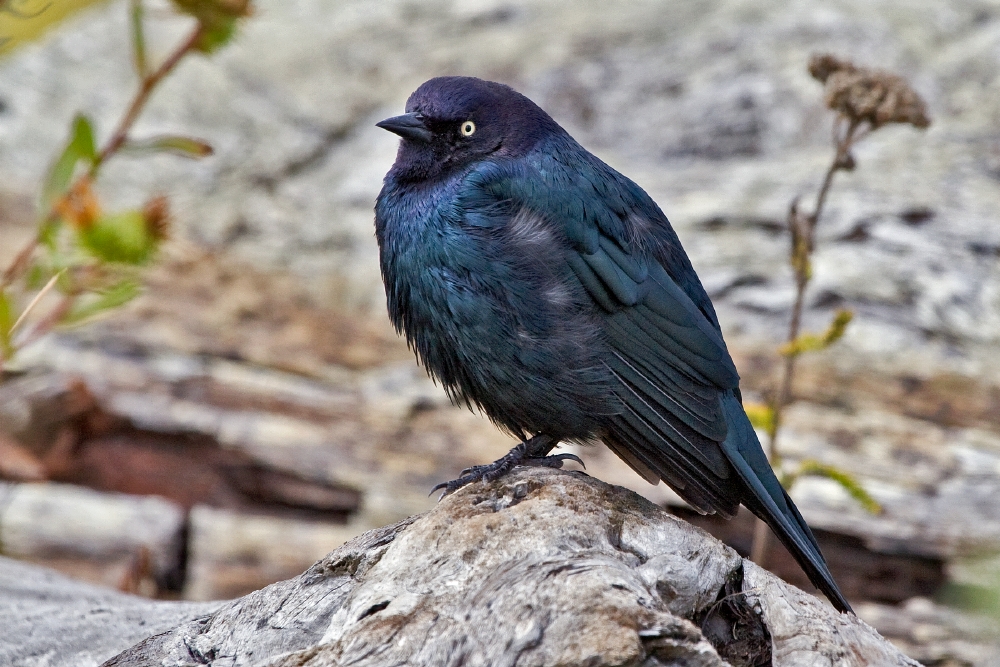
The Brewer’s Blackbird (Euphagus cyanocephalus) is the glossy blackbird of the American West — the male shimmers purple on the head and green-blue on the body, with a pale yellow eye that flashes across parking lots, parks, and pastures; the female is plain gray-brown with a dark eye. This is a ground-feeding bird of open country that has embraced suburbia completely. Attract it with millet, cracked corn, and sunflower on platform feeders or scattered on the ground, and expect company from the Red-winged Blackbird and the Brown-headed Cowbird in the same mixed flocks.
Species Physical Profile & Morphometrics
The Brewer’s Blackbird belongs to the New World blackbird family (Icteridae) and is the common small blackbird of the western half of the continent. East of the Rockies it is replaced by the larger Common Grackle; the smaller, browner Brown-headed Cowbird overlaps everywhere and is the most common source of confusion with the female.
The identification formula: small glossy blackbird + pale yellow eye + purple-green sheen + walking on pavement. The female’s formula is smooth gray-brown plumage + dark eye + sharp bill — larger and lankier than a female cowbird, without the cowbird’s stubby seed cone.
Essential Morphometric Field Marks:
- Body Length & Mass: 8.3 to 9.8 inches (21–25 cm) and 2.1 to 3.0 ounces (60–86 grams) — between a robin and a grackle in size, with males distinctly larger than females.
- Wingspan: about 14.6 inches (37 cm); flight is strong and direct, and winter flocks wheel over open fields in tight, coordinated masses.
- Bill Structure & Color: A pointed, sharp, all-purpose black bill — longer and finer than a cowbird’s cone, shorter and lighter than a grackle’s dagger — equally suited to probing turf and cracking seeds.
- Color Pattern: The male is glossy black with a purple-iridescent head and green-blue iridescent body, the colors flashing only in good light; his pale yellow eye is visible at surprising distance. The female is smooth gray-brown with slightly darker wings and tail and a dark eye.
- Male vs. Female: The male’s gloss and pale eye make him one of the West’s most recognizable blackbirds, while the female’s muted gray-brown keeps her overlooked — look for her walking near displaying males in spring parking lots and pastures.
The oil-slick showman: black at a distance, he ignites purple and green in sunlight, with a pale yellow eye that gleams like a headlight. In spring he fluffs his plumage, droops his wings, and pours out his wheezy song from fences, wires, and car roofs.
The understated forager — smooth gray-brown with a dark eye and a sharp bill, she walks open ground methodically, gathering insects for the nest she builds herself in a shrub, tree, or even on the ground under cover.
Brewer’s Blackbird Vocalization Guide (3 Field Recordings)
The Brewer’s Blackbird’s song is a wheezy, ascending squee-ee — like a rusty hinge swinging upward — backed by sharp chack calls and a variety of dry flock chatter. All three recordings below are real field audio, shared under commercial-use licenses — no simulations. For a deeper library, browse xeno-canto: Brewer’s Blackbird.
1. The Wheezy Squee-ee
2. Song Across the Meadow
3. Chacks and Flock Chatter
Habitat, Range & the Open-Country Life
The Brewer’s Blackbird is a bird of open ground in the West: meadows, pastures, prairies, river edges, and — above all — the human version of all three: lawns, parks, golf courses, feedlots, and parking lots. Few native birds have taken to suburbia more completely.

The West’s Everywhere Blackbird
Brewer’s Blackbirds breed across western North America from Canada through the western United States, from the Pacific coast to the Great Plains, and winter from the mild western states deep into Mexico. Pacific coast and southwestern populations are year-round residents; northern and mountain breeders migrate south in fall.
For backyard birders in the West, feeder traffic peaks in late winter and early spring, when mixed blackbird flocks move through towns, and again on cold snaps any time from November to March.
Backyard Behavioral Patterns & Social Dynamics
The Brewer’s Blackbird is a bird of feet and pavement — it walks where other blackbirds perch. Four behaviors explain most of what you will observe:
🅿️ The Parking-Lot Walker
No common blackbird is more terrestrial: Brewer’s walks pavement, lawn, and pasture with a deliberate, head-pumping gait, picking insects, seeds, and crumbs from the ground surface. A supermarket lot at dawn — birds weaving between parked cars — is the species at its most characteristic.
🎤 The Fluffed-Up Song
The singing male is all posture: he fluffs his body feathers, droops his wings, and leans forward, squeezing out the wheezy squee-ee from a fence post, wire, or shrub top. In loose breeding colonies, several males display within earshot of each other across a meadow.
🐦 The Winter Mixer
Outside the breeding season Brewer’s is intensely social, joining mixed flocks with Red-winged Blackbirds, Brown-headed Cowbirds, and starlings at feedlots, stubble fields, and backyard stations. The flocks rise and settle together, flashing a hundred pale eyes when they turn.
🥣 The Tray-and-Turf Feeder
At the station they feed as they live — on the ground and on open platforms. Spilled seed under hanging feeders, a low tray, or a bare patch of short grass all suit them; they will also cling briefly at suet cages in cold weather when insect prey disappears.
Problem: “A Flock of Blackbirds Has Taken Over My Feeder Tray and Lawn. What Should I Do?”
The two most common Brewer’s Blackbird worries both have practical answers:
First, the monopolized tray: a winter flock eats steadily and shoulders smaller birds aside — put out a measured morning scoop rather than an all-day buffet, offer safflower (which blackbirds like less than sunflower), and keep one caged or short-perch tube feeder reserved for chickadees and finches. Second, the lawn patrol: walking flocks probing turf are actually doing free pest control — beetle grubs, cutworms, and grasshoppers are staple prey — so consider letting the patrol work; if droppings on the patio are the issue, feed at one designated corner away from seating and hose the deck in the morning. Manage the buffet, not the bird, and a flashing flock of pale eyes becomes a free winter show.
Method 1: Set the Table — Seeds, Platforms & Ground Feeding
Design for a walking, ground-feeding bird with a sharp, all-purpose bill:
-
Offer Millet, Cracked Corn, and Sunflower
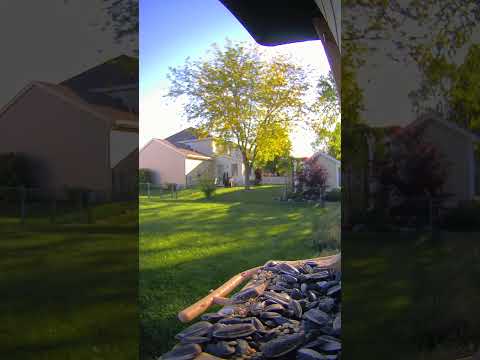
White millet, cracked corn, and black oil sunflower are the proven draws, served on a roomy platform or tray feeder where a walking bird can feed naturally. A light scatter of millet on bare ground serves the flock members that never perch.
-
Use Spillage as a Feature
Brewer’s evolved to feed on the ground surface — let a modest spill zone develop under one feeder, or designate a bare-soil corner ten feet from shrubby cover as a ground-feeding patch. Rake it weekly so hulls and droppings never build up.
-
Feed Hard in Late Winter
Traffic peaks November through March, when mixed blackbird flocks roam and natural seeds are buried or exhausted. A reliable morning refill during snow cover can hold a flock’s loyalty for weeks; scale back as insects emerge in spring.
-
Reserve a Small-Bird Station
A settled flock can dominate open seed — keep one caged or weight-sensitive tube feeder with short perches for finches, chickadees, and nuthatches, placed apart from the platforms. The flock works the tray while the little birds eat undisturbed.
Method 2: Build the Habitat — Lawns, Water & Native Grasses
Feed the landscape, not just the feeder:
-
Keep an Open Lawn Edge
Brewer’s Blackbirds feed where short grass meets shrubby cover — the classic western yard. Mow the main lawn regularly for the walking foragers, and leave one unmowed strip along the fence line to produce the insects they hunt in summer.
-
Provide Ground-Level Water
A shallow birdbath or ground-level water dish in the open draws drinking and bathing birds year-round; in dry western summers water can out-pull seed. A dripper’s sound advertises the station to flocks passing overhead.
-
Let Native Grasses Stand
Native bunchgrasses and annual grasses left standing through fall and winter feed ground birds directly from the stem — seed at walking height, exactly where this species forages. Skip the fall cleanup on the meadow strip.
-
Skip the Pesticides on the Lawn
A chemical-free lawn keeps the grub, beetle, and earthworm supply intact — the protein base that brings breeding birds to a yard in spring and summer. The walking flock on your turf is a sign the soil food web is working.
Tool Solution: Recommended Hardware for Brewer’s Blackbirds
Equipment matched to a stocky, walking, platform-and-ground feeder:
Platform / Tray Feeder
A roomy tray or platform feeder — hung or pole-mounted — where walking blackbirds can feed on millet, cracked corn, and sunflower, with drainage holes to keep seed dry in wet weather.
- • Food: Millet, corn, sunflower
- • Style: Open tray, drained
- • Placement: Open, near cover
Caged Tube Feeder
A tube feeder wrapped in a wire cage or fitted with a weight-sensitive perch — keeps sunflower and safflower flowing to finches and chickadees while the blackbird flock works the open tray instead.
- • Food: Sunflower, safflower
- • Style: Cage or weight-sensitive
- • Bonus: Excludes starlings too
Heated Birdbath
A heated shallow bath keeps open water available through freezing weather — a genuine magnet for winter blackbird flocks when puddles and stock tanks are iced over.
- • Depth: 1–2 in, gently sloped
- • Feature: Thermostat-controlled
- • Placement: Open sightlines
Frequently Asked Questions
- Species Profile: The Brewer’s Blackbird (Euphagus cyanocephalus) is an 8.3–9.8 inch, 2.1–3.0 ounce songbird (Icteridae), band code BRBL — the common glossy blackbird of the American West.
- ID in One Look: The male is glossy black with a purple-green sheen and a pale yellow eye; the female is smooth gray-brown with a dark eye and a sharp bill; both walk open ground.
- The Sound: A wheezy, ascending squee-ee song plus sharp chack calls and dry flock chatter; three real field recordings above.
- Range & Habit: Breeds across western North America, resident on the Pacific coast and in the Southwest — a bird of meadow, pasture, lawn, and parking lot, wintering in mixed blackbird flocks.
- Feeder Formula: Millet, cracked corn, and sunflower on platform feeders and ground spill zones — traffic peaks November through March; keep one caged tube feeder reserved for small songbirds.
- The Season: Males fluff and sing from fences and wires in spring; expect the biggest backyard crowds in late-winter flocks, and treat lawn patrols as free pest control.

Bird Watching Log
Species: Brewer’s Blackbird (Euphagus cyanocephalus)
| Brewer’s Blackbird (Pale Eye Seen: Yes / No — Squee-ee Heard: Yes / No — Ground Feeding: Yes / No — Flock Size: Small / Large) | |