
Black-crested Titmouse


Black-crested Titmouse (Baeolophus atricristatus): Complete Identification, Feeder Guide & Call Library
Quick Answer: How to Attract & Identify Black-crested Titmice
The Black-crested Titmouse (Baeolophus atricristatus) is the Lone Star cousin of the Tufted Titmouse — a 5.5–6.3-inch acrobat with a tall black crest, white forehead, big dark eyes, and peach-buff flanks. A non-migratory year-round resident of Texas, southern Oklahoma, and eastern Mexico, it rings out a whistled “peter-peter-peter” in every season. At feeders it grabs one sunflower seed or peanut piece at a time and hammers it open under one foot. Stock black oil sunflower, peanut pieces, and no-melt suet near tree cover, keep a shallow water source running through the Texas heat, and hang a nest box with a 1-1/4-inch entrance.
Species Physical Profile & Morphometrics
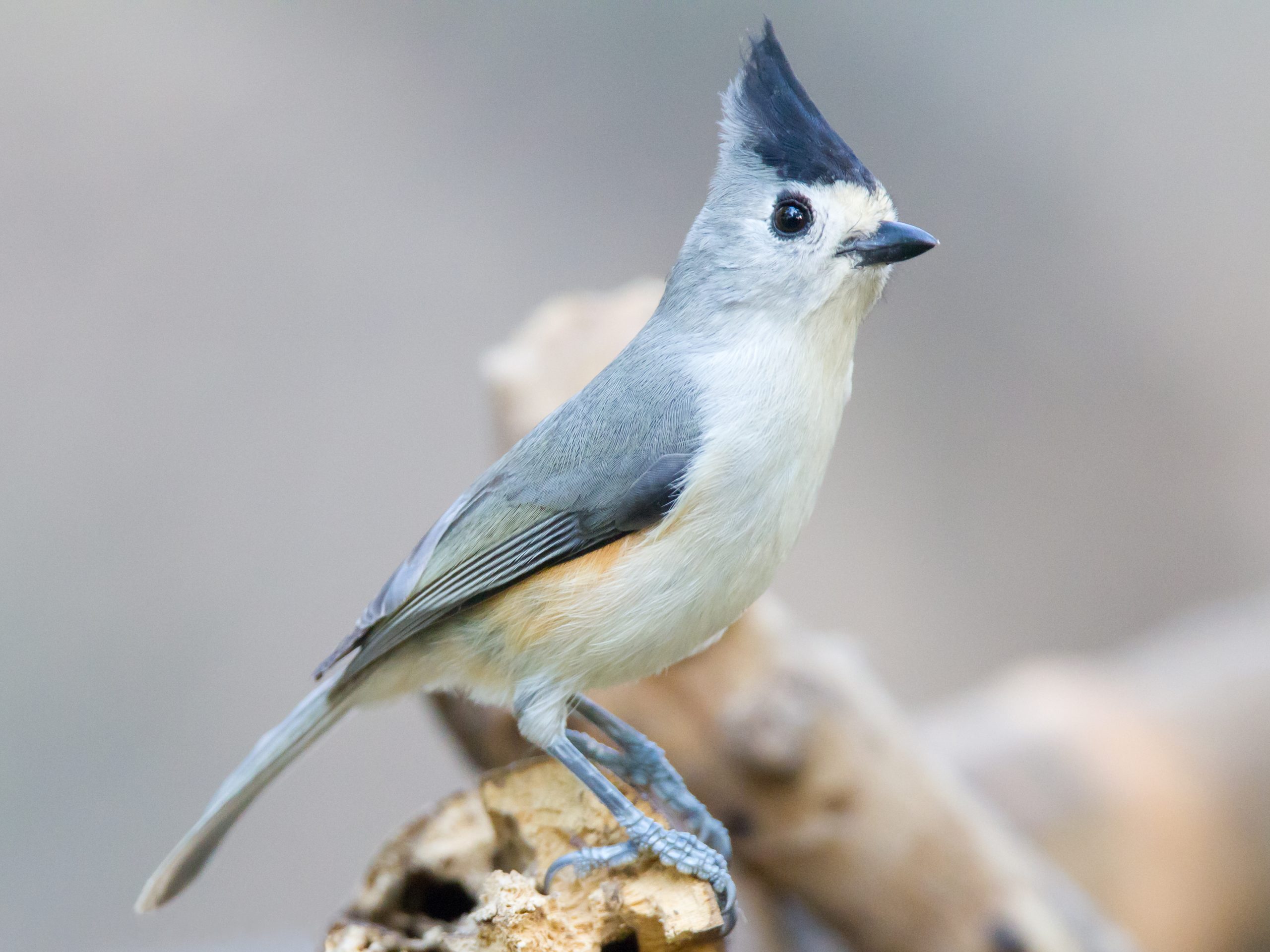
The Black-crested Titmouse is built on the tit family (Paridae) plan — oversized round head, stout little bill, plump body, and nonstop acrobatic energy — topped by a tall, pointed crest that telegraphs the bird’s mood. It was long treated as a subspecies of the Tufted Titmouse before being recognized as a full species.
The ID is the reverse of the Tufted Titmouse: the Tufted wears a gray crest and black forehead, while the Black-crested wears a black crest and white forehead — exactly the pattern in our Santa Ana refuge portrait. Where the two species meet in central Texas they interbreed freely, and hybrids show every shade of intermediate between black and gray crests. Birds of the lower Rio Grande Valley average the darkest crests and richest flank color.
Essential Morphometric Field Marks:
- Body Length & Mass: Averages 5.5 to 6.3 inches (14–16 cm) with an adult mass of 0.6 to 0.9 ounces (18–26 grams) — essentially the Tufted Titmouse’s frame.
- Wingspan: Roughly 7.9 to 10.2 inches (20–26 cm), with plain gray wings and a longish gray tail.
- Bill Structure & Color: A short, stout black bill (paler bluish in juveniles) used to hammer seeds held under one foot and pry insects from bark and ball moss.
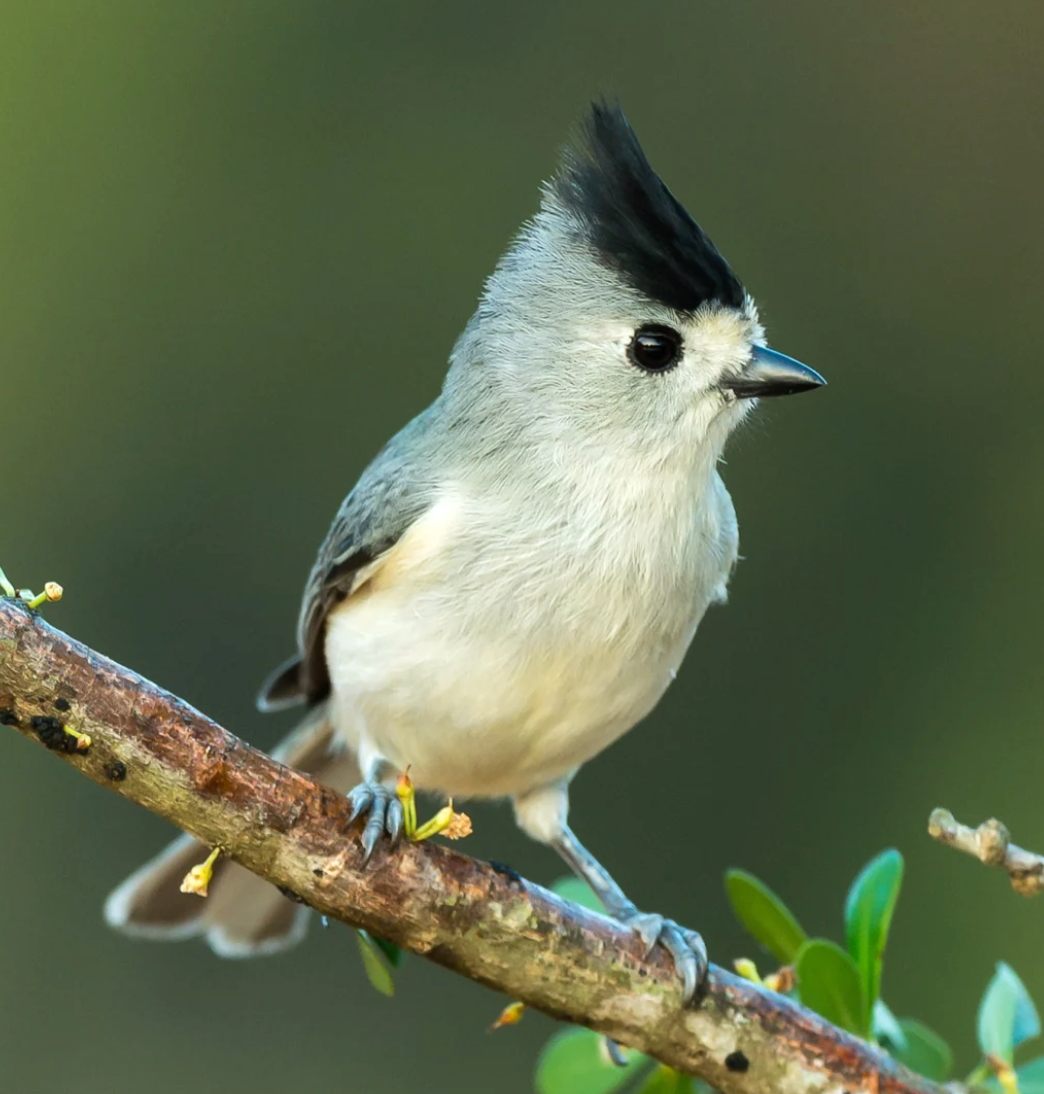
- Color Pattern: Black crest, white forehead, silvery-gray upperparts, whitish underparts, and peach-buff flanks, with a big dark eye in a pale face. Males and females look identical.
A tall, glossy black crest rising above a clean white forehead, pale gray back, and warm peach flanks. Adult males and females cannot be separated in the field.
Summer juveniles — like the soft-crested youngster in our gallery — look duller and fluffier: the crest is shorter and grayish, the bill pale bluish, and the flanks a washed-out buff until the first fall molt darkens the pattern.
Black-crested Titmouse Vocalization Guide (3 Simulations)
The voice is pure titmouse: a loud, whistled “peter-peter-peter” song and a nasal scold that rallies the neighborhood against predators. No commercial-use field recordings of this species are currently hosted on Wikimedia Commons, so all three cards below are clearly labeled acoustic simulations built to the published descriptions of its song and calls. For real wild audio, browse xeno-canto: Black-crested Titmouse.
1. Whistled Song — “Peter-Peter-Peter”
2. Nasal Scold — “Tsee-Day-Day-Day”
3. Dawn Song Bouts
Habitat, Range & Year-Round Resident Biology
Black-crested Titmice are birds of Texas woodlands: mesquite groves, live oak mottes, pecan and riparian corridors, thorn scrub edges, and the shaded suburban yards of Austin, San Antonio, and the Hill Country. The range covers central and southern Texas, a corner of southern Oklahoma, and runs south through eastern Mexico — including the Lower Rio Grande Valley, where our Santa Ana National Wildlife Refuge gallery bird was photographed.

The Lone Star Titmouse
These birds never migrate — a pair holds the same few acres of woodland in every season. Along a band through central Texas the range meets the Tufted Titmouse’s, and the two interbreed in a well-studied hybrid zone; backyard birds there can show any mix of gray and black in the crest.
A Texas yard with mature oaks or mesquite, a shrub layer, a feeder, and water checks every box. In winter they join mixed flocks with Carolina Chickadees, and the whole convoy may adopt a well-run station.
Backyard Behavioral Patterns & Social Dynamics
Black-crested Titmice run the same bold, methodical playbook as their Tufted cousins. Four signature behaviors explain most of what you will observe:
🥜 The One-at-a-Time Routine
A titmouse grabs a single seed or peanut piece, flies to cover, pins it under one foot, and hammers it open. Surplus items get cached in bark crevices for later — which is why a reliably stocked feeder earns such loyal, repeat traffic.
📣 A Voice Bigger Than Its Body
The ringing “peter-peter-peter” seems far too loud for a 20-gram bird, and it rings through Texas woods in every month of the year. The nasal scold is just as useful — it summons neighbors to mob any owl or snake it finds.
💧 The Water Seeker
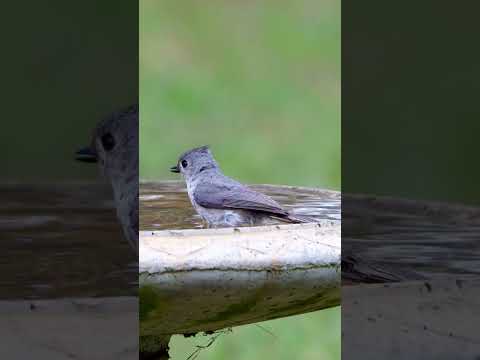
Through the brutal Texas summer, titmice visit bird baths and drippers far more often than feeders. A shallow, shaded bath with moving water can be the busiest spot in the yard from June through September.
🤝 The Winter Mixed Flocker
From fall to early spring, titmice travel in mixed foraging flocks with Carolina Chickadees, nuthatches, and woodpeckers. When the convoy adopts your station, expect every member species within minutes of each other.
Problem: Why Black-crested Titmice Skip the Wrong Station
Across Texas the familiar complaint is: “titmice in the neighbor’s live oak, none at my feeder.” The reasons are predictable:
First, a menu mismatch: bargain mixes heavy in milo, millet, or wheat get picked over and rejected — this species shops for sunflower, peanuts, and suet. Second, an exposed station: a feeder hanging over open lawn forces a hawk-visible flight for every seed, so the birds feed elsewhere. Third, the Texas heat quietly ruins good intentions — ordinary suet melts and seed sweats and molds in summer humidity, and a dry yard offers no reason to linger. Fix the menu, pull the station within a quick dash of trees, switch to no-melt suet, and add water — the flock will find you.
Method 1: Set the Table — Nuts, Sunflower & Water
Design for a bold but methodical one-item-at-a-time feeder:
-
Anchor the Station with Black Oil Sunflower
A hopper or tube feeder with a tray filled with black oil sunflower is the daily staple. Our lab-tested roundup of the Best Tube Feeders for Small Birds compares proven models.
-
Offer Peanut Pieces and Chopped Nuts
Unsalted peanut pieces and chopped tree nuts on a platform or in a mesh feeder are grabbed the moment they appear — high-fat, cacheable, and sized for a grab-and-go bill.
-
Hang No-Melt Suet in the Shade
A shaded suet cage stocked with a no-melt nut blend carries titmice through summer without the rancid mess ordinary suet makes in hundred-degree heat.
-
Run Water Year-Round
A shallow bird bath — ideally with a dripper — placed near shrubs is often the single fastest way to attract titmice in Texas, especially from May through September.
Method 2: Keep Them Year-Round — Cavities, Cover & the Winter Flock
Turn seasonal visits into permanent residence:
-
Hang a Nest Box They Can Actually Use
Titmice cannot excavate their own cavities, so a box with a 1-1/4-inch entrance hole mounted 5–15 feet up near trees is prime real estate in early spring. Add a layer of wood shavings inside.
-
Offer Nesting Hair in Spring
Hang a small wire cage of clean, undyed pet fur near the box — like their Tufted relatives, these birds line the nest cup with animal hair, sometimes plucked from cooperative live donors.
-
Plant or Keep Native Cover
Live oaks, mesquite, and a dense shrub layer give titmice the foraging substrate and escape cover they evolved with. Leave spent seed heads standing through fall as natural feeders.
-
Feed Through Every Season
Because titmice never migrate, the pair at your bath in August is the pair singing in January. Keep sunflower and suet stocked year-round and skip pesticides, so the caterpillar supply stays strong for nesting season.
Tool Solution: Recommended Hardware for Black-crested Titmice
Equipment matched to a heat-tested, peanut-loving resident:
Hopper or Tube Feeder with Tray
Holds black oil sunflower dry and dispenses it at perches sized for titmice and chickadees, with a tray for the one-at-a-time crowd.
- • Capacity: 2–3 lbs Sunflower
- • Roof: Weather-shedding lid
- • Mount: Pole or hook near trees
No-Melt Suet + Peanut Pieces
Heat-stable suet plus unsalted peanut pieces in a mesh feeder — the two fastest ways to win a titmouse’s loyalty in the Texas climate.
- • Suet: No-melt nut blend
- • Nuts: Chopped, unsalted, cache-ready
- • Purity: No milo or wheat filler
Titmouse Nest Box (1-1/4″ Entry)
Cedar box sized for Paridae that cannot excavate their own cavities — hang it near trees, add wood shavings, and offer clean pet fur for the famous hair-lined nest.
- • Entrance: 1-1/4 in (32 mm) round hole
- • Floor: 4 × 4 in interior
- • Mount: 5–15 ft, near tree cover
Frequently Asked Questions
- Species Profile: The Black-crested Titmouse (Baeolophus atricristatus) is a 5.5–6.3 inch, 18–26 gram songbird with a tall black crest, white forehead, gray back, and peach-buff flanks; males and females look identical.
- Texas Resident: Non-migratory across central and southern Texas, southern Oklahoma, and eastern Mexico — with a well-studied hybrid zone where it meets the Tufted Titmouse in central Texas.
- Reverse Pattern: Black crest plus white forehead is the exact reverse of the Tufted Titmouse’s gray crest and black forehead; hybrids show every intermediate shade.
- Feeder Formula: Black oil sunflower, peanut pieces, and no-melt suet near tree cover — plus a shallow water source, the top draw in the Texas heat.
- Cavity Nester: Cannot excavate its own hole — it uses natural cavities and nest boxes (1-1/4-inch entrance), lining the nest with soft material including animal hair.
- Mixed-Flock Regular: Winter flocks travel with Carolina Chickadees, nuthatches, and woodpeckers — one well-run station attracts the entire guild.
Bird Watching Log
Species: Black-crested Titmouse (Baeolophus atricristatus)
| Black-crested Titmouse (Subspecies / Notes: ____________________________) | |