
Ruffed Grouse


Ruffed Grouse (Bonasa umbellus): Complete Identification, Habitat Guide & Sound Library
Quick Answer: How to Attract & Identify the Ruffed Grouse
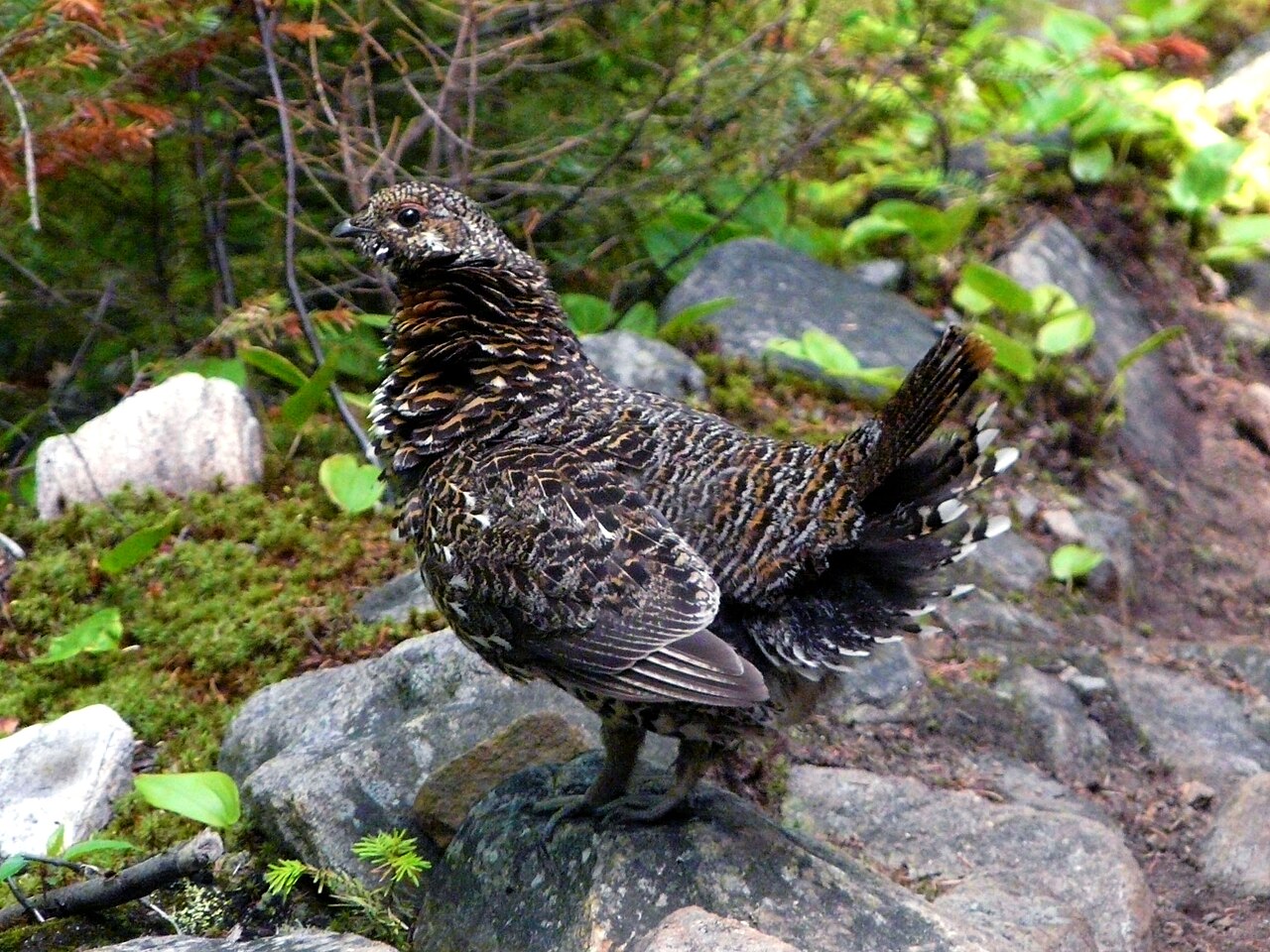
The Ruffed Grouse (Bonasa umbellus) is the drummer of the North Woods — a mottled, chicken-sized forest grouse with a crest, black neck ruffs, and a broad-banded fan tail, and the state bird of Pennsylvania. The male’s drumming — wings beating the air into a rising thump-thump-thump-thunder — is one of the great sounds of spring. It lives in young aspen and mixed forest and winters on buds and catkins. Wooded rural yards host them with brushy forest edges, standing aspens, and drumming logs left undisturbed. They share the timber with the Wild Turkey and the Barred Owl.
Species Physical Profile & Morphometrics
The Ruffed Grouse belongs to the pheasant and grouse family (Phasianidae) — a native forest grouse of the northern United States, southern Canada, and the Appalachian chain, absent from open prairie and the arid West.
The identification formula: mottled chicken-brown body + crest + black neck ruffs + banded fan tail. A flushed bird explodes at your feet with a roar and vanishes through the timber. Drumming on a spring morning — a muffled engine starting somewhere in the woods — is the surest identification of all.
Essential Morphometric Field Marks:
- Body Length & Mass: 15.7 to 19.7 inches (40–50 cm) and 15.9 to 26.5 ounces (450–750 grams) — chicken-sized and compact, built for the forest floor.
- Wingspan: 19.7 to 25.2 inches (50–64 cm) — short, rounded wings for explosive escape through trees, not distance flying.
- Bill Structure & Color: A short, stout dark bill for nipping buds, catkins, leaves, and berries — a vegetarian beak for a treetop winter diet.
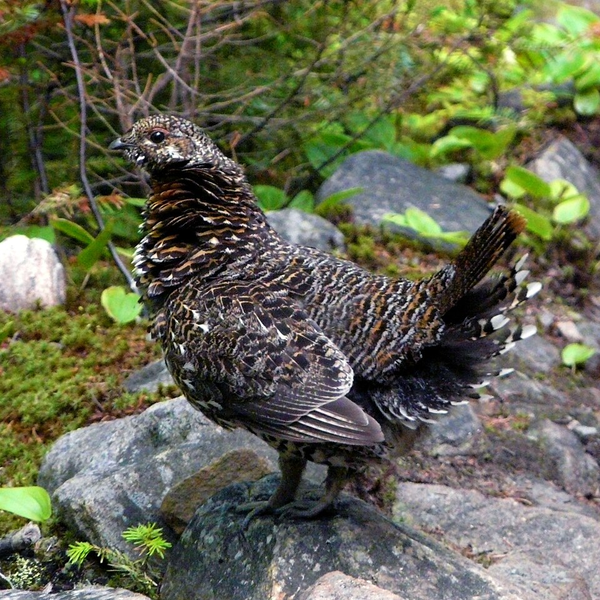
- Color Pattern: Mottled gray or red-brown (two morphs) with a small crest, iridescent black neck ruffs, and a tail crossed by a broad dark band just inside the pale tip.
- Male vs. Female: Sexes look alike; the male averages larger with a longer tail and unbroken tail band, and he alone performs the drumming display from his log.
The drummer: tail fanned, ruffs raised into a black cape, standing on his mossy log and beating the air into a rising thunder that you feel in your chest before you find him with your eyes.
The quiet hen — same mottled camouflage without the ceremony — she scratches leaf litter with her striped chicks and leads them to berry thickets, freezing flat when anything approaches.
Ruffed Grouse Vocalization Guide (3 Field Recordings)
The Ruffed Grouse does not sing — it drums: the male beats his wings against the air in an accelerating series — thump… thump… thump-thump-thump-thumpthumpthump — a muffled motor starting deep in the woods, audible a quarter mile off. All recordings below are real field audio via Wikimedia Commons — no simulations. For a deeper library, browse xeno-canto: Ruffed Grouse.
1. The Drumming
2. The Hiss & Whir
3. The Hen’s Cluck
Habitat, Range & the Young Forest
The Ruffed Grouse is a bird of young, brushy deciduous and mixed forest — aspen stands above all, plus old clearcuts, forest edges, and streamside thickets. Aspen is the anchor: buds and catkins feed the birds through winter, and dense young stems shelter nests and broods. Mature unbroken woods hold few grouse; edges and regrowth hold many.

The Thunder in the Aspen Stand
The range covers the forested North — New England, the Great Lakes states, the Appalachians to Georgia, the northern Rockies, and the Pacific Northwest — anywhere young forest and aspen persist.
For wooded rural properties: a woodlot with aspen, brushy edges, and a quiet drumming log can hold a male for years. The sound of drumming on a still April morning is the property’s certificate of forest health.
Backyard Behavioral Patterns & Social Dynamics
The Ruffed Grouse is a forest-floor bird whose year runs on buds, berries, and a drumming log. Four behaviors explain most of what you will observe:
🥁 The Drummer
From March through May the male drums from his log every few minutes at dawn — wing-beats against air creating the rising thump that advertises his territory without song.
🌿 The Bud Eater
In winter grouse live in the treetops, feeding on aspen and birch buds and catkins — look for plump birds balanced on thin twigs on cold afternoons.
❄️ The Snow Rooster
On cold nights grouse burrow into deep snow to roost — snow caves are natural insulation, and you may find wing prints beside a burst-out crater at dawn.
🐔 The Explosive Flush
Grouse hold tight and flush at your feet with a startling roar — the classic woodland heart-stopper, over in two seconds and a burst of feathers.
Problem: “I Hear Drumming in the Woods But Never See the Grouse. What Should I Do?”
The three most common Ruffed Grouse puzzles all have proven answers:
First, the invisible drummer: drumming carries far and the bird stays put on one log — move in slowly between drumming bouts, freezing when he drums (he listens then); approach from downwind and glass the logs and mounds, not the branches. Second, the mistaken motor: beginners confuse drumming with a distant engine — real drumming accelerates and stops abruptly; engines don’t. Third, the where-did-they-go autumn question: in fall, broods scatter and birds disperse (the fall shuffle) — winter flocks re-form around aspen stands; look up into bud-laden aspens on cold afternoons rather than at the ground.
Method 1: Keep the Young Forest — Aspen, Edges & Brush
Design for a young-forest grouse:
-
Protect Aspen Stands
Standing aspen is the pantry — buds and catkins feed grouse all winter; an aspen clone on your land is a grouse magnet.
-
Keep Brushy Edges
Forest edge, old logging roads, and regrowth thickets provide nesting cover and brood habitat — a brushy woodlot beats a park-like one.
-
Leave Drumming Logs Down
Big mossy logs and root mounds are display stages — leave them in place; a favored log hosts drumming males for decades.
-
Skip the Fall Cleanup
Leaf litter and brush piles shelter the insects and green growth that feed chicks — tidy woods are empty woods.
Method 2: Watch the Woods — Drumming & Bud Lines
Find the birds without pressuring them:
-
Listen at Spring Dawn
In April and May, stand quietly at the forest edge at first light — drumming marks each male’s territory better than any map.
-
Glass the Aspens in Winter
On cold afternoons, scan bud-laden aspen crowns for plump silhouettes — winter grouse feed visibly in the treetops.
-
Walk Old Roads Slowly
Logging roads and skid trails concentrate dust-bathing and grit-picking birds — walk softly and watch the edges ahead.
-
Give Broods Room
If a hen flutters and feigns injury, you are beside her chicks — back away the way you came and let her lead them off.
Tool Solution: Recommended Hardware for Ruffed Grouse
Equipment matched to a forest grouse:
Aspen & Edge Cover
Standing aspen with brushy edges and downed logs — the complete grouse property, pantry and stage in one.
- • Trees: Aspen first
- • Edges: Brushy regrowth
- • Keep: Drumming logs
Dawn Listening Post
A quiet seat at the forest edge in April — drumming carries a quarter mile and reveals every territory on your land.
- • Season: April–May
- • Timing: First light
- • Method: Listen, don’t walk
Aspen-Crown Glassing
Binoculars on the aspen crowns on cold afternoons — winter grouse bud-feeding in the treetops, visible from a warm window.
- • Target: Aspen crowns
- • Season: Dec–Feb
- • Bonus: Evening Grosbeaks
Frequently Asked Questions
- Species Profile: The Ruffed Grouse (Bonasa umbellus) is a 15.7–19.7 inch, 15.9–26.5 ounce forest grouse (Phasianidae), band code RUGR — Pennsylvania’s state bird.
- ID in One Look: Mottled crested grouse with black neck ruffs and a broad-banded fan tail.
- The Sound: Accelerating wing-beat drumming from a spring log; real field recordings above.
- Range & Habit: Year-round resident of young northern and Appalachian forest; winters on aspen buds, roosts in snow.
- Property Formula: Aspen stands, brushy edges, drumming logs left in place — habitat, not feeders.
- The Woodland Drum: That rising thump in the April woods is the forest’s heartbeat — listen first, look second.
Bird Watching Log
Species: Ruffed Grouse (Bonasa umbellus)
| Ruffed Grouse (Drumming Heard: Yes / No — Seen or Flushed: Seen / Flushed — Morph: Gray / Red — In Aspens: Yes / No — Date & Time: ___) | |