
Allen’s Hummingbird
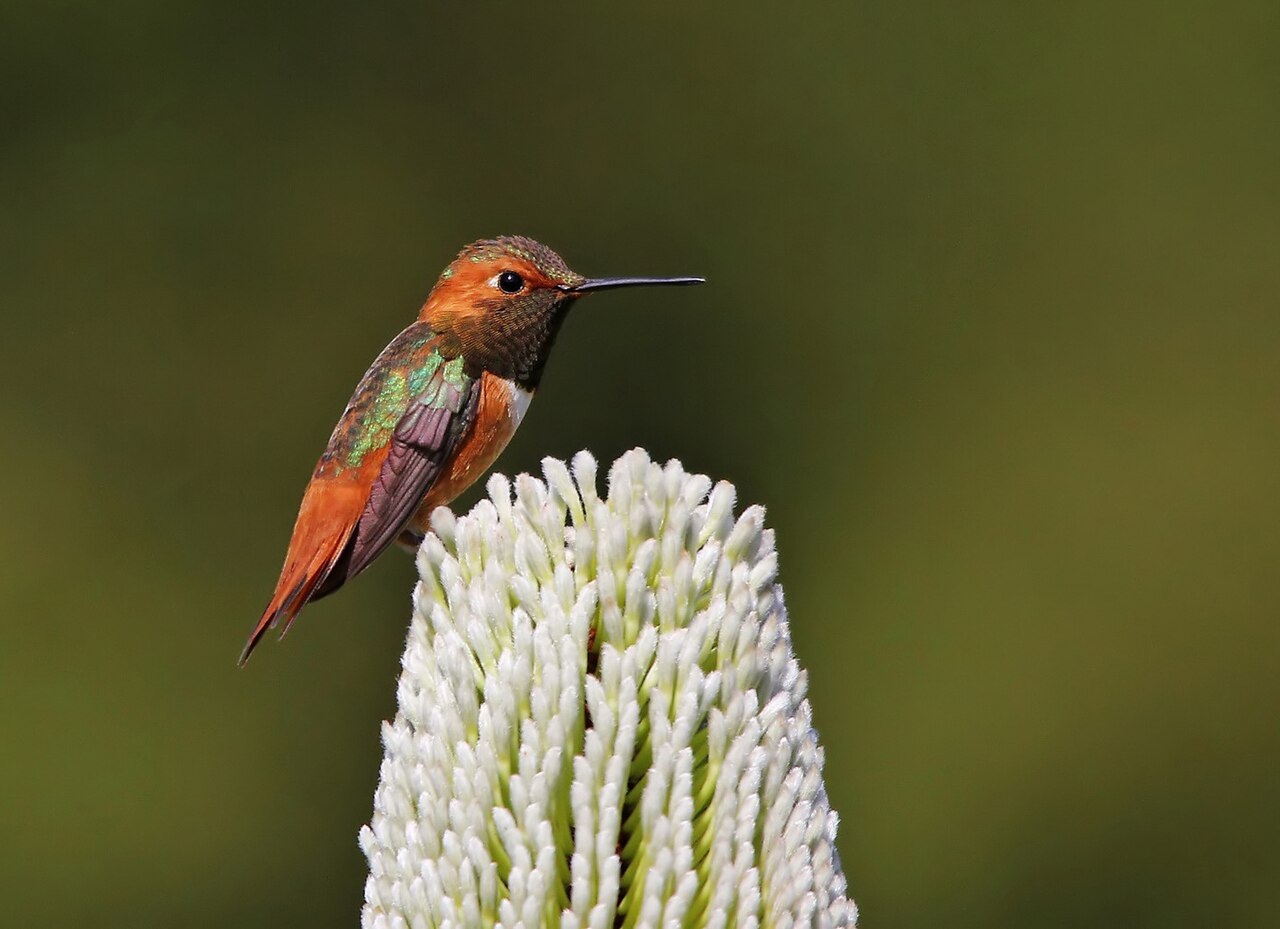
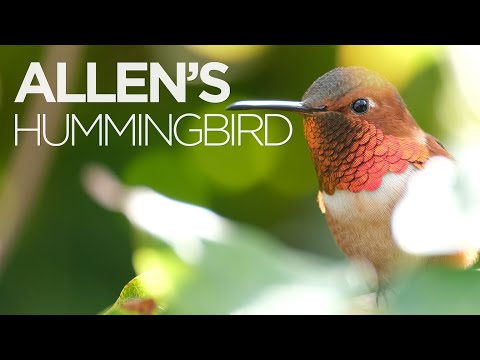


Allen’s Hummingbird (Selasphorus sasin): Complete Identification, Habitat Guide & Behavior Library
Quick Answer: How to Attract & Identify the Allen’s Hummingbird
The Allen’s Hummingbird (Selasphorus sasin) is the copper-flanked hummingbird of coastal California — the male blazing with an iridescent orange-red gorget over rufous sides and tail, famous for a J-shaped dive display ending in a metallic whine. It breeds in a narrow coastal strip and arrives earlier than almost any migrant — January in California. Coastal yards attract them with 4:1 sugar-water feeders and red tubular flowers. They share the garden with the Anna’s Hummingbird and the Rufous Hummingbird.
Species Physical Profile & Morphometrics
The Allen’s Hummingbird belongs to the hummingbird family (Trochilidae) and breeds almost entirely in a narrow foggy strip along the California coast (plus the Channel Islands), wintering in Mexico. It is among the earliest spring migrants in North America.
The identification formula: orange-red gorget + rufous flanks, rump, and tail — nearly identical to the Rufous Hummingbird. In coastal California, timing helps: Allen’s dominates the coast in spring, while Rufous passes through in migration. Adult males in-hand differ in tail width; in the yard, enjoy the uncertainty.
Essential Morphometric Field Marks:
- Body Length & Mass: 3.5 inches (9 cm) and 0.1 ounces (2–4 grams) — a compact hummingbird with a big attitude.
- Wingspan: 4.3 inches (11 cm); flight is the family trademark — hovering, backing up, and 60-mph display dives.
- Bill Structure & Color: A slender, straight black bill — a nectar probe just over half an inch long, also used to hawk tiny insects.
- Color Pattern: Male: iridescent orange-red gorget, green back, rufous flanks and tail. Female: green above, rufous-washed flanks, white throat with bronze speckles.
- Male vs. Female: The male carries the full fiery gorget; the female shows a pale speckled throat and more rufous at the tail base — both defend feeders ferociously.
The coastal flame: gorget blazing copper-orange in the sun, ruling the feeder like a tiny warlord, then rocketing into his J-shaped dive to impress a watching female.
The green-backed engineer — no gorget, all business — she builds a walnut-sized nest of plant down and spiderweb on a shaded branch and raises the chicks alone.
Allen’s Hummingbird Vocalization Guide (0 Field Recordings)
The Allen’s Hummingbird’s voice is a buzzy chatter, and the wings and tail add a metallic whine in the display dive. All recordings below are real field audio via Wikimedia Commons — no simulations. For a deeper library, browse xeno-canto: Allen’s Hummingbird.
1. The Buzzy Chatter
2. The Dive Whine
3. The Wing Hum
Habitat, Range & the Coastal Fog Belt
The Allen’s Hummingbird breeds in coastal scrub, chaparral, and gardens within the fog belt of California — a narrow strip from the Oregon border to southern California, plus the Channel Islands. Gardens with nectar feeders have made some populations nearly resident in the urban coast.

The Coast’s Early Flame
The breeding range is a narrow coastal ribbon — one of the smallest of any U.S. hummingbird. Winter takes migrants to central Mexico, while the Channel Islands and urban coastal population may linger year-round where feeders flow.
For backyard birders: coastal California yards are the heartland — feeders up by January catch the early arrivals, and red tubular flowers keep them through the season.
Backyard Behavioral Patterns & Social Dynamics
The Allen’s Hummingbird is a fearless, diving, fog-belt original. Four behaviors explain most of what you will observe:
🎢 The J-Dive
The male’s display is a steep J-shaped dive ending in a metallic whine produced by the tail — repeated relentlessly over a watching female in spring.
⚔️ The Feeder Warlord
Despite weighing less than a nickel, it defends feeders against birds many times its size — chatter, chase, and repeat is the daily routine.
🌁 The Fog-Belt Timer
It arrives on the breeding grounds as early as January — one of the earliest migrant returns on the continent, timed to coastal blooms.
🕷️ The Spiderweb Architect
The female builds with plant down bound in spiderweb — the nest stretches as the chicks grow, engineering on a walnut scale.
Problem: “I Can’t Tell If My Hummingbird Is an Allen’s or a Rufous. What Should I Do?”
The three most common Allen’s Hummingbird puzzles all have proven answers:
First, the famous look-alike: Allen’s and Rufous are nearly identical — location and season help most; on the breeding coast in spring it is almost certainly Allen’s, while spring migrants inland are usually Rufous. Enjoy the bird even when the ID stays open. Second, the empty feeder: a resident male guards the feeder from a hidden perch and chases every visitor — hang a second feeder out of his sightline to give the rest a chance. Third, the winter question: most Allen’s leave for Mexico, but urban coastal feeders hold some year-round — keep one feeder clean through winter and you may host a resident.
Method 1: Set the Table — Sugar Water & Tubular Blooms
Design for a coastal nectar specialist:
-
Mix 4:1 Sugar Water
One part white sugar to four parts water, no dye, no honey — the exact fuel of a hovering metabolism.
-
Hang Multiple Feeders
Two or more feeders out of each other’s sightline — one warlord cannot guard what he cannot see.
-
Plant Red Tubular Flowers
Salvia, penstemon, monkeyflower, and fuchsia — the coastal natives this bird evolved to serve.
-
Refresh Every Few Days
Change nectar every 2–3 days (daily in heat) and scrub the ports — a clean feeder is a safe feeder.
Method 2: Build the Habitat — Bloom Succession & Perches
Feed the seasons, and the flame returns each January:
-
Plan Continuous Bloom
Something flowering every month — winter currant and manzanita feed the early arrivals before spring.
-
Keep Spiderwebs Standing
Webs in sheltered corners are nest material — the female harvests them all season.
-
Leave Tiny Insects Alone
No insecticides — hummingbirds hawk gnats and fruit flies for protein, especially in nesting season.
-
Provide Exposed Perches
Dead twig tips near the feeder — hummingbirds rest and survey from bare perches between feeding bouts.
Tool Solution: Recommended Hardware for Allen’s Hummingbird
Equipment matched to a coastal hummingbird:
Saucer Nectar Feeder
A saucer-style feeder with 4:1 sugar water — leak-proof, bee-resistant, and easy to scrub clean.
- • Ratio: 4 parts water : 1 sugar
- • Care: Clean every 2–3 days
- • Dye: Never
Out-of-Sight Backup Feeder
A second feeder hidden from the first — the only way a warlorded yard feeds more than one bird.
- • Placement: Separate sightlines
- • Style: Matching saucer
- • Result: More birds fed
Native Flower Garden
Salvia, penstemon, and monkeyflower beds — bloom succession that keeps hummingbirds all season.
- • Plants: Salvia, penstemon
- • Color: Red & orange tubes
- • Bonus: Warblers at the blooms
Frequently Asked Questions
- Species Profile: The Allen’s Hummingbird (Selasphorus sasin) is a 3.5-inch, 0.1-ounce hummingbird (Trochilidae), band code ALHU — the copper-flanked flame of the California coast.
- ID in One Look: Orange-red gorget, rufous flanks and tail; Rufous Hummingbird is the twin — season and coast decide.
- The Sound: Buzzy chatter, wing hum, and the metallic dive whine; real recordings above.
- Range & Habit: Breeds in the coastal fog belt; arrives as early as January; winters in Mexico.
- Feeder Formula: Fresh 4:1 sugar water, multiple out-of-sight feeders, red tubular natives, no dye ever.
- The Early Bird: The continent’s earliest spring flame — have the feeders clean by New Year.
Bird Watching Log
Species: Allen’s Hummingbird (Selasphorus sasin)
| Allen’s Hummingbird (Gorget Seen: Yes / No — Dive Display: Yes / No — Feeder Visits: Frequent / Rare — At Flowers: Yes / No — Date & Time: ___) | |