
Broad-billed Hummingbird


Broad-billed Hummingbird (Cynanthus latirostris): Complete Identification, Habitat Guide & Behavior Library
Quick Answer: How to Attract & Identify the Broad-billed Hummingbird
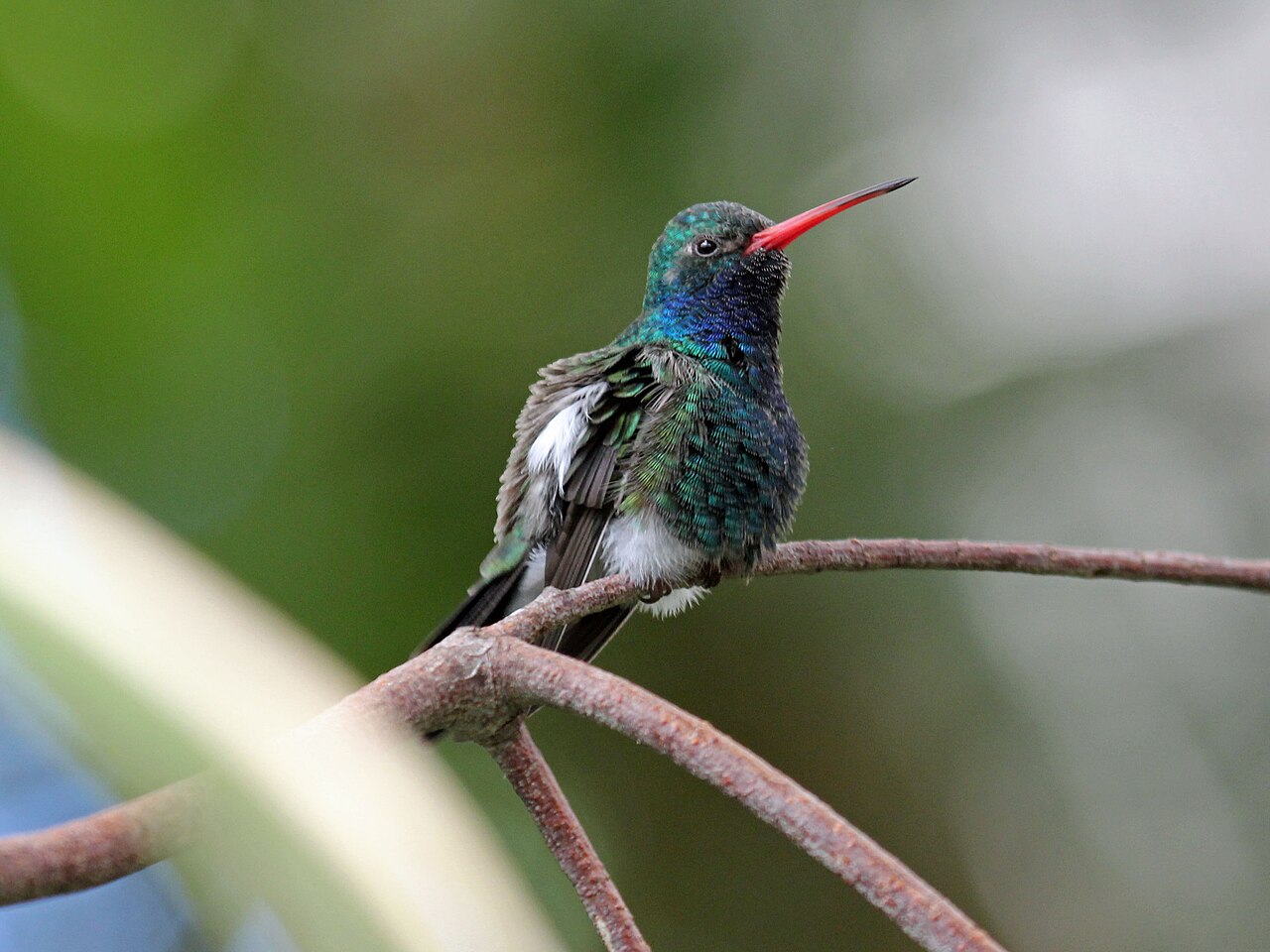
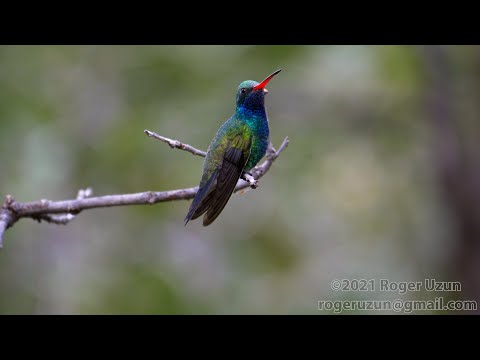
The Broad-billed Hummingbird (Cynanthus latirostris) is the red-billed jewel of Arizona’s sky islands — the male iridescent emerald green with a sapphire-blue throat and a broad red bill tipped in black, unmistakable among U.S. hummingbirds. It summers in streamside canyons of the Southeast’s borderlands and swarms feeders at famous desert oases. The voice is a rapid chattering and a wing whine. Borderland yards attract them with 4:1 sugar-water feeders and red flowers. They share the canyons with the Rivoli’s Hummingbird and the Black-chinned Hummingbird.
Species Physical Profile & Morphometrics
The Broad-billed Hummingbird belongs to the hummingbird family (Trochilidae) and reaches the U.S. mainly in southeastern Arizona, southwestern New Mexico, and west Texas from spring through fall, wintering in Mexico. It is one of the most abundant hummingbirds of the borderland canyons.
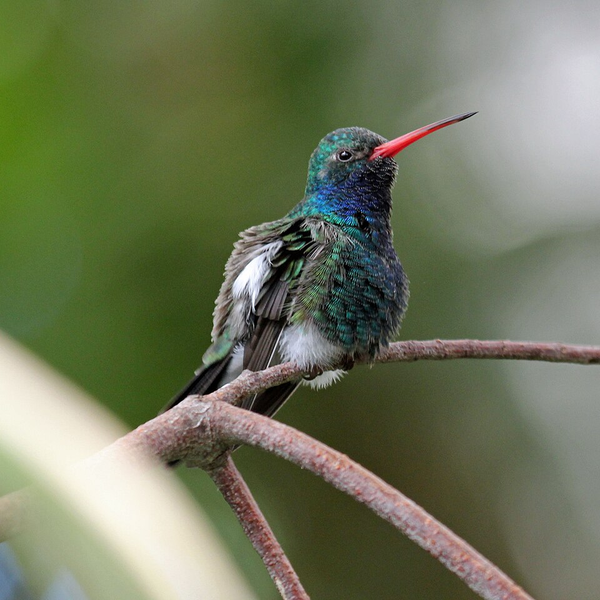
The identification formula: emerald body + sapphire throat + broad red bill with black tip. No other U.S. hummingbird combines a red bill with a green body and blue throat — even the female shows the red-based bill and a dark mask line. In Arizona canyon country, this is often the default hummingbird.
Essential Morphometric Field Marks:
- Body Length & Mass: 3.1 to 3.9 inches (8–10 cm) and 0.1 ounces (2–4 grams) — a mid-sized hummingbird, compact and brilliant.
- Wingspan: 5.1 inches (13 cm); flight is the hummingbird trademark — hover, reverse, and dart, with a noticeable wing whir.
- Bill Structure & Color: The namesake: a broad-based red bill with a black tip, slightly decurved — unique among U.S. hummingbirds and visible at remarkable distance.
- Color Pattern: Male: iridescent emerald green with a rich sapphire-blue gorget. Female: green above, grayish below, with a dark line through the eye and the red-based bill.
- Male vs. Female: The male is the jewel — emerald and sapphire; the female is subtle gray-green, but her red-based bill and dark eye line still name the species.
The canyon jewel: emerald body, sapphire throat, red bill catching the sun — hovering at the feeder between bouts of chasing every rival in the canyon.
The subtle architect — gray-green with the telltale bill — she builds her downy nest on a horizontal branch, often over water, and raises two chicks on nectar and gnats.
Broad-billed Hummingbird Vocalization Guide (0 Field Recordings)
The Broad-billed Hummingbird’s voice is a rapid, dry chattering — je-dit and chip notes — plus the whine of wings. All recordings below are real field audio via Wikimedia Commons — no simulations. For a deeper library, browse xeno-canto: Broad-billed Hummingbird.
1. The Chatter
2. The Chip Notes
3. The Wing Whir
Habitat, Range & the Sky Island Canyons
The Broad-billed Hummingbird lives in streamside canyons and desert washes of the borderlands: cottonwood-sycamore corridors, canyon gardens, and ranch yards in southeastern Arizona, southwestern New Mexico, and west Texas. Feeders at canyon homes are now core habitat.

The Borderland Jewel
The U.S. range is a borderland triangle — southeast Arizona, southwest New Mexico, west Texas — April through September, with the bulk of the species wintering in Mexico. Famous canyon feeding stations host swarms of them all summer.
For backyard birders: canyon and desert-edge yards in the borderlands can host them April–September — hang feeders early, keep them clean, and plant red tubular flowers for the full canyon experience.
Backyard Behavioral Patterns & Social Dynamics
The Broad-billed Hummingbird is a canyon jewel with a feeder habit. Four behaviors explain most of what you will observe:
💎 The Feeder Jewel
It is among the most feeder-loyal hummingbirds — canyon feeder stations host constant emerald traffic from dawn to dusk.
🌊 The Water’s-Edge Nester
The female often nests over or beside water — a horizontal branch above a stream or garden pond is prime real estate.
🌸 The Trapliner
Between feeder visits it traplines flowers — visiting the same bloom circuit in the same order each day, like a bus on a route.
⚔️ The Constant Chase
Males chase everything — rivals, females, other species — the chatter at a busy feeder is the sound of tiny diplomacy failing.
Problem: “My Arizona Feeder Has Five Hummingbird Species — How Do I Pick Out the Broad-billed?”
The three most common Broad-billed Hummingbird puzzles all have proven answers:
First, the bill: among the canyon crowd, only the Broad-billed shows a red bill with a black tip — check the bill first and the rest follows; the male’s emerald-and-sapphire body then confirms it. Second, the winter absence: Broad-billeds leave for Mexico in fall — a winter hummingbird at an Arizona feeder is usually an Anna’s or a rarity; log the April return instead. Third, the feeder wars: males monopolize single feeders — hang three or four feeders spread around the yard; in canyon country, abundance is the only peace treaty that works.
Method 1: Set the Table — Feeders & Desert Blooms
Design for a canyon nectar jewel:
-
Hang Multiple Feeders
Three or more saucer feeders in different sightlines — canyon hummingbirds come in crowds and quarrels.
-
Mix 4:1 Sugar Water
Four parts water, one part white sugar — no dye, no honey; in summer heat, change every other day.
-
Plant Desert Natives
Desert honeysuckle, penstemon, salvia, and ocotillo — the red tubes of the borderland bloom calendar.
-
Shade the Feeders
Hang in afternoon shade — nectar ferments fast in desert sun, and fresh is safe.
Method 2: Build the Habitat — Water, Blooms & Shelter
Build the canyon garden, and the jewels arrive each April:
-
Provide Moving Water
A fountain or dripper — hummingbirds bathe in flying droplets; moving water is a magnet in the desert.
-
Plan Monsoon Bloom
Late-summer bloomers — desert willow, salvia — feed the post-monsoon peak when the canyon is busiest.
-
Keep Nesting Branches
Horizontal limbs over water or shade — the nest sites of choice; prune with an eye for them.
-
Skip Insecticides
Gnats and tiny flies are protein — a spray-free canyon garden feeds the whole hummingbird nursery.
Tool Solution: Recommended Hardware for Broad-billed Hummingbird
Equipment matched to a canyon hummingbird:
Saucer Nectar Feeders
Saucer-style feeders in threes — the borderland standard, easy to clean and hard for bees to raid.
- • Ratio: 4:1, no dye
- • Count: 3+ per yard
- • Care: Clean every 2 days in heat
Fountain or Dripper
Moving water for bathing — flying-droplet bathing is hummingbird joy, and a desert magnet for every species.
- • Style: Fountain or mister
- • Placement: Near perches
- • Bonus: Warblers & tanagers too
Borderland Bloom Garden
Ocotillo, penstemon, salvia, desert honeysuckle — a red-tube calendar from March to October.
- • Plants: Ocotillo, salvia
- • Bloom: Spring through fall
- • Bonus: Orioles & verdins too
Frequently Asked Questions
- Species Profile: The Broad-billed Hummingbird (Cynanthus latirostris) is a 3.1–3.9 inch, 0.1-ounce hummingbird (Trochilidae), band code BBIH — the red-billed jewel of the borderland canyons.
- ID in One Look: Broad red bill with black tip; male emerald with sapphire throat.
- The Sound: Rapid je-dit chatter and wing whir; real field recordings above.
- Range & Habit: Summers in Arizona-New Mexico-Texas canyon country; winters in Mexico; feeder-swarm regular.
- Feeder Formula: Multiple shaded saucer feeders, fresh 4:1 nectar, red desert blooms, moving water.
- The Canyon Rule: Abundance is the only peace treaty — hang more feeders than you think you need.
Bird Watching Log
Species: Broad-billed Hummingbird (Cynanthus latirostris)
| Broad-billed Hummingbird (Red Bill Seen: Yes / No — Sapphire Throat: Yes / No — Feeder Visits: Frequent / Rare — Chasing Seen: Yes / No — Date & Time: ___) | |