
Townsend’s Solitaire
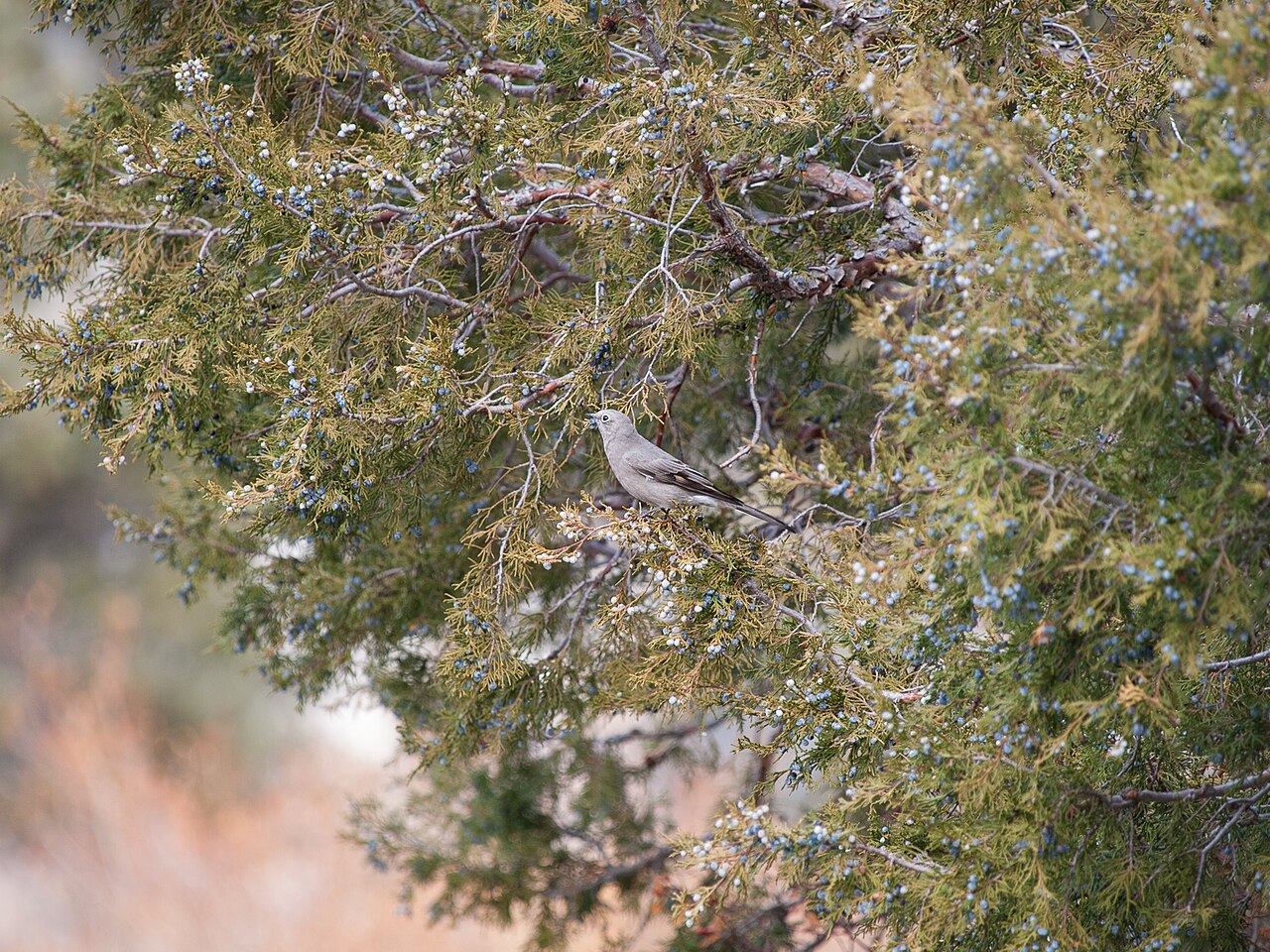
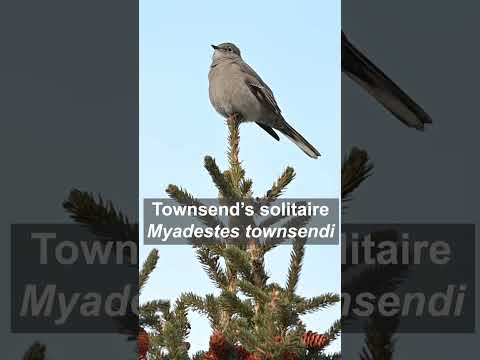


Townsend’s Solitaire (Myadestes townsendi): Complete Identification, Habitat Guide & Sound Library
Quick Answer: How to Attract & Identify the Townsend’s Solitaire
The Townsend’s Solitaire (Myadestes townsendi) is the slim gray thrush of the western mountains — pearl-gray overall with a bold white eye ring and a buff wing stripe that flashes in flight. In winter it descends to foothills and plains-edge junipers, defending berry-bearing trees like a one-bird orchard guard. The song is a long, rising series of clear bell-like notes — one of the finest and least-known songs in the West. Yards attract them with juniper trees, open perches, and winter water. They share the foothills with the Mountain Bluebird and the Pine Siskin.
Species Physical Profile & Morphometrics
The Townsend’s Solitaire belongs to the thrush family (Turdidae) and breeds in mountain conifer forest across the West, wintering downslope wherever junipers hold berries — from British Columbia to Mexico.
The identification formula: slim gray body + bold eye ring + buff wing stripe + upright stillness. Mockingbirds are bigger, longer-tailed, and white-patched; bluebirds are rounder and colored; a gray bird sitting motionless in a juniper is the Solitaire.
Essential Morphometric Field Marks:
- Body Length & Mass: 8.3 to 9.4 inches (21–24 cm) and 0.9 to 1.4 ounces (26–40 grams) — robin-length but half the bulk, built slim.
- Wingspan: 13.4 to 14.2 inches (34–36 cm); flight is smooth and level, with the buff wing stripe flashing at every beat.
- Bill Structure & Color: A slim dark thrush bill — sized for juniper berries in winter and insects in summer.
- Color Pattern: Pearl-gray overall, bold white eye ring, buff wing bar, white-edged outer tail feathers — plain at rest, patterned in flight.
- Male vs. Female: The sexes look alike — both sing (unusual among thrushes), and both defend winter berry trees.
The pine-top bell singer: motionless at the summit snag, pouring out long rising runs of clear notes for hours.
Identical in plumage — she sings too, guarding her winter juniper with short song bursts and tail-flick displays.
Townsend’s Solitaire Vocalization Guide (1 Field Recording)
The Townsend’s Solitaire’s song is a long, rising series of clear, bell-like notes — delivered even in winter. All recordings below are real field audio via Wikimedia Commons — no simulations. For a deeper library, browse xeno-canto: Townsend’s Solitaire.
1. The Bell Song
2. The Winter Song
3. The Tew Call
Habitat, Range & the Juniper Winter
The Townsend’s Solitaire breeds in open mountain conifer forest — pine, fir, and spruce slopes — and winters downslope in juniper woodland, foothill ravines, and plains-edge shelterbelts wherever berries hold.

The Berry Tree Guardian
Breeding range runs through the western mountains from Alaska and Canada to Mexico’s highlands; winter drops the birds to juniper country across the West and the plains edge, where a single berry tree may carry a bird all season.
For backyard birders: foothill and plains-edge yards with berry-bearing junipers or cedars can host a winter solitaire — look for the motionless gray bird on the tree’s crown, guarding its crop.
Backyard Behavioral Patterns & Social Dynamics
The Townsend’s Solitaire is a still-hunting thrush with a berry-territory habit. Four behaviors explain most of what you will observe:
🛡️ The Juniper Guard
In winter it defends a single berry tree — chasing robins, waxwings, and bluebirds from its private crop.
🔔 The Bell Singer
It sings long, clear bell-note runs — even in winter, even on cold sunny mornings, from the highest perch available.
🎯 The Still Hunter
It hunts motionless from an exposed perch — flycatching insects in summer, dropping on berries in winter.
🏔️ The Altitude Shift
It migrates vertically — breeding high in conifer forest, wintering low in juniper country, often within sight of its summer slope.
Problem: “How Do I Attract a Townsend’s Solitaire? What Should I Do?”
The three most common Townsend’s Solitaire puzzles all have proven answers:
First, the identity check: a slim gray bird sitting motionless atop a winter juniper is not a female bluebird or a drab mockingbird — the bold eye ring and buff wing stripe belong to the Solitaire. Second, the tree war: the bird chases everything from its juniper — that is normal territory defense, and the robins will return when the solitaire’s tree is stripped. Third, the absent winter guest: solitaires find berry trees, not feeders — plant junipers and cedars, keep a heated bath open at the yard’s edge, and the gray ghost will find you.
Method 1: Set the Table — Berry Trees & Open Lookouts
Design for a winter berry guardian:
-
Plant Berry Junipers
Rocky Mountain and eastern red cedar junipers — the winter crop that anchors a solitaire territory.
-
Keep Open Perches
Snag tops and bare crowns near the junipers — the singing and hunting stations.
-
Provide Winter Water
A heated bath near cover — daily drinking draws the guardian out of its tree.
-
Skip Winter Pruning
Berry branches are the food bank — prune junipers in summer only.
Method 2: Build the Habitat — Open Woods & Seasonal Rhythm
Keep the country open and the berries coming, and the bird returns each winter:
-
Keep Open Conifer Edges
Pine and juniper woodland edges — the breeding-to-winter corridor this species uses.
-
Plant Mixed Berry Shrubs
Serviceberry, chokecherry, and hawthorn — backup crops when juniper yields fail.
-
Expect the Vertical Commute
Birds appear in the foothills in fall — the first frost on the peaks sends them down.
-
Learn the Bell Song
Winter singing is common — a clear rising bell run on a cold morning is your invitation to look up.
Tool Solution: Recommended Hardware for Townsend’s Solitaire
Equipment matched to a juniper-guarding mountain thrush:
Berry-Bearing Junipers
Native junipers and red cedars with heavy berry crops — the territory anchor of a winter solitaire.
- • Plants: Native juniper
- • Feature: Berry-laden
- • Bonus: Waxwings & robins visit
Heated Bird Bath
Open water in freezing weather near the junipers — the daily errand that keeps the guardian in view.
- • Feature: Heated
- • Placement: Near cover
- • Bonus: All winter birds benefit
Snag or Bare Crown
An exposed high perch near the berry trees — the concert stage for the bell-note song.
- • Structure: High & bare
- • Placement: Beside junipers
- • Bonus: Flycatchers use it in summer
Frequently Asked Questions
- Species Profile: The Townsend’s Solitaire (Myadestes townsendi) is an 8.3–9.4 inch, 0.9–1.4 ounce thrush (Turdidae), band code TOSO — the gray ghost of the junipers.
- ID in One Look: Slim and gray, bold eye ring, buff wing stripe, frozen still on a perch.
- The Sound: Long bell-note runs sung even in winter; real field recordings above.
- Range & Habit: Western mountain breeder; winters in juniper country defending berry trees.
- Feeder Formula: Junipers, perches, and open water — seed is irrelevant.
- The Orchard Guard: One bird, one berry tree, all winter — defense is the lifestyle.
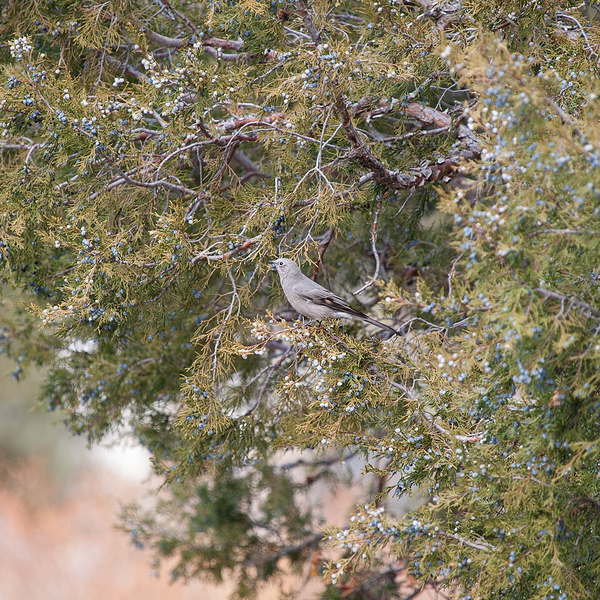
Bird Watching Log
Species: Townsend’s Solitaire (Myadestes townsendi)
| Townsend’s Solitaire (Eye Ring Seen: Yes / No — Buff Wing Stripe Seen: Yes / No — Bell Song Heard: Yes / No — Juniper Guarded: Yes / No — Date & Time: ___) | |