
Eastern Bluebird vs Western Bluebird

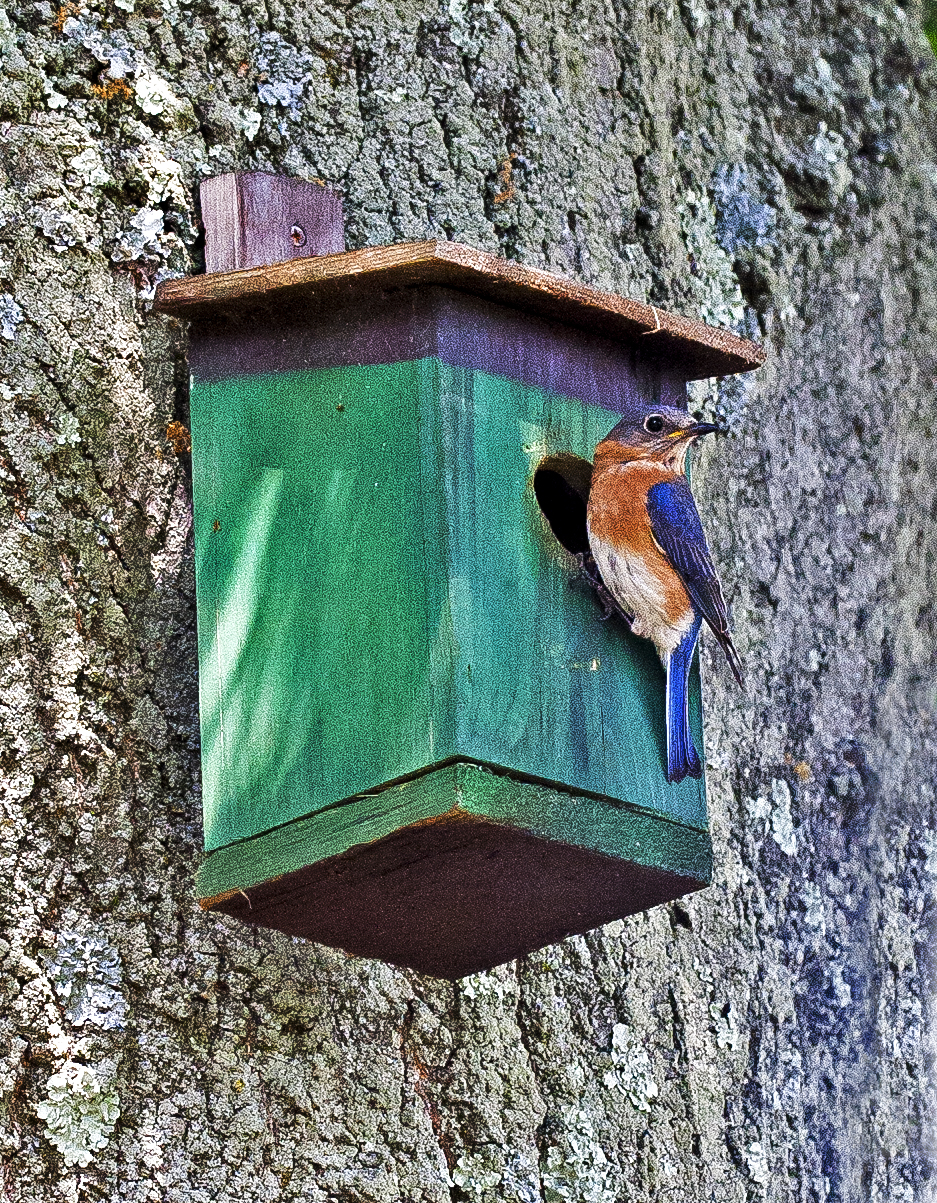


Eastern Bluebird vs Western Bluebird (Sialia sialis vs Sialia mexicana): The Complete Backyard Identification Guide
Quick Answer: The Fastest Way to Tell Them Apart
The two rusty bluebirds. Three rules:
- Throat: blue throat = Eastern; rusty throat = Western.
- Back: all blue = Eastern; rusty shoulder patch = Western (most males).
- Belly: clean white = Eastern; gray-blue = Western.
At-a-Glance Comparison Table
The eastern and western bluebird, side by side. KEY rows separate fastest.
| Feature | Eastern Bluebird | Western Bluebird |
|---|---|---|
| Scientific Name | Sialia sialis | Sialia mexicana |
| Length | 6.5 in (16.5 cm) | 6.3–7.5 in (16–19 cm) |
| Wingspan | 12.2 in (31 cm) | 11.4–13.4 in (29–34 cm) |
| Weight | 1.0–1.2 oz (28–34 g) | 0.8–1.1 oz (24–31 g) |
| Overall Shape | Small, plump thrush with a round head and short bill | A plump, short-tailed thrush of open western woodland — perches low and drops to the ground for insects |
| Male Plumage KEY | Brilliant royal blue above, rusty-orange throat and breast, clean white belly | Deep blue head, back and tail; rusty chest, rusty flanks and a rusty patch across the upper back |
| Female Plumage | Grayer blue above with blue wings and tail; duller rusty breast and white belly | Gray-brown with a white eye-ring, blue wings and tail, and a dull rusty breast |
| Bill Shape | Short, thin, dark | Thin, straight, dark |
| Tail | Short, blue, slightly notched | Short, blue in the male, blue-edged in the female |
| Core Range KEY | East of the Rockies — meadows, orchards, open woods and nest-box trails | Open woodland, orchards and ranch country of the West, from British Columbia to Mexico |
| Migration | Partial migrant; southern birds resident, northern birds withdraw in winter | Partial migrant — mountain breeders move to lower ground and south in winter |
| Feeder Presence | Visits for live and dried mealworms and suet crumbles; nest boxes are the great attractant | Live mealworms from a low tray; nest boxes on open posts |
| Favorite Foods | Insects, wild berries and fruit; mealworms at feeders | Insects in summer; mistletoe and juniper berries in winter |
| Song KEY | A soft, musical series of whistled phrases — “cheer-cheerful-charmer” | A short, soft, burry warble |
| Flight Call | A soft “chur-lee” and dry chatter | A soft “few” or “kew” note |
| Population Trend | Recovered strongly thanks to nest-box campaigns; stable to increasing | Stable; benefits from nest-box programs |
Male Field Marks, Side by Side
Eastern Bluebird — Male
- Royal blue back and head with a rusty-orange breast.
- Clean white belly below the rust.
- Perches low and upright, scanning for insects.
Western Bluebird — Male
- Blue above with a rusty chest AND rusty back patch.
- Deeper, duskier blue than a Mountain Bluebird.
- Perches on fences and drops to the ground for insects.
Female & Juvenile Marks, Side by Side
Eastern Bluebird — Female
- Gray-blue above with blue wings and tail.
- Paler rusty breast than the male.
- Accepts nest boxes readily — watch for carrying grass in spring.
Western Bluebird — Female
- Gray-brown with a white eye-ring and blue wings and tail.
- Dull rusty breast band.
- Accepts nest boxes readily — clean them between broods.
Part-by-Part Anatomy Breakdown
Every part offers a check:
| Body Part | Eastern Bluebird | Western Bluebird |
|---|---|---|
| Male Throat | Blue | Rusty-orange |
| Male Back | All blue | Rusty patch across the shoulders |
| Male Belly | White | Gray-blue to smoky |
| Male Flanks | Rusty | Rusty, blending into gray belly |
| Female | Gray-blue, rusty wash, white belly | Gray-brown, eye-ring, dull rusty breast |
| Habitat | Pastures and orchards | Open pine-oak woodland, ranch country |
| Song | Soft “cheer cheerful charmer” | Soft, burry warble — even quieter |
Song & Call Comparison
Eastern Bluebird
Song: a soft, musical cheer-cheerful-charmer — gentle whistled phrases.
Calls: a soft chur-lee and dry chatter.
Western Bluebird
Song: a soft, burry warble, mostly at dawn.
Calls: a quiet few note keeps pairs in touch.
Range & Seasonal Presence
The Eastern Bluebird lives east of the Rockies, wherever nest boxes stand over open grass.
The Western Bluebird lives in open woodland of the West — oak savanna, pinyon edges and ranch country. The two meet in a narrow zone on the Great Plains, where they occasionally hybridize.
Feeder Behavior & Favorite Foods
- Eastern Bluebird: mealworms, boxes over mowed grass, winter berries.
- Western Bluebird: mealworms at ranch and foothill yards; boxes in open woodland.
- Both hunt from low perches, dropping to the ground for insects.
- Water: a ground-level bath is the best winter draw for either species.
Temperament & Flock Behavior
Eastern Bluebirds are confiding yard birds that learn a mealworm whistle within days.
Western Bluebirds are equally gentle but keep to open woods; in winter they roam in berry-seeking flocks with other species.
6-Step Backyard ID Checklist
- Male throat. Blue = Eastern; rusty = Western.
- Male back. Blue = Eastern; rusty patch = Western.
- Male belly. White = Eastern; gray-blue = Western.
- Female. White belly = Eastern; duller, gray belly = Western.
- Map. East = Eastern; West = Western.
- Habitat. Open grass = Eastern; open woodland = Western.
Frequently Asked Questions
- Throat: Blue = Eastern; rusty = Western.
- Back: Blue = Eastern; rusty patch = Western.
- Belly: White = Eastern; gray = Western.
- Map: East = Eastern; West = Western.
- Habitat: Grass = Eastern; open woods = Western.
- Boxes: Same box fits both.