
Cedar Waxwing
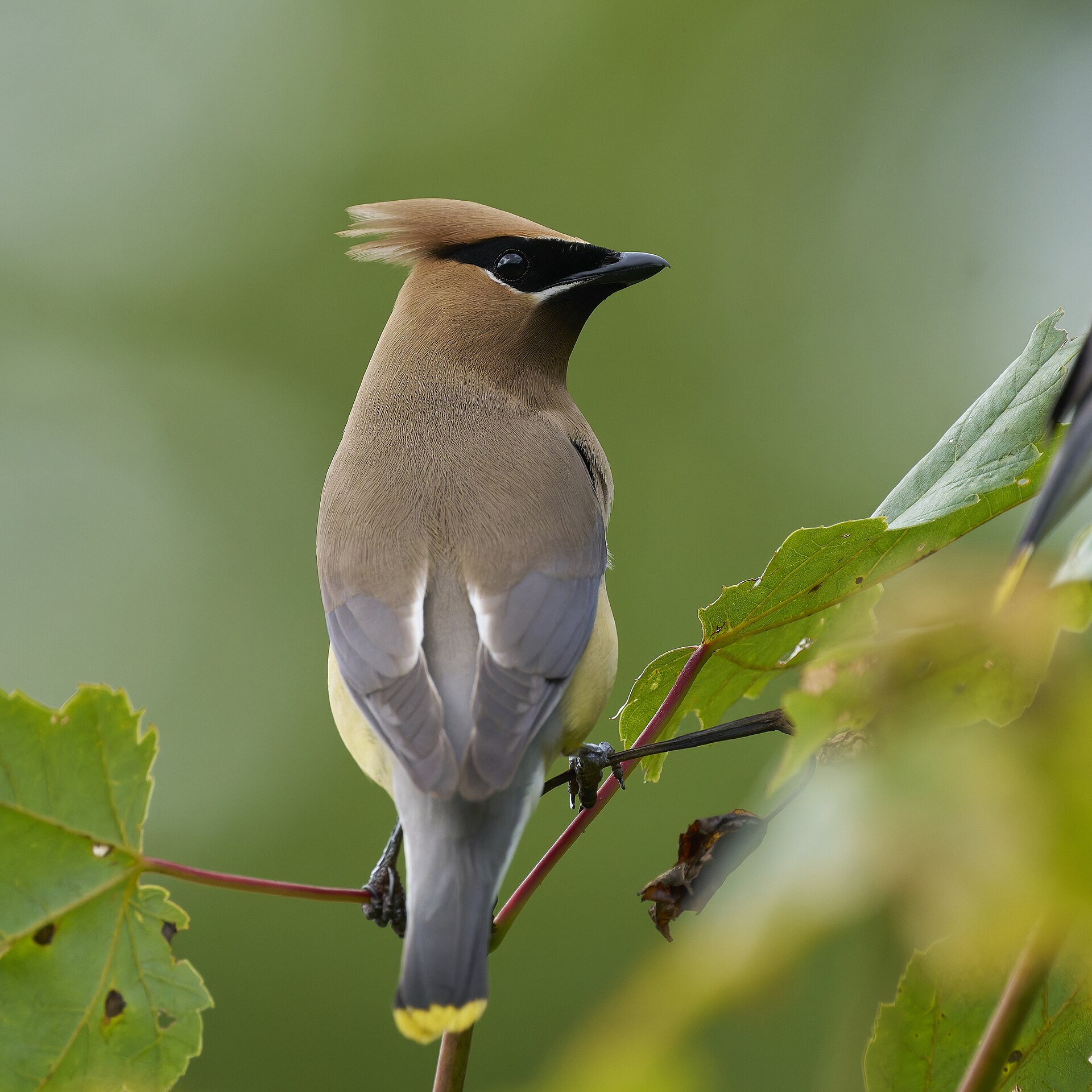



Cedar Waxwing (Bombycilla cedrorum): Complete Identification, Fruit Trees & Call Library
Quick Answer: How to Attract & Identify Cedar Waxwings
The Cedar Waxwing (Bombycilla cedrorum) is the silky, crested bird with the black mask, yellow-tipped tail, and red waxy wingtips — a nomadic fruit-eater found in flocks across most of the United States and southern Canada. Look for sleek fawn-brown plumage, a pale yellow belly, and the bright yellow band at the tail tip. It ignores seed feeders entirely; attract flocks with fruiting trees and shrubs — serviceberry, crabapple, hawthorn, dogwood, mulberry — and a moving-water birdbath. In the far Northwest in winter, compare the larger, grayer Bohemian Waxwing with rust-colored undertail coverts.
Species Physical Profile & Morphometrics
The Cedar Waxwing belongs to the waxwing family (Bombycillidae), a small family of silk-plumaged fruit specialists. The only close look-alike on the continent is the Bohemian Waxwing, which is larger, grayer, and shows rufous under the tail instead of white — a northern species that reaches the northern states mainly in winter.
The identification formula: crested + silky tan + black mask + yellow tail band + traveling in flocks + thin lisping whistles. A tight flock of sleek crested birds dropping into a fruiting tree can be nothing else.
Essential Morphometric Field Marks:
- Body Length & Mass: 5.5 to 6.7 inches (14–17 cm) and about 1.1 ounces (32 grams) — robin-shaped but slimmer, with a sleek crest and a squared tail.
- Wingspan: 8.7 to 11.8 inches (22–30 cm); flight is strong and direct, with flocks rising and wheeling together like a small cloud of starlings.
- Bill Structure & Color: A short, wide-based black bill — built for plucking and swallowing whole berries rather than cracking seeds.
- Color Pattern: Silky fawn-brown head and breast shading to gray wings, a pale yellow belly, white undertail coverts, a black mask edged in white, and a bright yellow terminal tail band. Many adults carry red waxy tips on the secondary wing feathers — colored by fruit pigments. Birds that grew feathers while eating non-native honeysuckle berries can show an orange tail band instead of yellow.
- Juveniles & Seasons: Juveniles are gray-brown and heavily streaked below but still show the crest and yellow tail tip; adults look identical year-round, and the sexes are alike in the field.
The berry passer: courting males hop along a branch toward a female, offering a berry or flower petal — she may pass it back several times before accepting. Males average slightly more red wax on the wings, but the difference is not usable in the field.
The late nester — waxwings are among the latest nesting songbirds in North America, timing eggs and chicks to the peak of summer fruit. The female builds the twig-and-grass cup in a tree fork and incubates four to six pale, speckled eggs.
Cedar Waxwing Vocalization Guide (3 Field Recordings)
The Cedar Waxwing has no true song — its voice is a thin, high, lisping whistle (bzeee or sreee) that keeps the flock in constant contact. All three recordings below are real field audio, shared under free licenses via Wikimedia Commons — no simulations. For a deeper library, browse xeno-canto: Cedar Waxwing.
1. The Flock Whistle
2. The Treetop Chorus
3. Calls on the Wing
Habitat, Range & the Backyard Life
The Cedar Waxwing follows fruit — open woodland, forest edges, orchards, parks, and suburban yards with berry-bearing trees and shrubs. It is one of the few North American songbirds that can subsist on fruit alone for months, which frees it to wander wherever crops ripen.

Nomads of the Fruit Crop
Cedar Waxwings breed across southern Canada and the northern half of the United States and winter through most of the U.S. and Mexico — but their real rule is the fruit calendar. Flocks are nomadic: a yard that hosts hundreds one week may be empty the next as the birds follow ripening crops across the region.
For backyard birders the key is thinking in years, not days: plant fruiting trees and shrubs, add a birdbath with moving water, and the flocks will find you when the crop comes on — sometimes stripping a tree in a single spectacular afternoon.
Backyard Behavioral Patterns & Social Dynamics
The Cedar Waxwing is one of the most social songbirds on the continent. Four behaviors explain most of what you will observe:
🍒 The Berry Line
Waxwings feed with remarkable courtesy: birds on a fruiting branch pass a berry beak-to-beak down the row rather than fighting over it, and courting pairs hop toward each other exchanging a berry or petal several times before one eats it.
☁️ The Traveling Cloud
A flock is a single organism: dozens of waxwings rise, wheel, and settle together, calling constantly with thin whistles. They can appear out of nowhere, drain a shrub of fruit in an hour, and vanish again — nomadism is the strategy.
💧 The Bathing Crowd
Waxwings love water: flocks line the rim of a birdbath shoulder to shoulder, and a dripper or small fountain is the surest non-fruit attraction. On hot afternoons they also hawk insects over water, snapping them from the air like flycatchers.
🪶 The Silk Coat
The plumage is famously smooth and seamless — waxwing feathers interlock so tightly the bird looks airbrushed. The red wingtip wax is fruit pigment deposited in the feather shafts, and tail-band color shifts yellow to orange when honeysuckle berries dominate the diet.
Problem: “Cedar Waxwings Are Acting Drunk — Falling Off Perches and Hitting Windows. What’s Going On?”
You are almost certainly watching fermented-fruit intoxication, a real and documented phenomenon:
When fruit freezes and thaws repeatedly in late winter and spring, yeasts convert its sugars to alcohol. Waxwings, which swallow berries whole in large quantities, can become genuinely intoxicated — unsteady flight, clumsy landings, collisions, and stunned birds sitting on the ground. Most recover within hours if they can sober up somewhere safe. What you can do: keep cats indoors while fruit is on the tree (a grounded waxwing is defenseless), apply decals or screens to windows near fruiting trees, and gently move a stunned bird to a sheltered shrub if it is exposed — do not feed or water it, just give it time. Longer term, plant a mix of species with staggered ripening so no single crop sits fermenting, and prune or harvest overabundant crabapples before the spring thaw. The same flock that worries you in March will repay you all summer by harvesting pest insects over the garden.
Method 1: Plant the Waxwing Menu — Fruit, Not Feeders
Seed feeders will never attract a waxwing; fruit trees will, reliably, for decades:
-
Start with Serviceberry
Serviceberry (Amelanchier) is the single best waxwing tree for most yards — native across the continent, beautiful in spring bloom, and loaded with June fruit that waxwings, robins, and orioles share. One tree feeds a whole flock.
-
Add Winter-Holding Fruit
Crabapples, hawthorns, and mountain ash hold fruit into the cold months — exactly when waxwings need it. Choose small-fruiting crabapple varieties; birds ignore the large-fruited types bred for people.
-
Layer in Native Shrubs
Dogwood, chokecherry, elderberry, juniper, and native viburnums fill the gaps between tree crops and give flocks cover to retreat to between feeding passes. A mixed hedgerow beats a single specimen tree.
-
Let Mulberry Work If You Have It
A fruiting mulberry is waxwing catnip — flocks find it within days of ripening. If you plant one, site it away from patios and cars; what the birds drop stains. Expect orioles, tanagers, and grosbeaks to join the feast.
Method 2: Water, Perches & a Pesticide-Free Garden
Fruit brings them; water and safety keep them returning:
-
Run Moving Water
A birdbath with a dripper, bubbler, or small fountain is the fastest waxwing attraction that is not fruit — the sound pulls flocks down from flyovers. Keep the basin shallow (1–2 inches) and scrubbed; waxwings bathe in crowds.
-
Keep Tall Perch Trees
Waxwings stage in tall bare-topped trees between feeding passes — a snag or a mature tree near your fruit plantings becomes flock headquarters. If a dead tree is safe to keep, keep it.
-
Skip the Pesticides
In summer, waxwings hawk flying insects over lawns and water and feed them to nestlings — a pesticide-free yard supplies that protein pulse. Spraying fruit trees, especially, removes both the insects and the birds’ reason to visit.
-
Protect from Windows & Cats
Fast-moving flocks are vulnerable to window strikes near fruit trees — apply external decals or netting to problem glass, and keep cats indoors during fruit season. A flock’s trust is slow to earn and quick to lose.
Tool Solution: Recommended Hardware for Cedar Waxwings
Equipment matched to a fruit-eating, bathing, flock-minded bird:
Birdbath with Dripper or Bubbler
A shallow basin with moving water — dripper, bubbler, or small solar fountain — is the single most reliable waxwing magnet besides fruit. The sound and sparkle pull flocks out of the sky.
- • Depth: 1–2 in, gently sloped
- • Feature: Moving water
- • Cleaning: Weekly scrub
Heated Birdbath
In freezing weather an unfrozen bath draws waxwing flocks working winter fruit crops — and serves every other bird in the yard when natural water is locked in ice.
- • Feature: Thermostat-controlled
- • Placement: Near fruiting trees
- • Season: Winter essential
Window Collision Decals
External decals, tape, or netting for glass near fruiting trees — fast-flying flocks, and especially berry-drunk birds, need visible barriers. Spacing matters: marks every 2 inches across the pane.
- • Spacing: 2×2 inch grid
- • Side: Outside surface
- • Where: Glass near fruit trees
Frequently Asked Questions
- Species Profile: The Cedar Waxwing (Bombycilla cedrorum) is a 5.5–6.7 inch, 1.1-ounce songbird (Bombycillidae), band code CEDW — North America’s silky, masked fruit specialist.
- ID in One Look: Sleek fawn plumage, swept-back crest, black mask edged white, yellow belly, yellow tail band, red waxy wingtips — and almost always a flock, never a single bird.
- The Sound: No true song — thin, high, lisping bzeee whistles keep the flock in contact; three real field recordings above.
- Range & Habit: Breeds across southern Canada and the northern U.S., winters through most of the country — nomadic flocks that follow ripening fruit rather than fixed migration routes.
- Attraction Formula: Fruiting trees and shrubs (serviceberry, crabapple, hawthorn, dogwood, mulberry), a birdbath with moving water, tall staging perches, and a pesticide-free garden — no seed feeder will work.
- The Quirk: Berry-passing courtship and flock courtesy are signature behaviors; in late winter, fermented fruit can intoxicate flocks — keep cats in and treat nearby windows.

Bird Watching Log
Species: Cedar Waxwing (Bombycilla cedrorum)
| Cedar Waxwing (Yellow Tail Band: Yes / No — Flock Size Counted: ___ — Fruit Tree Used: Yes / No — Birdbath Used: Yes / No) | |