
Hawaiian Goose (Nēnē)


Hawaiian Goose (Nēnē) (Branta sandvicensis): Complete Identification, Viewing Guide & Call Library
Quick Answer: How to Attract & Identify the Hawaiian Goose (Nēnē)
The Nēnē or Hawaiian Goose (Branta sandvicensis) — the state bird of Hawaii — is one of conservation’s great comebacks: down to about 30 birds in 1952, rebuilt by captive breeding into a few thousand today, yet still a treasured and protected sight. It is a medium-sized goose with a black head, golden-buff cheeks, and deeply furrowed neck, grazing lava slopes and golf-course grass on reduced-webbed feet. Its soft nay-nay calls give it its name. The golden rule for visitors and residents alike: admire, never feed — fed Nēnē lose their wariness and end up killed by cars and pets. Watch for it around Big Island and Kauai wetlands and uplands alongside the Pacific Golden-Plover and the introduced Zebra Dove.
Species Physical Profile & Morphometrics
The Nēnē belongs to the waterfowl family (Anatidae) — a Hawaiian offshoot of the Canada Goose lineage that arrived half a million years ago and evolved into a land goose: longer legs, reduced toe webbing, and a grazing life on volcanic slopes rather than ponds. It is found nowhere else on Earth.
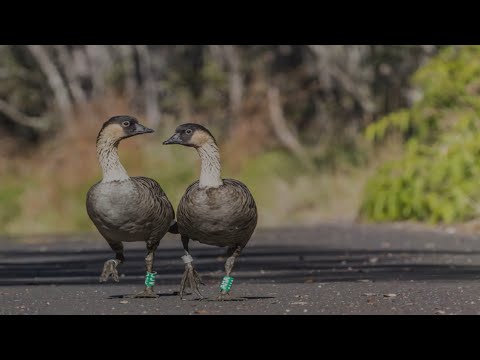
Unmistakable in Hawaii: a medium goose with black head and bill, golden-buff cheek patch, and a black neck marked by deep diagonal furrows, the body barred in soft gray-brown. No other goose is established wild in the islands. At a distance, the upright stance and pale cheeks separate it from any dark waterbird on a lawn or fairway.
Essential Morphometric Field Marks:
- Body Length & Mass: 21 to 26 inches (53–66 cm) and 3.5 to 6.6 pounds (1.6–3.0 kg) — about three-quarters the bulk of a Canada Goose, males larger than females.
- Wingspan: 43 to 53 inches (110–135 cm); flight is strong but used sparingly — this is a walking goose of lava fields, pastures, and golf courses.
- Bill Structure & Color: A small black goose bill, edged with lamellae for cropping grass and stripping berries — shorter and daintier than a Canada Goose’s.
- Color Pattern: Black head, crown, and bill; golden-buff cheeks and throat; black neck with deep diagonal furrows; body soft gray-brown with pale barring. Legs and feet blackish, the toes only partly webbed.
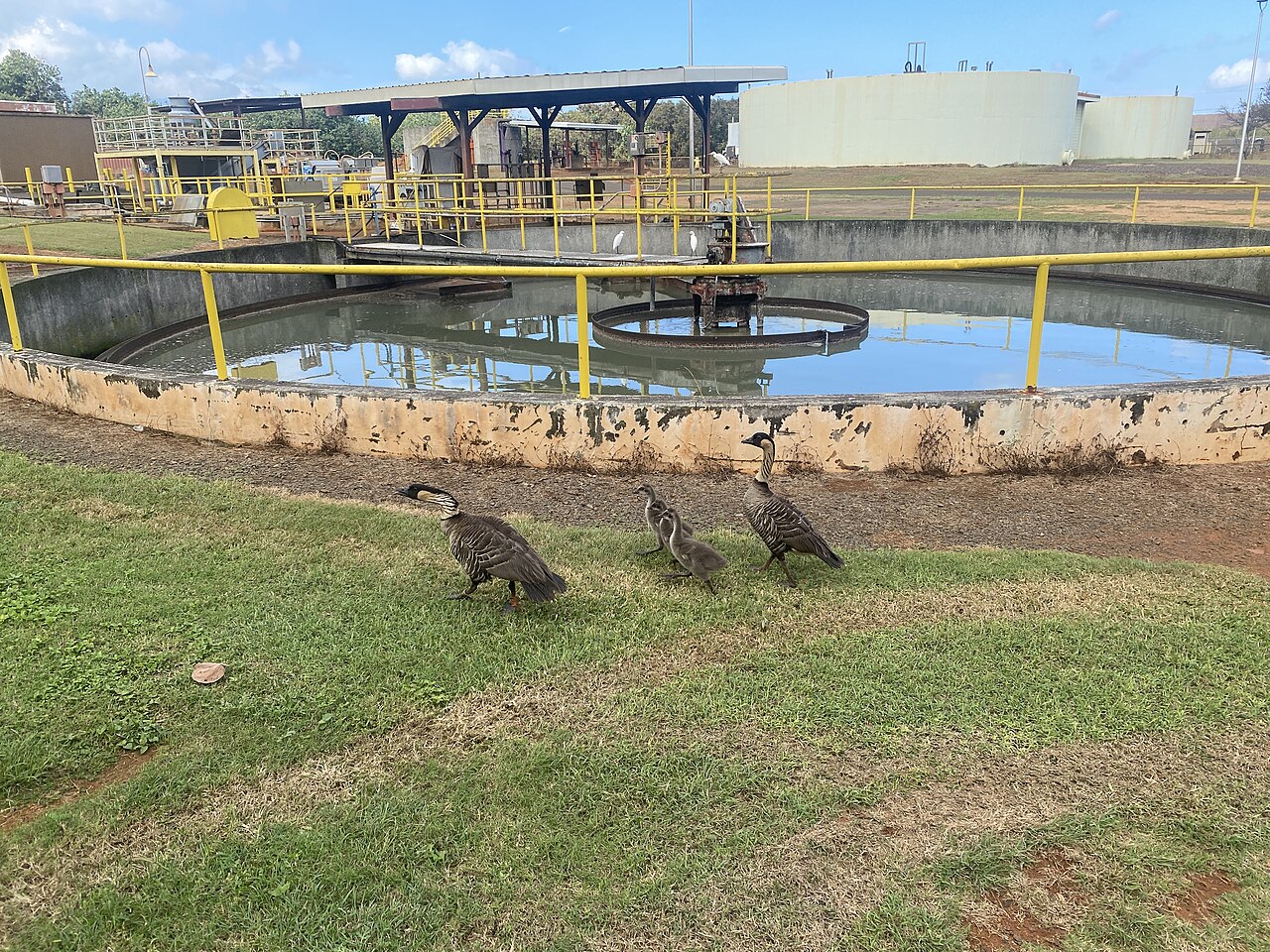
- Male vs. Female: Sexes share the same plumage; the male averages about 10% larger with a slightly deeper voice. Pairs stay together year-round, and families — parents plus downy golden goslings — graze as a unit through the breeding season.
The bigger guardian: same handsome pattern, roughly a tenth larger, with a deeper nay call. He stands watch while the female incubates and leads the family’s grazing rounds once the goslings hatch — pairs mate for life.
Same pattern, lighter frame — she nests on the ground in the shelter of a shrub or rock, lining a scrape with down, and does the incubating while the male guards. Her low clucking keeps the golden goslings gathered on grazing walks.
Hawaiian Goose (Nēnē) Vocalization Guide (1 Field Recording)
The Nēnē is named for its voice: soft, mellow nay-nay calls exchanged between mates and flock members, plus a low murmuring gabble when grazing and a louder, ringing flight call. It is far quieter than its Canada Goose ancestors. All recordings below are real field audio via Wikimedia Commons — no simulations. For a deeper library, browse xeno-canto: Nēnē.
1. The Nay-Nay
2. The Grazing Murmur
3. The Flight Call
Habitat, Range & the Lava-Field Life
The Nēnē lives on volcanic slopes, grassland, shrubland, and — increasingly — golf courses, pastures, and park lawns across Hawaii Volcanoes country, Haleakalā, and Kauai’s lowlands. It grazes grasses and eats berries, nesting on the ground in shrub shelter. Lawns and fairways are attractive but dangerous: they concentrate birds near roads and people.

Nowhere Else on Earth
The Nēnē is endemic to Hawaii: wild populations live on the Big Island (Hawaii Volcanoes National Park is the classic site), Maui’s Haleakalā slopes, and Kauai, with a smaller presence on Molokai. Every wild Nēnē descends from the captive-breeding program that rescued the species.
For residents and visitors: the likeliest encounters are Hawaii Volcanoes National Park, Kauai’s north shore refuges and fields, and Big Island golf courses. The bird walks roadsides and lawns with total confidence — which is exactly why the no-feeding and slow-driving rules matter.
Backyard Behavioral Patterns & Social Dynamics
The Nēnē rewrote the goose rulebook — a land goose of lava and grass. Four behaviors explain most of what you will observe:
🌋 The Land Goose
Nēnē rarely swim: their reduced toe webbing and long legs suit lava flows and pasture, not ponds. They walk everywhere, grazing like little cattle — watch for the family file crossing a fairway at its own pace.
🌿 The Grazer-Browser
The diet is green: grasses, leaves, flowers, and berries (including the native ‘ōhelo), cropped with the small bill. A grazing Nēnē works slowly across a lawn, head sweeping side to side.
💍 The Lifelong Pair
Pairs mate for life and nest on the ground in shrub shelter, usually starting in the rainy season. Both parents guard the golden goslings for months; a Nēnē family is one of Hawaii’s great wildlife sights.
🤝 The Too-Trusting Bird
Centuries without land predators left the Nēnē tame and approachable — the trait that nearly erased it when mongooses, cats, dogs, and cars arrived. Modern Nēnē still walk up to people; the responsible response is to step back.
Problem: “Nēnē Walk Right Up to People on Our Lawn — Are We Supposed to Feed Them?”
The three most common Nēnē encounters all have one right answer:
First and above all: no — never feed a Nēnē. Fed geese lose their wariness, crowd roads and parking lots, beg aggressively, and die by car strike and dog attack; feeding also spreads disease and malnutrition. Hawaii’s agencies ask everyone to admire from a distance. Second, the bird on the road: Nēnē graze roadside verges and cross slowly — slow down, stop, and wait; never herd or chase, which separates families. Report injured birds to the state’s wildlife hotline. Third, the yard visit: if Nēnē graze your lawn, enjoy it and let them move on — do not put out feed, pick up fallen fruit they crowd around, leash dogs, and keep the visit wild. The species came back from about 30 birds; its future is decided one respectful encounter at a time.
Method 1: Responsible Viewing — the Only Rule That Matters
Design for a protected, trusting, endangered goose:
-
Admire From a Distance
Stay back, stay quiet, and let the bird decide the distance. Binoculars turn a faraway grazer into a close-up portrait without changing its behavior — the whole point of watching wildlife.
-
Never Offer Food
No bread, no seed, no handouts — ever. A fed Nēnē becomes a parking-lot beggar and usually a casualty. Grazing birds are finding exactly what they need.
-
Give the Road to the Goose
Where Nēnē signs are posted, they mean it: drive slowly, stop for crossing families, and never honk them into panic. Most Nēnē deaths are vehicle strikes.
-
Leash Dogs, Indoors for Cats
A ground-nesting, flightless-molting goose has no defense against pets. Keep dogs leashed anywhere Nēnē may occur and keep pet cats indoors.
Method 2: Support the Comeback — Habitat Over Handouts
The comeback continues yard by yard:
-
Plant Native Groundcover
Native grasses and ‘ōhelo berry shrubs in rural Hawaii properties feed Nēnē the natural way — habitat beats handouts for an endangered grazer.
-
Keep Lawns Goose-Safe
If Nēnē graze your lawn, skip pesticides, fence off traffic lanes, and leave fallen fruit picked up where it draws birds into roads.
-
Support the Refuges
Hakalau, Kīlauea Point, and Hawaii Volcanoes protect the breeding and grazing habitat the comeback depends on — visits, memberships, and volunteering all count.
-
Report Bands & Injuries
Many Nēnē wear leg bands from the recovery program — reporting a band number or an injured bird to DLNR feeds real science and real rescue.
Tool Solution: Recommended Hardware for Hawaiian Goose (Nēnē)
Equipment matched to watching (not feeding) Hawaii’s state bird:
Compact Binoculars
8×42 binoculars turn a distant grazing Nēnē into a frame-filling portrait — the single piece of gear that makes responsible distance feel close.
- • Spec: 8×42 waterproof
- • Use: Distance viewing
- • Rule: Bird sets the distance
Native Grass & ‘Ōhelo Plantings
For rural Hawaii properties: native pasture grasses and berry shrubs that feed geese naturally and rebuild the landscape the species evolved in.
- • Plants: Native grasses, ‘ōhelo
- • Style: Open grazing cover
- • Bonus: Habitat for native insects too
Slow-Speed Signs & Pet Plan
A driveway slow sign where geese cross, dogs on leash, cats indoors — the unglamorous equipment that saves more Nēnē than any feeder ever could.
- • Road: Slow-down signage
- • Pets: Leash & indoor rule
- • Feeding: None, ever
Frequently Asked Questions
- Species Profile: The Nēnē (Branta sandvicensis) is a 21–26 inch, 3.5–6.6 pound land goose (Anatidae), band code HAGO — Hawaii’s state bird, found nowhere else on Earth.
- ID in One Look: Black head and furrowed black neck, golden-buff cheeks, gray-brown barred body, and half-webbed feet for walking lava instead of paddling ponds.
- The Sound: Soft, mellow nay-nay calls that give the bird its Hawaiian name; real field recordings above.
- Range & Habit: Endemic to Hawaii — Big Island, Maui, Kauai, Molokai — grazing volcanic slopes, pastures, and park lawns year-round.
- The Only Rule: Admire, never feed — handouts habituate Nēnē to roads and people, and road strikes are the leading preventable loss.
- The Comeback: From about 30 birds in 1952 to a few thousand today, thanks to captive breeding and habitat protection — a living conservation triumph.
Bird Watching Log
Species: Hawaiian Goose (Nēnē) (Branta sandvicensis)
| Hawaiian Goose (Nēnē) (Furrowed Neck Seen: Yes / No — Buff Cheeks: Yes / No — Goslings Present: Yes / No — Behavior: Grazing / Walking / Flying) | |