
Wild Turkey


Wild Turkey (Meleagris gallopavo): Complete Identification, Backyard Guide & Call Library
Quick Answer: How to Attract & Identify the Wild Turkey
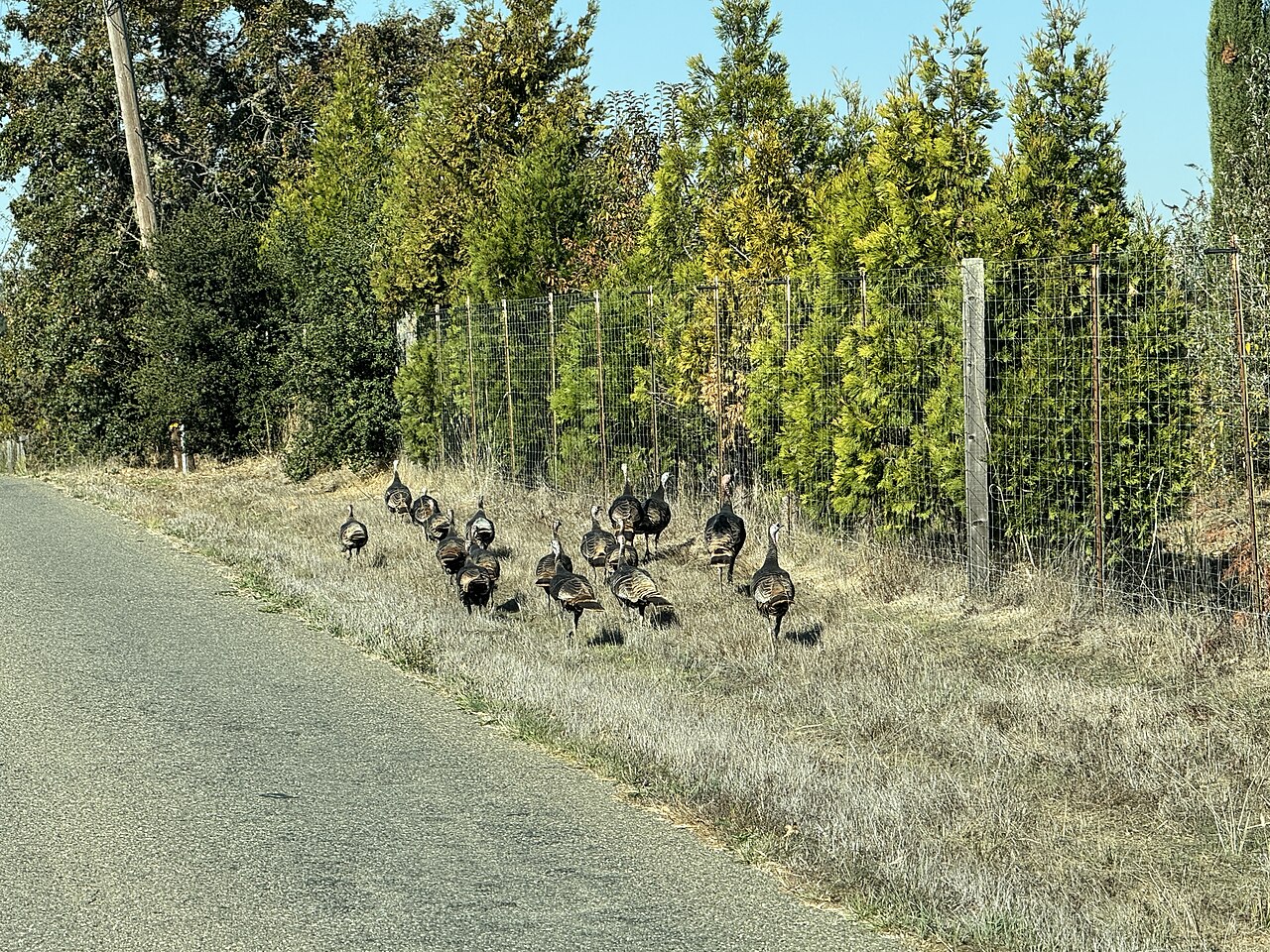
The Wild Turkey (Meleagris gallopavo) is America’s greatest wildlife comeback — reduced to about 30,000 birds by the early 1900s, restored by trap-and-transfer programs to millions today, now strutting through farmland, forest, and increasingly suburban yards. The tom’s gobble carries a mile, and his strut — tail fanned, snood dangling, head blazing red-white-and-blue — is pure theater. Hens lead quiet flocks of poults through summer. Turkeys visit yards for scattered corn, acorns, and birdseed spills, charming most homeowners and alarming a few — management is straightforward and covered below. They share the woodland edge with the Pileated Woodpecker and the Blue Jay.
Species Physical Profile & Morphometrics
The Wild Turkey belongs to the grouse-and-pheasant family (Phasianidae) and is one of only two turkey species in the world — a native North American that domestication sent to Europe and back before anyone thought to put it on the Thanksgiving table in its homeland’s image. It is the heaviest backyard bird most Americans will ever host.
Unmistakable at any distance: huge, dark, long-legged, long-necked, fan-tailed. The tom carries a chest beard, spurs, wattles, and a snood; the hen is smaller, slimmer, and unbearded. The domestic turkey is the same species in barnyard dress — the wild bird is slimmer, longer-legged, and can actually fly: 50 mph bursts into the roost tree.
Essential Morphometric Field Marks:
- Body Length & Mass: Toms 39.4 to 49.2 inches (100–125 cm) and up to 18.9 pounds (8.6 kg); hens run 8–12 pounds — the heaviest bird in the backyard, full stop.
- Wingspan: 49.2 to 56.7 inches (125–144 cm); flight is a loud, powerful burst up into roost trees at dusk — surprisingly strong, though the bird prefers to walk everywhere else.
- Bill Structure & Color: A short, stout horn-colored bill — a picker of acorns, corn, insects, and greenery, backed by feet that scratch leaves like a garden rake.
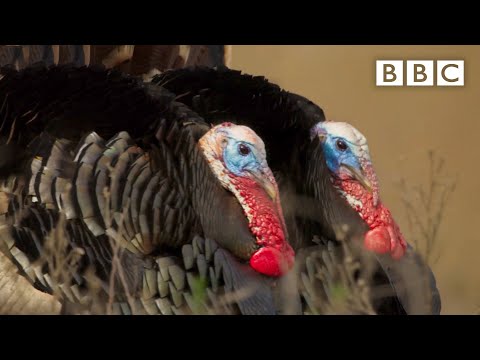
- Color Pattern: Iridescent bronze-green-black plumage with barred wings; the tom’s naked head shifts red, white, and blue with mood, hung with a snood and wattles; a black beard of modified feathers bristles from his chest. Hens are duller, slim-necked, usually unbearded.
- Male vs. Female: Dramatically different: the tom is twice her size, bearded, spurred, and technicolor-headed, strutting and gobbling in spring; the hen is modest brown-gray, quietly shepherding a dozen poults through the undergrowth by June.
The strutting patriot: beard, spurs, snood, and a head that floods red-white-and-blue, fanning his tail and dragging his wings while the gobble rolls across the valley — spring’s loudest backyard theater, played for an audience of quiet hens.
The modest mother — slim, brown-gray, unbearded, and all business: she nests in a hidden ground scrape, leads up to a dozen poults on insect-hunting marches by their second day, and flies them into low roost branches by their second week.
Wild Turkey Vocalization Guide (3 Field Recordings)
The Wild Turkey’s anthem is the gobble — a thunderous, rolling gabble that carries a mile on spring mornings — backed by a social vocabulary of yelps, clucks, purrs, putts, and the kee-kee run of separated young birds. All recordings below are real field audio via Wikimedia Commons — no simulations. For a deeper library, browse xeno-canto: Wild Turkey.
1. The Gobble
2. Yelps and Clucks
3. The Kee-Kee Run
Habitat, Range & the Great Comeback
The Wild Turkey lives in mixed woods and openings: hardwood forest with acorns, field edges, pastures, and increasingly the wooded suburbs where oaks rain mast and nobody hunts. It needs big trees to roost in, open ground to display on, and water nearby. A wooded suburban lot adjoining forest is modern turkey country.

From 30,000 Birds to Every State
The map is a conservation miracle: market hunting and forest loss cut the turkey to about 30,000 birds in the early 1900s; trap-and-transfer restoration rebuilt it to several million across every state but Alaska (with introductions there attempted too), plus Canada and Mexico.
For backyard birders: turkeys now thrive closer to people than ever — suburban flocks learn that nobody hunts the cul-de-sac and that bird feeders spill grain. Expect them in oak woods, field edges, and any yard with scattered corn or a busy feeder.
Backyard Behavioral Patterns & Social Dynamics
The Wild Turkey is a forest generalist with a flair for theater — social, vocal, and smarter than the barnyard myth. Four behaviors explain most of what you will observe:
📣 The Mile-Long Gobble
The tom’s gobble is engineered to carry — a rolling thunder audible a mile off, answered by other toms and triggered by crows, owls, car doors, and train whistles. Spring dawn near a roost is the loudest floor show in American birding.
🦚 The Full Strut
Tail fanned, wings dragging, chest puffed, head flooded red-white-and-blue — the strut is performed for hens and rivals alike, sometimes by trios of brother toms who court as a team and share the spoils.
👨👩👧👦 The Poult Parade
Hens nest in hidden ground scrapes and lead up to a dozen poults on insect-hunting marches within a day of hatching; by two weeks the family flies into low branches to roost. A June lawn can host the whole parade.
🌳 The Roost Flight
Turkeys walk all day but fly to roost: at dusk the flock erupts into big trees with a roar of wings, shuffling to safe limbs for the night. A backyard roost tree means a dawn chorus of tree yelps and wingbeats.
Problem: “A Turkey Flock Has Adopted My Yard — and the Driveway, and the Feeder. What Should I Do?”
The three most common Wild Turkey yard situations all have proven answers:
First, the adopted flock: turkeys stay where feeding is easy — stop scattering corn and clean up feeder spill if you want visits to stay occasional; the flock drifts to the next pantry within days. Second, the bold toms: spring toms can bluff-charge their own reflection in windows and shiny cars, and a habituated gobbler may challenge people — cover reflective glass, don’t feed by hand, and a confident wave of a jacket or umbrella reasserts boundaries; never run, which invites pursuit. Third, the garden damage: turkey feet are garden rakes — fence vegetable beds with two-foot poultry wire and accept that a flock’s leaf-scratching is free soil aeration elsewhere. Remember what you’re hosting: the species that came back from 30,000 birds now parades your lawn — with boundaries set, it is one of the great backyard privileges.
Method 1: Set the Table — Corn, Mast & Ground Feeding
Design for a scratching, flock-feeding forest bird:
-
Scatter Cracked Corn (If You Want Them)
Cracked corn or whole corn on open ground is the classic turkey draw — a morning scatter at the woodlot edge brings the flock on schedule. Skip it entirely if you’d rather they just pass through.
-
Let Them Clean the Feeder Spill
Turkeys relish the spill zone under busy feeders — sunflower hearts and millet kicked down by smaller birds. A wide tray under the station feeds the flock without extra effort.
-
Plant the Mast Trees
Oaks (acorns), beech, and cherry are the natural turkey pantry — a yard under big oaks feeds turkeys all fall and winter without a single feeder.
-
Provide Open Water
A ground-level water source — pond edge, wide basin, or livestock-style trough — gets daily flock visits, especially in dry late summer.
Method 2: Manage the Flock — Boundaries & Habitat
Enjoy the show, keep the boundaries:
-
Break the Handout Habit Early
A flock fed by hand becomes a flock that demands — feed wild-style (scattered, irregular, away from the house) or not at all, and never from the porch.
-
Cover the Reflections
Spring toms attack their reflections: soap, tape, or shade cloth over low windows and chrome bumpers ends the siege until testosterone season passes.
-
Fence the Garden, Not the Woods
Two-foot poultry wire around vegetable beds and new plantings redirects the scratching; everywhere else the flock’s raking is free pest control (they eat ticks by the thousand).
-
Give the Roost Its Dusk
If turkeys roost in your trees, keep evenings quiet near the roost wood — a disturbed roost relocates; a respected one anchors the flock’s daily route past your windows for years.
Tool Solution: Recommended Hardware for Wild Turkey
Equipment matched to America’s biggest backyard bird:
Ground Scatter of Cracked Corn
A morning handful on open ground at the woodlot edge — the simplest, oldest turkey invitation there is (skip it if you prefer pass-through visits).
- • Feed: Cracked or whole corn
- • Style: Open ground scatter
- • Timing: Set morning hour
Oak & Beech Mast Trees
Acorns and beechnuts are the wild turkey’s core winter diet — big mast trees are feeders that refill themselves every fall.
- • Trees: Oaks, beech, cherry
- • Yield: Fall–winter mast
- • Bonus: Deer, jays & squirrels too
Ground Trough + Garden Wire
A ground-level water trough for the flock, plus two-foot poultry wire around the garden — the two pieces that make turkey cohabitation effortless.
- • Water: Wide, ground-level
- • Fence: 2-ft poultry wire
- • Zones: Yes for woods, no for beds
Frequently Asked Questions
- Species Profile: The Wild Turkey (Meleagris gallopavo) is a 39.4–49.2 inch, up-to-18.9-pound native game bird (Phasianidae), band code WITU — America’s greatest wildlife comeback.
- ID in One Look: Huge, dark, fan-tailed; the tom bearded and spurred with a red-white-and-blue head, the hen slim and modest brown.
- The Sound: The mile-carrying gobble, hen yelps, flock purrs, and the kee-kee run of lost poults; real field recordings above.
- Range & Habit: Restored from ~30,000 birds to millions across every state but Alaska; strictly resident, roosting nightly in tall trees.
- Yard Formula: Scattered corn and oak mast if you want them, clean feeders and covered reflections if you don’t — boundaries, not battles.
- The Comeback: Trap-and-transfer restoration returned the turkey to woods and suburbs alike — your lawn flock is a conservation success story.
Bird Watching Log
Species: Wild Turkey (Meleagris gallopavo)
| Wild Turkey (Tom / Hen / Poult — Beard Seen: Yes / No — Strutting: Yes / No — Gobbling Heard: Yes / No — Flock Size: ___) | |