
Cactus Wren


Cactus Wren (Campylorhynchus brunneicapillus): Complete Identification, Habitat Guide & Sound Library
Quick Answer: How to Attract & Identify the Cactus Wren
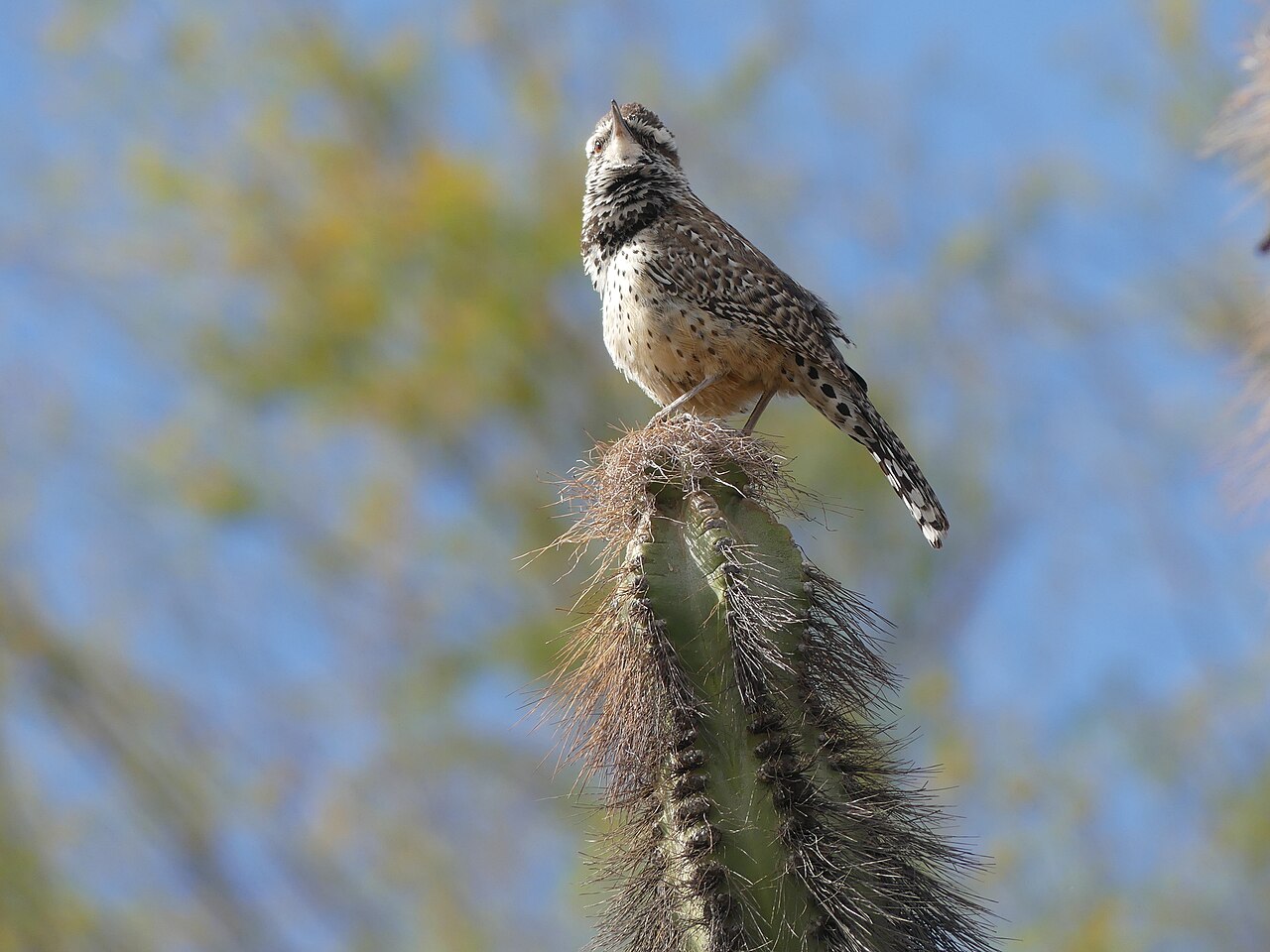
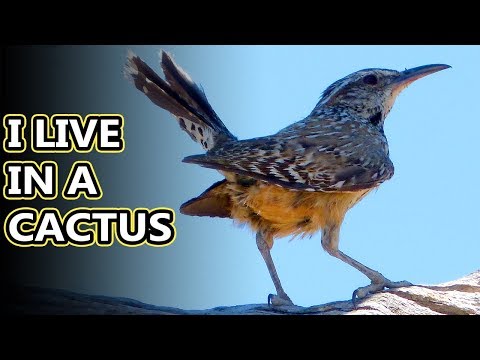
The Cactus Wren (Campylorhynchus brunneicapillus) is Arizona’s state bird and the largest wren in North America — boldly spotted below, with a blazing white eyebrow, a long slightly curved bill, and a harsh chug-chug-chug song delivered from a cactus top. It builds football-shaped grass nests inside cholla and prickly pear and forages on the ground for insects. It never migrates and rarely drinks — prey supplies its water. Desert yards attract them with native cacti, mesquite, and ground-level foraging space. They share the desert with the Gila Woodpecker and the Curve-billed Thrasher.
Species Physical Profile & Morphometrics
The Cactus Wren belongs to the wren family (Troglodytidae) and is the giant of the family — a year-round resident of the Sonoran and Chihuahuan deserts and adjacent dry country from California to Texas and deep into Mexico.
The identification formula: big wren + heavy breast spotting + bold white eyebrow + desert. Thrashers are longer-tailed and unstreaked or streaked rather than spotted; no other North American wren approaches this size or wears polka dots.
Essential Morphometric Field Marks:
- Body Length & Mass: 7.1 to 9.1 inches (18–23 cm) and 1.1 to 1.7 ounces (32–47 grams) — nearly robin-sized, four times a House Wren’s bulk.
- Wingspan: 11 inches (28 cm); flight is short and labored between perches — this wren would rather hop.
- Bill Structure & Color: A long, heavy, slightly decurved dark bill — built for flipping debris and hammering insects on the desert floor.
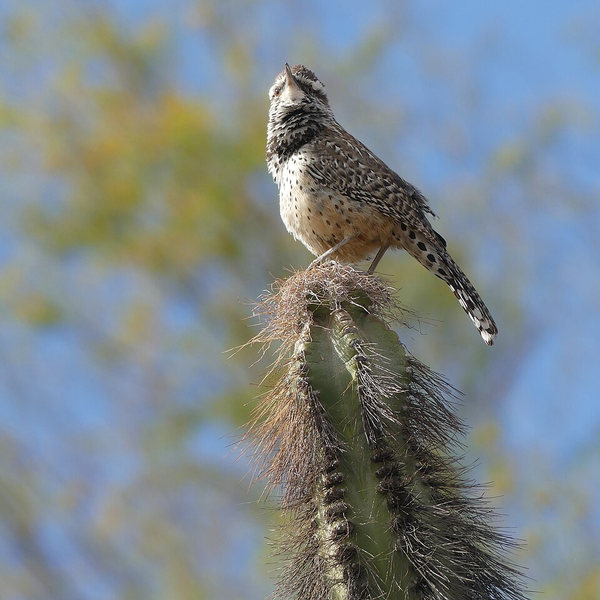
- Color Pattern: Brown above with heavy streaking, white eyebrow blaze, dense black spots on a white breast — the most patterned wren on the continent.
- Male vs. Female: The sexes look alike — both sing, both build the multiple nests, and both forage the same territory all year.
The cactus-top herald: perched on the highest cholla arm, tail down, pumping out chug-chug-chug like an engine that will not start.
Identical in plumage — she leads the nest weaving, tucking grass footballs into the spines of the cholla fortress.
Cactus Wren Vocalization Guide (0 Field Recordings)
The Cactus Wren’s song is a harsh, mechanical chug-chug-chug-chug — like an old engine turning over. All recordings below are real field audio via Wikimedia Commons — no simulations. For a deeper library, browse xeno-canto: Cactus Wren.
1. The Chugging Song
2. The Duet
3. The Scold
Habitat, Range & the Cholla Country
The Cactus Wren lives in desert with spiny structure: cholla and prickly pear flats, saguaro-mesquite desert, and thorn scrub across the Southwest. Suburban desert yards with native cactus and mesquite are fully acceptable territory.

The State Bird of Arizona
Range covers the Sonoran and Chihuahuan deserts from southern California and Nevada through Arizona and New Mexico to Texas, and deep into Mexico — resident all year, never migrating.
For backyard birders: desert yards with native cholla, prickly pear, or mesquite can host a resident pair — they adapt to suburbs readily, nesting in yard cacti and foraging along gravel beds.
Backyard Behavioral Patterns & Social Dynamics
The Cactus Wren is a ground-foraging desert specialist with a fortress mentality. Four behaviors explain most of what you will observe:
🌵 The Fortress Nester
The nest is a football-shaped grass bundle inside cholla or prickly pear — the spines guard the side entrance better than any landlord.
🐜 The Ground Forager
It forages on the ground, flipping debris and probing crevices for insects, spiders, and the occasional small lizard.
🏗️ The Multiple Nests
Pairs build several nests per season — some for breeding, some for roosting; the spiny suburbs are full of their real estate.
💧 The Water-Free Life
It rarely drinks — prey supplies nearly all moisture, the classic desert adaptation in a suburban-friendly package.
Problem: “How Do I Host Cactus Wrens? What Should I Do?”
The three most common Cactus Wren puzzles all have proven answers:
First, the identity check: a big spotted bird hopping around your cactus is not a young thrasher — the bold white eyebrow, dense polka-dot spotting, and chugging song belong to the Cactus Wren. Second, the nest in the walkway cactus: nests sit low in yard cholla — rope off the area or reroute the path for the season; the family fledges in weeks and the cactus is none the worse. Third, the disappearing pair: when yards replace native cactus and mesquite with gravel and exotics, the wrens leave — keep or plant natives, and the desert’s state bird will move back in.
Method 1: Set the Table — Spiny Natives & Foraging Ground
Design for a desert ground-wren:
-
Plant or Keep Cholla & Prickly Pear
Spiny natives are nest fortresses — one mature cholla is a wren subdivision.
-
Keep Mesquite & Palo Verde
Legume trees give perch, shade, and insects — the other half of the territory.
-
Leave Ground Litter & Debris
Undisturbed gravel, leaf litter, and fallen pads — the flipping grounds of a foraging pair.
-
Skip the Insecticide
Insects and spiders are the whole diet — sprayed gravel is a desert in the wrong sense.
Method 2: Build the Habitat — Drought Support & Nest Respect
Keep natives standing and water shallow, and the pair stays for years:
-
Offer Shallow Ground Water
A wide, shallow dish near cover in drought — rarely used, life-saving in June.
-
Protect Nesting Cactus
No trimming or removal in breeding season — nests are low and the season runs long.
-
Accept the Roost Nests
Extra football nests are normal — roosting shelters, not failures; leave them be.
-
Watch the Morning Show
Dawn is song time — the chugging duet from the cactus tops is desert suburbia at its best.
Tool Solution: Recommended Hardware for Cactus Wren
Equipment matched to a desert fortress wren:
Native Cholla & Mesquite
Spiny cactus for nests, legume trees for perches — the complete Cactus Wren homestead, planted once and permanent.
- • Plants: Cholla, prickly pear
- • Trees: Mesquite, palo verde
- • Bonus: Thrashers & gilded flickers
Shallow Ground Dish
A wide shallow water dish at ground level near cover — emergency hydration for extreme heat waves.
- • Depth: 1 inch
- • Placement: Beside cover
- • Bonus: Quail & doves too
Natural Gravel & Litter
Undisturbed desert floor with leaf litter and fallen pads — the flipping grounds where the wren hunts.
- • Rule: No raking
- • Rule: No insecticide
- • Bonus: Towhees & sparrows
Frequently Asked Questions
- Species Profile: The Cactus Wren (Campylorhynchus brunneicapillus) is a 7.1–9.1 inch, 1.1–1.7 ounce wren (Troglodytidae), band code CACW — Arizona’s state bird and the continent’s biggest wren.
- ID in One Look: Big spotted breast, white eyebrow blaze, cholla country.
- The Sound: A harsh chug-chug-chug from the cactus top; real field recordings above.
- Range & Habit: Sonoran and Chihuahuan desert resident; nests are grass footballs in spiny cactus.
- Feeder Formula: Native cactus and mesquite plus untouched ground — feeders are irrelevant.
- The Fortress Trick: The nest’s side door opens through living spines — nature’s security system.
Bird Watching Log
Species: Cactus Wren (Campylorhynchus brunneicapillus)
| Cactus Wren (Spotted Breast Seen: Yes / No — Chug Song Heard: Yes / No — Cactus Nest Found: Yes / No — Ground Foraging Watched: Yes / No — Date & Time: ___) | |