
American Robin vs Eastern Meadowlark

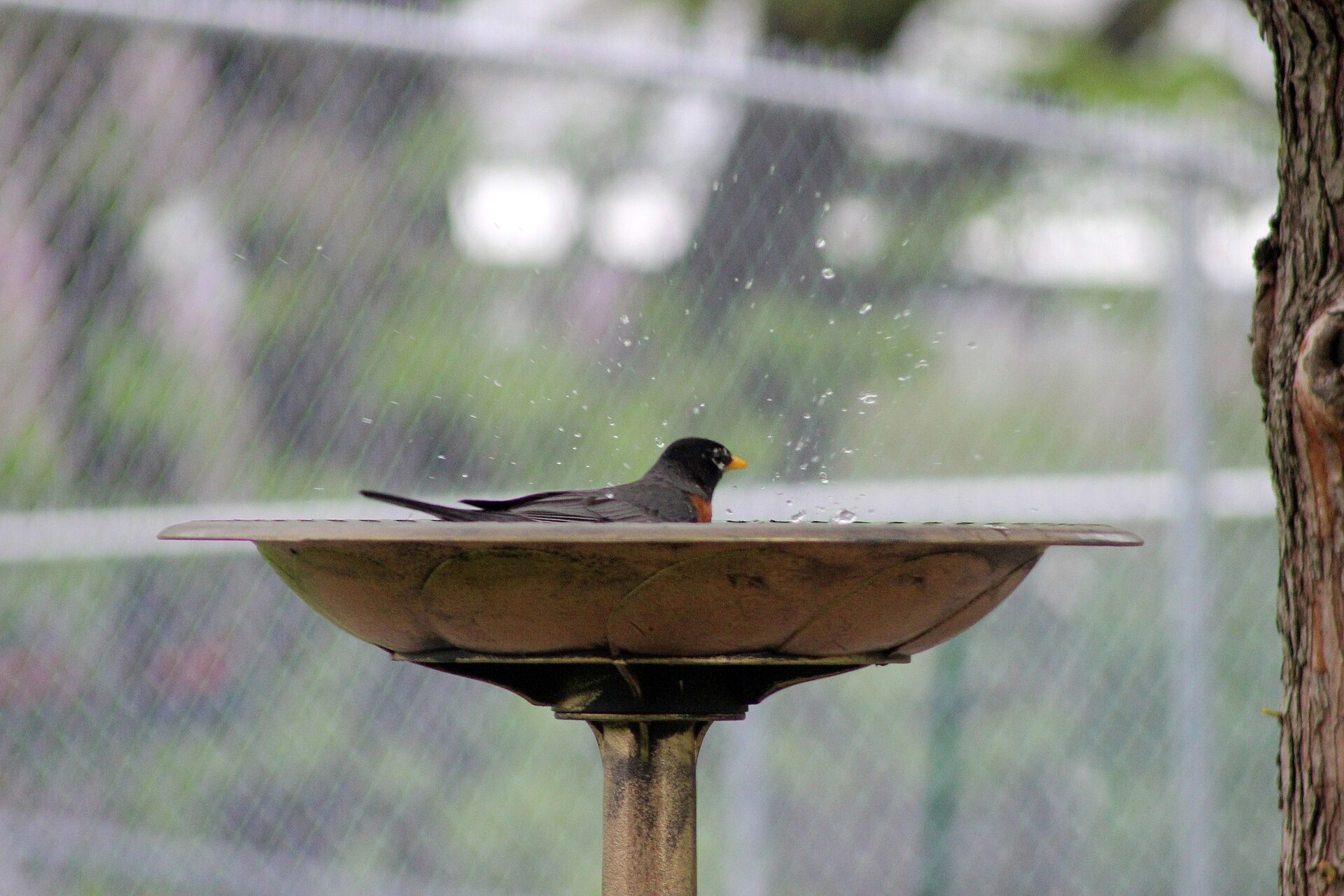


American Robin vs Eastern Meadowlark (Turdus migratorius vs Sturnella magna): The Complete Backyard Identification Guide
Quick Answer: The Fastest Way to Tell Them Apart
Two birds with showy breasts that hunt the same ground differently. Three rules:
- Breast pattern: plain brick-orange = robin; bright yellow crossed by a bold black V-shaped bib = Eastern Meadowlark.
- Back: plain gray-brown = robin; brown with heavy streaking = meadowlark.
- Tail flash: white outer tail feathers flashing on a low, burst-flight takeoff = meadowlark; plain dark tail = robin.
At-a-Glance Comparison Table
Thrush vs blackbird, side by side. KEY rows separate fastest.
| Feature | American Robin | Eastern Meadowlark |
|---|---|---|
| Scientific Name | Turdus migratorius | Sturnella magna |
| Length | 7.9–11 in (20–28 cm) | 9.5 in (24 cm) |
| Wingspan | 12.2–15.8 in (31–40 cm) | 14–16 in (36–41 cm) |
| Weight | 2.7–3.0 oz (77–85 g) | 2.7–5.1 oz (76–145 g) |
| Overall Shape | Upright thrush with a longish tail | Stocky grassland bird with a short tail and long bill |
| Male Plumage KEY | Gray back, brick-red breast, dark head with white eye arcs, yellow bill | Brown-streaked back, brilliant yellow underparts crossed by a bold black V, white outer tail feathers (sexes alike) |
| Female Plumage | Like the male but paler, with a duller head and breast | Like the male, slightly duller |
| Bill Shape | Straight, slender yellow bill | Long, straight, sharply pointed, pinkish |
| Tail | Medium dark tail with white corners | Short, with flashing white outer feathers |
| Core Range KEY | Nearly all of North America; lawns, parks and woods | East of the Rockies — meadows, pastures, hayfields and prairie remnants |
| Migration | Northern birds migrate; southern birds resident; flocks roam in winter | Partial migrant; southern birds resident |
| Feeder Presence KEY | Not a seed eater — visits for soaked raisins, mealworms and birdbaths | Rarely uses feeders; may visit scattered seed on the ground in large rural yards |
| Favorite Foods | Earthworms, insects, berries and fruit | Insects (grasshoppers, beetles), grass and weed seeds |
| Song KEY | Cheerful rising-falling phrases: “cheerily, cheer-up, cheerio” | A clear, sweet, slurred whistle: “see-you, see-yeer” — two to four notes |
| Flight Call | Sharp “tut-tut-tut” alarms and a thin “seep” | A sharp “chupp” and a dry rattle |
| Population Trend | Abundant; the default lawn bird of America | Declining steadily with meadow habitat loss |
Male Field Marks, Side by Side
American Robin — Male
- Brick-red breast on a gray-backed, dark-headed thrush.
- White eye arcs and yellow bill.
- Runs, stops, and cocks its head on lawns.
Eastern Meadowlark — Male
- Bright yellow breast with a bold black V bib.
- Streaked brown back; white outer tail feathers flash in flight.
- Sings from fence posts over grassland.
Female & Juvenile Marks, Side by Side
American Robin — Female
- Paler version of the male.
- Same upright lawn-hunting posture.
- White corners flash on the tail in flight.
Eastern Meadowlark — Female
- Like the male but duller yellow.
- Walks through grass rather than hopping.
- Ground nester — a domed grass nest hidden in the meadow.
Part-by-Part Anatomy Breakdown
The breast tells the story; everything else agrees:
| Body Part | American Robin | Eastern Meadowlark |
|---|---|---|
| Breast | Brick-orange, unmarked | Brilliant yellow with a bold black V bib |
| Back | Plain gray-brown | Brown, heavily streaked and barred |
| Tail | Medium, dark, plain | Short, with white outer feathers flashing in flight |
| Bill | Yellow, slim | Long, straight, sharply pointed, pinkish |
| Gait | Runs and stops upright on lawns | Walks deliberately through grass |
| Size | 10 in, slim-legged | 9.5 in, stocky and short-tailed |
| Flight | Strong and level | Stiff, quail-like bursts, low over the grass |
Song & Call Comparison
American Robin
Song: cheerful phrases — cheerily, cheer-up, cheerio — among the first voices of dawn.
Calls: sharp tut-tut-tut alarms at dusk roost time.
Eastern Meadowlark
Song: a clear, sweet, slurred whistle — see-you, see-yeer — simpler than the Western Meadowlark’s.
Calls: a sharp chupp and a dry rattle.
Range & Seasonal Presence
The American Robin breeds continent-wide and winters across most of the US — every lawn is its habitat.
The Eastern Meadowlark lives east of the Rockies in meadows, pastures and hayfields — true grassland. It winters in the southern part of its range and avoids tight suburban yards unless real meadow adjoins them.
Feeder Behavior & Favorite Foods
- American Robin: soaked raisins, fruit, mealworms and a ground bath; no seed.
- Eastern Meadowlark: rarely visits feeders; large rural yards with meadow edges may see one picking scattered seed or insects from the ground in late winter.
- Habitat over feeders: an unmown corner of tall grass is worth more to a meadowlark than any feeder.
- Caution: both ground-feed — keep cats indoors where either species forages.
Temperament & Flock Behavior
American Robins are conspicuous and tame, working lawns in plain sight all day.
Eastern Meadowlarks are warier grass birds — they sing from fence posts and vanish into the meadow when approached, flashing white tail feathers as they go.
6-Step Backyard ID Checklist
- Breast. Plain orange = robin; yellow with a black V = meadowlark.
- Back. Plain = robin; heavily streaked = meadowlark.
- Tail. No white = robin; white outer flashes = meadowlark.
- Bill. Short yellow = robin; long pinkish spike = meadowlark.
- Habitat. Suburban lawn = robin; open meadow = meadowlark.
- Song. Cheerful caroling = robin; clear slurred “see-you, see-yeer” = meadowlark.
Frequently Asked Questions
- Breast: Plain orange = robin; yellow + black V = meadowlark.
- Back: Plain = robin; streaked = meadowlark.
- Tail: Plain = robin; white flashes = meadowlark.
- Habitat: Lawn = robin; meadow = meadowlark.
- Flight: Level = robin; stiff quail-like bursts = meadowlark.
- Song: Caroled phrases = robin; “see-you, see-yeer” = meadowlark.