
American Goldfinch vs Pine Siskin





American Goldfinch vs Pine Siskin (Spinus tristis vs Spinus pinus): The Complete Backyard Identification Guide
Quick Answer: The Fastest Way to Tell Them Apart
The two birds mobbing your nyjer feeder. Three rules:
- Streaking: heavily streaked all over = Pine Siskin; unstreaked = goldfinch.
- Bill: thin and pointed = siskin; conical = goldfinch.
- Yellow: flashes in wings and tail only = siskin; body plumage = goldfinch.
At-a-Glance Comparison Table
The goldfinch and the siskin, side by side. KEY rows separate fastest.
| Feature | American Goldfinch | Pine Siskin |
|---|---|---|
| Scientific Name | Spinus tristis | Spinus pinus |
| Length | 4.3–5.1 in (11–13 cm) | 4.3–5.5 in (11–14 cm) |
| Wingspan | 7.5–8.7 in (19–22 cm) | 7.1–8.7 in (18–22 cm) |
| Weight | 0.4–0.7 oz (11–20 g) | 0.4–0.6 oz (12–18 g) |
| Overall Shape | Small, slim finch with a short, deeply notched tail | A tiny, heavily streaked finch with a thin, pointed bill and a flash of yellow in the wings |
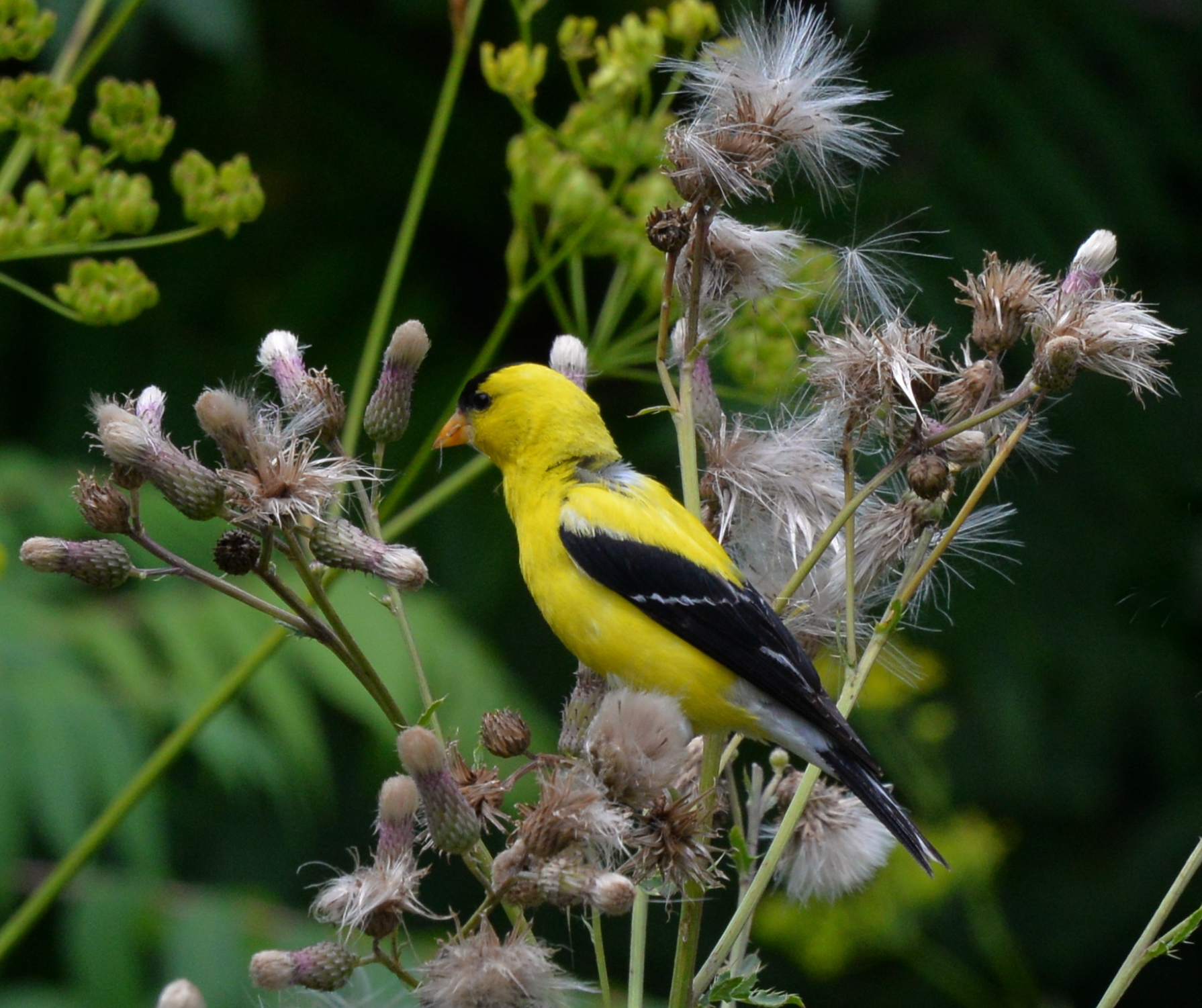
| Male Plumage KEY | Breeding male unmistakable: brilliant lemon-yellow with a jet-black forehead cap and black wings with white bars; winter male dull olive-brown | Brown and heavily streaked all over, with yellow edging in the wings and tail (sexes alike) |
| Female Plumage | Dull yellow-olive overall, cleaner and completely unstreaked below; wings darker with pale bars | Identical to the male |
| Bill Shape KEY | Small, neat conical bill; pinkish-orange in breeding season, gray-brown in winter | Thin, pointed — finer than a goldfinch’s |
| Tail | Short tail with a clear notch | Short, notched, with yellow at the base |
| Core Range | Across most of the US and southern Canada; weedy fields, forest edges, gardens | Northern and mountain conifer forest; irrupts across the whole US in some winters |
| Migration | Northern birds migrate south; much of the range holds goldfinches year-round | Irruptive — common at feeders one winter, absent the next |
| Feeder Presence | Year-round where present; acrobatic, clings to nyjer socks and fine tube perches | Nyjer (thistle) and sunflower chips, often shoulder-to-shoulder with goldfinches |
| Favorite Foods | Nyjer (thistle), sunflower hearts; almost entirely vegetarian, even feeds nestlings seeds | Small seeds — nyjer, birch, alder and weed seeds |
| Song | Sweet, canary-like series of twitters and warbles | A twittering, goldfinch-like warble with buzzy notes mixed in |
| Flight Call KEY | Bouncy flight call rendered “po-ta-to-chip” or “per-chic-o-ree” | A rising, buzzy “zzzreee” and hard “cheet” notes |
| Population Trend | Common and stable; a classic backyard finch | Erratic but broadly declining; winter numbers swing wildly with cone crops |
Male Field Marks, Side by Side
American Goldfinch — Male
- Breeding male is brilliant lemon-yellow with a jet-black forehead cap.
- Black wings carry clean white bars; rump white in flight.
- In winter, males fade to dull olive — the black cap disappears.
- No streaking below at any season.
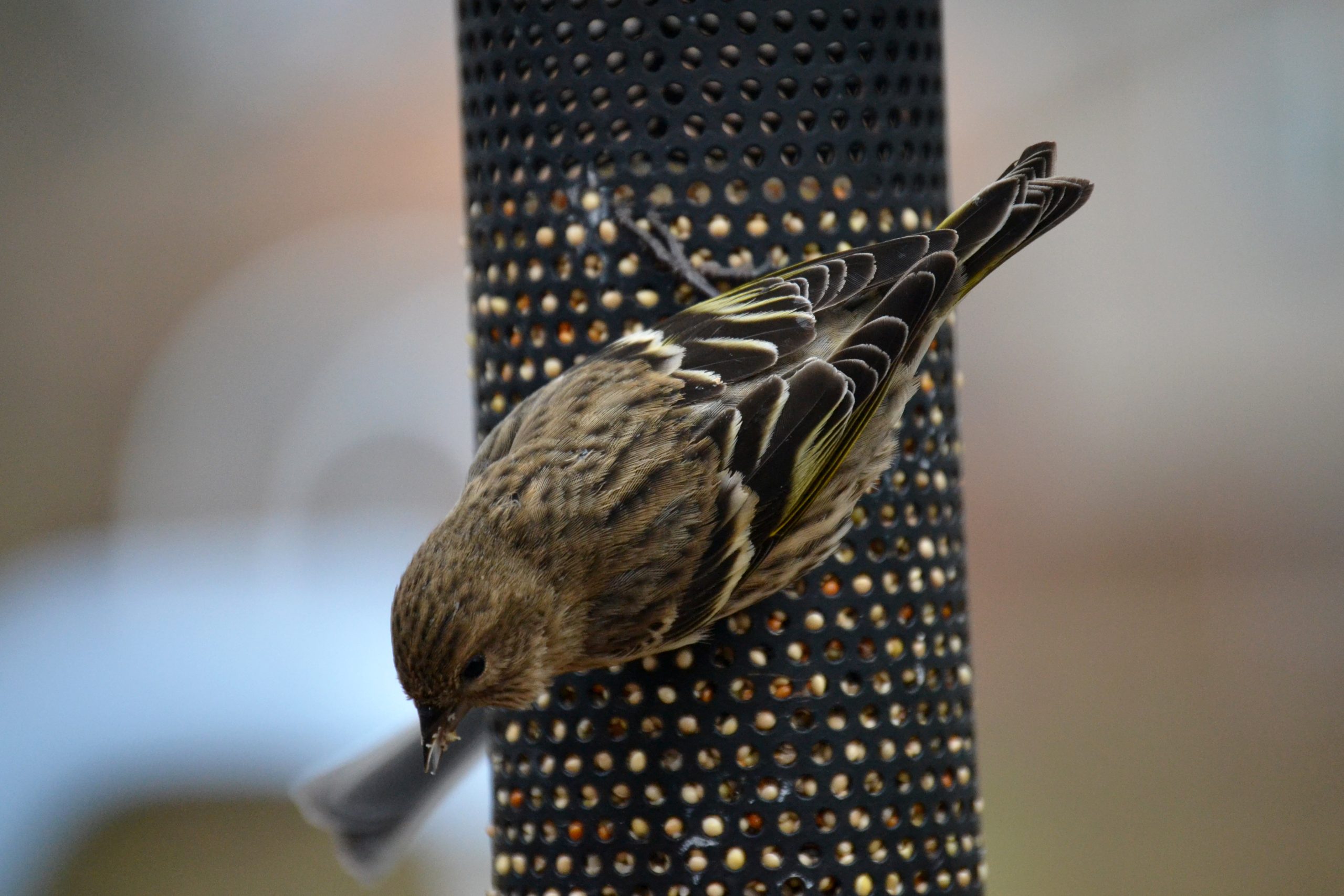
Pine Siskin — Male
- Streaky brown finch with yellow wing flashes.
- Thin, pointed bill — goldfinches have a thicker one.
- Swarms nyjer feeders in irruption winters.
Female & Juvenile Marks, Side by Side
American Goldfinch — Female
- Dull yellow-olive, soft and clean-looking.
- Underparts completely unstreaked — the key female clue.
- Small pinkish-gray conical bill; dark wings with pale bars.
Pine Siskin — Female
- Identical to the male.
- Nests in conifers, sometimes in loose colonies.
- Flocks twitter constantly as they feed.
Part-by-Part Anatomy Breakdown
Every part offers a check:
| Body Part | American Goldfinch | Pine Siskin |
|---|---|---|
| Streaking | None — clean plumage in every season | Heavy brown streaking everywhere |
| Bill | Conical, pink-orange (blackish in winter) | Thin, sharply pointed |
| Yellow | Male’s whole body; wings in winter | Only flashes in wings and tail base |
| Winter Look | Plain buff-olive, black wings with bars | Same streaky look as summer |
| Flight | Bounding, with “po-ta-to-chip” calls | Bounding, with buzzy “zzzreee” calls |
| Molt | Two full plumages a year | One streaky plumage all year |
| Flock Size | Modest flocks | Dense swarms of dozens at a feeder |
Song & Call Comparison
American Goldfinch
Song: a sweet, canary-like series of twitters, trills and warbles delivered from a perch or in flight.
Calls: the bounding flight call sounds like po-ta-to-chip; also soft tsee contact notes.
Pine Siskin
Calls: a rising, buzzy zzzreee unlike any goldfinch.
Song: a twittering warble with buzzy notes woven in.
Range & Seasonal Presence
The American Goldfinch is a year-round fixture across most of the US — weedy fields and feeders everywhere.
The Pine Siskin breeds in northern and mountain conifers and irrupts across the country in winters when northern cone crops fail.
Feeder Behavior & Favorite Foods
- Both species love nyjer (thistle) and fine sunflower chips — often feeding shoulder to shoulder.
- Goldfinch: a dependable daily visitor all year.
- Siskin: arrives in irruption winters, sometimes in flocks of fifty.
- Hygiene: crowded finch feeders spread disease — clean feeders weekly and watch for sick birds.
Temperament & Flock Behavior
American Goldfinches are bouncy and cheerful, singing canary-like from treetops and feeding acrobatically.
Pine Siskins are pushier — crowding perches, fencing with open bills, and hanging upside down to feed.
6-Step Backyard ID Checklist
- Streaking. Streaked = siskin; clean = goldfinch.
- Bill. Thin spike = siskin; cone = goldfinch.
- Yellow location. Wing flashes = siskin; body = goldfinch.
- Call. Buzzy “zzzreee” = siskin; “po-ta-to-chip” = goldfinch.
- Season. Every year = goldfinch; boom-and-bust winters = siskin.
- Summer plumage. Bright yellow male = goldfinch; siskins stay streaky.
Frequently Asked Questions
- Streaking: Streaked = siskin; clean = goldfinch.
- Bill: Spike = siskin; cone = goldfinch.
- Yellow: Wing flashes = siskin; body = goldfinch.
- Call: Buzzy zzzreee = siskin.
- Pattern: Goldfinch yearly; siskin irruptive.
- Hygiene: Clean feeders when siskin flocks arrive.