
California Towhee


California Towhee (Melozone crissalis): Complete Identification, Feeder Guide & Call Library
Quick Answer: How to Attract & Identify California Towhees
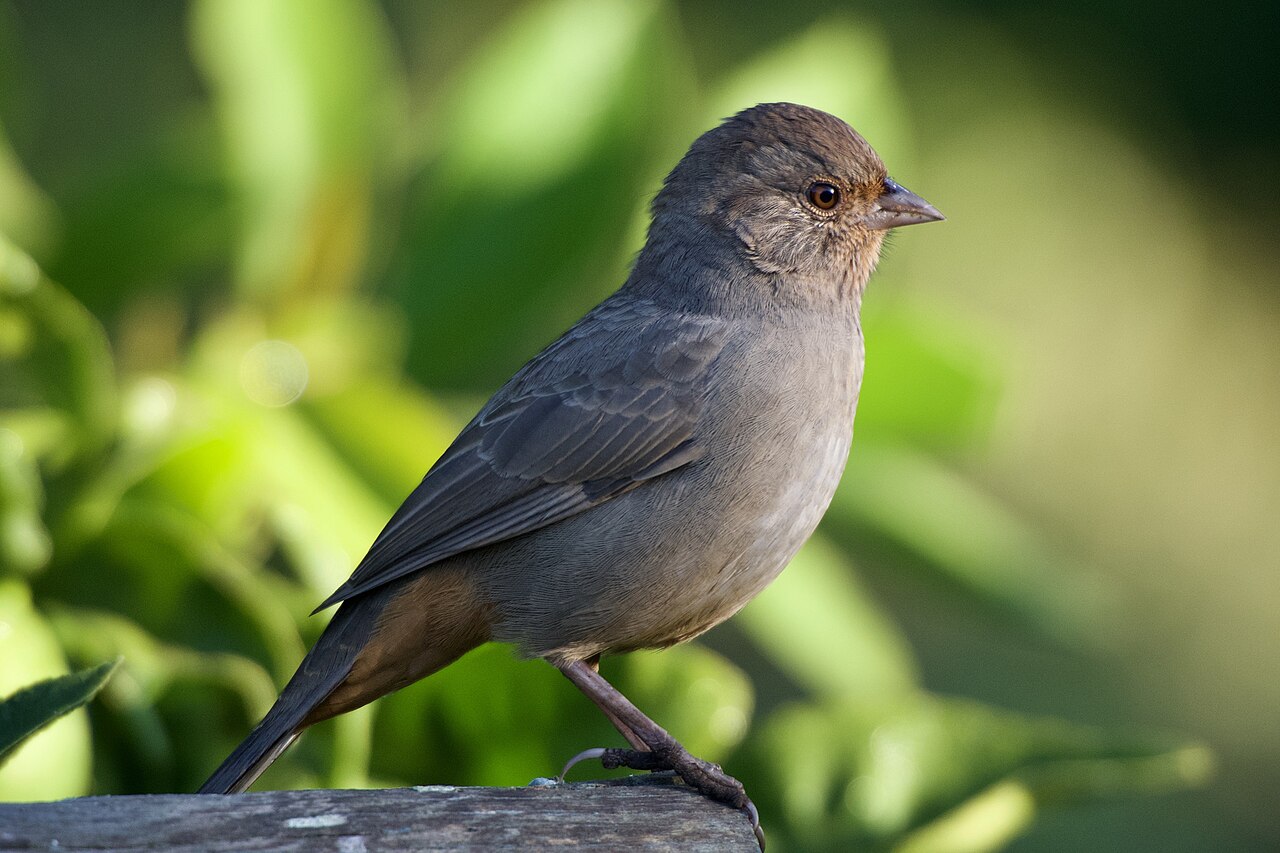
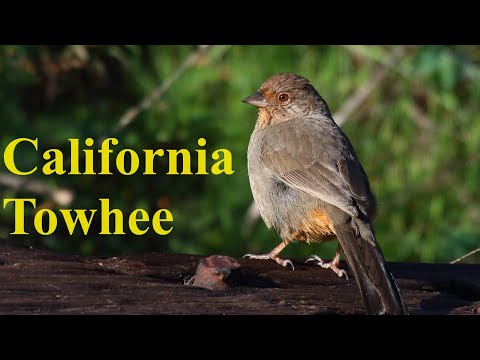
The California Towhee (Melozone crissalis) is a big, long-tailed ground sparrow of California and southern Oregon yards — plain gray-brown from beak to tail, with a rusty crown, a buffy streak-outlined throat, and warm rusty undertail coverts that flash as it hops away. A year-round resident of chaparral, parks, and suburban gardens, it feeds by double-scratching on open ground beside birds like the Spotted Towhee and the Golden-crowned Sparrow. To attract it: scatter cracked corn, millet, and coarse grain on bare ground, gravel, or a low platform beside shrubs, keep leaf litter under the shrub border, and add a shallow birdbath near cover. Listen for the loud metallic “chip” call and the accelerating chip-trill song.
Species Physical Profile & Morphometrics
The California Towhee belongs to the New World sparrow family (Passerellidae) and is one of the largest, plainest sparrows in a western yard — a plump, long-tailed body, a thick seed bill, and strong legs built for scratching.
The identification formula: plain gray-brown plumage + rusty crown + buffy streaked throat + rusty undertail coverts, hopping on the ground near shrubs.
Essential Morphometric Field Marks:
- Body Length & Mass: 8.3 to 9.8 inches (21–25 cm) and 1.3 to 2.4 ounces (37–67 grams) — one of the biggest sparrows in a California yard, noticeably bulkier than a Spotted Towhee.
- Wingspan: about 11.4 inches (29 cm), with short, rounded wings made for low dashes between shrubs rather than long flights.
- Bill Structure & Color: A thick, conical, seed-cracking bill, dark gray-brown above and paler below; legs and feet are pinkish.
- Color Pattern: Soft gray-brown overall, slightly warmer brown on the wings and tail, with a rusty-brown crown, a buffy throat patch outlined by dark streaks, and rich rusty-cinnamon undertail coverts — the single most useful confirming mark. Eyes are dark; juveniles look paler and lightly streaked.
Understated by design: plain gray-brown with the rusty crown, streaked buffy throat, and rusty undertail — he advertises with voice instead of plumage, chipping loudly from fence tops and singing the accelerating chip-trill in spring.
A mirror image of her mate: males and females wear essentially the same plain gray-brown suit and share the same field marks. Pairs stay together year-round, so the two birds at your ground tray are very likely a bonded couple.
California Towhee Vocalization Guide (2 Recordings + 1 Simulation)
This species talks more than it sings. The everyday voice is a loud, metallic “chip” that carries across the yard; the true song is a series of those chips accelerating into a rapid trill. The first two cards below are licensed field recordings via Wikimedia Commons and xeno-canto; the third is a clearly labeled acoustic simulation of the song pattern for practice.
1. Field Recording — Metallic “Chip” & “Tseep” Calls
2. Field Recording — Calls From the Shrub Edge
3. Song Simulation — The Accelerating Chip-Trill
Habitat, Range & the Pacific Slope Garden Corridor
This is a bird of scrubby, open-ground habitats: chaparral, oak woodland understory, streamside tangles, parks, and suburban gardens — anywhere shrubs or dense plantings stand beside bare soil, gravel, or leaf litter to scratch in.

A Pacific Slope Resident, Every Month of the Year
The California Towhee lives year-round along the Pacific slope from southern Oregon through California and into Baja California — west of the Sierra Nevada and Cascade crests, in the Coast Ranges, the Central Valley edges, and coastal southern California. It does not migrate: the bird at your feeder in January is the same neighbor that nested in your shrub border in May.
In the last several decades the species has expanded north into southern Oregon, following suburban gardens and backyard feeding stations. Wherever it occurs, the habitat rule is the same: shrubby cover above, scratchable open ground below.
Backyard Behavioral Patterns & Social Dynamics
The California Towhee is one of the boldest, most trusting ground birds in a western yard. Four behaviors explain most backyard encounters:
🍂 The Double-Scratcher
The signature move: a hop forward, then a kick back with both feet at once, flinging leaves, gravel, and mulch aside to expose seeds and insects. On bare ground and gravel patches the scratching is easy to watch at close range.
🪨 The Gravel-Patch Regular
Unlike shyer sparrows, this species works driveway edges, gravel paths, patios, and open dirt with confidence — as long as dense shrubs stand within a quick dash. It learns feeding routines fast and often waits nearby at the usual hour.
💞 The Year-Round Pair
Pairs hold permanent territories and stay together all year, calling back and forth with metallic chips as they forage. Two plain brown towhees at your ground tray in winter are almost certainly the same pair that raised young nearby in spring.
🪟 The Reflection Fighter
In the breeding season, territorial males famously attack their own reflection in windows, sliding glass doors, and car mirrors — hours of determined but harmless self-dueling. Covering the outside of the glass for a few weeks ends the siege.
Problem: “A Big Plain Brown Bird Owns My Yard — It Scratches the Gravel, Scolds Me From the Fence, and Even Fights My Window. What Is It?”
The three most common California Towhee puzzles all have reassuring answers:
First, the anonymous brown bird: plain plumage is the whole point — confirm it with the rusty undertail coverts, rusty crown, and buffy streaked throat as it hops away, and by the double-scratch feeding style no other plain yard bird matches. Second, the window warrior: spring males attacking glass are defending territory from their own reflection — a temporary, harmless behavior that stops if you cover the outside of the pane. Third, the look-alikes: the Spotted Towhee shares the yard but wears a black hood and white-spangled back; the Canyon Towhee is a bird of the arid interior with a dark central breast spot; and the Abert’s Towhee of the desert Southwest wears a black mask around the bill.
Method 1: Set the Table — Cracked Corn & Grain, Served Low
Design for a big, bold, floor-feeding sparrow:
-
Use the Ground You Already Have
A bare soil patch, gravel corner, or driveway edge beside shrubs is already prime towhee habitat — scatter feed directly on it and let the double-scratch do the rest. No special equipment is required to start.
-
Serve Cracked Corn & Coarse Mixed Grain
Cracked corn and coarse grain mixes scattered on open ground are the staple — chunky, easy to handle, and exactly what this big-billed ground feeder prefers. A handful each morning on the same patch builds a daily route.
-
Add Millet & Sunflower Chips on a Low Platform
White millet and sunflower chips on a low, stable platform or ground tray broaden the menu and draw the juncos and sparrows that feed alongside towhees. Keep portions fresh; serve only what disappears in a day.
-
Keep the Litter Bed Stocked
Scatter a share of the seed into the leaf litter under the shrub border — the natural foraging floor this species evolved to work, and the place it feels safest feeding.
Method 2: Build the Habitat — Cover, Litter & Water
Feed the habitat, and the towhees follow:
-
Plant or Keep a Dense Native Shrub Border
Native shrubs and thick foundation plantings supply the escape cover and nesting structure this species requires — ceanothus, coyote brush, coffeeberry, toyon, and shrubby oak are classic California towhee structure.
-
Leave the Leaves — On Purpose
A deliberate leaf-litter bed under the shrubs is pantry and foraging floor in one: seeds fall in, insects live in it, and the birds work it daily. Skip the fall cleanup in at least one corner.
-
Add a Brush Pile
A simple stacked brush pile near the feeding floor gives towhees instant cover from hawks and cats — the cheapest “feeder accessory” you will ever build.
-
Offer a Shallow Bath Near Cover
California Towhees drink and bathe daily at shallow water within a quick dash of shrubs — in dry California summers a clean, refilled bath can be the single strongest draw in the yard. In frosty foothill winters a heated bird bath keeps water open.
Tool Solution: Recommended Hardware for California Towhees
Equipment matched to a big, ground-feeding, cover-loving sparrow:
Low Platform / Ground Tray
A wide, stable tray set on or near the ground beside the shrub border, filled with cracked corn, millet, and sunflower chips — the serving style a double-scratching bird actually trusts.
- • Seed: Cracked corn, millet, coarse grain, sunflower chips
- • Style: Ground tray or low platform
- • Placement: Open soil or gravel beside dense shrubs
Brush Pile & Native Shrub Structure
Not hardware you buy so much as habitat you keep: a stacked brush pile plus a dense native shrub border gives this ground feeder the escape cover it demands before it will work an open gravel patch.
- • Material: Pruned branches, native shrubs
- • Build: Loose, layered, dense at the core
- • Placement: Within a quick dash of the feeding floor
Shallow Bird Bath
A shallow bath with gently sloped sides set near shrub cover — towhees drink and bathe daily, and through the long dry western summer fresh water is often the busiest station in the yard.
- • Depth: 1–2 in, gently sloped
- • Dry season: Refresh daily in summer
- • Placement: Beside, never far from, shrubs
Frequently Asked Questions
- Species Profile: The California Towhee (Melozone crissalis) is a large 8.3–9.8 inch, 37–67 gram New World sparrow (Passerellidae) with a thick conical bill, long rounded tail, and strong scratching legs.
- ID in One Look: Plain gray-brown overall with a rusty crown, buffy streaked throat, and rusty-cinnamon undertail coverts — hopping and double-scratching on open ground beside shrubs. Males and females look alike.
- A Year-Round Pacific Slope Resident: Lives from southern Oregon through California into Baja California and does not migrate; pairs hold the same yard territory in every season.
- The Sound: A loud metallic “chip” call, and a spring song of chip notes accelerating into a dry trill from a fence top or shrub.
- Feeder Formula: Cracked corn, millet, and coarse grain scattered on bare ground, gravel, or a low platform beside shrubs — plus leaf litter under the border and a shallow bath nearby.
- Quirky but Harmless: Spring males may attack their own reflection in windows and mirrors; covering the outside of the glass for a few weeks ends the behavior.

Bird Watching Log
Species: California Towhee (Melozone crissalis)
| California Towhee (Rusty Undertail Seen: Yes / No — Double-Scratching: Yes / No — Chipping: Yes / No) | |