
Woodhouse’s Scrub-Jay


Woodhouse’s Scrub-Jay (Aphelocoma woodhouseii): Complete Identification, Feeder Guide & Call Notes
Quick Answer: How to Attract & Identify Woodhouse’s Scrub-Jays
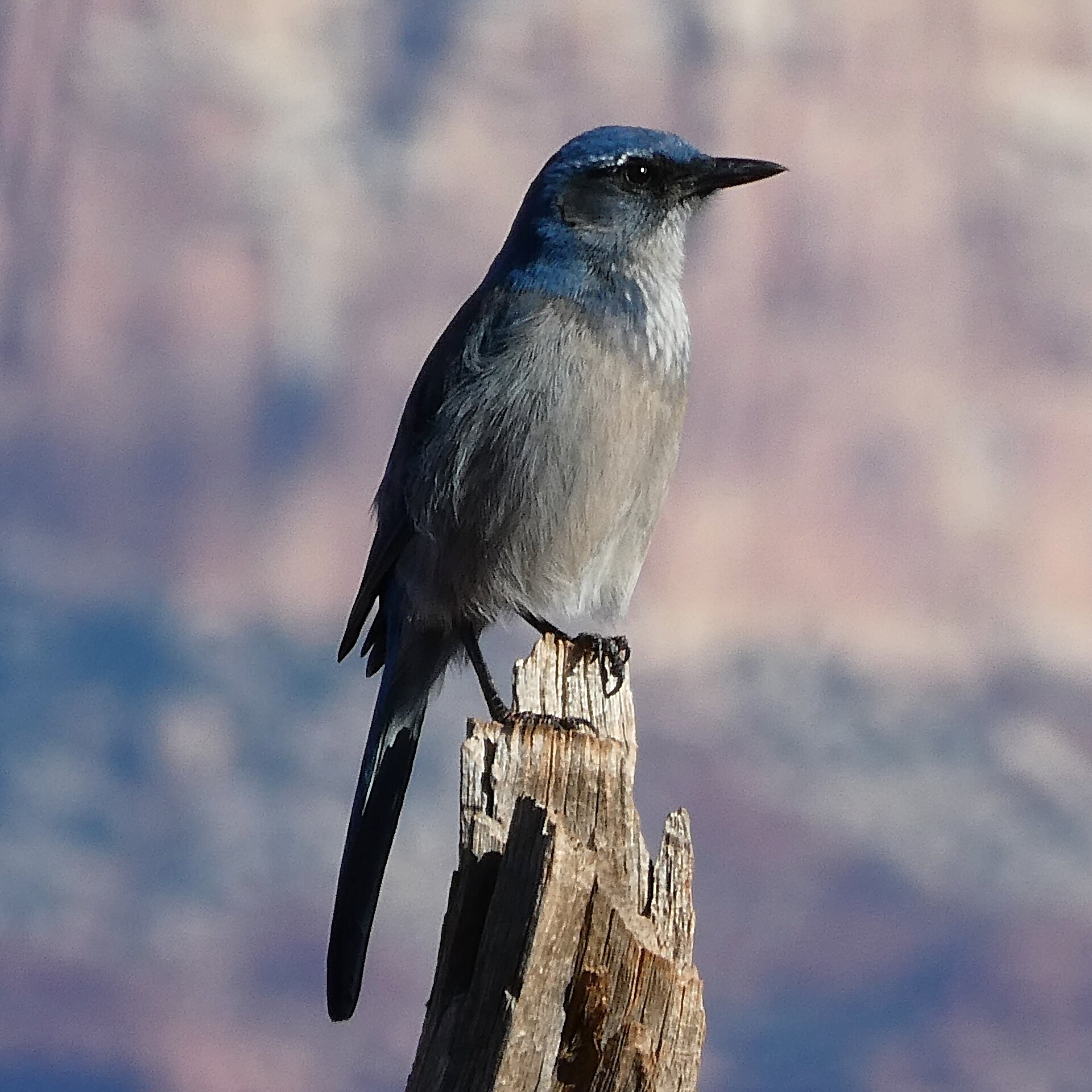
The Woodhouse’s Scrub-Jay (Aphelocoma woodhouseii) is the crestless blue jay of the interior West — dull azure head, wings, and long tail, a pale gray-white throat, and a smooth rounded crown. The signature bird of pinyon-juniper woodland and canyon country, it caches thousands of pinyon seeds and acorns each fall and remembers the hiding spots for months. To attract it: offer whole peanuts in the shell, black oil sunflower, and cracked corn on a sturdy platform feeder, and keep water out in this dry climate. Listen for the raspy, rising “shreep” call. It shares high-desert yards with the Juniper Titmouse and the Canyon Towhee.
Species Physical Profile & Morphometrics
The Woodhouse’s Scrub-Jay is a large songbird of the crow and jay family (Corvidae), named for Samuel Washington Woodhouse, the naturalist who collected it on the 1850s Sitgreaves expedition across the Southwest. Until 2016 it was lumped with the California Scrub-Jay as the “Western Scrub-Jay” — the two are now separate species, and this one owns the dry interior.
The identification formula: dull blue head, wings, and tail + pale gray-white throat with a faint breast band + gray back + NO crest. Compared with the California Scrub-Jay it is paler, grayer, and finer-billed — a washed-out version tailored to the high desert.
Essential Morphometric Field Marks:
- Body Length & Mass: about 11 to 11.8 inches (28–30 cm) and 2.5 to 3.5 ounces (70–100 grams) — the same frame as its coastal cousin, with a proportionally longer tail.
- Wingspan: about 15.3 inches (39 cm); flight is a low, quick dash between shrubs, tail fanning wide on landing.
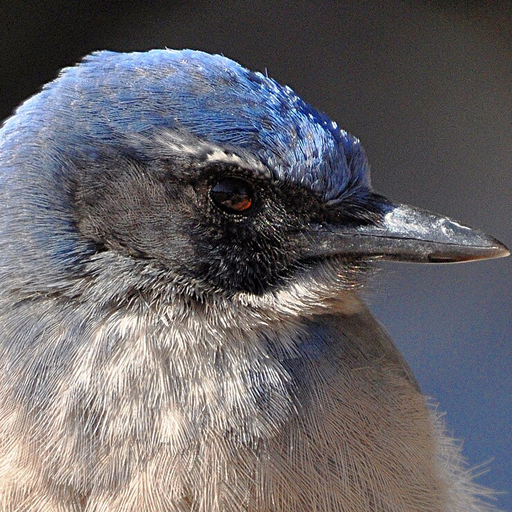
- Bill Structure & Color: A thin, pointed black bill — noticeably finer than the California Scrub-Jay’s, built for picking pinyon seeds from cones and probing leaf litter.
- Color Pattern: Dull blue head, wings, and tail; pale gray-white throat with an incomplete, faint blue breast band; dull gray back; whitish belly; a faint pale eyebrow over the dark eye. No crest anywhere on that smooth round crown.
- Male vs. Female: The sexes look identical — same dusty blue, same pale throat; males average slightly larger. Pairs hold territory together year-round, so the two birds on your fence are likely a mated pair.
Same uniform, sentinel duty: plumage identical to the female, averaging a touch larger. He posts up on the tallest juniper as lookout and delivers food to his incubating mate — the quiet, gurgling courtship notes are spring-only.
Same uniform, chief architect: identical plumage. She builds the twig cup low in a dense shrub or juniper and incubates, going uncharacteristically silent around the nest — a loud yard that goes quiet in April often means eggs.
Woodhouse’s Scrub-Jay Vocalization Guide (2 Synthesized Mnemonics)
The Woodhouse’s Scrub-Jay sounds much like its coastal cousin: a loud, raspy, rising “shreep” is the everyday call, and agitated birds fire a rapid, scolding “chek-chek-chek” series. An honest note on audio: because this species was split from the California Scrub-Jay only in 2016, no freely licensed field recording of it exists yet in the Wikimedia Commons archive — so instead of mislabeled audio, the two buttons below play clearly labeled synthesized approximations to help you memorize the patterns. For real field recordings, browse xeno-canto: Woodhouse’s Scrub-Jay.
1. The Raspy “Shreep” Call
2. The Scolding “Chek-Chek-Chek” Series
Habitat, Range & the Interior West
The Woodhouse’s Scrub-Jay belongs to the pinyon-juniper hills, canyon rims, and high-desert scrub of the interior West — the Great Basin and Colorado Plateau country where juniper dots the slopes and red rock catches the light. Towns, ranches, and campgrounds inside that belt count as home turf.

From the Great Basin to the Mexican Highlands
The range covers the interior West: eastern Oregon and southern Idaho through Nevada, Utah, western Colorado, Arizona, and New Mexico, spilling into west Texas and continuing south through Mexico’s interior highlands. West of the Sierra-Cascade crest, the species hands off to the California Scrub-Jay. Birds are strictly resident — the pair on your pinyon slope in July is the same pair at your feeder in January.
Backyards score best in pinyon-juniper and scrub-oak country, but any high-desert or foothill yard with shrub cover, a water source, and a peanut platform can hold a resident pair — including the edge-of-town neighborhoods of Santa Fe, Grand Junction, or St. George.
Backyard Behavioral Patterns & Social Dynamics
The Woodhouse’s Scrub-Jay is the wily quartermaster of pinyon country. Four behaviors explain most backyard encounters:
🌲 The Pinyon-Seed Banker
Each fall a single bird caches thousands of pinyon seeds and acorns, one per hiding spot, scattered across its territory — and remembers most of them for months. In poor cone years, feeders and cached surplus become survival rations.
🏕️ The Campground Regular
Across canyon country this is the bird that works the picnic tables: bold, quick, and unembarrassed around people. It learns handout routines in days — which is why campground signs warn against feeding it, and why your patio feeder never stays full.
🏜️ The Ground Forager
Unlike most jays, scrub-jays feed heavily on open ground, hopping between shrubs and flipping leaf litter for insects, seeds, and cached nuts. A platform feeder at knee height — or seed scattered on gravel — plays right into this habit.
🚨 The Canyon Sentinel
The highest juniper is the lookout post: scrub-jays spot hawks and cats early and erupt in raspy scolding that every bird and squirrel in the drainage obeys. A sudden “chek-chek-chek” storm means find the predator.
Problem: “Scrub-Jays Steal Camp Food and Empty the Feeder. Can I Fix That?”
The three most common Woodhouse’s Scrub-Jay complaints all have workable answers:
First, the campground and patio raiding: boldness is learned, and you control the lesson — keep food in closed containers, never leave plates unattended, and never hand-feed, because a rewarded jay becomes a lifelong thief (and some parks fine wildlife feeding). Second, the feeder that empties in a day: much of what a jay grabs is cached, not eaten. Ration it — a dozen peanuts each morning instead of a topped-up platform — and hang tube feeders with short perches nearby so smaller birds eat in peace. Third, buried treasure in the gravel: cached peanuts and seeds do sprout in landscaping rock. Consider it the species’ signature landscaping service — pull what you don’t want, and enjoy the rest.
Method 1: Set the Table — Peanuts, Corn & a Sturdy Platform
Design for a bold, ground-minded nut specialist:
-
Lead with Whole Peanuts in the Shell
The fastest scrub-jay draw there is — in-shell peanuts get hammered open on the platform or flown off to cache. In pinyon country the local pair will find them within days.
-
Use a Large, Rigid Platform
A scrub-jay won’t commit to swinging feeders. A firmly mounted tray or fly-through platform, set within a quick dash of juniper or shrub cover, is the landing pad this species trusts.
-
Add Sunflower and Cracked Corn
Black oil sunflower is the everyday staple, and cracked corn on a low tray or swept patch of ground matches the species’ ground-foraging habit — expect the Canyon Towhee to join in.
-
Offer Suet in Winter
A solidly mounted suet cage carries the pair through snow spells when cached food is buried, shared happily with the Ladder-backed Woodpecker of the same habitat.
Method 2: Build the Habitat — Pinyon, Cover & Water
In dry country, habitat beats hardware:
-
Keep (or Plant) Pinyon and Juniper
Pinyon-juniper is the species’ homeland — cone crops, nest sites, and lookout posts in one package. On a larger lot, a cluster of native pinyon and Utah juniper anchors a yard in scrub-jay territory for decades.
-
Add Scrub Oak and Berry Shrubs
Gambel oak and other scrub oaks supply the acorn crop that fuels fall caching; native currant and serviceberry add summer fruit. This shrub layer is also where the pair hides its nest.
-
Water Is the Desert Trump Card
In arid country a reliable shallow bird bath can outdraw any feeder — scrub-jays drink and bathe daily, and a dripper’s sound advertises the water across the block. Keep it filled in summer and ice-free in winter.
-
Leave a Quiet Corner in Spring
Pairs nest low in dense shrubs and go silent around the nest from April into June. Hold off on trimming the thickest corner of the yard and you may watch a family fledge from it.
Tool Solution: Recommended Hardware for Woodhouse’s Scrub-Jays
Equipment matched to a bold, ground-feeding desert corvid:
Large Platform / Tray Feeder
A big, rigid tray or fly-through platform — the only common feeder style a scrub-jay commits to with confidence, and the natural stage for peanuts, sunflower, and cracked corn.
- • Food: Whole peanuts, sunflower, cracked corn
- • Style: Large rigid tray, drain holes
- • Placement: Firm mount, a short dash from shrub cover
Wire Peanut Wreath / Suet Cage
A wire wreath of whole in-shell peanuts — or a heavy suet cage for winter — turns feeding into a show: the jay clings, hammers, and flies off to cache the prize in your landscaping.
- • Food: Whole peanuts in the shell; suet blocks
- • Style: Wire wreath or heavy-duty suet cage
- • Placement: A few yards from small-bird feeders
Bird Bath with Dripper / Heater
A shallow basin is the desert yard’s trump card — moving water advertises itself, a dripper draws jays in summer heat, and a thermostatic heater keeps the water open through high-desert freezes.
- • Depth: 1–2 in, gently sloped
- • Extras: Dripper in summer; heater in winter
- • Placement: Open sightlines beside dense cover
Frequently Asked Questions
- Species Profile: The Woodhouse’s Scrub-Jay (Aphelocoma woodhouseii) is an 11–11.8 inch, 70–100 gram corvid (Corvidae) of the interior West — dull pale-blue head, wings, and tail, gray-white throat, no crest, thin pointed bill, band code WOSJ.
- ID in One Look: A crestless dull-blue jay with a pale gray-white throat and thin bill in pinyon-juniper hills or canyon country is this species; the smooth crown separates it instantly from the crested Steller’s Jay.
- Strictly Resident: Pairs hold the same territory all year, year after year; only hard winters push some birds to lower elevations and valley feeders.
- The Sound: A loud, raspy, rising “shreep” and a scolding “chek-chek-chek” mobbing series — no melodious song at all.
- Feeder Formula: Whole peanuts in the shell, black oil sunflower, and cracked corn on a large rigid platform near shrub cover — plus a bird bath, the trump card of any arid-country yard.
- The Pinyon Banker: Each jay caches thousands of pinyon seeds and acorns every fall and remembers the hiding spots for months — the memory bank that carries it through a high-desert winter.
Bird Watching Log
Species: Woodhouse’s Scrub-Jay (Aphelocoma woodhouseii)
| Woodhouse’s Scrub-Jay (Peanut Taken: Yes / No — Caching Seen: Yes / No — Shreep Heard: Yes / No — Ground Foraging: Yes / No) | |