
Curve-billed Thrasher



Curve-billed Thrasher (Toxostoma curvirostre): Complete Identification, Desert Song & Backyard Handbook
Quick Answer: How to Attract & Identify Curve-billed Thrashers
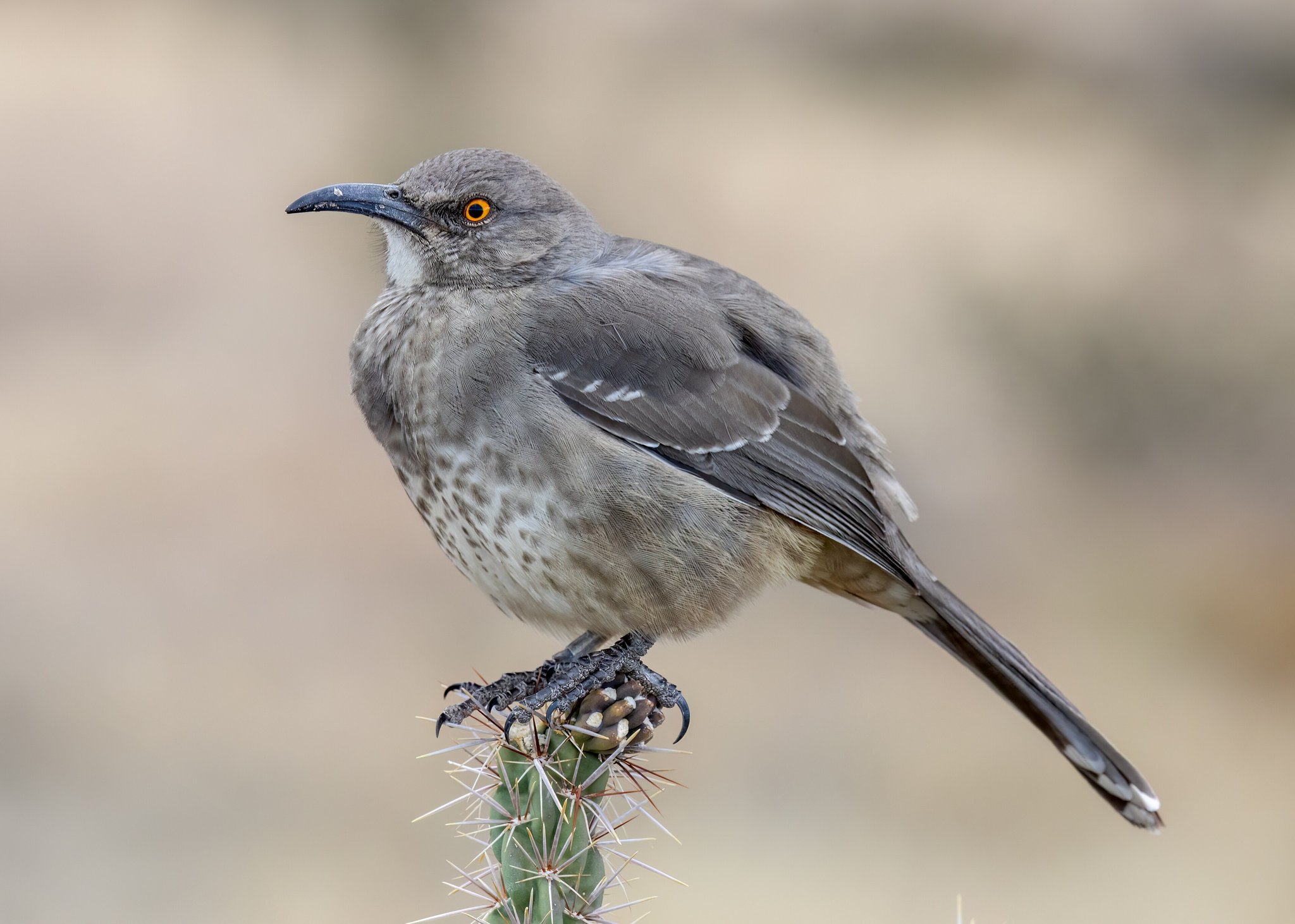
The Curve-billed Thrasher (Toxostoma curvirostre) is the default desert bird of the Southwest — a plain gray-brown, long-tailed mimic with a downcurved sickle bill, faint round breast spots, and a piercing orange eye, announcing itself with a loud whit-wheet! whistle. To attract a pair: scatter sunflower seeds on the ground or a low platform near thorny cover, offer suet or orange halves, and provide ground-level water — in desert country, water is the strongest magnet of all. It is the desert cousin of the Brown Thrasher and the Northern Mockingbird.
Species Physical Profile & Morphometrics
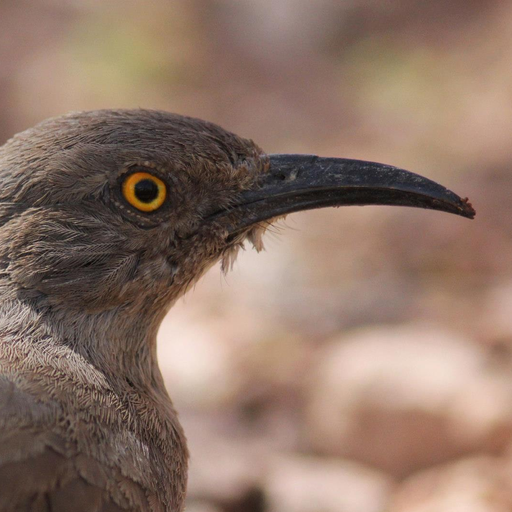
The Curve-billed Thrasher is a robin-sized member of the mimid family (Mimidae), lankier and longer-tailed than a robin, built on strong legs for life on the desert floor. The pattern: plain grayish-brown above, paler gray-buff below with faint round spots (not streaks) on the breast, a whitish throat, warm buffy undertail coverts, a long blackish bill curving visibly downward, and eyes that run from yellow in young birds to blazing orange in adults.
The identification formula: gray-brown + sickle bill + orange eye + desert scrub. The Brown Thrasher is bright rufous with bold streaks; Bendire’s Thrasher — the real look-alike — has a shorter, straighter bill and smaller, neater spots; the Sage Thrasher is smaller with a short straight bill and crisp streaking. West of the Continental Divide, a big plain gray-brown bird digging in the dirt with a curved bill is almost always this species.
Essential Morphometric Field Marks:
- Body Length & Mass: about 10.6 to 11 inches (27–28 cm) and 2.2 to 3.3 ounces (61–94 grams) — long-tailed and heavy-legged, with a hurried, jerky run on the ground.
- Wingspan: about 13.4 to 13.8 inches (34–35 cm); flight is low and brief, cover to cover, the long tail streaming behind.
- Bill Structure & Color: A long, blackish, distinctly downcurved bill — nearly as long as the head is wide — used as a pick and plow to dig soil and sweep aside litter. Juveniles have a shorter, straighter bill.
- Color Pattern: Plain gray-brown above, paler below with faint round spots (blurrier in the western palmeri group, crisper in eastern birds); whitish throat; buffy undertail coverts; yellow-to-orange eyes.
- The Signature Sound: A loud, brash whit-wheet! — a two-note whistle uncannily like a person hailing a cab — given from cactus tops and fence posts, often the last bird voice before desert dark.
- Male vs. Female: The sexes look identical — same plumage, same bill, same stare. Pairs stay together all year, so the two birds working your yard are very likely mates.
No migration, no seasonal disappearing act: Curve-billed Thrashers mate for life and hold the same 5-to-11-acre territory in every season. The male sings his melodious, varied warble — phrases two to fifteen seconds long, repeated two or three times — from the tallest cactus or juniper on the territory, at dawn and again at dusk.
Nine times out of ten, the nest is in a cholla cactus — a deep, bulky cup of twigs lined with grass, armored by thousands of spines. Both parents build it and both incubate the 2–4 pale blue-green eggs (finely speckled reddish-brown) for about 12–15 days. Two broods a season are normal, and a pair may stack a new nest right on top of an old one.
Curve-billed Thrasher Vocalization Guide (3 Sounds)
The voice of this species is famous: the brash whit-wheet! contact whistle, the melodious dawn warble, and the soft countersung whisper song between mates. A note on sources: every freely licensed field recording we could locate for this species carries a non-commercial license, so rather than hotlink them, the three buttons below play clearly labeled synthesized interpretations of each vocalization type. For real field recordings, browse xeno-canto: Curve-billed Thrasher — over 800 recordings strong.
1. The “Whit-Wheet” Contact Whistle
2. The Dawn Warble
3. The Whisper Song
Habitat, Range & the Human Landscape
The Curve-billed Thrasher is the signature songbird of the Sonoran and Chihuahuan deserts: cholla and prickly pear flats, mesquite bosques, ocotillo and creosote scrub, desert washes, and — increasingly — suburban yards, parks, and ranchland from Arizona and New Mexico through west and south Texas, western Oklahoma, and southeastern Colorado, south deep into Mexico. Of all the southwestern thrashers, it is the most comfortable around people.

The Resident That Never Leaves
No migration, ever: a pair that claims your corner of the desert holds it in January and July alike, roosting together in dense shrubs and often reusing old nests as shelter. That permanence is the backyard birder’s advantage — every improvement you make (water, cover, ground feeding) pays off all twelve months.
Yards score best with one thorny anchor plant (cholla, mesquite, or dense native shrub), open bare or gravelly ground for digging, and reliable water. In Tucson and Phoenix suburbs, thrashers are often the first birds singing in the morning.
Backyard Behavioral Patterns & Social Dynamics
The Curve-billed Thrasher is the boldest thrasher in the West around people — shy in open desert, but surprisingly tame in suburbs where food and water appear. Four behaviors explain most backyard encounters:
⛏️ The Soil Digger
Like its eastern cousin the Brown Thrasher, this bird feeds by sweeping and digging with its curved bill — but in desert fashion: poking and probing bare soil, flipping gravel and litter, sometimes bracing its tail against the ground for leverage. Fresh little dig-holes under your shrubs are thrasher signatures.
📣 The Whit-Wheet Sentinel
Both sexes give the loud whit-wheet! whistle from exposed perches — first from a cactus top at dawn, and reliably as the last bird voice before dark. Once you know it, you will hear it on every desert evening walk; mockingbirds and starlings sometimes copy it.
🌵 The Cholla Homesteader
Roughly 90% of nests are built in cholla cactus — chain-fruit and teddy-bear cholla preferred — where the spines do the guarding. Pairs mate for life, hold the same territory year-round, and may stack a new nest directly atop last season’s. A yard with an old cholla nest usually still has its owners nearby.
💪 The Feeder Boss
At suburban feeding stations the thrasher throws its weight around, displacing smaller birds from seed piles and suet. It is also an enthusiastic bather — in arid country a shallow water dish or dripper draws daily visits, and the vigorous splashing is half the show.
Problem: “I Hear That Whit-Wheet Whistle Every Evening, but the Bird Vanishes into the Brush — and It Never Comes to My Hanging Feeders. Why?”
Two separate frustrations, one shared explanation — you are hosting a ground bird in an elevated world:
First, the vanishing act: away from reliable food and water, thrashers move in hurried, jerky runs from cover to cover, freezing inside shrubs at any disturbance. The fix is to watch from a window at dawn and dusk, when the birds perch exposed to call and sing. Second, feeder rejection: hanging tube feeders are useless here. Put sunflower seeds, suet crumbles, or orange halves on the ground or a low platform beside thorny cover, and add the real desert magnet — water at ground level. Once a resident pair folds your yard into its year-round territory, visits become daily and bold; the same birds will greet you every month of the year.
Method 1: Feed on the Ground, Desert Style
Design for a big, bold ground forager that ignores hanging hardware:
-
Scatter Sunflower Seeds Low
Black-oil sunflower seeds scattered on bare ground or served on a low platform are the everyday staple this species takes most reliably at feeders. It cracks them with the same bill it uses to dig — no climbing required.
-
Add Suet and Orange Halves
Suet crumbles and fresh orange halves are proven thrasher bait in the Southwest — the fruit echoes the cactus fruit and berries in its wild diet. Set them low, on a ground tray or a platform a few inches up.
-
Anchor the Buffet to Cover
Place food within a few feet of dense shrubs, cactus, or a brush pile so the bird can dash back into cover between bites. Food in the middle of an open patio may be ignored for days, no matter how good it is.
-
Expect a Boss, Plan Portions
Thrashers dominate smaller birds at shared food. If you also feed finches and doves, spread offerings across two or three spots so one territorial thrasher cannot guard the whole yard’s buffet.
Method 2: Thorny Cover, Digging Ground & Water
Habitat is the permanent attractant — and water is the desert trump card:
-
Plant (or Keep) One Thorny Anchor
A cholla, mesquite, or dense native shrub is perch, pantry, and potential nest site in one. Cholla is the classic — most nests go into it — but any thorny tangle three feet and up qualifies. Desert landscaping done natively is thrasher habitat by default.
-
Leave Diggable Ground
This bird earns its living digging in soil and flipping litter. Bare earth, decomposed granite, and unraked leaf litter under shrubs all work; a yard that is entirely lawn or concrete offers nothing to probe.
-
Make Water the Centerpiece
In arid country, a shallow ground-level bath or slow dripper is the single strongest thrasher magnet. They drink and bathe vigorously, even at midday heat when other birds sit still. Keep it filled and shallow — an inch or two at the edge.
-
Skip the Insecticides
Beetles, ants, grasshoppers, spiders, and snails dug from your soil are the core of its diet. Spraying the yard removes the thrasher’s groceries — tolerate the bugs, and let the bird do the pest control for free.
Tool Solution: Recommended Hardware for Curve-billed Thrashers
Equipment matched to a big desert ground feeder with a lifelong territory:
Ground Platform / Tray Feeder
A low open tray on the ground or inches above it, set beside thorny cover — the natural serving table for a bird that feeds with its feet in the dirt and will not use hanging feeders.
- • Food: Black-oil sunflower, suet crumbles, orange halves
- • Style: Ground-level open platform
- • Placement: Within 2–3 ft of thorny cover
Low-Mounted Suet Cage
A suet cage mounted low near cover adds winter protein to the menu — thrashers take suet readily in the Southwest, and a second feeding point keeps one bossy bird from monopolizing the yard.
- • Food: Suet cakes and crumbles
- • Mount: Low, adjacent to shrubs
- • Tip: Second station reduces bullying
Ground-Level Bath with Dripper
A shallow bath right on the ground — ideally with a dripper or bubbler — outpulls any feeder in arid country. Thrashers drink and bathe daily, and moving water advertises itself to every bird within earshot.
- • Depth: 1–2 in at the edge
- • Extras: Dripper or small fountain
- • Placement: Open ground near cover
Frequently Asked Questions
- Species Profile: The Curve-billed Thrasher (Toxostoma curvirostre) is a 10.6–11 inch, 61–94 gram desert mimic (Mimidae) of the Southwest — plain gray-brown, faint round breast spots, band code CBTH.
- ID in One Look: Gray-brown + sickle-curved bill + orange eye + desert scrub; faint spots, not streaks, separate it from the rufous Brown Thrasher, and the longer, more curved bill separates it from Bendire’s.
- The Sound: A brash whit-wheet! double whistle like someone hailing a cab — often the last bird voice before desert dark — plus a melodious, varied warble at dawn; three clearly labeled synthesized interpretations above.
- Never Leaves: Non-migratory and mated for life — a pair holds the same 5-to-11-acre territory all year, nests in cholla cactus nine times out of ten, and raises two broods most seasons.
- Feeder Formula: Ground-scattered sunflower seeds, suet, and orange halves beside thorny cover — hanging feeders are wasted on this species, and expect it to boss smaller birds.
- The Trump Card: In arid country, water beats food — a shallow ground-level bath or dripper is the fastest way to make your yard part of a thrasher’s permanent territory.
Bird Watching Log
Species: Curve-billed Thrasher (Toxostoma curvirostre)
| Curve-billed Thrasher (Single / Pair: ___ — Whit-Wheet Heard: Yes / No — Ground Digging Seen: Yes / No — Water Visited: Yes / No) | |