
Fish Crow


Fish Crow (Corvus ossifragus): Complete Identification, Habitat Guide & Sound Library
Quick Answer: How to Attract & Identify the Fish Crow
The Fish Crow (Corvus ossifragus) is the smaller, nasal-voiced crow of the Atlantic and Gulf coasts — all black and glossy, nearly identical to the American Crow until it speaks: a short, nasal uh-uh or nyah. It forages along beaches, marshes, and rivers and follows waterways far inland. It eats anything — crabs, carrion, eggs, grain, and garbage. At yards it visits platform feeders and open water, warily. They share the waterfront with the American Crow and the Common Raven.
Species Physical Profile & Morphometrics
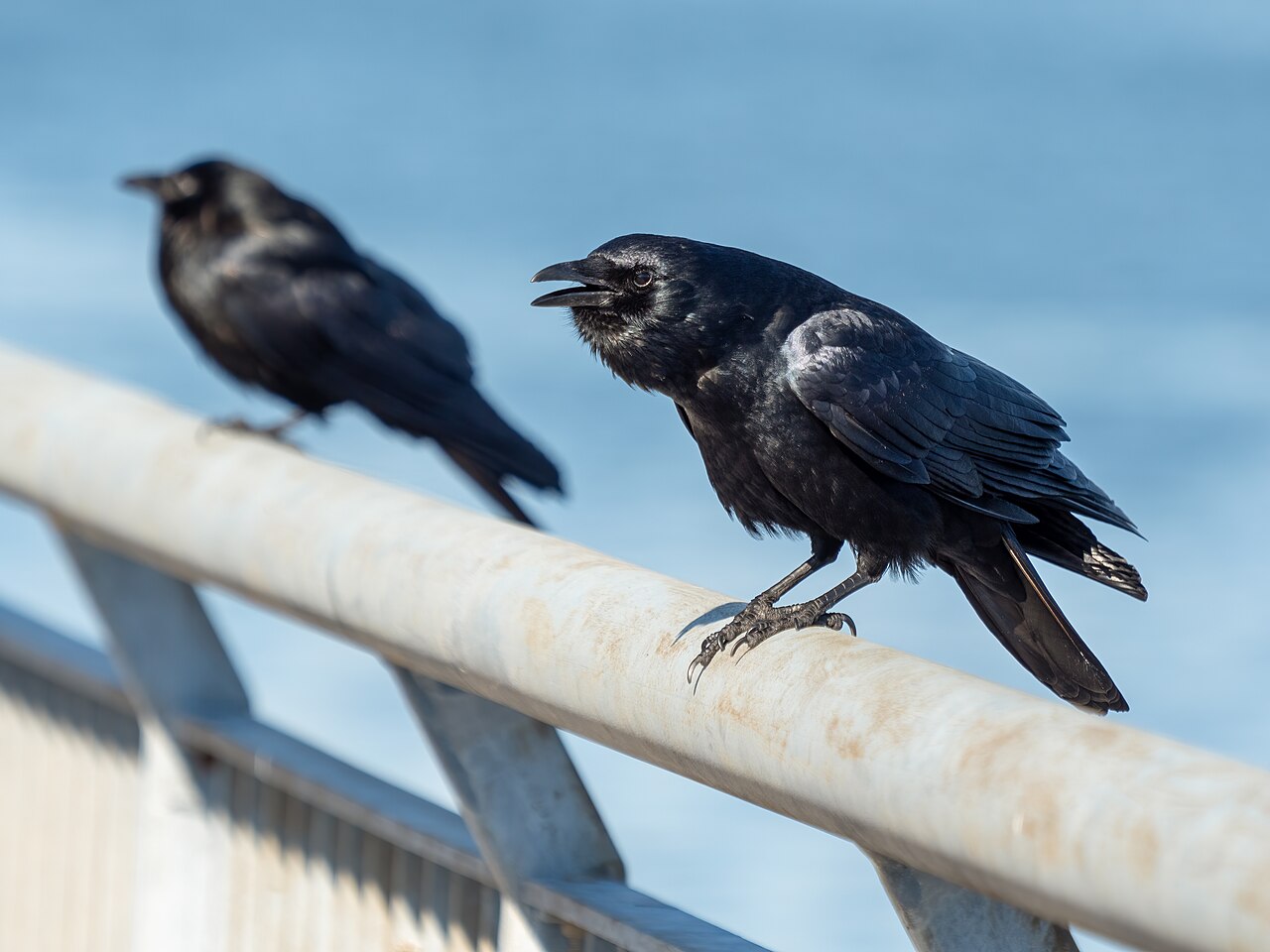
The Fish Crow belongs to the crow family (Corvidae) and is the smaller crow of eastern coasts and rivers — identified almost entirely by voice, because the plumage mirrors the American Crow.
The identification formula: voice — a nasal uh-uh or nyah. Visually it is subtly smaller with a slighter bill, but even experts separate the two crows by sound: the American Crow’s caw is open-throated; the Fish Crow’s is pinched and nasal.
Essential Morphometric Field Marks:
- Body Length & Mass: 14.2 to 15.8 inches (36–40 cm) and 6.9 to 10.9 ounces (195–310 grams) — about two-thirds the bulk of an American Crow.
- Wingspan: 33 inches (84 cm); flight is steady and direct, often in loose flocks along the waterfront.
- Bill Structure & Color: An all-black, slightly slim crow bill — the same all-purpose hardware, scaled down.
- Color Pattern: All glossy black — identification is by voice and subtle structure, not color.
- Male vs. Female: The sexes look alike — pairs stay together year-round, and family groups forage in company.
The nasal lookout: perched over the riverbank, delivering his pinched uh-uh like a skeptical answer to every question.
Identical in plumage — she incubates the stick nest high in a waterside tree while he delivers crabs and carrion.
Fish Crow Vocalization Guide (0 Field Recordings)
The Fish Crow’s voice is the identification: a short, nasal uh-uh or nyah. All recordings below are real field audio via Wikimedia Commons — no simulations. For a deeper library, browse xeno-canto: Fish Crow.
1. The Uh-Uh
2. The Nyah
3. The Flock Chorus
Habitat, Range & the Waterfront
The Fish Crow lives near water: Atlantic and Gulf coasts, tidal marshes, beaches, and the big river systems it follows far inland — towns, dumps, and waterfronts included.

The Crow of the Tidewater
Range hugs the Atlantic and Gulf coasts and the eastern river corridors — Hudson, Delaware, Potomac, Mississippi — expanding slowly inland along the water.
For backyard birders: coastal and riverside yards see Fish Crows at platform feeders, compost, and water — wary, smart, and gone at the first hint of trouble.
Backyard Behavioral Patterns & Social Dynamics
The Fish Crow is a social waterfront scavenger with a memorable voice. Four behaviors explain most of what you will observe:
🗣️ The Nasal Answer
The uh-uh call is the field mark — pinched and nasal, like a crow with a cold; voice before plumage, always.
🦀 The Tidewater Table
It forages the waterline for crabs, carrion, and eggs — a shorebird’s menu on crow intelligence.
👪 The Family Flock
It travels in family groups and flocks — young birds stay with parents, learning the territory for years.
🧠 The Long Memory
It remembers people, routes, and feeders — a crow that was fed once checks the spot for seasons.
Problem: “How Do I Tell Fish Crow from American Crow? What Should I Do?”
The three most common Fish Crow puzzles all have proven answers:
First, the voice test: listen — nasal uh-uh means Fish Crow; open-throated caw means American. Visual separation is so unreliable that even experts default to sound. Second, the feeder raids: crows empty platforms and scatter seed — feed them deliberately on a separate ground platform or exclude them with weight-sensitive feeders; halfway measures feed them anyway. Third, the nest-raiding worry: crows do take eggs, but the evidence says open nests fail for many reasons — do not harass a protected native; instead support dense cover where songbirds nest best.
Method 1: Set the Table — Deliberate or Excluded, Never Halfway
Decide your crow policy and execute it:
-
Feed Deliberately on the Ground
A separate ground platform with corn or peanuts — crows fed on their own station leave the songbird feeders alone.
-
Or Exclude with Weight Feeders
Weight-sensitive feeders — crow bulk closes the port; songbirds feed on.
-
Secure All Trash
Latched bins — open garbage trains a crow flock to your address.
-
Never Hand-Feed
Habituated crows become bold beggars — admire intelligence at a distance.
Method 2: Understand the Bird — Voice, Water & Family
Learn the crow you actually have:
-
Learn the Uh-Uh
Voice ID beats plumage ID — one nasal note settles the species.
-
Watch the Family Groups
Young stay with parents for seasons — the flock at the riverbank is a family business.
-
Expect the River Corridor
Big rivers carry them inland — river towns host Fish Crows miles from salt water.
-
Keep Water Open
A ground bath or pond edge — crows drink and bathe daily, warily but reliably.
Tool Solution: Recommended Hardware for Fish Crow
Equipment matched to life with a waterfront crow:
Ground Platform with Corn
A separate ground platform with corn or peanuts — crow diplomacy: their table, their rules, your feeders in peace.
- • Feed: Corn, peanuts
- • Placement: Open ground
- • Bonus: Doves & squirrels too
Weight-Sensitive Feeder
Perch-closing feeders — the crow’s weight locks the port; the chickadees dine on.
- • Feature: Adjustable weight
- • Effect: Crow-resistant
- • Bonus: Grackle control too
Ground Bath or Pond Edge
Open water at ground level — the daily crow errand, visible from the window.
- • Depth: 2–3 inches
- • Placement: Open sightlines
- • Bonus: All backyard birds
Frequently Asked Questions
- Species Profile: The Fish Crow (Corvus ossifragus) is a 14.2–15.8 inch, 6.9–10.9 ounce corvid (Corvidae), band code FICR — the nasal crow of the coast.
- ID in One Look: Do not trust looks — the nasal uh-uh is the field mark.
- The Sound: Pinched nasal calls versus the American Crow’s open caw; real recordings above.
- Range & Habit: Atlantic and Gulf coasts plus river corridors; family flocks year-round.
- Feeder Formula: Deliberate ground station or weight feeders — never halfway.
- The Memory Rule: Fed once, remembered for seasons — crow policy is a long-term decision.
Bird Watching Log
Species: Fish Crow (Corvus ossifragus)
| Fish Crow (Nasal Uh-Uh Heard: Yes / No — Size Noted: Smaller / Same — Waterfront Nearby: Yes / No — Flock Size: ___ — Date & Time: ___) | |