
Golden-fronted Woodpecker



Golden-fronted Woodpecker (Melanerpes aurifrons): Complete Identification, Habitat Guide & Sound Library
Quick Answer: How to Attract & Identify the Golden-fronted Woodpecker
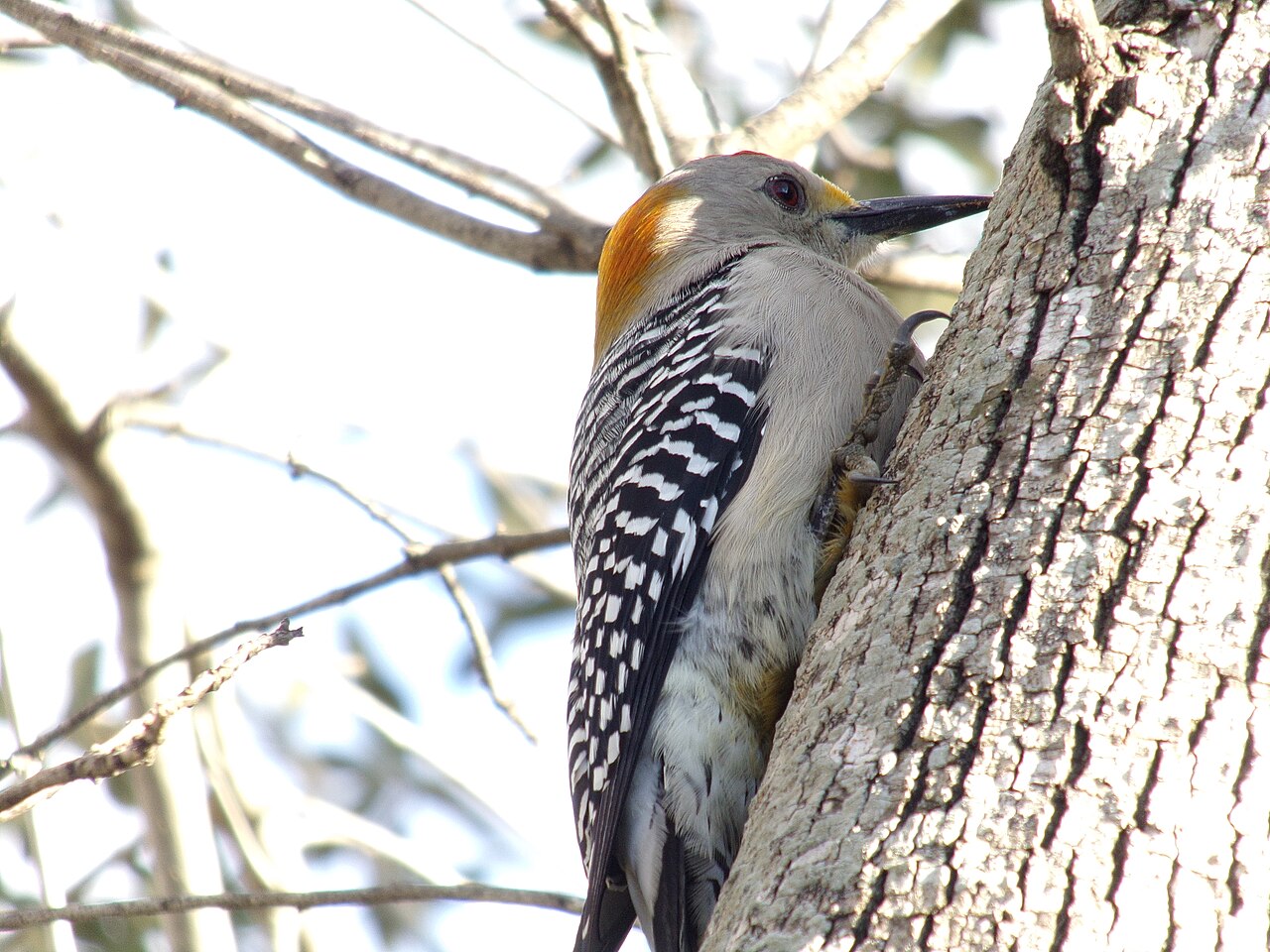
The Golden-fronted Woodpecker (Melanerpes aurifrons) is the everyday woodpecker of Texas backyards — a zebra-barred woodpecker with a golden-yellow nape, yellow at the base of the bill, a white rump, and a red crown on the male. It is bold, noisy, and feeder-loyal, thriving from mesquite brush to suburban pecan trees. The voice is a harsh rolling churr plus loud drumming. Texas yards attract them with suet, peanuts, sunflower, and cracked corn. They share the yard with the Red-bellied Woodpecker and the Ladder-backed Woodpecker.
Species Physical Profile & Morphometrics
The Golden-fronted Woodpecker belongs to the woodpecker family (Picidae) and is a close relative of the Red-bellied Woodpecker — the two replace each other geographically, with the Golden-fronted ruling Texas and the southern plains south into Mexico.
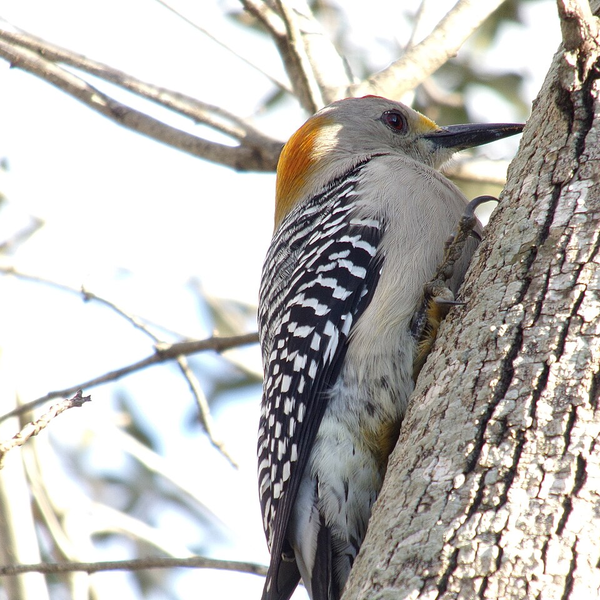
The identification formula: zebra-barred back + golden nape + white rump. The Red-bellied Woodpecker shows red from nape over the crown (male) and has a barred — not white — rump zone; the Golden-fronted’s golden-yellow nape and white rump settle it in Texas. Males add a red crown patch; females keep the head gray-and-gold.
Essential Morphometric Field Marks:
- Body Length & Mass: 8.7 to 10.2 inches (22–26 cm) and 2.6 to 3.5 ounces (73–99 grams) — robin-sized, sturdy, and big-headed.
- Wingspan: 16.5 to 17.3 inches (42–44 cm); flight is undulating — a few quick wingbeats, then a glide with wings tucked.
- Bill Structure & Color: A stout, gray, chisel-tipped bill — as happy cracking pecans as hammering bark; note the yellow wash at the bill’s base, the golden front itself.
- Color Pattern: Gray face and underparts, barred black-and-white back and wings, golden-yellow nape, white rump, black tail; males wear a red crown patch.
- Male vs. Female: The male adds a red cap to the golden nape; the female’s crown stays gray — both are equally bold at feeders.
The red-and-gold foreman: red crown, golden nape, and zebra back, hammering a pecan against a branch like a man with a hammer and a stubborn nail.
The gray-crowned partner — golden nape without the red cap — she excavates her share of the nest cavity in a dead mesquite or utility pole and guards it fiercely from starlings.
Golden-fronted Woodpecker Vocalization Guide (2 Field Recordings)
The Golden-fronted Woodpecker’s voice is a harsh, rolling churr — a loud wooden rattle given from posts and tree tops — plus emphatic spring drumming. All recordings below are real field audio via Wikimedia Commons — no simulations. For a deeper library, browse xeno-canto: Golden-fronted Woodpecker.
1. The Harsh Churr
2. The Call Exchange
3. Spring Drumming
Habitat, Range & the Texas Woodland
The Golden-fronted Woodpecker lives in open woodland and brush country: mesquite flats, pecan and oak groves, riverside forest, parks, and suburban yards across Texas and southern Oklahoma, then deep into Mexico. It is one of the most yard-adapted woodpeckers in America.

The Lone Star Woodpecker
The U.S. range is essentially Texas plus a wedge of southern Oklahoma, extending south through Mexico to Central America. It does not migrate — a Texas yard’s pair is resident every month of the year.
For backyard birders: virtually any Texas yard with mature trees can host a pair — suet and peanuts make you a daily stop, and a dead limb or wooden pole may earn you a nesting cavity.
Backyard Behavioral Patterns & Social Dynamics
The Golden-fronted Woodpecker is a bold, vocal, omnivorous yard bird — one of the easiest woodpeckers in America to know well. Four behaviors explain most of what you will observe:
🔨 The Hoarder
Like its Melanerpes relatives, it wedges nuts and corn into bark crevices for storage — check fence posts and utility poles for tucked-away pecans and kernels.
🍰 The Feeder Boss
It dominates suet and peanut feeders, seeing off birds half again its size with a spread-winged threat display — give it its own feeder corner and peace prevails.
🥜 The Omnivore
Insects, pecans, acorns, corn, fruit, and even hummingbird feeder sugar water — the Golden-fronted eats nearly everything a yard can offer.
🏠 The Cavity Architect
Pairs excavate fresh nest cavities each spring in dead limbs and poles — last year’s hole goes to owls, flycatchers, and bees, a one-bird housing program.
Problem: “A Golden-fronted Woodpecker Is Drumming on My Gutter Every Morning. What Should I Do?”
The three most common Golden-fronted Woodpecker puzzles all have proven answers:
First, the dawn drummer: drumming on metal is advertising, not feeding — the bird has found the loudest amplifier in the neighborhood. Hang mylar tape or windsocks at the drumming spot for a week or two and offer a suet feeder nearby; most birds move on once the display season passes in early summer. Second, the feeder bully: Golden-fronteds dominate shared feeders — spread offerings across two or three stations so smaller birds feed in peace. Third, the red-bellied confusion: in eastern Texas the two barred-back species overlap — check the nape; golden-yellow says Golden-fronted, red says Red-bellied.
Method 1: Set the Table — Suet, Peanuts & Corn
Design for a bold omnivorous woodpecker:
-
Hang Suet at Trunk Height
A wire suet cage on a trunk or post — the everyday staple this species checks first each morning.
-
Offer Peanuts & Corn
Chopped peanuts in mesh, cracked corn on a tray — both are Golden-fronted favorites, and corn kernels get hoarded in bark crevices.
-
Try Sunflower in a Hopper
Black-oil sunflower in a sturdy hopper — they cling and hammer seeds open against the perch.
-
Provide a Birdbath
A shallow bath near trees — woodpeckers drink daily, and Texas heat makes water a year-round draw.
Method 2: Build the Habitat — Mature Trees & Deadwood
Keep the trees standing, and the pair stays for years:
-
Preserve Mature Pecans & Oaks
Veteran pecan, oak, and mesquite anchor territories — the bigger the tree, the better the foraging board.
-
Leave Safe Dead Limbs
Dead limbs and snags are nest sites and larders — remove only genuine hazards.
-
Tolerate the Drumming Season
February–May drumming is territorial song, not damage — brief, seasonal, and a sign your yard is prime habitat.
-
Keep Starling Numbers Down
Close off starling nest sites in eaves and vents — fewer starlings means more woodpecker cavities succeed.
Tool Solution: Recommended Hardware for Golden-fronted Woodpecker
Equipment matched to a bold Texas woodpecker:
Suet Cage Feeder
A wire suet cage at trunk height — the first stop of every Golden-fronted’s morning rounds.
- • Food: Suet cakes
- • Placement: Trunk or post
- • Bonus: Ladder-backeds & orange-crowned warblers too
Mesh Peanut Feeder
Chopped peanuts in a wire-mesh tube — hammered, cached, and revisited all day.
- • Food: Chopped peanuts
- • Style: Wire mesh
- • Behavior: Watch for caching
Shallow Birdbath
A shallow bath kept full through the brutal Texas summer — water outdraws seed from May to September.
- • Depth: One to two inches
- • Placement: Near trees
- • Season: Year-round
Frequently Asked Questions
- Species Profile: The Golden-fronted Woodpecker (Melanerpes aurifrons) is an 8.7–10.2 inch, 2.6–3.5 ounce woodpecker (Picidae), band code GFWO — the zebra-backed foreman of Texas yards.
- ID in One Look: Barred back, gray face, golden nape, white rump; red crown on the male.
- The Sound: A harsh rolling churr and emphatic spring drumming; real field recordings above.
- Range & Habit: Permanent Texas resident; bold feeder bird; hoards nuts in bark and fence posts.
- Feeder Formula: Suet cage, mesh peanuts, cracked corn, sunflower hopper, and a full birdbath.
- The Yard Foreman: Give it a feeder corner of its own and it will patrol your trees for pests all year.
Bird Watching Log
Species: Golden-fronted Woodpecker (Melanerpes aurifrons)
| Golden-fronted Woodpecker (Male Red Crown / Female Gray — Drumming: Yes / No — At Suet: Yes / No — Caching Seen: Yes / No — Date & Time: ___) | |