
Pine Warbler


Pine Warbler (Setophaga pinus): Complete Identification, Habitat Guide & Sound Library
Quick Answer: How to Attract & Identify the Pine Warbler
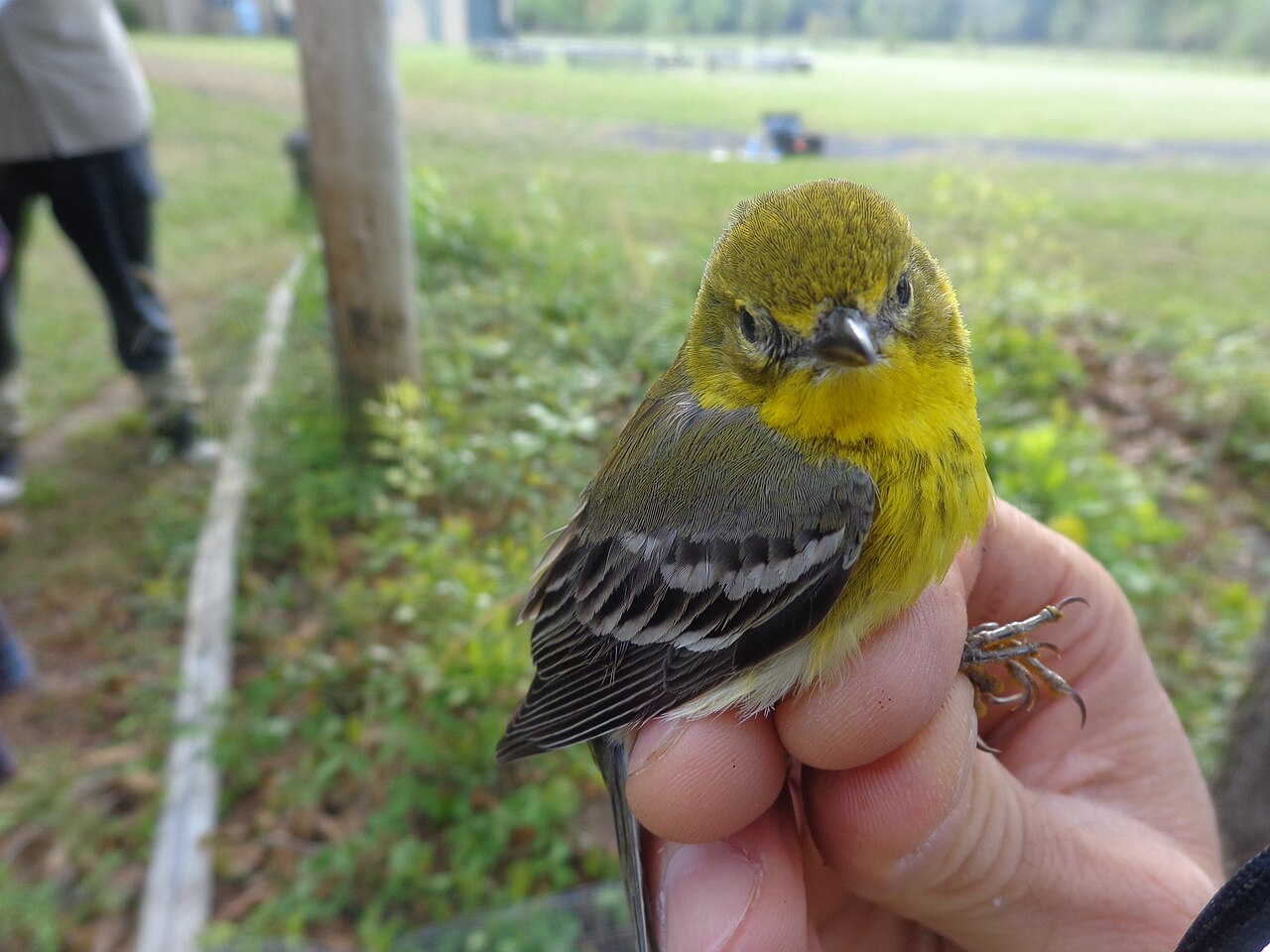
The Pine Warbler (Setophaga pinus) is the warbler that visits feeders — yellow throat and breast, olive back, white wing bars, broken eye ring, and blurry breast streaks. It lives in pine forest and is the rare warbler that eats suet, sunflower chips, and mealworms — a winter staple at southeastern feeders. The song is a musical, lazy trill from the pine canopy. Yards attract them with suet cages and sunflower chips. They share the pines with the Carolina Chickadee and the Brown-headed Nuthatch.
Species Physical Profile & Morphometrics
The Pine Warbler belongs to the warbler family (Parulidae) and lives year-round in southeastern pine forest — the most feeder-friendly warbler on the continent.
The identification formula: yellow breast + olive back + white wing bars + broken eye ring + pines. The Yellow-rumped Warbler shows a yellow rump and side patches; the Prairie Warbler is brighter with bold facial stripes and tail-wagging. At a suet cage in the Southeast, a warbler is almost always a Pine.
Essential Morphometric Field Marks:
- Body Length & Mass: 4.7 to 5.5 inches (12–14 cm) and 0.3 to 0.5 ounces (9–15 grams) — a sturdy, big-billed warbler.
- Wingspan: 7.5 to 9.1 inches (19–23 cm); movement is deliberate hops along pine branches, needle by needle.
- Bill Structure & Color: A thin, straight dark warbler bill, stouter than most — equal parts insect probe and suet chisel.
- Color Pattern: Yellow throat and breast with blurry streaks, olive back, white wing bars and belly, broken eye ring; females and young are drabber.
- Male vs. Female: He is the brighter yellow; she is olive-drab with a hint of the pattern — both visit the suet cage.
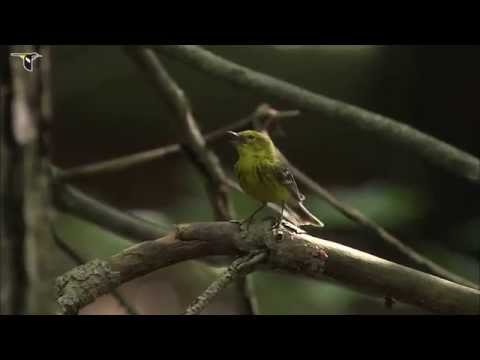
The canopy triller: high in the pines, rolling out his lazy musical trill on the first warm days of February.
Drabber olive-yellow — she builds the nest on a horizontal pine branch, hidden among the needles, and winters at the same suet cage as he.
Pine Warbler Vocalization Guide (1 Field Recording)
The Pine Warbler’s song is a musical, lazy trill — a smooth roll from the pine canopy. All recordings below are real field audio via Wikimedia Commons — no simulations. For a deeper library, browse xeno-canto: Pine Warbler.
1. The Lazy Trill
2. The Chip Call
3. The Winter Trill
Habitat, Range & the Pine Belt
The Pine Warbler lives in pine forest — loblolly, longleaf, and pitch pine across the Southeast and up the Atlantic — resident in the South, summering north to the Great Lakes and New England’s pitch pines.

The Warbler of the Pine Canopy
Range tracks the eastern pine belt — southeastern birds are resident year-round; northern birds migrate in from the Great Lakes and Northeast each spring.
For backyard birders: southeastern yards with pines and a suet feeder host Pine Warblers all winter — the one warbler a feeder can reliably deliver.
Backyard Behavioral Patterns & Social Dynamics
The Pine Warbler is a canopy gleaner with a feeder habit. Four behaviors explain most of what you will observe:
🌲 The Needle Gleaner
It forages by hopping along pine branches, picking insects and pine seeds from the needles and cones.
🧈 The Suet Warbler
It is the only warbler that routinely eats suet — plus sunflower chips and mealworms — all winter in the Southeast.
🎶 The Early Singer
It sings from February onward in the South — the first trill of the year, weeks before spring.
❄️ The Winter Resident
Southeastern birds stay all winter — the yard’s warbler when every other has flown to the tropics.
Problem: “Why Is a Warbler at My Feeder? What Should I Do?”
The three most common Pine Warbler puzzles all have proven answers:
First, the feeder surprise: a warbler on suet is normal Pine Warbler behavior — serve suet, sunflower chips, and mealworms and enjoy the only feeder warbler in the East. Second, the identity check: compare rump and face — Pine has a plain rump and broken eye ring; Yellow-rumped shows the yellow rump patch; Prairie wags its tail and shows bold facial stripes. Third, the summer disappearance: breeding birds leave the feeder for the canopy — the May quiet is nesting season, not loss; the trill overhead proves the pair is home.
Method 1: Set the Table — Suet, Chips & Mealworms
Design for the only feeder warbler:
-
Hang Suet Cages
Plain or insect suet — the winter staple a Pine Warbler visits daily.
-
Offer Sunflower Chips
Hulled sunflower on a platform — taken readily when the suet runs low.
-
Serve Mealworms
Live or dried mealworms in a dish — the protein treat this warbler cannot resist.
-
Keep a Shallow Bath
Open water near the feeders — warblers drink and bathe daily, even in winter.
Method 2: Build the Habitat — Pines for Summer, Feeders for Winter
Keep the pines standing and the suet stocked, and the pair stays all year:
-
Keep Mature Pines
Loblolly, longleaf, or pitch pine — the canopy is the summer territory.
-
Expect the February Song
Southern males sing from mid-winter — the year’s first trill comes from the pines.
-
Leave Pine Cones & Needles
Untouched canopy feeds the gleaners — sprayed pines hold no warblers.
-
Watch the Winter Cage
Suet traffic peaks on cold mornings — the bird warms its day on fat.
Tool Solution: Recommended Hardware for Pine Warbler
Equipment matched to a feeder-friendly warbler:
Suet Cage Feeder
Plain or insect suet in a cage — the winter anchor of a Pine Warbler’s yard territory.
- • Feed: Suet cakes
- • Style: Wire cage
- • Bonus: Woodpeckers & chickadees
Mealworm Dish
Live or dried mealworms in a shallow dish — the treat that turns a visitor into a regular.
- • Feed: Mealworms
- • Style: Dish feeder
- • Bonus: Bluebirds & wrens too
Shallow Heated Bath
Open water in winter — the daily drink and bath of the Southeast’s only winter warbler.
- • Feature: Heated or refreshed
- • Depth: 1–2 inches
- • Bonus: All winter birds
Frequently Asked Questions
- Species Profile: The Pine Warbler (Setophaga pinus) is a 4.7–5.5 inch, 0.3–0.5 ounce warbler (Parulidae), band code PIWA — the feeder warbler.
- ID in One Look: Yellow breast, olive back, broken eye ring, in the pines.
- The Sound: A lazy musical trill from the canopy, starting in February; real recordings above.
- Range & Habit: Eastern pine belt; southeastern birds resident year-round.
- Feeder Formula: Suet, chips, mealworms, water — the warbler that breaks the rules.
- The Winter Gift: When every other warbler is in the tropics, this one is at your suet.
Bird Watching Log
Species: Pine Warbler (Setophaga pinus)
| Pine Warbler (Broken Eye Ring Seen: Yes / No — Suet Visited: Yes / No — Trill Heard: Yes / No — Pines Nearby: Yes / No — Date & Time: ___) | |