
Brown Creeper


Brown Creeper (Certhia americana): Complete Identification, Feeder Guide & Call Library
Quick Answer: How to Attract & Identify Brown Creepers
The Brown Creeper (Certhia americana) is North America’s only treecreeper — a 4.7–5.5-inch, 6–8-gram sliver of camouflage, mottled like bark above and clean white below, with a slender downcurved bill and a stiff, spine-tipped tail it braces against the trunk like a woodpecker. The field mark that never lies is the movement: creepers spiral upward from the base of a trunk, then fly to the base of the next tree — the exact opposite of a nuthatch. Listen for the very high, thin “see” calls; many older ears miss them entirely. A partial migrant, it visits backyards mostly in winter, often trailing chickadee flocks. Attract one by smearing suet or unsalted peanut butter directly into tree bark and keeping big, mature trees standing.
Species Physical Profile & Morphometrics
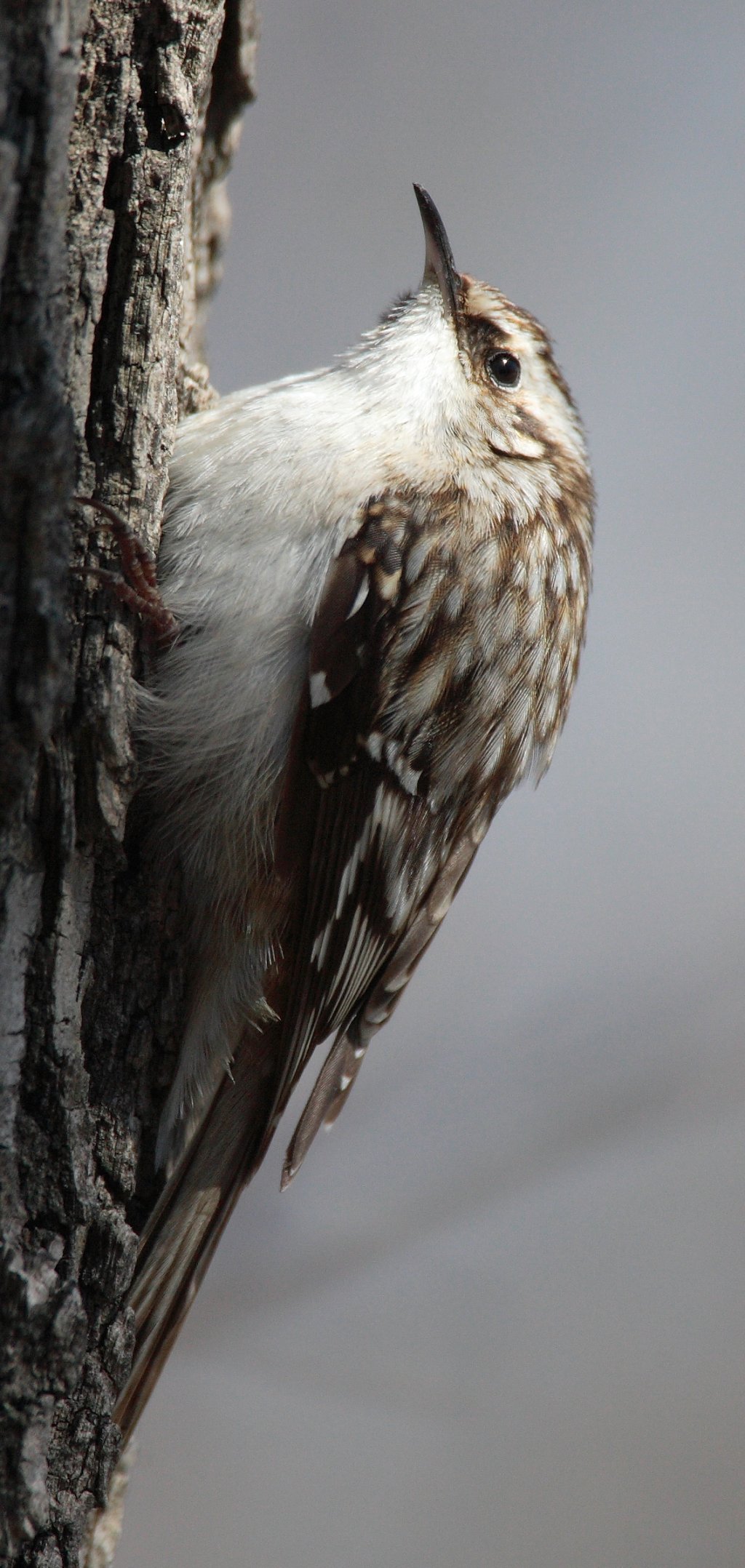
The Brown Creeper is the only member of the treecreeper family (Certhiidae) in North America — a relative of the Eurasian treecreepers, built for one job: working the bark of big trees. Everything about the bird serves that niche. The back is a dizzy pattern of brown, buff, and white streaks that reads as tree bark; the belly is clean silvery white; and a faint buffy eyebrow stripe crosses the face.
In the field, forget plumage first and watch posture and direction. A creeper hugs the trunk flat, props itself on a stiff tail of pointed feathers, and climbs upward in a spiral, probing furrows with its tweezer-like bill. Nuthatches walk down headfirst; creepers only go up. When it reaches the crown, it flutters down to the base of the next tree and starts again.
Essential Morphometric Field Marks:
- Body Length & Mass: Averages 4.7 to 5.5 inches (12–14 cm) with an adult mass of just 0.2 to 0.3 ounces (5.7–8.5 grams) — smaller and lighter than a chickadee.
- Wingspan: About 6.7 to 7.9 inches (17–20 cm), with rounded wings that flash a pale buffy band in flight.
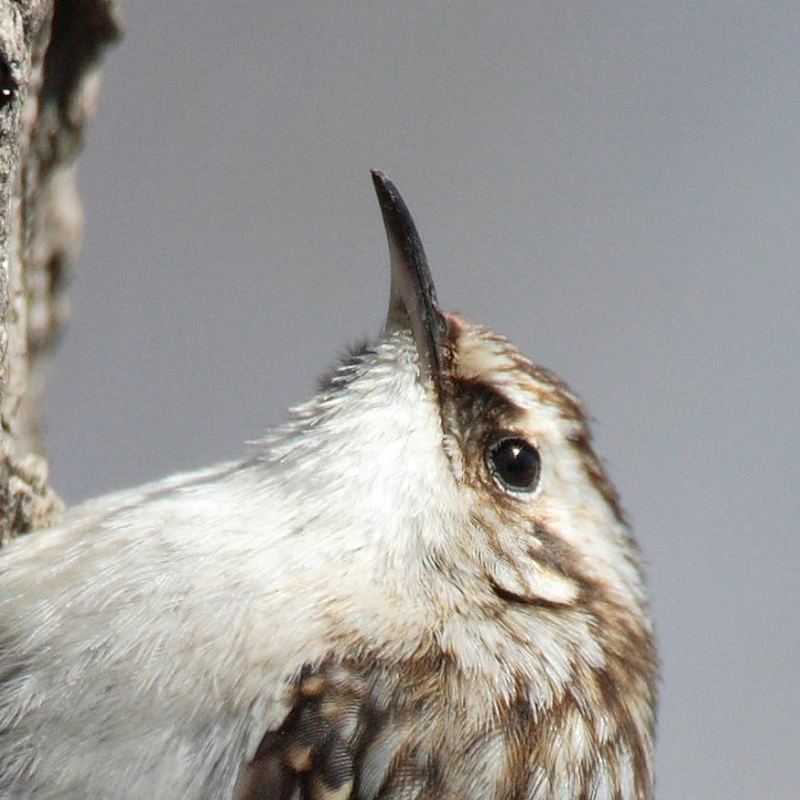
- Bill Structure & Color: A slender, distinctly downcurved bill — precision tweezers for plucking insects and spiders out of deep bark furrows.
- Tail: Long, stiff, spine-tipped tail feathers that brace the body against vertical bark — shared engineering with woodpeckers.
- Color Pattern: Mottled brown-buff-white above, silvery white below, with a rusty rump and a pale eyebrow stripe. Males and females look alike; males average slightly larger.
Always upward, in a spiral, pressed flat to the bark. A creeper starts near the base of a trunk, works up into the crown, then drops in a fluttering glide to the base of the next tree. That flight path — up one trunk, down through the air, up the next — is the single best identification clue at a distance.
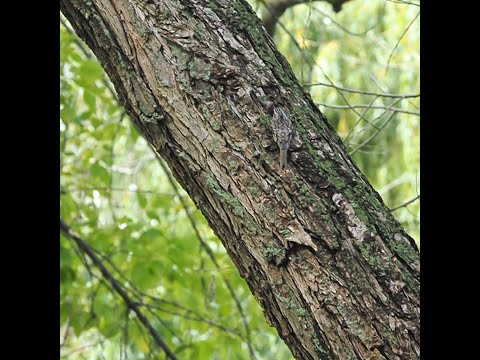
When alarmed, a creeper freezes and flattens itself against the bark, spreading its wings slightly and relying on its mottled back to vanish. The gallery’s “camouflage test” photo shows the effect: most people walk past this bird every winter day without ever knowing it was there.
Brown Creeper Vocalization Guide (3 Field Recordings)
Brown Creepers speak in some of the highest notes of any North American songbird — thin, piercing “see” or “swee” calls pitched near the top of human hearing. This is why so many birders, especially older ears, never hear one even when it is ten feet away. The song, given mostly in spring, is a sweet, high warble of a few notes lasting barely two seconds, often written “pee pee willow wee” or “see tidle swee.” All three cards below are real field recordings with open licenses.
1. Foraging Calls — Urban Park Cottonwood
2. Quavering Contact Calls
3. Flight Calls — Off to the Next Tree
Habitat, Range & Partial-Migrant Biology
Brown Creepers are birds of mature forest with big trunks and deep bark furrows — coniferous and mixed woods across Canada and Alaska, the mountain West, the Northeast, and the Great Lakes states, with year-round pockets down the mountain chains into Mexico. In winter, northern birds spread south and downhill into woodlots, parks, cemeteries, and shady backyards across most of the United States.

A Winter Visitor to Southern Backyards
Much of the population is a partial migrant: creepers breed deep in northern and mountain forests, then many push south in fall. That is why a backyard in the southern half of the country usually hosts this bird only from late fall through early spring.
Winter creepers frequently travel in mixed foraging flocks — look for them working trunks alongside Black-capped Chickadees, White-breasted Nuthatches, and Golden-crowned Kinglets. Find the flock, then scan the trunks for the one bird that only goes up.
Backyard Behavioral Patterns & Social Dynamics
The Brown Creeper lives its life on vertical real estate that most birds ignore. Four signature behaviors explain nearly everything you will observe:
🌀 The Spiral-Up Climber
A creeper lands low on a trunk and spirals upward, probing every furrow, then flies down to the base of the next tree. Nuthatches do the opposite — they walk down headfirst. Direction of travel is the fastest way to tell these trunk-clingers apart.
🎨 A Piece of Walking Bark
The mottled brown back is near-perfect bark camouflage, and a startled creeper freezes flat against the trunk rather than flushing. Move slowly, and the “bark” will eventually move for you.
🪶 A Tail Built Like a Prop
The stiff, pointed tail feathers brace the body against the trunk like a third leg — the same engineering woodpeckers use. Watch for the silhouette: body tilted away from the bark, tail pressed hard into it.
🏠 The Nest Behind the Bark
The nest is a hammock-shaped cup tucked behind a flap of loose, peeling bark on a large dead or dying tree — one of the most unusual nest sites of any songbird. The female lays 5 to 6 eggs and incubates about two weeks.
Problem: The Bird You Have Probably Never Noticed
The commonest backyard report on this species runs: “I have lived here twenty years and never seen one.” The reasons are predictable:
First, camouflage: the bird looks like bark and freezes when watched, so eyes slide right past it. Second, the voice: its calls sit so high that many older ears simply cannot hear them, removing the usual cue that a bird is present. Third, it ignores ordinary feeders: a creeper will not perch on a tube feeder or hop on a platform, so it never enters the field of view of someone watching from the kitchen window. And fourth, young-tree yards: a creeper needs big trunks with deep furrows — a lawn of saplings has nothing to offer. Learn the thin “see” call, watch the trunks instead of the feeders, and smear suet into the bark: suddenly the invisible bird appears.
Method 1: Set the Table — Suet Straight on the Trunk
Design for a bark-clinging insect hunter, not a perching seed-eater:
-
Smear Suet or Peanut Butter into the Bark
The single most effective creeper trick: take soft suet, bark butter, or unsalted peanut butter and rub it directly into the furrows of a large trunk at eye level. The bird feeds exactly as it does on wild prey — clinging vertically, probing crevices. Our lab-tested roundup of the Best Suet Feeders & Cakes compares proven blends.
-
Hang a Suet Cage Against the Trunk
A wire suet cage strapped flat against the trunk — or hung on a low limb right beside it — puts the food on the creeper’s vertical highway. Winter creepers quickly add such a cage to their daily circuit.
-
Time It for Winter
In most of the country, creeper season in the backyard is late October through March. Get the suet out with the first cold snap, and keep it stocked — winter birds are creatures of routine.
-
Offer Water in the Cold Months
A shallow bath near a large tree serves a creeper on its circuit. In freezing weather, a heated bird bath keeps open water available when every natural source is locked in ice.
Method 2: Keep the Habitat — Mature Trees & Standing Snags
A creeper’s true feeder is the tree itself:
-
Keep Your Biggest, Oldest Trees
Creepers need large-diameter trunks with deep bark furrows — the kind only decades-old trees provide. Before removing a mature shade tree, know that it took half a century to become creeper habitat.
-
Leave Safe Standing Snags
The nest goes behind loose, peeling bark on a dead or dying tree. Where a snag poses no hazard to people or roofs, leaving it standing is the single best way to host a nesting pair — and a dying tree crawls with the insects creepers eat.
-
Skip the Tree Sprays
Nearly the entire diet is small insects and spiders harvested from bark. Spraying trunks and canopies empties the pantry; an untreated tree is a stocked one.
-
Plant the Next Generation of Big Trees
Oaks, pines, spruces, and firs are classic creeper trees. Planting a native large-canopy tree today is a promise of furrowed bark — and winter creepers — for the decades ahead.
Tool Solution: Recommended Hardware for Brown Creepers
Equipment matched to a tiny, trunk-clinging insect hunter:
Trunk-Mounted Suet Cage
A simple wire suet cage strapped flat against a large trunk — food placed right on the creeper’s vertical feeding route, clingable from every side.
- • Cake: Insect or nut blend
- • Mount: Flat on a big trunk
- • Season: Fall through early spring
Bark Butter / Soft Suet Spread
Spreadable suet or unsalted peanut butter rubbed directly into bark furrows — the closest match to how a creeper naturally feeds, and irresistible to winter birds.
- • Texture: Soft, spreadable
- • Apply: Into deep bark crevices
- • Note: Unsalted peanuts only
Heated Shallow Bath
A shallow bath with a heater, placed near a large tree — open water in freezing weather is a powerful draw for winter creepers and the flocks they travel with.
- • Depth: 1–2 in, gently sloped
- • Winter: Thermostatic heater
- • Placement: Beside a big trunk
Frequently Asked Questions
- Species Profile: The Brown Creeper (Certhia americana) is a 4.7–5.5 inch, 6–8 gram songbird, mottled like bark above and white below, with a slender downcurved bill and a stiff, spine-tipped tail — the only member of the treecreeper family (Certhiidae) in North America.
- The Telltale Climb: Creepers spiral upward from the base of a trunk and fly to the base of the next tree — the exact opposite of nuthatches, which walk down headfirst.
- Partial Migrant: Breeds in northern and mountain forests; many birds push south in fall, so backyards across the southern half of the country host creepers mostly in winter, often with chickadee flocks.
- Feeder Formula: Soft suet, bark butter, or unsalted peanut butter smeared directly into the bark of a large trunk, plus a suet cage mounted flat against the trunk — ordinary seed feeders rarely interest this bird.
- The Hidden Nest: A hammock-shaped cup tucked behind loose, peeling bark on a dead or dying tree; the female lays 5–6 eggs. Leaving safe standing snags is the best way to host a nesting pair.
- High, Thin Voice: Calls are piercing “see” notes near the top of human hearing; the spring song is a two-second warble often written “pee pee willow wee.”
Bird Watching Log
Species: Brown Creeper (Certhia americana)
| Brown Creeper (Climbing Direction / Flock Companions: ____________________________) | |