
Chimney Swift


Chimney Swift (Chaetura pelagica): Complete Identification, Habitat Guide & Sound Library
Quick Answer: How to Attract & Identify the Chimney Swift
The Chimney Swift (Chaetura pelagica) is the flying cigar of eastern skies — sooty gray, long sickle wings, stubby tail, and a constant twittering chatter. It spends its entire day airborne and roosts and nests clinging to vertical walls — chimneys, silos, and hollow trees — on a nest of twigs glued with saliva. It eats only flying insects and winters in the Amazon basin. Homeowners help by keeping chimneys uncapped and unused in summer, or building a swift tower. They share the evening sky with the Barn Swallow and the Purple Martin.
Species Physical Profile & Morphometrics
The Chimney Swift belongs to the swift family (Apodidae) — not a swallow — and is the only swift breeding across the eastern half of North America, bound to chimneys and hollow trees for nesting.
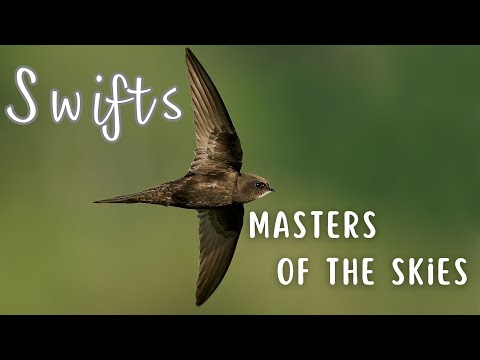
The identification formula: cigar-shaped body + long sickle wings + constant chipping chatter. Swallows have broader, more triangular wings and forked or squared tails; a swift’s stiff, bowed-wing flight and cigar body are unmistakable once seen.
Essential Morphometric Field Marks:
- Body Length & Mass: 4.7 to 5.9 inches (12–15 cm) and 0.6 to 1.1 ounces (17–30 grams) — a flying cylinder with wings.
- Wingspan: 10.6 to 11.8 inches (27–30 cm); flight is rapid, stiff-winged beats alternating with glides, always on the move.
- Bill Structure & Color: A pin-sized bill hiding an enormous gape — the scoop for aerial plankton, from gnats to beetles.
- Color Pattern: Uniform sooty gray-brown, slightly paler on the throat — identification is by shape and sound, not color.
- Male vs. Female: The sexes are identical — even biologists sex them only by behavior at the nest.
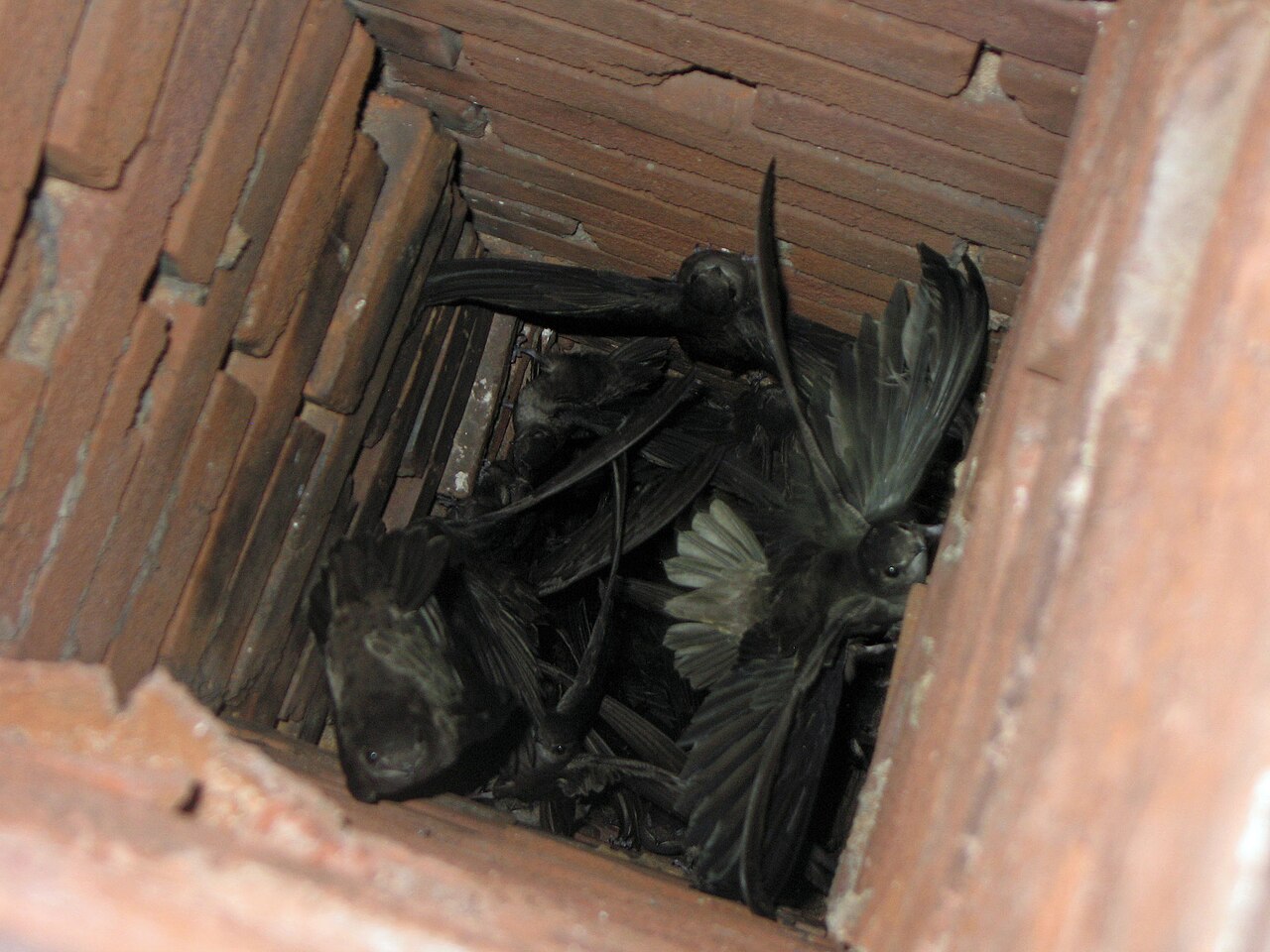
The chimney acrobat: chattering overhead all day, then folding his wings and dropping into the flue at dusk like a stone.
Identical in plumage — she breaks twigs from treetops in flight and glues the half-saucer nest to the chimney wall with saliva.
Chimney Swift Vocalization Guide (2 Field Recordings)
The Chimney Swift’s voice is a rapid, twittering chip-chip-chip given on the wing — the soundtrack of summer evenings. All recordings below are real field audio via Wikimedia Commons — no simulations. For a deeper library, browse xeno-canto: Chimney Swift.
1. The Twittering Chips
2. The Flock Chorus
3. The Nest Calls
Habitat, Range & the Chimney Partnership
The Chimney Swift lives over towns, cities, and farmland across the East — anywhere with flying insects and vertical roost walls. Hollow trees were the original home; chimneys replaced them, and now capped flues and demolition are erasing the substitute.

The Bird in the Flue
Breeding range spans the eastern half of the continent from the Great Plains to the Atlantic; in fall the whole population migrates to the upper Amazon basin of Peru, Ecuador, and Brazil.
For backyard birders: an uncapped, unused chimney or a purpose-built swift tower can host a nesting pair — and migrating roosts put on one of the great free shows in American birding.
Backyard Behavioral Patterns & Social Dynamics
The Chimney Swift is the most aerial land bird on the continent. Four behaviors explain most of what you will observe:
🕊️ The All-Day Flier
It spends the entire day airborne — feeding, drinking, bathing, and gathering twigs without ever perching on a branch.
🧱 The Wall Clinger
It roosts and nests clinging to vertical walls — tail spines brace the body against chimney brick like tiny grappling hooks.
🏺 The Saliva Glue
The nest is twigs cemented with saliva — a half-saucer glued to the wall, the swift family’s trademark masonry.
🌪️ The Roost Vortex
In migration, hundreds circle and funnel into one chimney at dusk — a living tornado running in reverse.
Problem: “How Do I Handle Chimney Swifts? What Should I Do?”
The three most common Chimney Swift puzzles all have proven answers:
First, the noise worry: nestlings chitter audibly for a few weeks — the sound is soft, temporary, and over by midsummer; earplugs beat eviction. Second, the fire hazard myth: the nest is a small half-saucer of twigs, not a blockage — sweep the flue after the season if concerned, and never light a fire while birds are present. Third, the fallen nestling: a baby on the fireplace floor should be put back on the wall inside the flue — parents feed by regurgitation and will resume care; swifts have no smell-based rejection.
Method 1: Set the Table — Keep a Flue Open
Design for a vertical-wall nester:
-
Leave One Flue Uncapped
An unused, uncapped chimney May–August — the single most valuable swift habitat in town.
-
Never Disturb Active Nests
Protected by law while occupied — fires and caps wait until the family leaves.
-
Build a Swift Tower
A freestanding concrete-block or wooden tower — the modern substitute for the disappearing chimney.
-
Skip the Insecticide
Flying insects are the whole diet — a sprayed neighborhood starves the swifts overhead.
Method 2: Build the Habitat — Airspace & Timing
Keep the air full and the calendar clear, and the swifts return each spring:
-
Watch the Evening Sky
Dusk is swift hour — feeding flocks and roost gatherings are best seen in the last hour of light.
-
Protect Roost Chimneys
Old school and industrial chimneys host thousands — advocate to keep them standing and uncapped.
-
Keep Water Open
Ponds and lakes concentrate aerial plankton — swifts feed hardest over water at dawn and dusk.
-
Mark the Calendar
April arrival, August departure — plan chimney work for fall and winter only.
Tool Solution: Recommended Hardware for Chimney Swift
Equipment matched to a chimney-nesting aerialist:
An Open Chimney or Swift Tower
An uncapped flue or purpose-built tower — the entire nesting habitat of a species losing its homes.
- • Season: May–August open
- • Law: Active nests protected
- • Bonus: Thousands of mosquitoes eaten
A West-Facing Chair at Dusk
Binoculars and a sunset — roost vortices and feeding flocks are the evening show.
- • Time: Last hour of light
- • Season: Migration peaks
- • Bonus: Nighthawks & bats too
Unsprayed Neighborhood Air
Chemical-free airspace — aerial plankton is the only menu a swift knows.
- • Rule: No fogging
- • Feature: Water nearby
- • Bonus: Swallows & martins too
Frequently Asked Questions
- Species Profile: The Chimney Swift (Chaetura pelagica) is a 4.7–5.9 inch, 0.6–1.1 ounce swift (Apodidae), band code CHSW — the flying cigar.
- ID in One Look: Cigar body, sickle wings, constant chatter, never on a wire.
- The Sound: Rapid chip-chip twittering all day; roost choruses at dusk; real field recordings above.
- Range & Habit: Eastern breeder, Amazon winterer; nests are twig saucers glued to chimney walls.
- Feeder Formula: Open sky and an open flue — no feeder applies.
- The Stewardship Rule: Never cap or fire an active chimney nest; sweep in fall, host in summer.
Bird Watching Log
Species: Chimney Swift (Chaetura pelagica)
| Chimney Swift (Cigar Silhouette Seen: Yes / No — Chatter Heard: Yes / No — Roost Vortex Watched: Yes / No — Chimney Occupied: Yes / No — Date & Time: ___) | |