
Spotted Dove
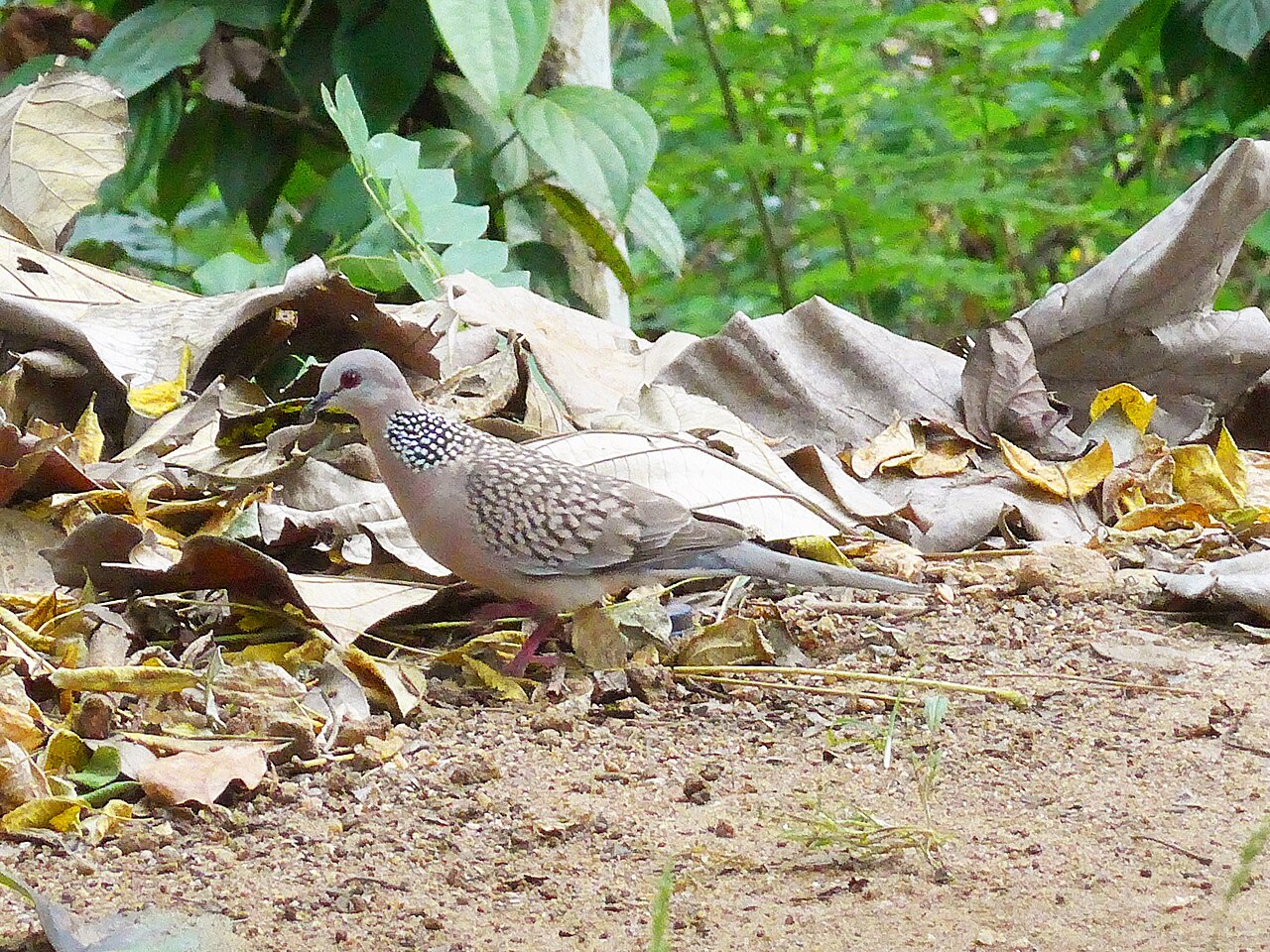
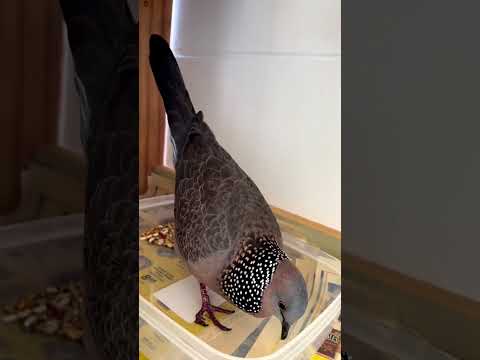


Spotted Dove (Spilopelia chinensis): Complete Identification, Habitat Guide & Sound Library
Quick Answer: How to Attract & Identify the Spotted Dove
The Spotted Dove (Spilopelia chinensis) is the lace-necked dove of Hawaii and Southern California — a large pinkish-brown Asian import wearing a black-and-white checkered patch on the back of the neck. Its voice is a mellow three-note coo — coo-coo-croo. It feeds on seeds picked from lawns, paths, and garden ground. Yards attract them with scattered seed on open ground, a ground-level water dish, and dense shrubs nearby. They share the lawn with the smaller Zebra Dove and the native Mourning Dove.
Species Physical Profile & Morphometrics
The Spotted Dove belongs to the pigeon and dove family (Columbidae) — a native of South and Southeast Asia introduced to Hawaii in the nineteenth century and to coastal Southern California around 1915, where it remains a yard bird of both regions.
The identification formula: large pinkish dove + black-and-white lace patch on the hindneck. The Zebra Dove is half its size and striped all over; the Mourning Dove is slimmer, grayer, and long-tailed with no neck patch. The mellow coo-coo-croo confirms it.
Essential Morphometric Field Marks:
- Body Length & Mass: 11.8 to 12.6 inches (30–32 cm) and 4.2 to 6.0 ounces (120–170 grams) — a full-sized dove, plainly bigger than a Zebra Dove.
- Wingspan: Broad, rounded wings for fast direct flight between trees and feeding ground, with a whistling wing-note at takeoff.
- Bill Structure & Color: A small dark bill with a pale tip, sized for seeds and grain picked off the ground.
- Color Pattern: Soft pinkish-brown overall, rosier on the breast; the hindneck wears a black patch densely spotted with white — the lace collar; outer tail feathers tipped white.
- Male vs. Female: Sexes look alike; the male averages slightly larger with a pinker breast, and he performs the clapping display flight over the territory.
The lace-necked advertiser: big and pink-breasted, cooing from the roof peak, then launching into the steep clapping climb and long glide that tells the neighborhood this garden is taken.
The matched partner — same lace collar in a slightly duller tone — she shares the two-egg twig nest in a garden tree and walks the lawn at his side at feeding hour.
Spotted Dove Vocalization Guide (3 Field Recordings)
The Spotted Dove’s song is a mellow, rhythmic three-note coo — coo-coo-croo — deeper and slower than the Zebra Dove’s stutter. All recordings below are real field audio via Wikimedia Commons — no simulations. For a deeper library, browse xeno-canto: Spotted Dove.
1. The Mellow Coo
2. The Wing Whistle
3. The Nest Coo
Habitat, Range & the Island Suburb
The Spotted Dove is a bird of human landscapes: suburban gardens, parks, farmland edges, and open woodland. In Hawaii it lives on every main island from beach to upland; in California it holds to the coastal suburbs of Los Angeles and Orange counties. Lawns to forage, trees to nest, water to drink — the recipe is simple.

The Lace Collar of Two Coasts
In America the species lives in exactly two worlds: all the main Hawaiian Islands and coastal Southern California from Los Angeles south — both populations descending from nineteenth- and early twentieth-century releases.
For yards in either stronghold: a lawn, a shade tree, and a daily scatter of seed make you a Spotted Dove address. They are year-round birds — the pair you feed in July coos from your roof in January.
Backyard Behavioral Patterns & Social Dynamics
The Spotted Dove is a big, tame, ground-feeding garden dove. Four behaviors explain most of what you will observe:
🚶 The Walking Forager
It walks rather than hops, covering lawns and paths in a steady pigeon-like stride, picking seeds one at a time.
🕊️ The Clap-and-Glide Display
The male’s display is a steep climb with loud wing-claps, then a long glide down on fixed wings — watch for it over gardens in the breeding season.
🏡 The Roof-Peak Cooer
Males advertise from roof peaks, tree crowns, and wires — the same perch every morning, the same mellow song.
👫 The Pair Bond
Pairs feed and rest together year-round — the twig nest with two white eggs is often in a garden tree a few yards from the feeding lawn.
Problem: “How Do I Tell the Two Garden Doves (and the Mourning Dove) Apart?”
The three most common Spotted Dove puzzles all have proven answers:
First, the three-dove sort-out: size and neck settle everything — the Spotted is large and pinkish with a black-and-white lace patch on the hindneck; the Zebra Dove is small and barred all over; the Mourning Dove is slim, gray-tan, and long-tailed. Second, the bullying question: Spotted Doves are big enough to shoulder smaller doves off a seed pile — scatter seed in two or three spots a few yards apart and everyone eats. Third, the noisy takeoff: the loud wing-whistle at flush is normal — feed near shrubs so the flock flushes to cover instead of across the street.
Method 1: Set the Table — Scattered Seed & Ground Water
Design for a large ground-feeding dove:
-
Scatter Mixed Seed & Millet
Millet, cracked corn, and mixed seed on open ground — the Spotted Dove’s daily table, refreshed at a set hour.
-
Spread Two Feeding Spots
Scatter in two or three places a few yards apart — this lets Zebra Doves and smaller birds feed beside the big doves in peace.
-
Provide Ground-Level Water
A wide shallow pan on the ground — doves drink by suction, head down, and prefer a stable rim to perch on.
-
Feed Beside a Tree or Hedge
Keep seed within a short flight of dense cover — the flush path matters more than the menu.
Method 2: Grow the Garden — Nest Trees & Quiet Hours
Give them a reason to nest in your yard:
-
Keep a Mid-Sized Garden Tree
The flimsy twig nest goes on a horizontal branch in a garden tree — leave dead horizontal limbs where safe.
-
Skip the Hedge Trimming in Season
Pairs nest through the warm months — delay heavy trimming until you are sure no nest is active.
-
Keep Cats Indoors
Ground-feeding doves are defenseless against cats — the indoor-cat rule is the foundation of a dove yard.
-
Feed at Dawn & Dusk
Refresh seed at the two natural feeding hours — the flock learns the schedule within days and arrives on time.
Tool Solution: Recommended Hardware for Spotted Dove
Equipment matched to a large island dove:
Ground Scatter of Mixed Seed
Millet and mixed seed on open ground beside a hedge — the station that fills your lawn with doves at the feeding hour.
- • Food: Millet, mixed seed
- • Spots: Two or three
- • Timing: Dawn & dusk
Wide Ground Water Pan
A broad shallow pan with a perching rim — doves drink head-down and linger to bathe on warm afternoons.
- • Depth: 1–2 inches
- • Style: Ground level
- • Bonus: All garden birds
Garden Tree with Horizontal Limbs
A mid-sized tree with level branches over the lawn — nest platform, cooing stage, and escape cover in one.
- • Feature: Flat limbs
- • Height: 8–15 ft
- • Bonus: Shade for the yard
Frequently Asked Questions
- Species Profile: The Spotted Dove (Spilopelia chinensis) is an 11.8–12.6 inch, 4.2–6.0 ounce dove (Columbidae), band code SPOD — the lace-necked dove of Hawaii and SoCal.
- ID in One Look: Large pinkish dove with a black-and-white checkered lace patch on the hindneck.
- The Sound: A mellow three-note coo-coo-croo from the roof peak; real field recordings above.
- Range & Habit: Introduced resident of all Hawaiian islands and coastal Southern California; tame ground forager.
- Garden Formula: Mixed seed scattered in two spots, a ground water pan, and a garden tree over the lawn.
- The Two-Coast Dove: One Asian import, two American homes — island gardens and LA suburbs.
Bird Watching Log
Species: Spotted Dove (Spilopelia chinensis)
| Spotted Dove (Neck Patch Seen: Yes / No — Cooing Heard: Yes / No — Display Flight: Yes / No — At Seed: Yes / No — Date & Time: ___) | |