
Canada Jay


Canada Jay (Perisoreus canadensis): Complete Identification, Habitat Guide & Sound Library
Quick Answer: How to Attract & Identify the Canada Jay
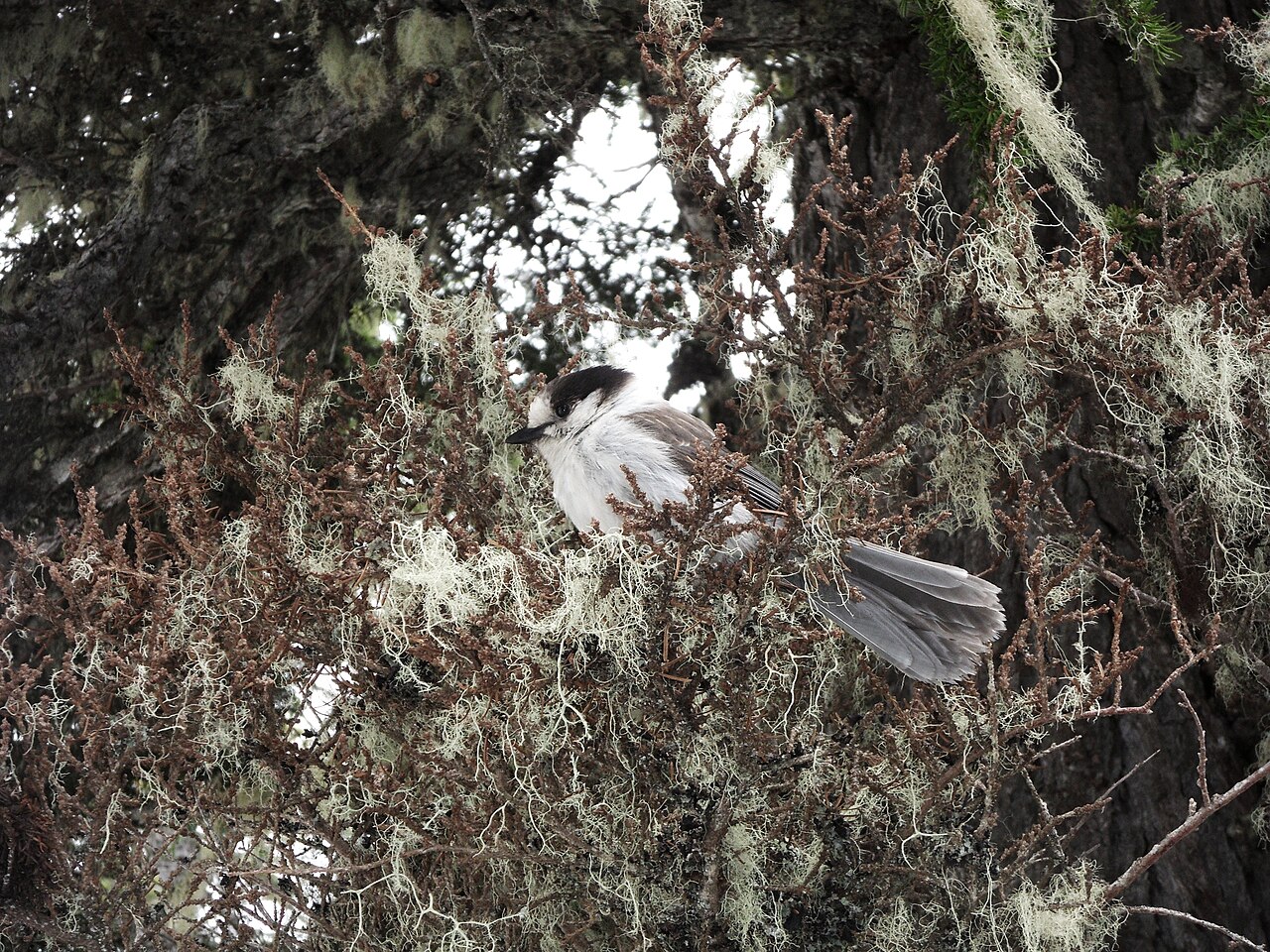
The Canada Jay (Perisoreus canadensis) — the legendary camp robber or whiskey jack — is a fluffy gray-and-white jay of the boreal forest, famous for landing on hikers’ hands to take food. A white face sets off a dark nape cap, and its short black bill hides a superpower: sticky saliva that glues food caches to tree bark for winter. The voice is a soft whistled whee-ah and gentle chatter. Northern yards and cabins attract them with suet, peanut butter, and patience. They share the spruce woods with the Blue Jay and the Black-capped Chickadee.
Species Physical Profile & Morphometrics
The Canada Jay belongs to the crow and jay family (Corvidae) and is a permanent resident of boreal and mountain conifer forest — Alaska, Canada, and the northern and western high country of the Lower 48. It nests in late winter, sometimes while snow still blankets the forest.
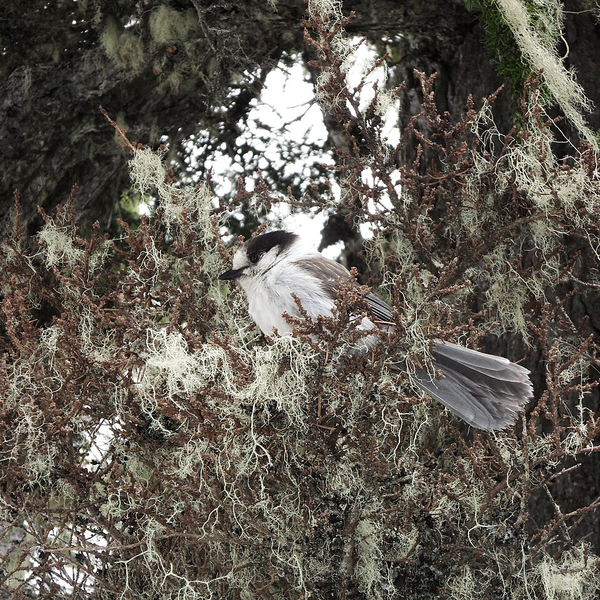
The identification formula: fluffy gray-and-white plumage + white face + dark cap on the back of the head only. No other northern bird matches it — a Gray Jay look-alike simply does not exist in range. The fearless approach to people is often the first identification clue.
Essential Morphometric Field Marks:
- Body Length & Mass: 9.8 to 11.4 inches (25–30 cm) and 2.0 to 3.0 ounces (58–84 grams) — robin-sized but looking bigger through dense, insulating fluff.
- Wingspan: 18.0 inches (46 cm); flight is soft, silent, and buoyant — short glides between spruces rather than long flights.
- Bill Structure & Color: A short, stout black bill — half the length of a Blue Jay’s — backed by sticky saliva glands that glue food parcels to bark for winter storage.
- Color Pattern: Soft gray above, pale gray-white below, white face and forehead, dark gray-black cap covering the nape only; juveniles are slaty gray all over.
- Male vs. Female: The sexes look identical — pairs bond for life and stay together on the same territory through every northern winter.
The lifelong partner: indistinguishable from his mate, gliding silently to your outstretched palm, already thinking about where to glue the prize for February.
The winter nester — identical in plumage — she incubates through late-winter cold snaps at twenty below while the male ferries food to the insulated nest.
Canada Jay Vocalization Guide (3 Field Recordings)
The Canada Jay’s voice is a soft whistled whee-ah, gentle clucks, and quiet chatter — a remarkably soft-spoken jay. All recordings below are real field audio via Wikimedia Commons — no simulations. For a deeper library, browse xeno-canto: Canada Jay.
1. The Whee-Ah Whistle
2. The Quiet Chatter
3. The Mimic’s Repertoire
Habitat, Range & the Boreal Forest
The Canada Jay lives in spruce-fir boreal forest: muskeg edges, black spruce bogs, and mountain conifer forest across the northern continent. It visits cabins, camps, and rural yards within the forest belt — anywhere people and spruce meet, the camp robber follows.

The North’s Permanent Resident
The range blankets Alaska and Canada and dips into the Lower 48 along the northern border — Minnesota, Wisconsin, Michigan, Maine, and New England’s high country — plus the Rockies and Cascades south to Arizona and New Mexico’s highest forests. It never migrates; caches carry it through winter.
For backyard birders: cabins and rural yards in the northern forest belt can host a resident pair — offer suet and peanut butter consistently, and the camp robbers will learn your breakfast schedule within days.
Backyard Behavioral Patterns & Social Dynamics
The Canada Jay is a caching, camp-following, cold-defying original. Four behaviors explain most of what you will observe:
🖐️ The Hand-Feeder
Famous for landing on hands and hats for food — this is millennia-old behavior around human camps, not tameness taught; slow movements and an open palm earn a visit.
🍯 The Glue Factory
Its saliva is sticky like paste — the bird coats food parcels and glues them to bark above the snowline, building thousands of winter caches across the territory.
❄️ The Winter Nester
It nests in late winter, brooding chicks through subzero cold — the cached larder, not spring abundance, feeds the family.
🥩 The Omnivore’s Table
Berries, insects, carrion, camp bacon, and anything edible you offer — the least picky jay in North America, which is precisely how it survives forty below.
Problem: “The Camp Robbers Visited Daily, Then Vanished for Weeks. What Should I Do?”
The three most common Canada Jay puzzles all have proven answers:
First, the disappearing act: pairs hold large territories and rotate through them — a week of absence is normal; keep the feeding station stocked and they return on their circuit. Second, the quiet bird question: unlike Blue Jays, Canada Jays rarely call loudly — listen for the soft whee-ah and watch for the silent glide between spruces at dawn; they are present long before they are obvious. Third, the food worry: camp food is fine in moderation, but salt-heavy or moldy scraps can harm them — offer unsalted suet, peanuts, and plain peanut butter as the staples, and treats become a bonus rather than a risk.
Method 1: Set the Table — Suet, Peanut Butter & Patience
Design for a fearless caching jay:
-
Offer Suet Year-Round
A suet cage on a trunk or post — the reliable staple a pair will check on every circuit of its territory.
-
Smear Peanut Butter on Bark
Plain peanut butter smeared on bark or a pinecone — irresistible to a caching jay and entertaining to watch carried off.
-
Offer Unsalted Peanuts
Unsalted peanuts, in or out of the shell — portable cache units, exactly the format this species evolved to store.
-
Feed at a Fixed Spot & Hour
Consistency teaches the circuit — same stump, same time, and the pair schedules you into their rounds.
Method 2: Build the Habitat — Conifers & Quiet Woods
Keep the spruce standing, and the whiskey jacks stay forever:
-
Preserve Spruce & Fir
Mature conifers are nest sites, cache walls, and shelter — the whole territory is built on them.
-
Leave Standing Deadwood
Snags and dead limbs are cache shelves — thousands of glued food parcels stud the dead bark of a jay territory.
-
Keep a Quiet Corner
An undisturbed patch of dense conifers gives the pair a nest core — they tolerate people at the feeder but want privacy in March.
-
Feed Through the Cold
Late winter is crunch time — nesting starts in February; a stocked feeder then is worth more than all summer’s offerings.
Tool Solution: Recommended Hardware for Canada Jay
Equipment matched to a boreal caching jay:
Suet Cage Feeder
A suet cage on a trunk — the four-season staple that anchors a camp robber pair to your yard.
- • Food: Suet, peanut butter
- • Placement: Trunk or stump
- • Season: Year-round, critical in winter
Unsalted Peanut Platform
A platform with unsalted peanuts — watch the birds carry off and glue every single one to a tree.
- • Food: Unsalted peanuts
- • Style: Platform or stump
- • Behavior: Watch the caching
Heated Bird Bath
Liquid water at twenty below is a magnet for every bird in the boreal forest, jays included.
- • Feature: Heated, ice-free
- • Season: Winter essential
- • Bonus: Grouse & redpolls too
Frequently Asked Questions
- Species Profile: The Canada Jay (Perisoreus canadensis) is a 9.8–11.4 inch, 2.0–3.0 ounce corvid (Corvidae), band code CAJA — the fearless camp robber of the boreal forest.
- ID in One Look: Fluffy gray and white, white face, dark cap on the nape only, short black bill.
- The Sound: Soft whee-ah whistles and gentle chatter; real field recordings above.
- Range & Habit: Permanent resident of northern spruce forest; nests in late winter; glues thousands of food caches to bark.
- Feeder Formula: Suet, peanut butter, unsalted peanuts, a fixed spot and hour, and standing conifers.
- The Winter Nest: It broods chicks at twenty below — the most cold-defying nesting strategy of any songbird.
Bird Watching Log
Species: Canada Jay (Perisoreus canadensis)
| Canada Jay (Hand Landing: Yes / No — Caching Seen: Yes / No — Whee-Ah Heard: Yes / No — At Suet: Yes / No — Date & Time: ___ — Temp: ___) | |