
Eastern Phoebe


Eastern Phoebe (Sayornis phoebe): Complete Identification, Habitat Guide & Sound Library
Quick Answer: How to Attract & Identify the Eastern Phoebe
The Eastern Phoebe (Sayornis phoebe) is the tail-wagging flycatcher of bridges and porches — plain gray-brown with a darker head, no eye ring, and a habit of dipping its tail down every few seconds. It says its own name: a raspy FEE-bee. It plasters mud nests under bridges, eaves, and porch roofs — one of the few birds that builds with us, not despite us. Eastern yards attract them with sheltered ledges, low perches, open lawn, and spray-free airspace. They share the yard with the Barn Swallow and the Great Crested Flycatcher.
Species Physical Profile & Morphometrics
The Eastern Phoebe belongs to the tyrant flycatcher family (Tyrannidae) and breeds across the eastern and central U.S. and Canada, wintering in the southern states and Mexico. It was the first bird ever banded in North America — by Audubon himself, with silver thread.
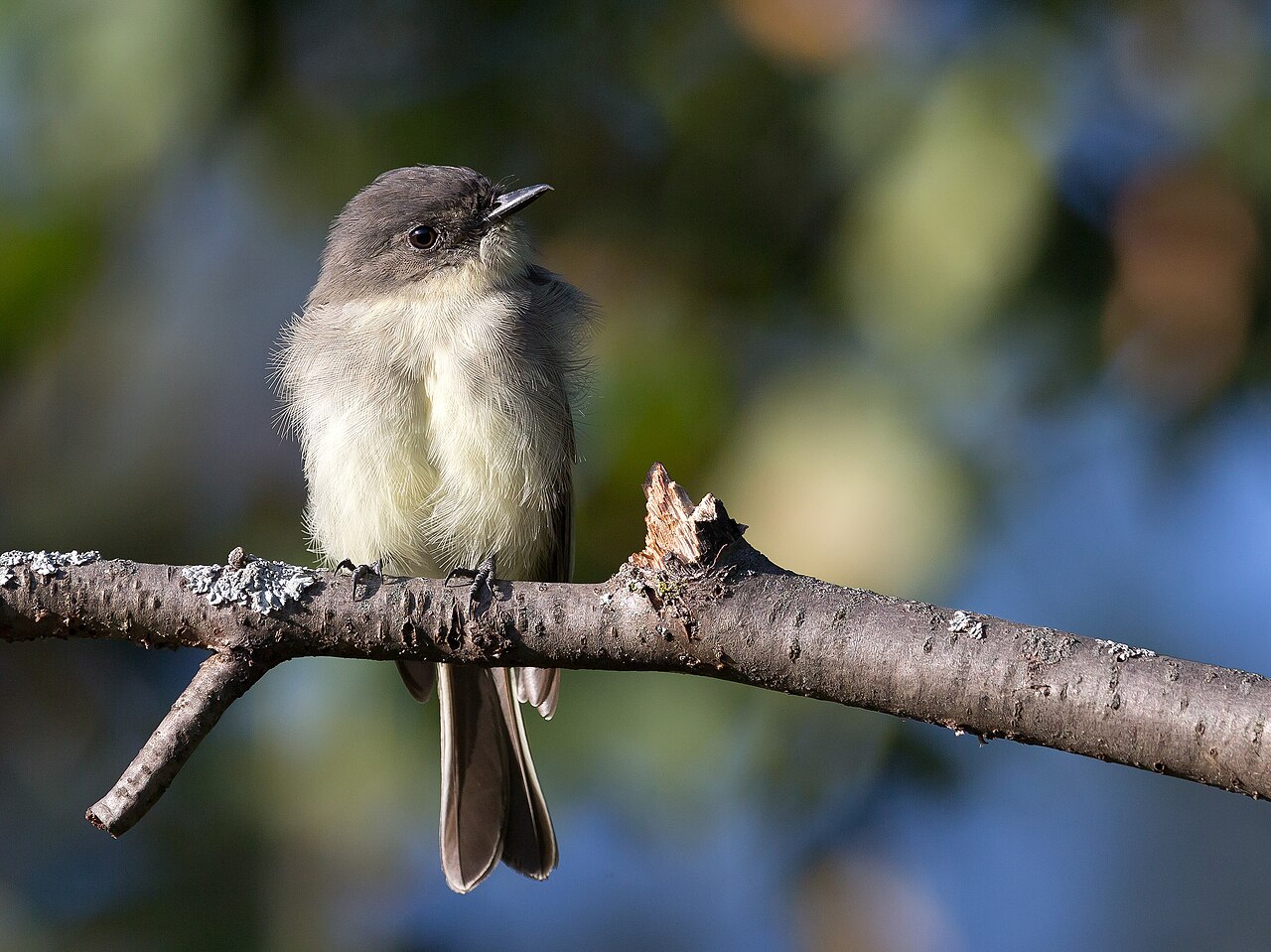
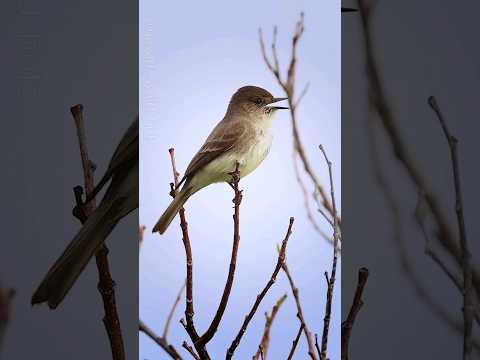
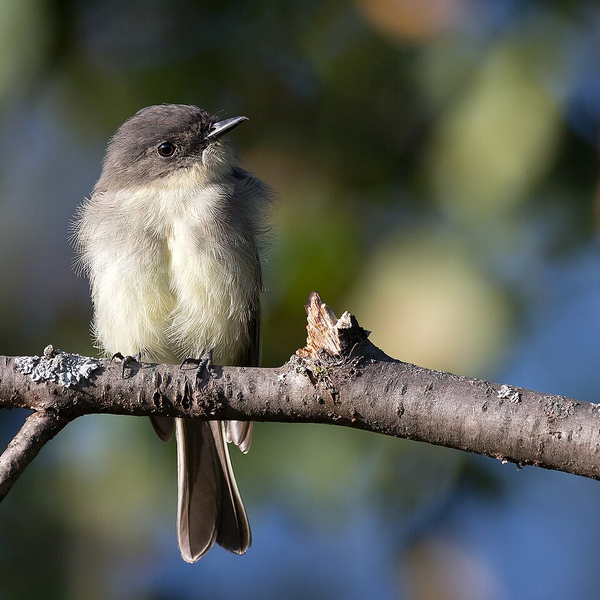
The identification formula: plain gray-brown + darker head + no eye ring + downward tail wag. Flycatcher look-alikes wear eye rings and wing bars; the phoebe is plain — and the tail dips down (a Say’s Phoebe is cinnamon-bellied; a Black Phoebe wears a tuxedo). If it nests under your bridge, it is a phoebe.
Essential Morphometric Field Marks:
- Body Length & Mass: 5.5 to 6.7 inches (14–17 cm) and 0.6 to 0.7 ounces (16–21 grams) — a slim, mid-sized flycatcher with a biggish head.
- Wingspan: 10.2 to 11.0 inches (26–28 cm); flight is quick low sallies over lawn and water, returning to the same perch.
- Bill Structure & Color: A thin, all-black, flattened bill — fine tweezers for snapping flying insects; all-dark in every season.
- Color Pattern: Gray-brown above, whitish below with a faint yellow wash in fall, a darker head with no eye ring, and weak wing bars — a study in restraint.
- Male vs. Female: The sexes look alike — both wag, both sing versions of the name-song; the female builds the mud nest unaided.
The raspy herald: singing fee-bee from the gutter edge at dawn in March, tail dipping like a slow pump handle, first flycatcher of the year.
The mud mason — identical plumage — she plasters hundreds of mud pellets into a nest cup under your eave and lines it with grass and hair.
Eastern Phoebe Vocalization Guide (3 Field Recordings)
The Eastern Phoebe’s song is a raspy FEE-bee — the bird saying its own name, endlessly. All recordings below are real field audio via Wikimedia Commons — no simulations. For a deeper library, browse xeno-canto: Eastern Phoebe.
1. The Fee-Bee
2. The Alternate Phrase
3. The Chip Call
Habitat, Range & the Sheltered Ledge
The Eastern Phoebe lives where open foraging air meets sheltered ledges: woodland edges, stream banks, farms, and yards — always near a structure or outcrop for the mud nest. Bridges, barns, porches, and sheds have made it a true bird of human company.

The First Flycatcher of Spring
Breeding range spans the eastern and central continent from Canada to Texas and the Southeast; winter covers the southern states and Mexico. It returns remarkably early — March fee-bees ring over half-thawed ponds.
For backyard birders: any yard with an open lawn edge and a sheltered ledge — eave, porch, bridge, or barn — can host a nesting pair; they return to the same site for years.
Backyard Behavioral Patterns & Social Dynamics
The Eastern Phoebe is a low-hunting, structure-nesting, tail-wagging neighbor. Four behaviors explain most of what you will observe:
👇 The Tail Wag
It dips its tail downward every few seconds — a slow pump that identifies the bird at 50 yards before any plumage mark appears.
🏗️ The Mud Mason
The female plasters mud pellets into a cup under a sheltered ledge — bridges, eaves, and culverts are the classic sites, reused for years.
🎯 The Low Sallier
It hunts from low perches — fences, branches, gutters — sallying out over lawn and water and looping back to the same spot.
🌱 The Early Returner
It is among the first flycatchers back in March, surviving cold snaps by taking berries and seeds — the year’s opening act.
Problem: “A Phoebe Is Building a Mud Nest Over My Front Door. What Should I Do?”
The three most common Eastern Phoebe puzzles all have proven answers:
First, the doorstep nest: phoebes choose sheltered ledges with open approaches — your porch is prime real estate. If the location truly conflicts, act before eggs are laid: block the site gently and mount a small wooden nesting shelf ten feet away; once eggs exist, the nest is protected and best enjoyed. Second, the droppings worry: nest-week mess is real but brief — a board or newspaper under the nest catches it for the three weeks the nestlings grow; they fledge and the cleanup is done. Third, the empty March: a yard without structures has no phoebes — one nesting shelf under an eave converts a passing bird into a resident pair.
Method 1: Set the Table — Nesting Shelves & Hunting Perches
Design for a structure-nesting flycatcher:
-
Mount a Nesting Shelf
A small open shelf under an eave or porch roof — the phoebe’s preferred foundation, reused for years.
-
Provide Low Hunting Perches
Low bare branches, fence lines, and trellises overlooking lawn — the sallying posts of the daily hunt.
-
Keep Mud Available
A damp muddy patch in spring — nest mortar; the female carries pellet after pellet in April.
-
Skip the Yard Fogging
No insecticide fogging — flying insects over the lawn are the entire diet.
Method 2: Build the Habitat — Open Air, Water & Quiet
Keep the airspace full and the ledge sheltered, and the pair stays:
-
Keep Open Lawn Edges
Open ground beside cover — the hunting arena; phoebes work the edge, not the deep woods.
-
Add Water Nearby
A bath or pond edge draws flying insects — and the phoebe hawks them just above the surface.
-
Leave Old Nests Standing
Last year’s mud nest is this year’s renovation — never tidy it away.
-
Protect the Quiet Dawn
March–June dawns are song and courtship — a calm yard wins the pair’s trust for the season.
Tool Solution: Recommended Hardware for Eastern Phoebe
Equipment matched to a structure-nesting phoebe:
Nesting Shelf
A simple open wooden shelf under an eave — the single gesture that turns a March visitor into an April resident.
- • Type: Open shelf
- • Placement: Under roof overhang
- • Reuse: Good for years
Lawn Edge & Low Perches
Open lawn meeting cover, with low bare perches — the daily hunting ground, watched from your window.
- • Structure: Edge habitat
- • Perches: Low & bare
- • Bonus: Bluebirds & swallows too
Bird Bath or Pond Edge
Water draws the flying insects the phoebe hawks — a bath near open lawn is a feeder by proxy.
- • Type: Shallow bath
- • Placement: Near lawn edge
- • Season: March–October
Frequently Asked Questions
- Species Profile: The Eastern Phoebe (Sayornis phoebe) is a 5.5–6.7 inch, 0.6–0.7 ounce flycatcher (Tyrannidae), band code EAPH — the tail-wagging neighbor of bridges and porches.
- ID in One Look: Plain gray-brown, darker head, no eye ring, constant downward tail wag.
- The Sound: The raspy FEE-bee that says its name; real field recordings above.
- Range & Habit: Eastern U.S. March–October; mud nests on structures; first flycatcher of spring.
- Feeder Formula: A nesting shelf, low perches, open lawn, mud in April, no fogging.
- The Audubon Bird: The first bird ever banded in America — hosting one continues a 200-year tradition.
Bird Watching Log
Species: Eastern Phoebe (Sayornis phoebe)
| Eastern Phoebe (Tail Wag Seen: Yes / No — Fee-Bee Heard: Yes / No — Nest Active: Yes / No — Low Sallying: Yes / No — Date & Time: ___) | |