
Gray-crowned Rosy-Finch



Gray-crowned Rosy-Finch (Leucosticte tephrocotis): Complete Identification, Habitat Guide & Sound Library
Quick Answer: How to Attract & Identify the Gray-crowned Rosy-Finch
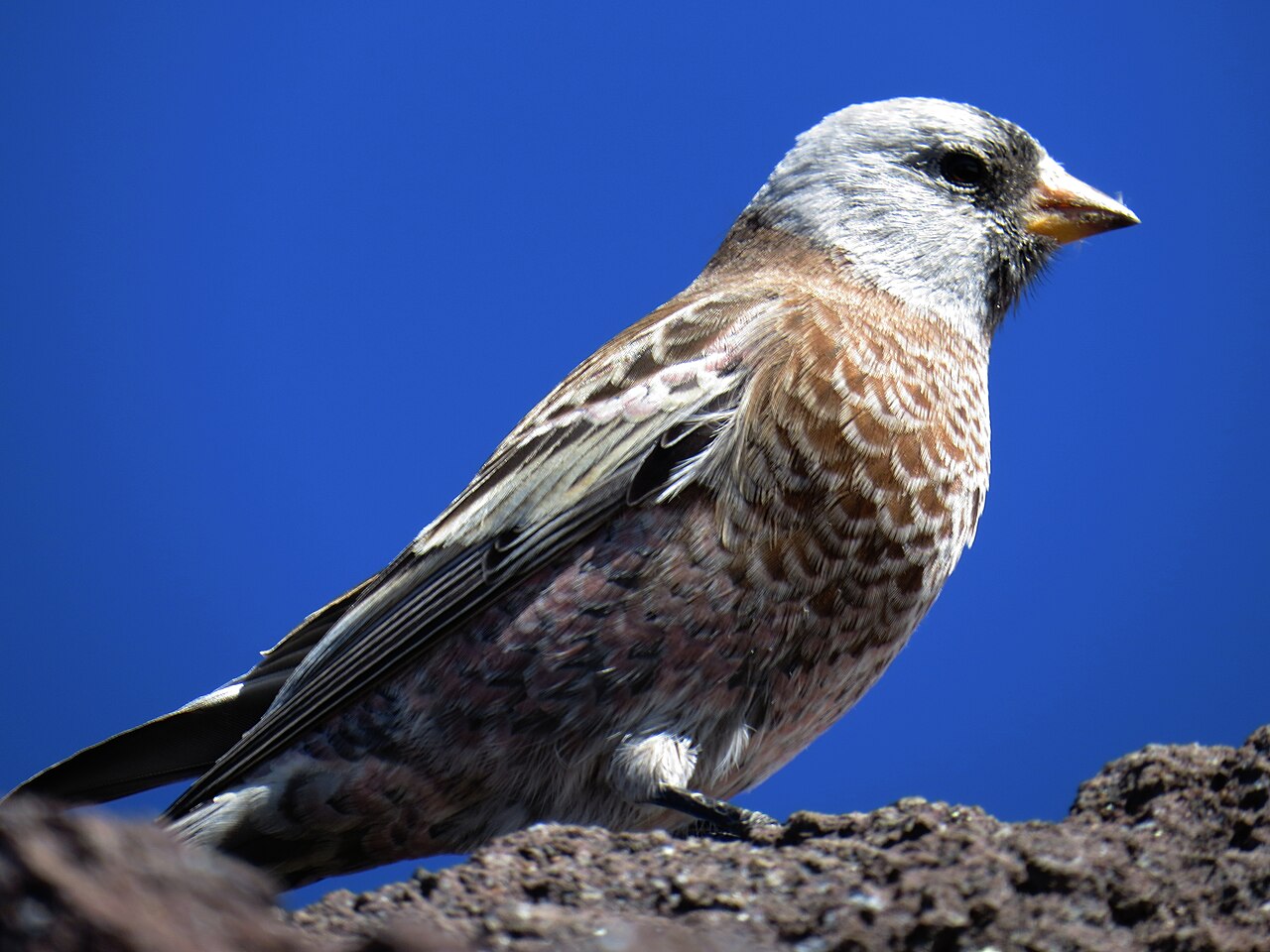
The Gray-crowned Rosy-Finch (Leucosticte tephrocotis) is the alpine finch that winters at mountain feeders — chocolate-brown with a rosy wash on wings, rump, and belly, and a gray band wrapping the crown behind a black forehead. It breeds on snowfields and tundra — among the highest-nesting birds on the continent — and descends in winter to flock at feeders in mountain towns. The calls are buzzy twitters and chirps. Winter yards attract them with black oil sunflower on platforms. They share the winter flock with the Pine Siskin and the Common Redpoll.
Species Physical Profile & Morphometrics
The Gray-crowned Rosy-Finch belongs to the finch family (Fringillidae) and breeds on alpine tundra and cliffs from Alaska through the mountain West, wintering in open country and mountain towns at lower elevation.
The identification formula: chocolate body + rosy wash + gray crown band behind black forehead. House Finches are streaked and red-faced; siskins are small and striped; a stocky, dark, rosy finch swarming a winter feeder in mountain country is this bird.
Essential Morphometric Field Marks:
- Body Length & Mass: 5.5 to 8.3 inches (14–21 cm) and 0.8 to 2.1 ounces (22–60 grams) — stocky and big-headed for a finch, varying by subspecies.
- Wingspan: 13 inches (33 cm); flight is bounding and flock-tight, swirls of birds pouring onto a feeding area.
- Bill Structure & Color: A conical seed bill, black in breeding season and yellow in winter — the season written on the face.
- Color Pattern: Chocolate-brown body with rosy wash, black forehead, gray crown band, pink-edged wings — elegant at rest, dazzling in flock flight.
- Male vs. Female: He is the rosier bird; she is duller and browner — both wear the gray band and share the flock life.
The rosy alpine prince: chocolate and pink on the feeder rim, gray crown sharp, twittering with forty of his closest friends.
Duller and browner — same gray band, subtler rose; she nests on the alpine cliffs in summer and flocks with the best of them in winter.
Gray-crowned Rosy-Finch Vocalization Guide (0 Field Recordings)
The Gray-crowned Rosy-Finch’s voice is a series of buzzy twitters and chirps — flock calls given constantly at feeders. All recordings below are real field audio via Wikimedia Commons — no simulations. For a deeper library, browse xeno-canto: Gray-crowned Rosy-Finch.
1. The Buzzy Twitter
2. The Flight Calls
3. The Alpine Song
Habitat, Range & the Vertical Commute
The Gray-crowned Rosy-Finch breeds on alpine tundra, cliffs, and snowfields — among the highest nesters on the continent — and winters at lower elevations in open country, mountain towns, and at feeders.

The Highest Nester Comes to Town
Breeding range spans the western mountains from Alaska to the Sierra Nevada and Rockies; winter drops the flocks to mountain valleys and towns across the West, where feeders become winter habitat.
For backyard birders: mountain-town yards with platform feeders of black oil sunflower can host winter flocks of dozens — a swirl of chocolate and rose against the snow.
Backyard Behavioral Patterns & Social Dynamics
The Gray-crowned Rosy-Finch is an alpine ground-feeder with a flocking winter life. Four behaviors explain most of what you will observe:
🏔️ The Snowfield Nester
It breeds on alpine tundra and cliff ledges above treeline — nesting where almost no other songbird dares.
🌨️ The Storm Descent
Winter storms push flocks to valley feeders — the worse the weather, the bigger the flock at the platform.
🐦 The Ground Flock
It feeds on the ground and low platforms in tight flocks — dozens of birds shoulder to shoulder on the seed.
🌅 The Roofline Roost
Flocks gather on roofs and wires at dawn before pouring onto the feeding grounds — a daily aerial ceremony.
Problem: “How Do I Identify and Host Rosy-Finches? What Should I Do?”
The three most common Gray-crowned Rosy-Finch puzzles all have proven answers:
First, the dark-finch question: a swarm of big dark finches at a mountain feeder is not starlings or cowbirds — look for the gray crown band and rosy wash; the twittering flock etiquette is pure finch. Second, the feeder crowding: flocks dominate tube feeders — spread the seed on platforms and cleared ground; ground-feeding spreads the crowd and satisfies everyone. Third, the summer disappearance: the birds leave town for the alpine in spring — the empty April feeder is the vertical commute, not a problem to solve.
Method 1: Set the Table — Platforms & Ground Seed
Design for a ground-feeding mountain flock:
-
Serve Black Oil Sunflower
Platforms and cleared ground — the staple the winter flocks seek.
-
Spread the Food Wide
Multiple platforms or a cleared patch — ground-feeders share better spread out.
-
Stock Through Storms
Blizzard days are peak need — the flock times its visit to the worst weather.
-
Add Grit & Water
A dish of grit and open water — seed-eaters need both in the freeze.
Method 2: Understand the Calendar — Alpine Summers, Valley Winters
Match the yard to the vertical commute:
-
Expect the November Arrival
First flocks come with the snow — the descent begins with the first storms.
-
Learn the Roofline Muster
Dawn gatherings on roofs and wires — count the flock before it pours down.
-
Offer Millet Backup
White millet on the ground — accepted readily and cheaper than sunflower for big flocks.
-
Watch the Spring Goodbye
April takes them to the tundra — the last flock of the season is a farewell to winter.
Tool Solution: Recommended Hardware for Gray-crowned Rosy-Finch
Equipment matched to a winter mountain flock:
Platform Feeder with Black Oil Sunflower
Big open platforms of sunflower — the winter staple of a rosy-finch flock.
- • Feed: Black oil sunflower
- • Style: Platform
- • Bonus: Siskins & redpolls join
Cleared Ground Patch
A snow-cleared patch with scattered seed — the natural feeding floor of the species.
- • Method: Scattered seed
- • Seed: Sunflower + millet
- • Bonus: Juncos & sparrows too
Heated Bird Bath
Open water in the mountain winter — daily drinking for flocks on a dry-seed diet.
- • Feature: Heated
- • Placement: Near feeders
- • Bonus: All winter birds
Frequently Asked Questions
- Species Profile: The Gray-crowned Rosy-Finch (Leucosticte tephrocotis) is a 5.5–8.3 inch, 0.8–2.1 ounce finch (Fringillidae), band code GCRF — the alpine nomad of the snowfields.
- ID in One Look: Chocolate body, rosy wash, gray crown band, winter flock.
- The Sound: Buzzy twittering flock calls; real field recordings above.
- Range & Habit: Western alpine breeder; winters in mountain towns and at feeders.
- Feeder Formula: Platform sunflower, ground scatter, grit, and heated water.
- The Vertical Commute: Snowfields in July, your feeder in January — same bird.
Bird Watching Log
Species: Gray-crowned Rosy-Finch (Leucosticte tephrocotis)
| Gray-crowned Rosy-Finch (Gray Band Seen: Yes / No — Rosy Wash Seen: Yes / No — Flock Size: ___ — Storm Day: Yes / No — Date & Time: ___) | |