
Red Crossbill


Red Crossbill (Loxia curvirostra): Complete Identification, Feeder Guide & Call Library
Quick Answer: How to Attract & Identify Red Crossbills
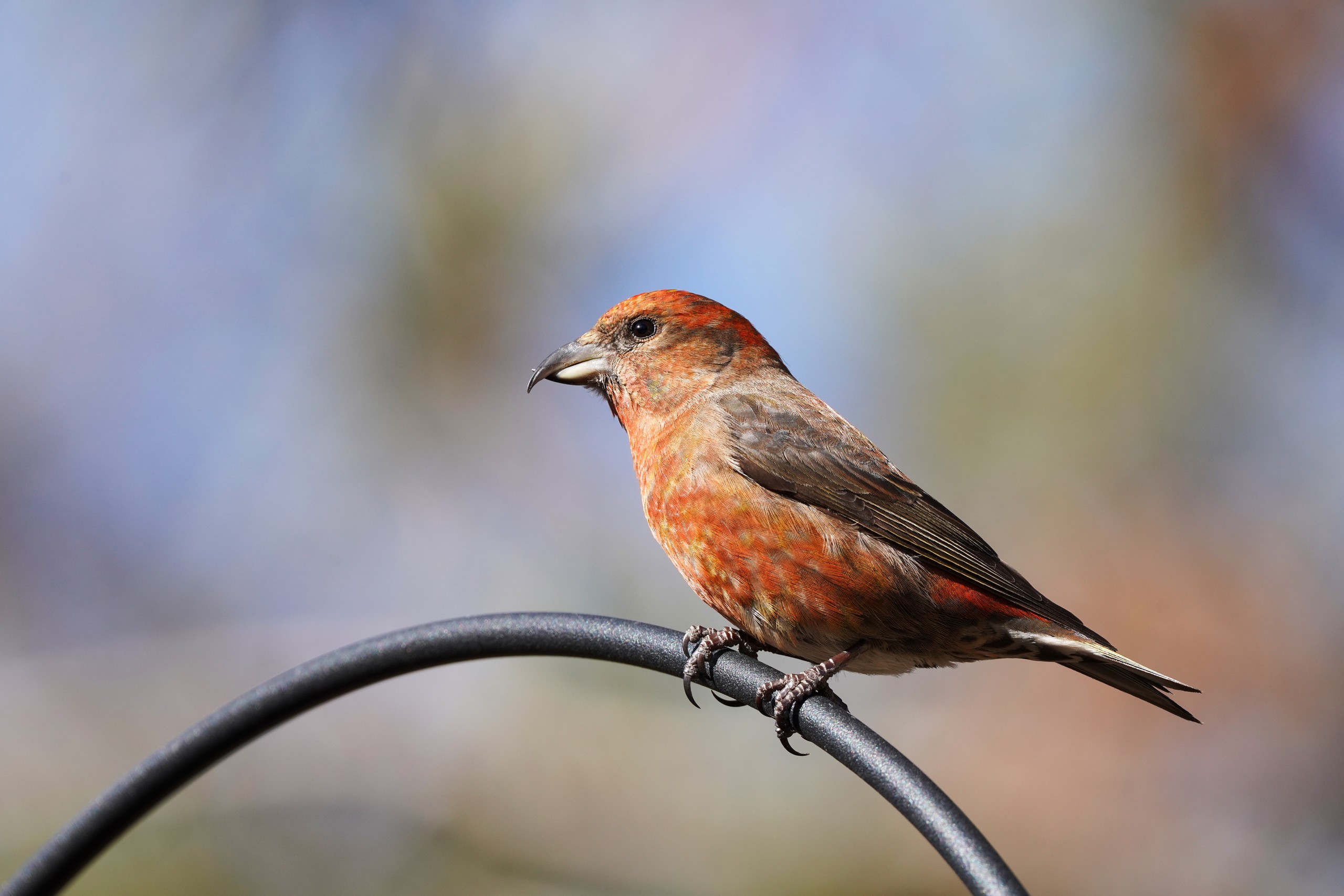
The Red Crossbill (Loxia curvirostra) is a stocky, big-headed finch of northern and western conifer forests, famous for the crossed bill tips that pry open spruce and pine cones. Males are dull brick-red with plain dark wings; females are yellow-olive with faint streaking. They are nomads — flocks appear wherever the cone crop is good, in any season, and can even nest in mid-winter. The giveaway sound is a sharp “jip-jip-jip” flight call from overhead. At feeders they take black oil sunflower in the shell on platform or hopper feeders, and they visit water and mineral grit daily.
Species Physical Profile & Morphometrics
The Red Crossbill belongs to the true finch family (Fringillidae), genus Loxia — the crossbills, the most specialized conifer-seed eaters on the continent. It is built like a small parrot: big head, strong neck, forked tail, and a bill that works like a crowbar.
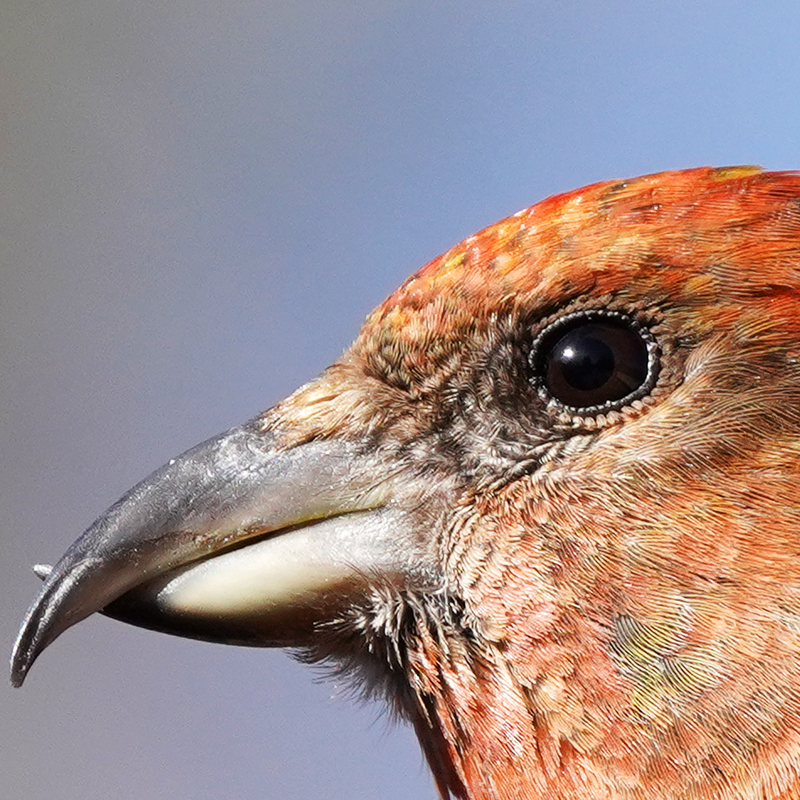
Everything about the bird serves the cones: crossed mandibles slide sideways to pry scales apart, a grooved tongue lifts the seed out, and the feet grip cones while the bill works. At close range the crossed bill tip settles identification instantly.
Essential Morphometric Field Marks:
- Body Length & Mass: 5.5 to 6.7 inches (14–17 cm) and 0.8 to 1.4 ounces (23–40 grams) — stockier and bigger-headed than a House Finch.
- Wingspan: About 9.8 to 10.6 inches (25–27 cm), driving a strong, undulating flock flight high over the treetops.
- Bill Structure: A stout conical bill with crossed tips — the lower mandible hooks left or right past the upper. No other backyard finch has it.
- Color Pattern: Male: fairly uniform dull brick-red (some birds orange-red) with plain dark wings and tail and no breast streaking. Female: yellow-olive with faint streaks and a brighter yellow rump. Juveniles: heavily streaked brown — but still with the crossed bill.
Dull brick-red from crown to rump, brightest on the crown and rump, with plain blackish wings and tail and no wing bars and no streaking. That clean, unstreaked red plus the crossed bill separates him from male House and Purple Finches at a glance.
Yellow-olive and gray overall with a brighter yellow rump, faintly streaked below — much cleaner than the boldly streaked females of House and Purple Finches. The heavy head and crossed bill give her away even before the color does.
Red Crossbill Vocalization Guide (2 Field Recordings + 1 Simulation)
The everyday sound is a sharp, hard “jip” or “jip-jip-jip” flight call, given constantly as flocks commute between cone-bearing trees — most crossbills are first detected by ear, overhead. North American birds come in about ten distinct “call types”, each with its own flight-call accent. The first two cards below are real field recordings shared under Creative Commons licenses; the third is a clearly labeled acoustic simulation of the flight call. For more wild audio, browse xeno-canto: Red Crossbill.
1. Real Recording — Calling from a Ponderosa Pine
2. Real Recording — A 40-Bird Flock in a Spruce
3. Flight Call Simulation — “Jip-jip-jip”
Habitat, Range & the Cone-Crop Wandering
Red Crossbills live where the cones are: spruce, fir, pine, and hemlock forest across Canada and Alaska, the western mountains, and pockets of the northern states and Appalachians. Beyond that core range they can turn up almost anywhere a cone crop ripens.

They Follow the Cones, Not the Calendar
The huge dark-purple core is year-round range, but crossbills ignore map edges: when a local cone crop fails, flocks irrupt hundreds of miles to wherever spruce and pine cones are ripening — in any month, in either direction.
In those wanderings they drop into parks, cemeteries, and backyards with ornamental spruces, and a platform feeder of sunflower seed can hold a flock while the local cones last.
Backyard Behavioral Patterns & Social Dynamics
The Red Crossbill is a parrot-like finch with a toolkit of specialized habits. Four behaviors explain most of what you will observe:
🔧 The Cone Crowbar
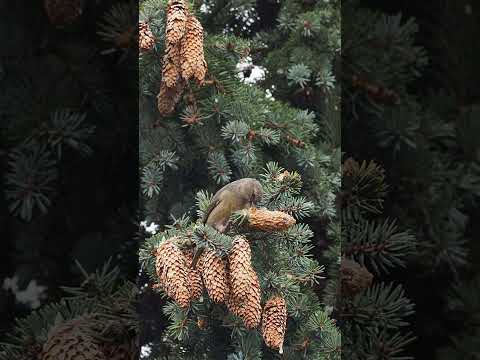
The bird pushes its closed bill between cone scales, then slides the crossed tips sideways to lever them apart, and lifts the seed out with a grooved tongue — often gripping the cone with one foot like a tiny parrot.
🧂 The Mineral Hunter
Crossbills famously gather at salt, mineral soil, and even wood ash — a craving you can serve at home with a shallow dish of grit or crushed eggshell near the feeder.
🥤 The Constant Drinker
A dry-seed diet makes crossbills unusually thirsty — they drink and bathe daily, and a clean bird bath can pull a passing flock down out of the treetops when seed alone will not.
❄️ The Any-Month Nester
Wherever cones ripen — even in mid-winter — crossbills can breed. The female incubates 3–4 eggs in a conifer cup nest while snow lies on the branches, a trick almost no other songbird attempts.
Problem: “A Red Bird Showed Up at My Feeder — But Something’s Wrong With Its Beak”
The three most common Red Crossbill puzzles all resolve quickly:
First, the “broken bill” worry: the crossed mandible tips look like a deformity to first-time observers — they are not; the cross is the whole point of the bird, a precision tool for opening cones, and the bird is perfectly healthy. Second, the misidentification: a red crossbill gets filed as a House Finch or Purple Finch — check for the unstreaked brick-red body, plain dark wings, big head, and crossed bill tip. Third, the disappearance: crossbills are cone-crop nomads; when the local cones are exhausted, the flock simply leaves, sometimes after a single memorable week. Stock in-shell sunflower on a platform feeder, keep fresh water out, and if the flock stays, watch for the crossed bills and listen for the sharp jip-jip overhead — you may be hosting winter nesters.
Method 1: Set the Table — Sunflower in the Shell, on a Platform
Design for a stocky, powerful-billed cone specialist:
-
Serve Black Oil Sunflower in the Shell
In-shell black oil sunflower is the crossbill feeder seed — that crowbar bill shells it in one motion. Unlike the small finches, crossbills want room to work: serve it on a platform or hopper feeder, not a fine-mesh sock. Our roundup of the Best Tube Feeders for Small Birds covers hopper and platform styles too.
-
Keep the Seed Dry and the Tray Clean
Platform feeders expose seed to weather — offer a day or two’s worth at a time and brush out wet hulls. Crossbills visit in flocks, and clean, dry seed keeps the whole group healthy.
-
Anchor the Station Near Conifers
Place feeders near spruces or pines if you have them — crossbills commuting over the canopy drop to feeders most readily when the yard already feels like conifer country.
-
Never Skimp on Water
Dry-seed specialists drink constantly. A shallow bath kept full is half the formula; in freezing weather a heated bird bath can hold a flock by itself.
Method 2: Conifers, Water & Grit — the Crossbill Yard
Think like a cone crop:
-
Plant or Protect Cone-Bearing Trees
Spruces, pines, firs, and hemlocks are crossbill habitat and crossbill pantry in one. Even two or three ornamental spruces give a wandering flock a reason to stop — and stay if the cones ripen.
-
Offer Mineral Grit
Play to the famous craving: a shallow dish of coarse grit, crushed eggshell, or mineral soil near the feeder station replicates the natural salt licks crossbills seek out in the wild.
-
Listen Before You Look
Most backyard crossbills are found by ear first — learn the hard “jip-jip” flight call, look up, and check the treetops. Flocks often feed silently in cones and reveal themselves only when they fly.
-
Keep the Whole Station Clean
Flocking finches concentrate germs. Scrub feeders every one to two weeks, rinse and dry fully, and rake hulls and droppings from beneath the platform.
Tool Solution: Recommended Hardware for Red Crossbills
Equipment matched to a stocky, powerful-billed flock bird:
Platform / Hopper Feeder
A roomy platform or hopper stocked with in-shell black oil sunflower — the setup that gives a crossbill flock space to land, grip, and shell seeds comfortably.
- • Seed: Black oil sunflower, in shell
- • Style: Platform or hopper
- • Capacity: Serves a whole flock
Sturdy Tube Feeder
A large-port tube with generous perches, filled with sunflower — keeps seed dry in wet weather and feeds crossbills alongside the finches already using it.
- • Seed: Black oil sunflower
- • Ports: Large ports, long perches
- • Weather: Seed stays dry
Shallow Heated Bird Bath
A shallow, gently sloped bath with a thermostatic heater — crossbills drink daily, and open water is often the feature that converts a flyover flock into yard regulars.
- • Depth: 1–2 in, gently sloped
- • Winter: Thermostatic heater
- • Placement: Near conifers or shrubs
Frequently Asked Questions
- Species Profile: The Red Crossbill (Loxia curvirostra) is a stocky 5.5–6.7 inch, 23–40 gram true finch (Fringillidae) with crossed bill tips built for prying open conifer cones.
- Know the Colors: Males are unstreaked dull brick-red with plain dark wings; females are yellow-olive with a brighter rump — both sexes carry the diagnostic crossed bill.
- Cone-Crop Nomads: They follow the cones, not the calendar — irrupting hundreds of miles when crops fail, and able to nest in any month, even mid-winter.
- Feeder Formula: Black oil sunflower in the shell on a platform or hopper feeder, near conifers, with fresh water always available.
- Listen Up: The hard “jip-jip-jip” flight call — in about ten regional call types — is how most flocks are first detected overhead.
- Bonus Draws: Mineral grit dishes and clean bird baths play to the crossbill’s famous salt craving and constant thirst.
Bird Watching Log
Species: Red Crossbill (Loxia curvirostra)
| Red Crossbill (Crossed Bill Seen? Y / N — Flock Size: ____________________________) | |