
House Wren



House Wren (Troglodytes aedon): Complete Identification, Nest Box Guide & Song Library
Quick Answer: How to Attract & Identify House Wrens
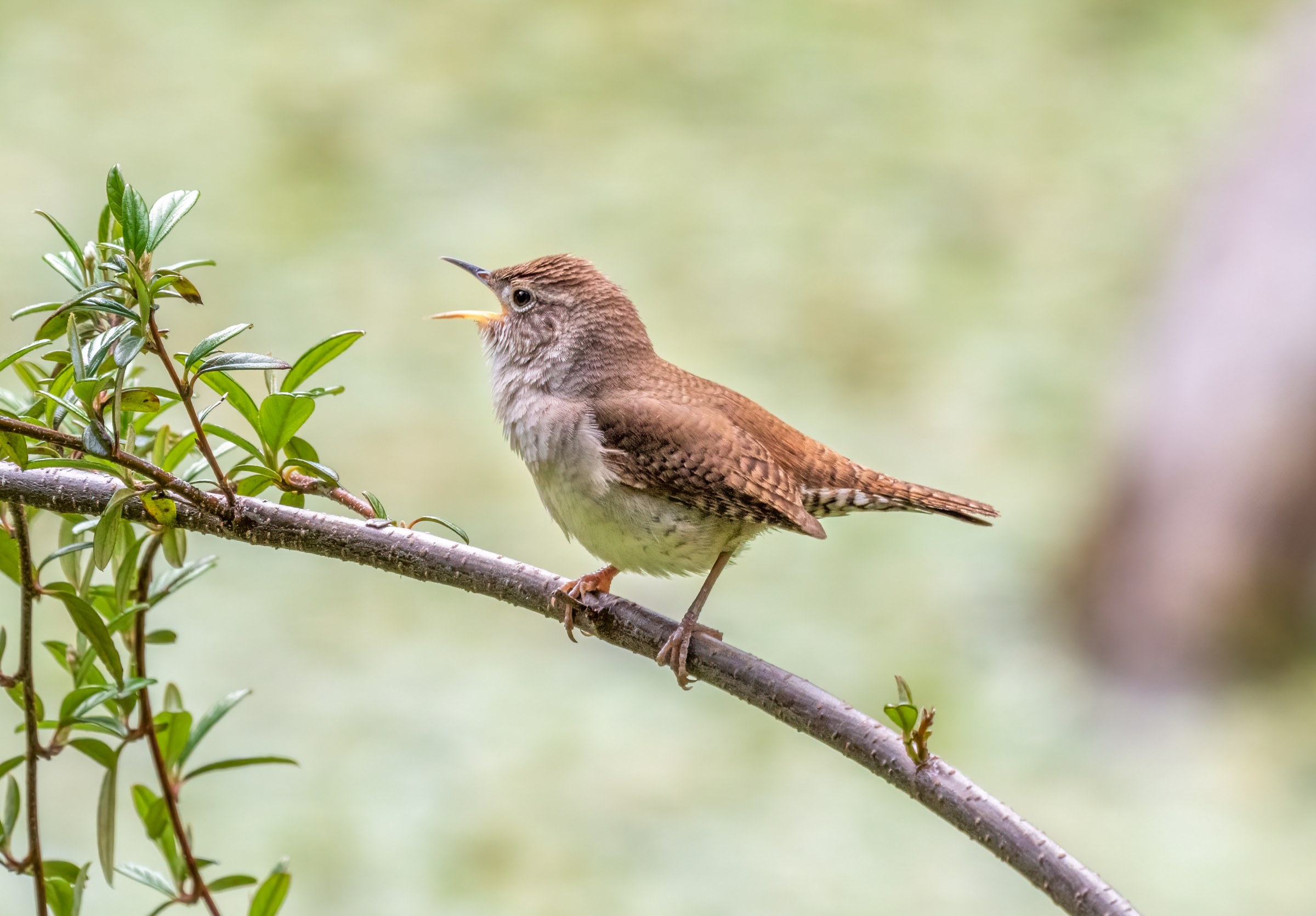
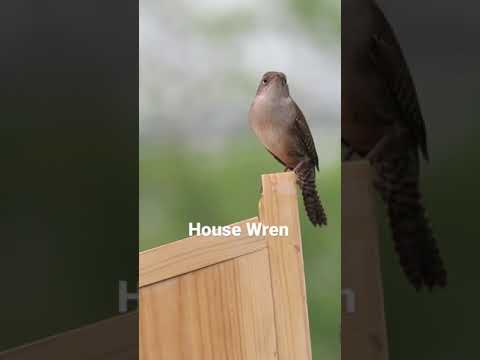
The House Wren (Troglodytes aedon) is the small plain-brown bird with the oversized bubbling song — the classic backyard wren of gardens, hedgerows, and birdhouses across most of the United States in summer. Look for warm brown plumage, a faint eyebrow, fine barring on the wings, and a cocked tail. It eats insects almost exclusively, so attract it with a simple wooden nest box with a 1-1/8 inch entrance hole, a brushy corner, and a pesticide-free garden — not seed feeders. Its southeastern cousin, the Carolina Wren, is richer rust-colored with a bold white eyebrow.
Species Physical Profile & Morphometrics
The House Wren belongs to the wren family (Troglodytidae) and is the most widespread and backyard-friendly wren on the continent. In the East it shares yards with the larger, rustier Carolina Wren; in the West, compare the Bewick’s Wren, which shows a bold white eyebrow and a longer, white-corners tail.
The identification formula: tiny + plain warm brown + faint eyebrow + cocked tail + explosive bubbly song. If a mousy brown bird is scolding you from inside the lilac with a voice far too big for its body, you have found the House Wren.
Essential Morphometric Field Marks:
- Body Length & Mass: 4.3 to 5.1 inches (11–13 cm) and just 0.3 to 0.4 ounces (10–12 grams) — barely heavier than two quarters, yet one of the loudest birds in the yard.
- Wingspan: about 5.9 inches (15 cm); flight is short, quick, and direct between shrubs, with a whir of small round wings.
- Bill Structure & Color: A thin, pointed, slightly downcurved bill, dark above and paler below — built for plucking caterpillars and spiders from bark and leaf litter.
- Color Pattern: Plain gray-brown above, pale grayish below, with a faint pale eyebrow, darker barring on the wings and tail, and warm buffy flanks. Both sexes look alike — the singer on the box is the male, but you will not tell by plumage.
- Juveniles & Seasons: Freshly fledged juveniles look like softer, shorter-tailed adults and trail their parents through the shrubs, begging with quivering wings; plumage changes little across seasons.
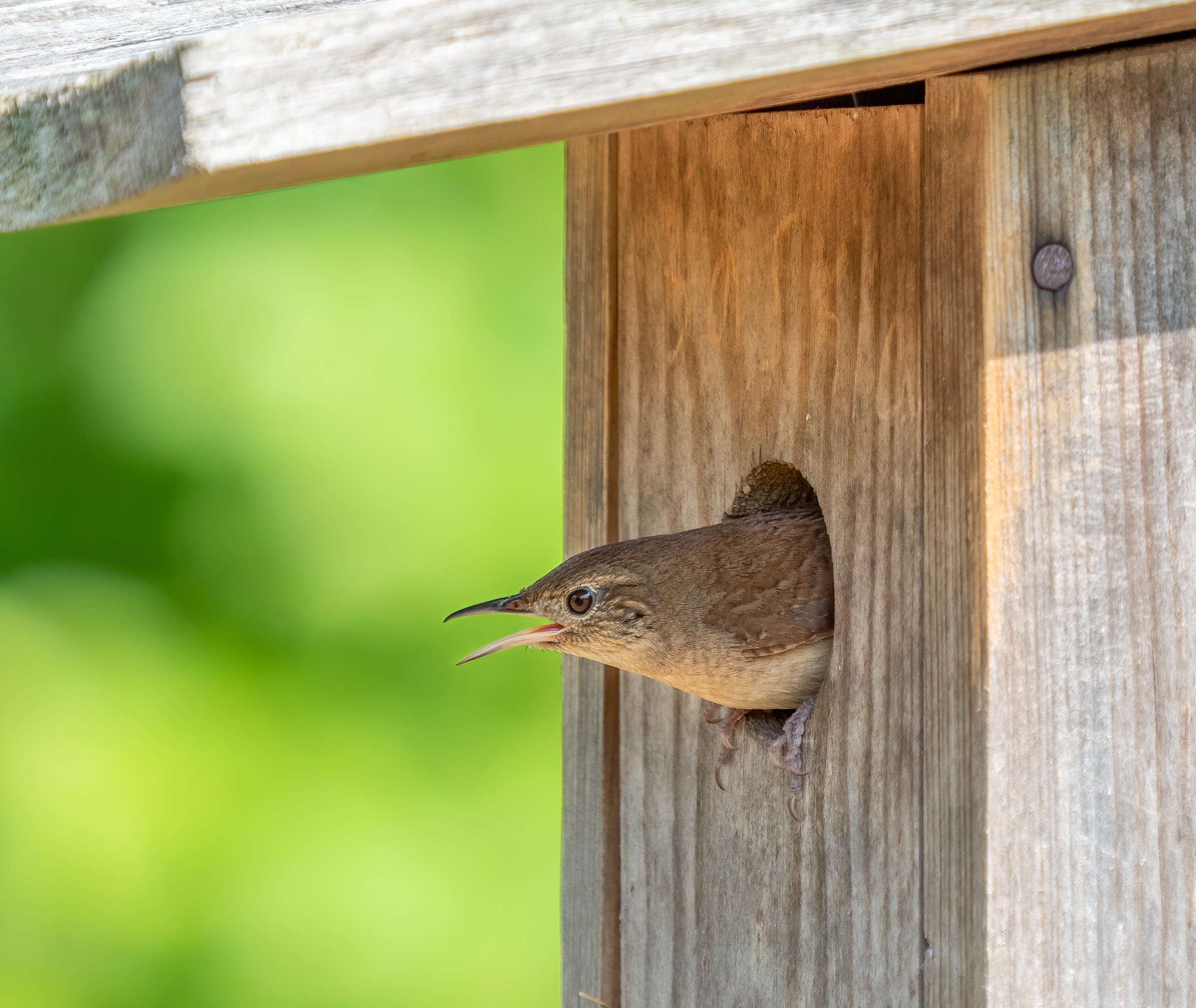
The tireless landlord: he arrives first in spring, claims the yard, and stuffs every cavity in it — nest boxes, old woodpecker holes, flowerpots, even boots left on the porch — with twigs. Then he sings. All day. The female inspects his offerings and chooses one to finish.
The quiet inspector — identical in plumage, she tours the male’s twig-stuffed cavities, picks one, and lines the cup with grass, feathers, and spider egg sacs before laying six to eight speckled eggs. She does the incubating; he guards and sings.
House Wren Vocalization Guide (3 Field Recordings)
The House Wren’s song is a rushing, bubbling cascade of notes — astonishing volume from a ten-gram bird — and the scold is a harsh, dry chet-chet-chet. All three recordings below are real field audio, shared under commercial-use licenses via Wikimedia Commons — no simulations. For a deeper library, browse xeno-canto: House Wren.
1. The Bubbling Cascade
2. The Territory Salvo
3. Song and Scold
Habitat, Range & the Backyard Life
The House Wren is a bird of open woods, forest edges, gardens, and backyards — anywhere shrubby cover meets open foraging ground and a cavity is on offer. Few native birds accept human company so readily: a birdhouse on a fence post can be claimed within hours of the male’s spring arrival.

Canada to Cape Horn
The House Wren breeds across southern Canada and most of the United States, and its close relatives extend the lineage through Latin America to Tierra del Fuego — one of the widest distributions of any songbird in the Americas. Northern birds are migratory, wintering in the southern U.S. and Mexico.
For backyard birders, the season runs April through August: males arrive singing in spring, fill local cavities with twigs, and a claimed box usually means a summer of song and free insect control. By September the yard falls silent as birds slip south.
Backyard Behavioral Patterns & Social Dynamics
The House Wren packs a remarkable amount of drama into ten grams. Four behaviors explain most of what you will observe:
🪵 The Twig Stuffer
The male’s courtship strategy is architecture: he fills every cavity in his territory with twigs — often sticks so long he must pivot and angle them through the entrance hole. These dummy nests crowd out rivals and give the female a menu of homesites to choose from.
🎤 The Oversized Voice
The song-to-body ratio is absurd: a male pours out his bubbling cascade every few seconds for hours, from the birdhouse roof, the fence top, and the highest bare twig. He sings through the heat of noon when other birds fall silent — the true voice of the summer backyard.
🐛 The Garden Patrol
House Wrens eat almost nothing but insects and spiders — caterpillars, beetles, leafhoppers, and pest larvae gleaned from shrubs, bark, and leaf litter. A nesting pair makes hundreds of feeding trips a day; a wren family is a season-long, chemical-free pest control service for the garden.
⚔️ The Fierce Neighbor
Wrens defend cavities aggressively: they scold intruders relentlessly and are documented to puncture or remove the eggs of birds nesting too close — an ancient competition for scarce holes. Give bluebird boxes generous spacing, and let the wren keep the garden-side box.
Problem: “A House Wren Took Over the Bluebird Box — or Emptied Another Bird’s Nest. What Should I Do?”
The two most common House Wren conflicts both have workable answers:
First, the occupied bluebird box: the wren claimed it fair and square, and as a native species it is protected — never remove an active nest with eggs. Instead, think like a wren: they want shrubby edges, not open lawn. Move the bluebird box to open grass and hang a separate wren box 100 feet away near shrubs or garden cover; next spring each species claims its preferred habitat and both nest in peace. Second, the egg removal: it is distressing to find, but it is instinctive cavity competition, not spite — House Wrens evolved in woodlands where holes are scarce. Prevention is the only ethical tool: site boxes apart, screen the wren box with vegetation, and use proper entrance sizes (1-1/8 inch for wrens; 1-1/2 inch for bluebirds). A yard planned this way can host both families every summer.
Method 1: The Right Nest Box, Placed the Wren Way
The fastest route to a resident wren is a correct box in the right spot:
-
Drill a 1-1/8 Inch Entrance
The entrance hole is the whole game: 1-1/8 inch admits a wren and excludes House Sparrows and starlings — no predator guard or gimmick does more. Use an unpainted wooden box with a floor of about 4 by 4 inches, drainage holes, and no perch (wrens do not need one; predators do).
-
Mount It at the Shrubby Edge
Five to ten feet up on a pole, post, or tree trunk at the edge of the garden or along a shrub border — wrens like cover within a short flight of the door. Face the entrance away from prevailing storms and afternoon sun.
-
Offer More Than One Cavity
Males build several twig dummy nests and let the female choose — two or three boxes spaced through the yard raise the odds that one becomes the real nest. Hanging baskets, old boots, and empty flowerpots count too; a wren’s definition of “cavity” is generous.
-
Clean the Box After the Season
Once the last brood fledges — usually by August — open the box, remove the old twig platform and nest cup, and scrub with a mild vinegar solution. A clean box invites the same pair or their offspring back next spring, and House Wrens show strong loyalty to successful sites.
Method 2: Build the Habitat — Brush, Bugs & Water
Wrens choose yards by cover and food, not by seed:
-
Keep a Brushy Corner
A brush pile, a dense shrub border, or an untrimmed corner is wren infrastructure — foraging ground, escape cover, and scolding post in one. Stack fallen branches loosely rather than hauling them away; the wren will move in before the pile settles.
-
Garden Without Pesticides
Wrens are insect hunters — a chemical-free garden with healthy caterpillar and spider populations is the feeder that actually attracts them. Tolerate a few chewed leaves; each one represents the prey base that fills a wren nest box with song.
-
Offer Water at Ground Level
A shallow birdbath or ground-level dish near cover draws wrens to drink and bathe through the summer heat — place it within a quick dash of shrubs so a small brown bird never feels exposed.
-
Leave the Leaf Litter
An unraked layer under the shrubs shelters the spiders and beetles wrens probe for, especially on cool spring mornings when the garden’s surface life is slow. Rake the lawn if you must — spare the beds.
Tool Solution: Recommended Hardware for House Wrens
Equipment matched to a tiny cavity-nesting insect hunter:
Wren Nest Box (1-1/8 Inch Hole)
A small unpainted wooden box with a 1-1/8 inch entrance, 4×4 inch floor, drainage, and no perch — the exact specification that welcomes wrens and locks out House Sparrows and starlings.
- • Entrance: 1-1/8 in exactly
- • Mount: 5–10 ft, shrub edge
- • Perch: None — ever
Small Dish Feeder for Mealworms
A shallow dish or small tray feeder offering live or dried mealworms near cover — not a staple for wrens, but a welcome supplement in cold spring snaps when insects are scarce.
- • Food: Mealworms
- • Style: Shallow dish, covered
- • Placement: Low, near shrubs
Heated Birdbath
A shallow heated bath near shrub cover serves the whole yard in freezing weather — and in the southern states, wintering House Wrens use it daily when natural water ices over.
- • Depth: 1–2 in, gently sloped
- • Feature: Thermostat-controlled
- • Placement: Beside cover
Frequently Asked Questions
- Species Profile: The House Wren (Troglodytes aedon) is a 4.3–5.1 inch, 0.3–0.4 ounce songbird (Troglodytidae), band code HOWR — the classic backyard wren of American gardens.
- ID in One Look: Tiny, plain warm brown, faint eyebrow, fine barring on wings and tail, cocked tail — and an explosive bubbling song far too big for the bird.
- The Sound: A rushing, bubbling cascade repeated every few seconds all morning, plus a harsh chet-chet-chet scold; three real field recordings above.
- Range & Habit: Breeds across southern Canada and most of the U.S., wintering in the South and Mexico — a bird of garden edges, hedgerows, and nest boxes, present April through August in most yards.
- Attraction Formula: A wooden nest box with a 1-1/8 inch entrance at the shrubby edge, a brushy corner, leaf litter, ground-level water, and a pesticide-free garden — insects, not seed, are the draw.
- The Season: Males arrive in April and May and stuff every cavity with twigs; give bluebird boxes 100 feet of spacing in open grass so both species can nest in the same yard.

Bird Watching Log
Species: House Wren (Troglodytes aedon)
| House Wren (Tail Cocked: Yes / No — Bubbling Song Heard: Yes / No — Nest Box Used: Yes / No — Twig Carrying Seen: Yes / No) | |