
Abert’s Towhee


Abert’s Towhee (Melozone aberti): Complete Identification, Habitat Guide & Sound Library
Quick Answer: How to Attract & Identify the Abert’s Towhee
Abert’s Towhee (Melozone aberti) is the desert river towhee — a large, warm-brown sparrow with a black mask around the bill and a chestnut undertail, scratching through leaf litter in riverside thickets and desert-edge yards. Pairs duet with accelerating squeals that sound like a squeaky toy speeding up. It never migrates — the pair in your hedge is there all year. Southwestern yards attract them with scattered millet, dense hedges, ground water, and leaf litter left in place. They share the brush with the Canyon Towhee and the Curve-billed Thrasher.
Species Physical Profile & Morphometrics
Abert’s Towhee belongs to the New World sparrow family (Passerellidae) and is a permanent resident of desert river corridors in Arizona, the Colorado River valley, and adjacent corners of Nevada, Utah, California, and New Mexico. It rarely strays far from dense low brush.
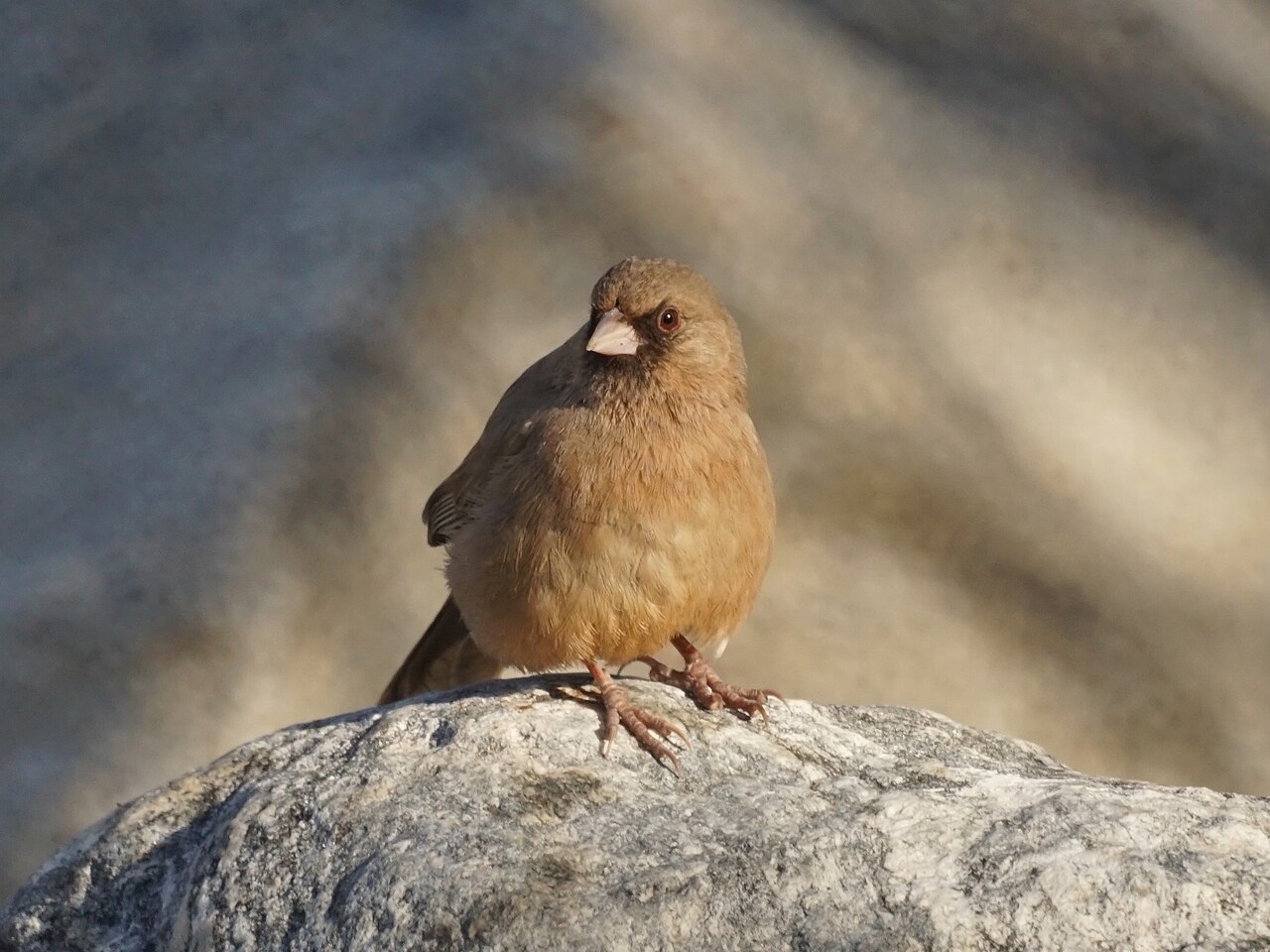
The identification formula: warm brown all over + black face mask + chestnut undertail. The Canyon Towhee is grayer with a rusty crown and spotted throat instead of a mask; the California Towhee is plainer and lives far to the west. Within its desert range, the black mask is decisive.
Essential Morphometric Field Marks:
- Body Length & Mass: 8.3 to 9.8 inches (21–25 cm) and 1.4 to 1.8 ounces (39–52 grams) — a big, long-tailed ground sparrow, towhee-built and strong-legged.
- Wingspan: 11.0 inches (28 cm); flight is short and low — a darting burst from hedge to hedge with the long tail pumping.
- Bill Structure & Color: A stout, dark, conical bill — seed-cracking equipment, set in the black mask like a tool in a workbench.
- Color Pattern: Warm cinnamon-brown overall, black around the bill and eyes forming a mask, chestnut-rufous undertail coverts, and a long graduated tail flipped and pumped as it scratches.
- Male vs. Female: The sexes look alike — both wear the mask — and pairs stay together year-round, duetting from the hedge at dawn.
The masked foreman of the hedge: warm brown with a burglar’s black mask, raking the leaf litter in double-footed jumps while his duet partner answers from the other end of the yard.
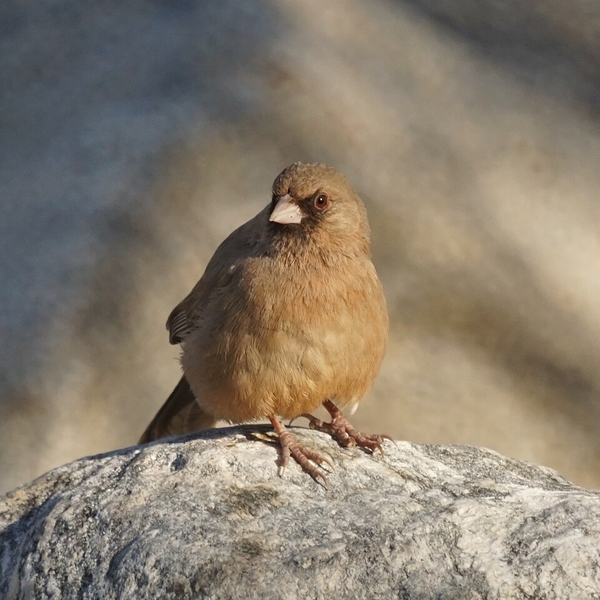
Identically masked — she nests deep in dense brush a few feet off the ground and keeps up her end of the accelerating duet that holds the pair’s territory.
Abert’s Towhee Vocalization Guide (0 Field Recordings)
The Abert’s Towhee’s voice is a sharp peek and a famous accelerating squeal duet — notes speeding into a rattle, like a squeaky toy wound too fast. All recordings below are real field audio via Wikimedia Commons — no simulations. For a deeper library, browse xeno-canto: Abert’s Towhee.
1. The Squeaky Duet
2. The Sharp Peek
3. Dawn Chorus
Habitat, Range & the Desert River Corridor
Abert’s Towhee lives in dense low brush along desert water: mesquite bosques, saltcedar and willow thickets, riverside hedges, and the overgrown edges of desert towns and farms. Suburban yards with dense hedges and leaf litter inside its range are fully occupied habitat.

The Hedge That Never Leaves
The range hugs the Sonoran Desert’s river corridors: Arizona’s Gila and Salt rivers, the Colorado River valley up into Nevada and Utah’s corners, and a finger into New Mexico. It does not migrate — a pair defends the same hedgerow for years.
For backyard birders: desert towns from Phoenix to Yuma can host a resident pair wherever dense hedges meet bare soil and water — this is one of the few desert birds that genuinely prefers a good hedge to wild country.
Backyard Behavioral Patterns & Social Dynamics
The Abert’s Towhee is a hedge-loyal, litter-scratching, duet-singing resident. Four behaviors explain most of what you will observe:
🍂 The Double-Footed Scratcher
It feeds by raking leaf litter with both feet at once, hopping forward and scratching back — watch the leaves fly at the hedge edge at dawn.
🎤 The Squeaky Duet
Pairs duet in accelerating squeals — one of the most distinctive pair-bond displays of any backyard bird; the faster the squeal, the tighter the bond.
🏡 The Hedge Loyalist
A pair occupies the same hedge for years — they are among the most site-faithful birds in the Southwest; your hedge is their address.
🌅 The Dawn & Dusk Schedule
Most active early and late, resting deep in cover through desert midday — set your watching clock accordingly.
Problem: “I Hear the Squeaky Duet but Rarely See the Birds. What Should I Do?”
The three most common Abert’s Towhee puzzles all have proven answers:
First, the invisible pair: Abert’s Towhees feed at the brush line, not the feeder pole — scatter millet where hedge shadow meets open soil, sit still at dawn, and the masked faces appear within days. Second, the brown-bird confusion: Canyon Towhees overlap widely — look for the black mask and chestnut undertail; Canyon is grayer with a rusty crown and no mask. Third, the sudden silence: duets pause during molt and midsummer heat — listen again at dawn in September; the pair has not left, it is simply quiet, and the hedge still holds them.
Method 1: Set the Table — Millet, Litter & Low Water
Design for a hedge-dwelling ground scratcher:
-
Scatter Millet at the Hedge Line
White millet scattered where cover meets open soil — never in the open center of the yard.
-
Leave the Leaf Litter
Undisturbed leaf litter under shrubs is the natural feeding floor — rake the lawn, spare the hedge bottom.
-
Provide Low Water
A shallow ground dish near the hedge — desert towhees drink morning and evening, and water anchors the pair.
-
Feed at a Fixed Hour
Dawn scattering on schedule — the pair learns the routine and waits for it.
Method 2: Build the Habitat — Dense Hedges & Quiet Corners
Keep the hedge thick, and the pair keeps the address:
-
Plant Dense Native Hedges
Mesquite, wolfberry, and desert hackberry — layered, thorny, and dense: towhee architecture.
-
Never Mid-Season Shear
No hedge trimming March–July — nests sit a few feet up in the tangle.
-
Keep Cats Indoors
Ground scratchers are cat prey — the hedge pair survives only where the yard is safe.
-
Let a Corner Go Wild
An unraked, unpruned back corner is worth more than any feeder — the pair’s core territory.
Tool Solution: Recommended Hardware for Abert’s Towhee
Equipment matched to a desert hedge towhee:
Ground Seed Scatter
White millet scattered daily at the hedge line — the simplest, surest way to bring the masked pair into view.
- • Food: White millet, cracked corn
- • Placement: Hedge line
- • Timing: Dawn
Shallow Ground Water
An inch-deep dish beside the hedge, full through every dry spell — the pair’s daily appointment.
- • Depth: One inch
- • Placement: Beside cover
- • Rule: Never dry
Native Brush Plantings
Mesquite, wolfberry, and hackberry thickets — plant the hedge and the towhees will find it.
- • Plants: Mesquite, wolfberry
- • Structure: Dense & thorny
- • Bonus: Thrashers & wrens too
Frequently Asked Questions
- Species Profile: The Abert’s Towhee (Melozone aberti) is an 8.3–9.8 inch, 1.4–1.8 ounce sparrow (Passerellidae), band code ABTO — the masked towhee of desert river corridors.
- ID in One Look: Warm brown body, black face mask, chestnut undertail, long pumping tail.
- The Sound: Sharp peeks and the famous accelerating squeaky-toy duet; real field recordings above.
- Range & Habit: Permanent resident of southwestern river brush and hedges; double-footed litter scratcher; fiercely site-faithful.
- Feeder Formula: Millet at the hedge line, litter left in place, low water beside cover, and no cats.
- The Hedge Address: Win the pair and you host them for years — same hedge, same dawn duet, same yard.
Bird Watching Log
Species: Abert’s Towhee (Melozone aberti)
| Abert’s Towhee (Pair Seen: Yes / No — Mask Seen: Yes / No — Duet Heard: Yes / No — At Hedge Seed: Yes / No — At Water: Yes / No — Date & Time: ___) | |