
American Tree Sparrow
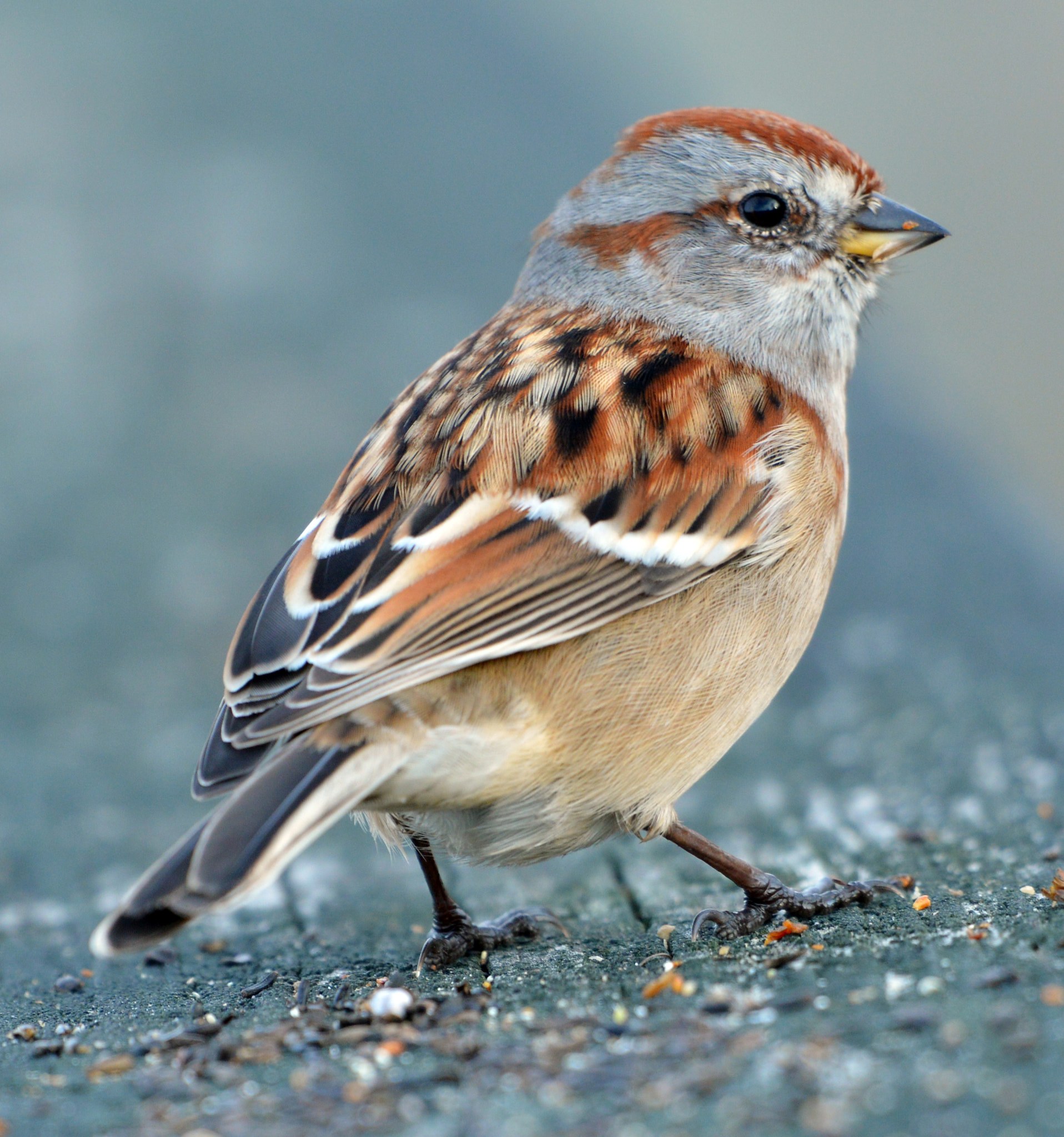


American Tree Sparrow (Spizelloides arborea): Complete Identification, Feeder Guide & Call Library
Quick Answer: How to Attract & Identify American Tree Sparrows
The American Tree Sparrow (Spizelloides arborea) is the round, rusty-capped snowbird of northern and midwestern winters — look for a plain grayish breast with one small dark central spot, a bicolored bill (dark above, yellow below), rusty wings with two white bars, and a rich rusty cap. Despite the name it is a ground bird that breeds on the far northern tundra and winters in weedy fields and feeder yards across the northern half of the country, arriving in November and leaving by April. To attract the winter flocks: scatter white millet on the ground — even right onto the snow — beside hedges or brush piles, offer safflower seed on a low platform, leave garden weeds and seed heads standing, and keep a heated bird bath open in freezing weather. Listen for the gentle musical twitter of the flock and, from late winter, the sweet whistled song.
Species Physical Profile & Morphometrics
The American Tree Sparrow belongs to the New World sparrow family (Passerellidae) and is one of the neatest-dressed winter sparrows — round-bodied, clean-breasted, and marked with a neat set of field marks that hold up in any plumage.
The identification formula: rusty cap + rusty eyeline + plain breast with a dark central stickpin spot + bicolored bill, seen in small flocks on the ground in the coldest months.
Essential Morphometric Field Marks:
- Body Length & Mass: About 5.5 inches (14 cm) and 0.5 to 1.0 ounces (13–28 grams) — plumper and rounder than a Chipping Sparrow, with a full chest and short notched tail.
- Wingspan: About 9.4 inches (24 cm), with rusty wings showing two clean white wing bars.
- Bill Structure & Color: A small conical seed bill that is strikingly bicolored — blackish above, yellow below. In a winter flock of brown sparrows, that two-tone bill is often the first reliable clue.
- Color Pattern: Rusty-red cap and rusty line behind the eye; gray face and underparts without streaking, carrying a single small dark stickpin spot in the center of the breast; rusty-brown back and flanks washed buff. Males and females look alike, and winter is when you will see them.
Crisp and colorful: bright rusty cap, clean gray breast with the central dot, rusty wings with white bars. Fresh fall and winter plumage is the sharpest — this is the look that visits your feeders.
The Chipping Sparrow shares the rusty cap but has a black line through the eye, a thin all-dark bill, and no breast spot — and it is a summer bird in most yards. The Field Sparrow has a pink bill and a plain face. Bicolored bill plus central spot settles it.
American Tree Sparrow Vocalization Guide (2 Field Recordings + 1 Simulation)
Winter flocks converse in a gentle, musical twittering — soft “tseelik” and “teedle-eet” notes exchanged as they feed. The full song, heard on mild days from late winter onward, is a sweet, high whistled series: a few clear opening notes flowing into a short, tuneful warble. The first two cards below are real field recordings shared under Creative Commons licenses; the third is a clearly labeled acoustic simulation of the song skeleton. For more wild audio, browse xeno-canto: American Tree Sparrow.
1. Real Recording — The Tundra Song
2. Real Recording — Winter Flock Calls
3. Song Simulation — Clear Notes, Then a Warble
Habitat, Range & the Winter Circuit
In summer this sparrow lives beyond the treeline — in the willow and birch thickets of the tundra and taiga edge across Alaska and northern Canada. In winter it moves south into weedy fields, marsh edges, hedgerows, and feeder yards across the northern half of the United States.

A True Snowbird
The orange band shows how far north this bird goes to nest — the tundra and taiga of Alaska and northern Canada, country with no trees at all despite the name. The yellow belt is the migration corridor through southern Canada.
The blue band is where you meet it: the winter range, covering New England, the mid-Atlantic, the Midwest, the Great Plains, and the interior West. If you live in that band, your yard can host this bird from November into April.
Backyard Behavioral Patterns & Social Dynamics
The American Tree Sparrow is a sociable, hardy ground bird of the cold months. Four behaviors explain most of what you will observe:
❄️ The Snowstorm Regular
Feeder visits spike exactly when the weather turns worst — snow cover buries the wild seed, and the flock works your scattered millet and platform trays all day. This is one bird that blizzards bring in, not drive off.
🌾 The Seed-Head Rider
In weedy corners it feeds straight off the stalk, riding grass and goldenrod stems down to the snow and picking the seed heads clean — a winter garden left standing is a self-stocking feeder.
👥 The Twittering Flock
It winters in loose flocks of a handful to dozens, feeding on open ground near cover and keeping up a constant soft, musical twitter. Where one appears under your feeder, more are usually nearby.
🎵 The Late-Winter Singer
On mild days from late February into April, males tune up for the tundra — the sweet whistled song drifting over a snowy yard is the surest sign that spring migration has begun.
Problem: “Round Little Sparrows with Red Caps Swarm My Yard Every Winter — What Are They, and Why Do They Ignore My Hanging Feeder?”
The three most common American Tree Sparrow puzzles all have reassuring answers:
First, the name game: a round, rusty-capped sparrow on the ground in January is an American Tree Sparrow — check the bicolored bill and the single dark dot on a clean breast, and don’t let the word “tree” fool you; this is a tundra ground bird. Second, the feeder standoff: it is built to feed on the ground and distrusts swaying tubes — white millet scattered on the ground, the patio, or even straight onto the snow beside a hedge will draw the whole flock within a day. Third, the spring disappearance: they leave for the far north in April and no amount of seed will hold them — that is the tundra calling, and they will find you again with the first November snow.
Method 1: Set the Table — Small Seed, Served Low
Design for a flocking, ground-feeding winter bird:
-
Scatter White Millet on the Ground — Snow Included
White proso millet scattered on bare ground, the patio edge, or directly onto fresh snow is the classic American Tree Sparrow offering — small-seeded and served exactly where this bird feeds. Toss a handful beside the hedge each morning.
-
Offer Safflower on a Low Platform
Safflower seed on a stable low platform adds variety that tree sparrows accept readily — and its bitter taste discourages squirrels and grackles from raiding the station. The feeder style comparison guide covers platform options.
-
Use the Spill Zone
Let hanging feeders serve the finches and let the spill beneath them serve the tree sparrows — a catch tray or a swept patio corner under the tubes becomes an official ground station.
-
Feed Heaviest in Hard Weather
This species needs you most when snow buries wild seed. Top up ground stations before and during storms, scatter only what gets eaten in a day or two, and rake wet patches weekly.
Method 2: Build the Habitat — Weeds, Cover & Water
Feed the habitat, and the flock follows:
-
Leave Garden Seed Heads Standing
Don’t cut the garden down in fall — goldenrod, coneflower, grasses, and amaranth gone to seed feed tree sparrow flocks naturally all winter, right at snow level where they feed.
-
Keep a Weedy Corner
An unmowed patch of weeds and tall grass along the fence line recreates the weedy field edges this bird evolved to forage — manicured lawn alone offers it nothing.
-
Provide Escape Cover Beside the Feeding Spot
A dense hedge, evergreen shrubs, or a brush pile within a quick dash of the ground station is non-negotiable — the flock feeds confidently only where it can dive into cover between foraging bouts.
-
Keep Water Open Through Freezes
A shallow bath kept ice-free with a thermostatic heater draws the whole flock daily in the coldest weeks — a heated bird bath is a genuine survival resource in January, not a luxury.
Tool Solution: Recommended Hardware for American Tree Sparrows
Equipment matched to a flocking, ground-feeding winter snowbird:
Low Platform / Ground Tray
A stable tray set low beside a hedge, filled with white millet, safflower, and cracked corn — the serving style a ground-feeding flock actually trusts.
- • Seed: White millet, safflower
- • Style: Low platform or ground tray
- • Placement: Open spot beside dense cover
Heated Bird Bath
A shallow bath with a thermostatic heater set near cover — open water in a hard freeze is the single scarcest winter resource, and the flock will visit it daily.
- • Depth: 1–2 in, gently sloped
- • Winter: Thermostatic heater
- • Placement: Quick dash from shrubs
Seed Tray Under Hanging Feeders
A wide tray mounted beneath your existing tube feeders — turns finch spillage into a tidy tree sparrow ground station and keeps the patio clean.
- • Seed: Catches spillage
- • Cleanup: Keeps patio clean
- • Bonus: Serves juncos and doves
Frequently Asked Questions
- Species Profile: The American Tree Sparrow (Spizelloides arborea) is a plump 5.5-inch, 13–28 gram New World sparrow (Passerellidae) with a small bicolored bill — dark above, yellow below.
- ID in One Look: Rusty cap and eyeline, plain gray breast with one dark central stickpin spot, rusty wings with two white bars — in flocks, on the ground, in the snow.
- A Winter-Only Guest: Breeds on the far northern tundra; winters across the northern half of the U.S. from November into April.
- The Sound: A gentle musical twitter from feeding flocks, plus a sweet high whistled song on mild late-winter days.
- Feeder Formula: White millet scattered on the ground or snow, safflower on a low platform, weed seed heads left standing, and a heated bath through the freezes.
- Name vs. Nature: Named for the Eurasian Tree Sparrow of the colonists’ homeland — but this is a tundra ground bird that rarely leaves the snow level.

Bird Watching Log
Species: American Tree Sparrow (Spizelloides arborea)
| American Tree Sparrow (Central Spot Seen: Yes / No — Singing: Yes / No — Flock Size: ____________________________) | |