
Song Sparrow
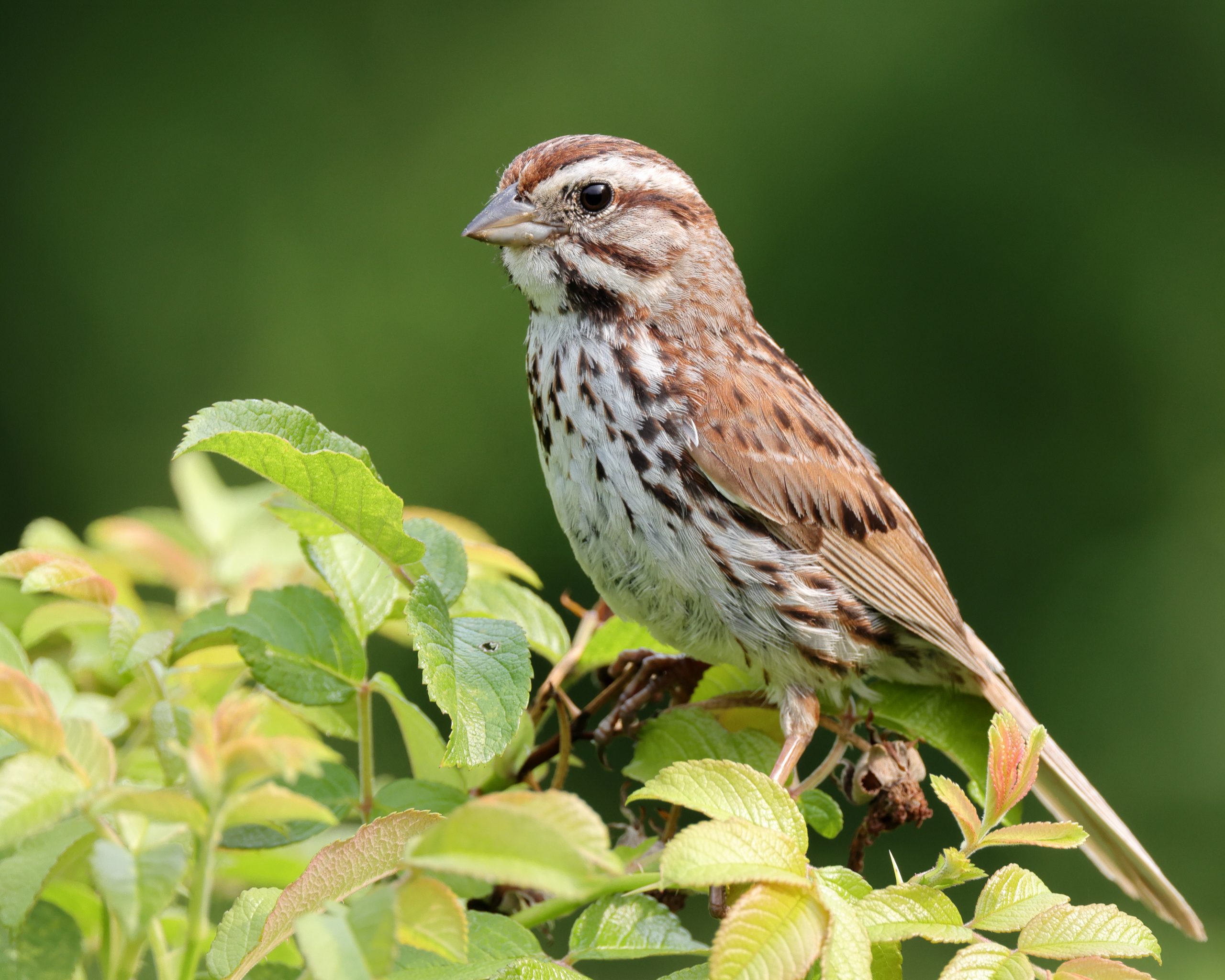


Song Sparrow (Melospiza melodia): Complete Identification, Feeder Guide & Call Library
Quick Answer: How to Attract & Identify Song Sparrows
The Song Sparrow (Melospiza melodia) is the plump, brown-streaked singer of shrubby yards and wetland edges — its heavy breast streaks run together into a dark central breast spot, the face is neatly striped in brown and gray, and the long rounded tail pumps in flight. Western birds run darker and rustier, but the pattern is constant. They feed low and near cover: offer mixed seed, white millet, and sunflower chips scattered on the ground or a low platform beside shrubs, keep a shallow birdbath full (this species is tied to water), and leave seed heads standing. They live year-round across much of the country. Listen for the famous song — maids-maids-maids, put on your tea-kettle-ettle-ettle — and the sharp “chimp” call from the shrubbery.
Species Physical Profile & Morphometrics
The Song Sparrow belongs to the New World sparrow family (Passerellidae) and is one of the most widespread, most sung, and most variable songbirds on the continent — more than two dozen regional forms share one unmistakable blueprint.
The identification formula: heavily streaked breast + central breast spot + striped face + long rounded tail, usually seen low in shrubs or scratching on damp ground near cover.
Essential Morphometric Field Marks:
- Body Length & Mass: 4.7 to 6.7 inches (12–17 cm) and 0.6 to 1.1 ounces (17–32 grams) — plumper and longer-tailed than a Chipping Sparrow, with a big round head and stout bill.
- Wingspan: About 7.1 to 9.4 inches (18–24 cm), with short, tail-pumping flights from shrub to shrub.
- Bill Structure & Color: A stout conical seed bill, grayish-brown — heavier than a chipping sparrow’s, built for mixed seed and insects alike.
- Color Pattern: Coarse brown streaks on a whitish breast converging into a dark central spot; striped face with gray eyebrow and brown crown stripes; rusty-brown wings and a long, rounded brown tail. Pacific Northwest birds are darker and rustier; desert birds paler — the pattern never changes.
Warm brown and gray: reddish-brown streaks on a whitish breast meeting at the central spot, a striped face, and a rusty wash on the wings and tail. This is the familiar look across the East and Midwest.
Darker and rustier on the Pacific coast, paler and sandier in the desert Southwest — with more than two dozen named regional forms in between. Males and females look alike in every one of them; the breast spot and striped face always hold.
Song Sparrow Vocalization Guide (2 Field Recordings + 1 Simulation)
The song is one of the classic sounds of spring: three short clear notes followed by a jumbled musical trill — “maids-maids-maids, put on your tea-kettle-ettle-ettle.” The everyday call is a sharp, nasal “chimp” from deep in the shrubs. The first two cards below are real field recordings shared under Creative Commons licenses; the third is a clearly labeled acoustic simulation of the song skeleton. For more wild audio, browse xeno-canto: Song Sparrow.
1. Real Recording — The Classic Song
2. Real Recording — Contact Call
3. Song Simulation — Three Notes, Then a Trill
Habitat, Range & the Water Connection
Song Sparrows live in shrubby, often damp places: marsh edges, stream banks, wet meadows, hedgerows, and garden shrub beds — very often within earshot of water. They breed across Canada and the northern half of the United States, and live year-round across the West, the mid-Atlantic, and much of the South.

Year-Round Neighbors for Most of Us
The purple year-round band covers the whole West, the Northeast and mid-Atlantic, and deep into the South — for most American gardeners the Song Sparrow is a four-season regular, not a visitor.
The orange band across Canada and the northern states is the summer-only breeding population; those birds winter in the blue band across the central and southern states, where they join resident flocks at brushy feeding stations.
Backyard Behavioral Patterns & Social Dynamics
The Song Sparrow is a busy, confiding shrub bird with a few signature habits. Four behaviors explain most of what you will observe:
🎵 The Treetop Troubadour
Males sing from an exposed perch at the shrub line — three clear notes, then the jumbled trill — for hours a day from late winter into summer. Each male knows several song versions and rotates through them.
🐾 The Damp-Ground Scratcher
Like its cousins, it feeds by double-scratching in leaf litter — but it favors damp ground near water: under shrubs, along the birdbath drip, around the downspout puddle.
💧 The Bath Lover
This is one of the most bath-devoted sparrows — it visits a shallow birdbath daily to drink and splash, and a yard with water and shrubs will hold a pair year-round where feeders alone fail.
🪺 The Low Nester
The nest — a grassy cup hidden low in a shrub, a clump of weeds, or on the ground under cover — is often right in the garden. A pair may raise two or three broods in a season from the same shrub bed.
Problem: “A Streaky Brown Sparrow Lives in My Shrubs Year-Round — But Which One Is It, and Why Won’t It Use the Feeder?”
The three most common Song Sparrow puzzles all have reassuring answers:
First, the identification tangle: among all the streaked brown sparrows, this is the one whose breast streaks run together into a central dark spot — check for that stickpin, the striped face, and the long rounded tail it pumps in flight. Second, the feeder standoff: it is a low, cover-loving feeder that distrusts exposed hanging tubes — the same mixed seed scattered on the ground beside the shrub bed, or on a low platform, disappears daily. Third, the “it only visits in spring” impression: year-round birds often go quiet and skulky after nesting — they are still there, molting in the shrubs, and a shallow birdbath near cover will keep them visible even when the song stops.
Method 1: Set the Table — Mixed Seed, Served Low
Design for a ground-feeding shrub bird:
-
Scatter Mixed Seed Beside the Shrubs
A millet-based mixed seed scattered on the ground at the shrub-line edge is the Song Sparrow staple — white millet, cracked corn, and sunflower chips all work. Toss a handful where lawn meets cover each morning.
-
Add a Low Platform Feeder
A platform set low near dense shrubs gives tidier serving — Song Sparrows will feed from a stable tray beside cover while ignoring a swaying tube entirely. The feeder style comparison guide covers platform options.
-
Use the Spill Zone
Let hanging feeders serve the finches, and let the spill beneath them serve the Song Sparrows — or add a catch tray to make it official and keep seed off the lawn.
-
Keep Ground Stations Fresh
Damp corners where this species loves to feed also spoil seed fast. Scatter a day or two’s worth at a time, rotate the spot if it stays wet, and rake the patch weekly.
Method 2: Build the Habitat — Water & Shrub Cover
Feed the habitat, and the birds follow:
-
Install a Shallow Birdbath Near Shrubs
Water is half the attraction for this species. A shallow bath — one to two inches deep, gently sloped — set near shrub cover will be visited daily; a heated bird bath keeps it open through freezing months.
-
Keep a Dense Shrub Border
Evergreen shrubs, dense hedges, and brushy corners supply the cover, song perches, and nest sites Song Sparrows require. A yard with lawn, shrubs, and water is their complete habitat.
-
Leave Seed Heads and Leaf Litter
Don’t deadhead everything in fall — amaranth, grasses, and garden flowers gone to seed feed Song Sparrows naturally, and a leaf-litter bed under the shrubs gives them a scratching pantry.
-
Let a Damp Corner Stay Wild
The low, damp corner of the yard that never quite dries is Song Sparrow gold — resist tidying it. A little mud, some weeds, and nearby cover beat a manicured bed every time.
Tool Solution: Recommended Hardware for Song Sparrows
Equipment matched to a water-loving, ground-feeding shrub bird:
Shallow Bird Bath (Heated in Winter)
A shallow bath with gently sloped sides set near shrub cover — the single most reliable Song Sparrow magnet, in every season, feeder or no feeder.
- • Depth: 1–2 in, gently sloped
- • Winter: Thermostatic heater
- • Placement: Beside shrub cover
Low Platform / Ground Tray
A stable tray set low at the shrub-line edge, filled with millet-based mixed seed — the serving style this cover-loving ground feeder actually trusts.
- • Seed: Mixed seed, white millet
- • Style: Low platform or tray
- • Placement: Lawn edge beside shrubs
Seed Tray Under Hanging Feeders
A wide tray mounted beneath your existing tube feeders — turns finch spillage into an official Song Sparrow feeding station without extra refilling.
- • Seed: Catches spillage
- • Cleanup: Keeps lawn clean
- • Bonus: Serves juncos and towhees
Frequently Asked Questions
- Species Profile: The Song Sparrow (Melospiza melodia) is a plump 4.7–6.7 inch, 17–32 gram New World sparrow (Passerellidae) with a stout bill and long rounded tail.
- ID in One Look: Heavy breast streaks converging into a dark central spot, striped face, tail pumped in flight — near shrubs, often near water.
- Mostly Year-Round: Resident across much of the U.S.; only the far northern and Canadian birds migrate south for winter.
- The Sound: Three clear notes then a jumbled trill — “maids-maids-maids, put on your tea-kettle” — plus a sharp “chimp” call from the shrubs.
- Feeder Formula: Millet-based mixed seed scattered low beside shrubs, seed heads left standing, and above all a shallow birdbath — water is half the attraction.
- Many Coats: More than two dozen regional forms — rusty in the Pacific Northwest, sandy in the desert — all one species with one blueprint.

Bird Watching Log
Species: Song Sparrow (Melospiza melodia)
| Song Sparrow (Breast Spot Seen: Yes / No — Singing: Yes / No — Flock Size: ____________________________) | |