
American Goldfinch vs Yellow-fronted Canary

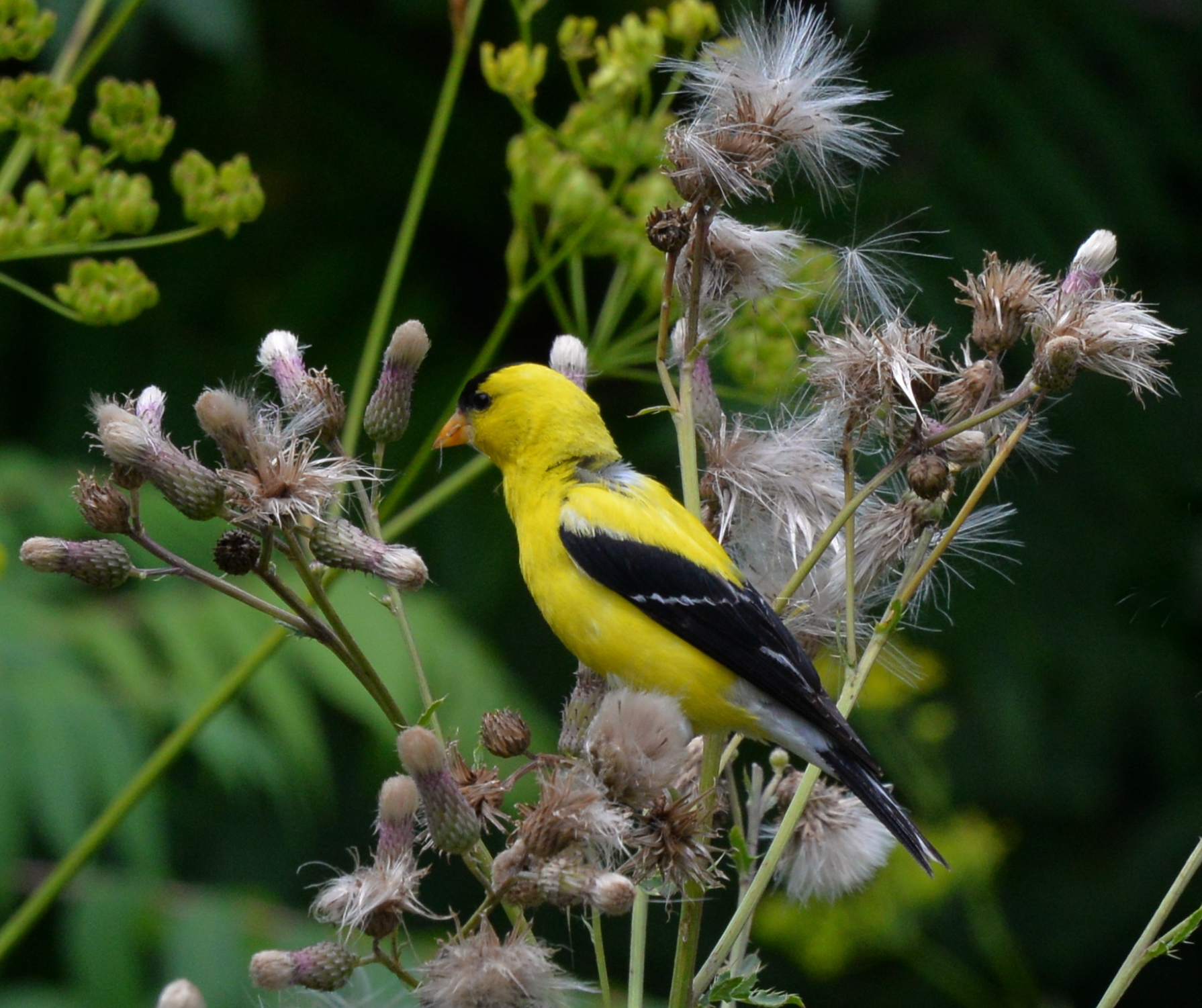


American Goldfinch vs Yellow-fronted Canary (Spinus tristis vs Crithagra mozambica): The Complete Backyard Identification Guide
Quick Answer: The Fastest Way to Tell Them Apart
Two true finches wearing yellow, an ocean apart. Three rules:
- Location: mainland US yards = American Goldfinch; Hawaiian gardens and lawns = Yellow-fronted Canary (introduced from Africa). No overlap.
- Face: a clean yellow face below a black cap (breeding male) = goldfinch; a yellow face marked with black lores and mustache stripes = Yellow-fronted Canary.
- Back: plain yellow-olive = goldfinch; gray-green and finely streaked = Yellow-fronted Canary.
At-a-Glance Comparison Table
Goldfinch vs canary, side by side. KEY rows separate fastest.
| Feature | American Goldfinch | Yellow-fronted Canary |
|---|---|---|
| Scientific Name | Spinus tristis | Crithagra mozambica |
| Length KEY | 4.3–5.1 in (11–13 cm) | 4.5 in (11 cm) |
| Wingspan | 7.5–8.7 in (19–22 cm) | 7.5 in (19 cm) |
| Weight | 0.4–0.7 oz (11–20 g) | 0.3–0.5 oz (8–14 g) |
| Overall Shape | Small, slim finch with a short, deeply notched tail | Very small, compact canary — smaller than a goldfinch |
| Male Plumage KEY | Breeding male unmistakable: brilliant lemon-yellow with a jet-black forehead cap and black wings with white bars; winter male dull olive-brown | Bright yellow face and underparts with bold black lores and mustache marks; gray-green, finely streaked back |
| Female Plumage | Dull yellow-olive overall, cleaner and completely unstreaked below; wings darker with pale bars | Like the male but with duller, weaker face markings |
| Bill Shape | Small, neat conical bill; pinkish-orange in breeding season, gray-brown in winter | Tiny, pinkish, conical |
| Tail | Short tail with a clear notch | Short, notched, yellow-edged |
| Core Range KEY | Across most of the US and southern Canada; weedy fields, forest edges, gardens | Native to Africa; introduced and established in Hawaii (Oahu and others) and Puerto Rico |
| Migration | Northern birds migrate south; much of the range holds goldfinches year-round | Non-migratory resident |
| Feeder Presence | Year-round where present; acrobatic, clings to nyjer socks and fine tube perches | Takes tiny seeds on the ground and at low platforms in Hawaiian yards |
| Favorite Foods | Nyjer (thistle), sunflower hearts; almost entirely vegetarian, even feeds nestlings seeds | Grass and weed seeds; occasional small insects |
| Song KEY | Sweet, canary-like series of twitters and warbles | A sweet, sustained canary warble — richer than its size suggests |
| Flight Call | Bouncy flight call rendered “po-ta-to-chip” or “per-chic-o-ree” | A thin “tsee” and short trills |
| Population Trend | Common and stable; a classic backyard finch | Established introduced species in Hawaii |
Male Field Marks, Side by Side
American Goldfinch — Male
- Breeding male is brilliant lemon-yellow with a jet-black forehead cap.
- Black wings carry clean white bars; rump white in flight.
- In winter, males fade to dull olive — the black cap disappears.
- No streaking below at any season.
Yellow-fronted Canary — Male
- Yellow face with black lores and mustache — a tiny masked canary.
- Bright yellow underparts; gray-green streaked back.
- Noticeably smaller than a Saffron Finch or goldfinch.
Female & Juvenile Marks, Side by Side
American Goldfinch — Female
- Dull yellow-olive, soft and clean-looking.
- Underparts completely unstreaked — the key female clue.
- Small pinkish-gray conical bill; dark wings with pale bars.
Yellow-fronted Canary — Female
- Duller, with weaker face markings than the male.
- Ground-feeds on lawn grass seed in small groups.
- Pairs stay close through the year.
Part-by-Part Anatomy Breakdown
Face and back patterns separate the two yellow finches:
| Body Part | American Goldfinch | Yellow-fronted Canary |
|---|---|---|
| Male Face | Clean yellow below a jet-black cap | Yellow with bold black lores and mustache marks |
| Male Wings | Jet black with white bars | Yellow-green, unstreaked |
| Back | Plain yellow-olive (male), gray-olive (female) | Gray-green, finely streaked |
| Size | 5.1 in | 4.5 in — visibly smaller |
| Winter Plumage | Molts to drab yellow-buff | Keeps the same pattern all year |
| Bill | Pink-orange cone, black-tipped in spring | Tiny pinkish cone |
| Feeding Posture | Clings to nyjer feeders and seed heads | Ground-feeds on lawns and low platforms |
Song & Call Comparison
American Goldfinch
Song: a sweet, canary-like series of twitters, trills and warbles delivered from a perch or in flight.
Calls: the bounding flight call sounds like po-ta-to-chip; also soft tsee contact notes.
Yellow-fronted Canary
Song: a sweet, sustained canary warble from a low perch.
Calls: a thin tsee and short trills.
Range & Seasonal Presence
The American Goldfinch lives across nearly the whole mainland US and southern Canada — weedy fields, roadsides and feeders.
The Yellow-fronted Canary is an African native introduced to Hawaii (Oahu and other islands) and Puerto Rico, where it lives in gardens, parks and lawns. A yellow finch in a Hawaiian yard is this species or the Saffron Finch — never a goldfinch.
Feeder Behavior & Favorite Foods
- American Goldfinch: the acrobat of nyjer socks and tube feeders, in every season on the mainland.
- Yellow-fronted Canary: takes tiny seeds on the ground and at low platforms in Hawaiian yards — millet and fine mixed seed.
- Best foods: nyjer and sunflower chips (goldfinch); fine millet and grass seed scattered low (canary).
- Voice at the feeder: goldfinches twitter and give the “po-ta-to-chip” flight call; canaries deliver sweet sustained warbles from a shrub between feeding bouts.
Temperament & Flock Behavior
American Goldfinches travel in bouncing, twittering flocks, drifting between seed heads and feeders.
Yellow-fronted Canaries feed in quiet pairs and small groups on the ground, flying up to low perches to sing — classic canary manners in miniature.
6-Step Backyard ID Checklist
- Where are you? Mainland = goldfinch; Hawaii = Yellow-fronted Canary.
- Face. Black cap, clean yellow face = goldfinch; black-masked yellow face = canary.
- Back. Unstreaked = goldfinch; streaked gray-green = canary.
- Size. Larger = goldfinch; noticeably tiny = canary.
- Season. Drab yellow-buff in winter = goldfinch; unchanged all year = canary.
- Feeding style. Clinging to a feeder = goldfinch; picking seed off the lawn = canary.
Frequently Asked Questions
- Range: Mainland = goldfinch; Hawaii = Yellow-fronted Canary.
- Face: Black cap = goldfinch; black-masked yellow face = canary.
- Back: Unstreaked = goldfinch; streaked gray-green = canary.
- Size: 4.5-inch bird = canary; 5.1-inch = goldfinch.
- Molt: Drab in winter = goldfinch; same all year = canary.
- Feeding: Hanging feeder acrobat = goldfinch; lawn picker = canary.