
American Robin vs Eastern Bluebird

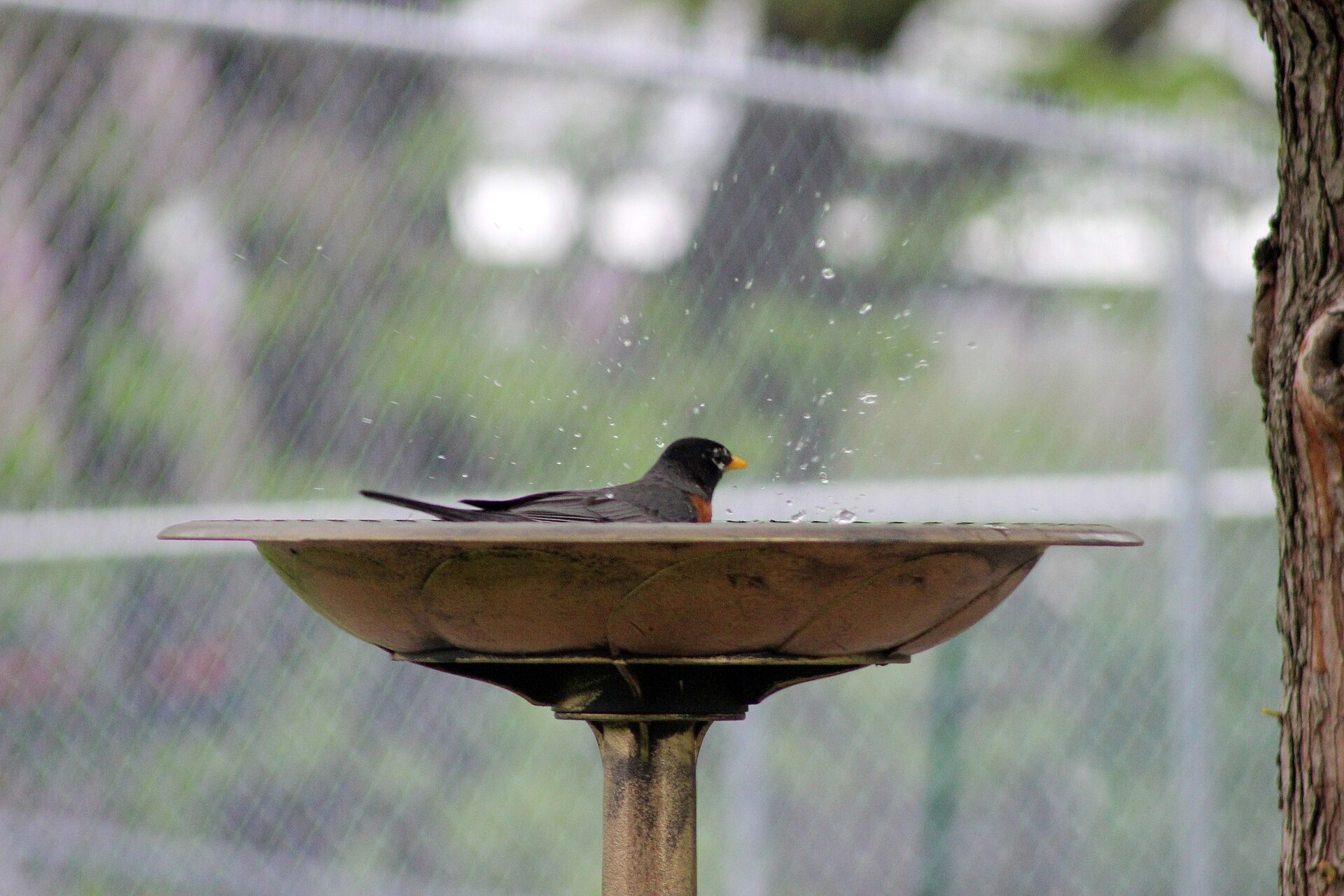


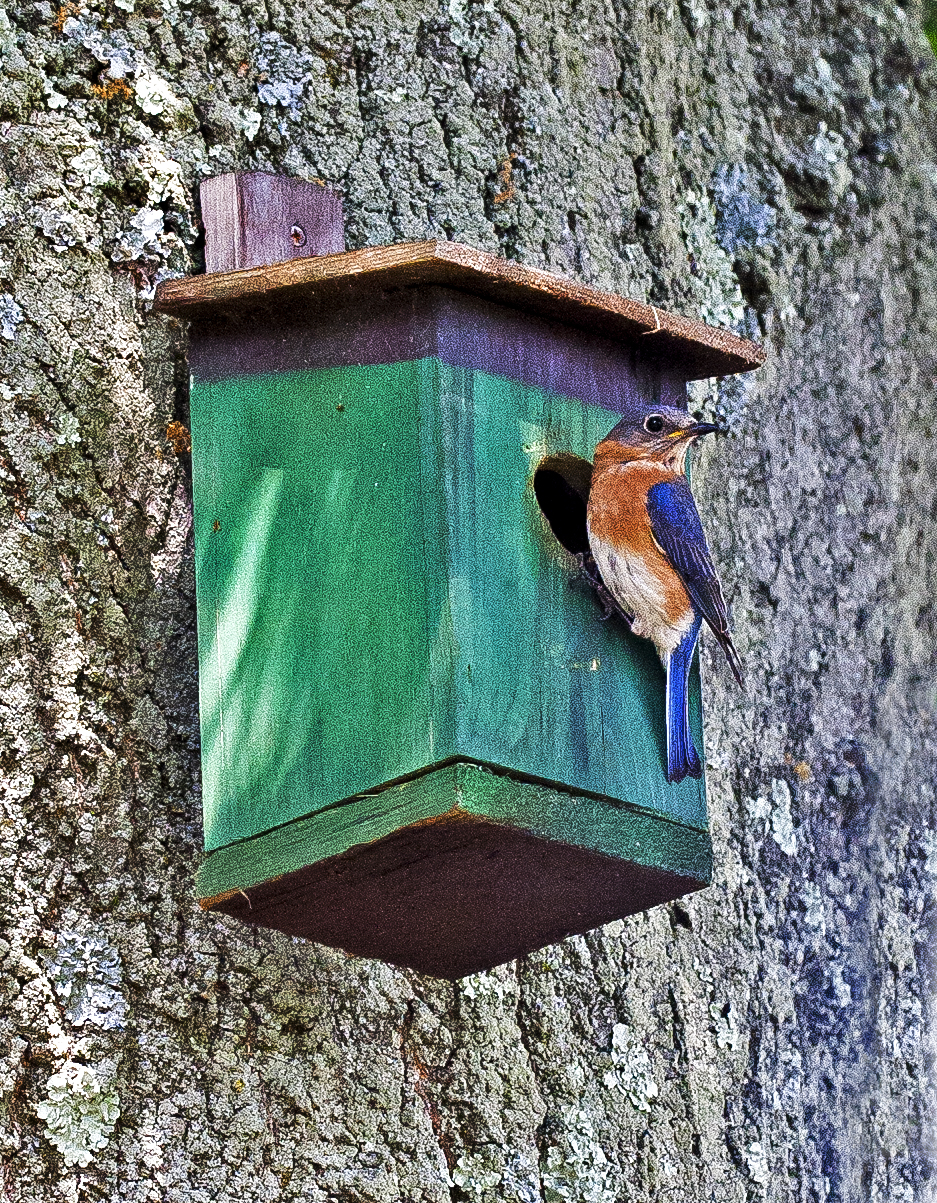


American Robin vs Eastern Bluebird (Turdus migratorius vs Sialia sialis): The Complete Backyard Identification Guide
Quick Answer: The Fastest Way to Tell Them Apart
The two orange-breasted thrushes of eastern yards. Three rules:
- Back color: gray-brown back and dark head = American Robin; brilliant royal-blue back, wings and head = male Eastern Bluebird.
- Size: the robin is half again as big — 10 inches against the bluebird’s compact 6.5.
- Breast pattern: orange fills the robin’s whole breast under a dark streaked throat; the bluebird’s rusty breast ends cleanly at a white belly.
At-a-Glance Comparison Table
Robin vs bluebird, side by side. KEY rows separate fastest.
| Feature | American Robin | Eastern Bluebird |
|---|---|---|
| Scientific Name | Turdus migratorius | Sialia sialis |
| Length KEY | 7.9–11 in (20–28 cm) | 6.5 in (16.5 cm) |
| Wingspan | 12.2–15.8 in (31–40 cm) | 12.2 in (31 cm) |
| Weight | 2.7–3.0 oz (77–85 g) | 1.0–1.2 oz (28–34 g) |
| Overall Shape | Upright thrush with a longish tail | Small, plump thrush with a round head and short bill |
| Male Plumage KEY | Gray back, brick-red breast, dark head with white eye arcs, yellow bill | Brilliant royal blue above, rusty-orange throat and breast, clean white belly |
| Female Plumage KEY | Like the male but paler, with a duller head and breast | Grayer blue above with blue wings and tail; duller rusty breast and white belly |
| Bill Shape | Straight, slender yellow bill | Short, thin, dark |
| Tail | Medium dark tail with white corners | Short, blue, slightly notched |
| Core Range | Nearly all of North America; lawns, parks and woods | East of the Rockies — meadows, orchards, open woods and nest-box trails |
| Migration | Northern birds migrate; southern birds resident; flocks roam in winter | Partial migrant; southern birds resident, northern birds withdraw in winter |
| Feeder Presence KEY | Not a seed eater — visits for soaked raisins, mealworms and birdbaths | Visits for live and dried mealworms and suet crumbles; nest boxes are the great attractant |
| Favorite Foods | Earthworms, insects, berries and fruit | Insects, wild berries and fruit; mealworms at feeders |
| Song | Cheerful rising-falling phrases: “cheerily, cheer-up, cheerio” | A soft, musical series of whistled phrases — “cheer-cheerful-charmer” |
| Flight Call | Sharp “tut-tut-tut” alarms and a thin “seep” | A soft “chur-lee” and dry chatter |
| Population Trend | Abundant; the default lawn bird of America | Recovered strongly thanks to nest-box campaigns; stable to increasing |
Male Field Marks, Side by Side
American Robin — Male
- Brick-red breast on a gray-backed, dark-headed thrush.
- White eye arcs and yellow bill.
- Runs, stops, and cocks its head on lawns.
Eastern Bluebird — Male
- Royal blue back and head with a rusty-orange breast.
- Clean white belly below the rust.
- Perches low and upright, scanning for insects.
Female & Juvenile Marks, Side by Side
American Robin — Female
- Paler version of the male.
- Same upright lawn-hunting posture.
- White corners flash on the tail in flight.
Eastern Bluebird — Female
- Gray-blue above with blue wings and tail.
- Paler rusty breast than the male.
- Accepts nest boxes readily — watch for carrying grass in spring.
Part-by-Part Anatomy Breakdown
Same family, different paint job — part by part:
| Body Part | American Robin | Eastern Bluebird |
|---|---|---|
| Back & Head (M) | Gray-brown back, near-black head | Entirely royal blue |
| Breast | Brick-orange, throat dark-streaked | Rusty-orange throat and breast, white belly |
| Size & Shape | 10 in, long-legged, upright runner | 6.5 in, plump, round-headed percher |
| Bill | Yellow, slim | Short, thin, dark |
| Eye | Dark with white broken eye-ring | Dark, plain dark face |
| Flight | Strong, direct, level | Buoyant, shallow wingbeats |
| Nest | Mud-cup in trees and ledges | Cavity — natural holes and nest boxes |
Song & Call Comparison
American Robin
Song: cheerful phrases — cheerily, cheer-up, cheerio — among the first voices of dawn.
Calls: sharp tut-tut-tut alarms at dusk roost time.
Eastern Bluebird
Song: a soft, musical cheer-cheerful-charmer — gentle whistled phrases.
Calls: a soft chur-lee and dry chatter.
Range & Seasonal Presence
The American Robin breeds continent-wide and winters across most of the US — the default lawn thrush everywhere.
The Eastern Bluebird lives east of the Rockies in meadows, orchards, golf courses and open woods — anywhere short grass meets scattered trees and nest cavities. Northern birds withdraw in winter; flocks wander to berry crops.
Feeder Behavior & Favorite Foods
- American Robin: soaked raisins, chopped apples, suet crumbles and mealworms; a ground bath with moving water is the best robin magnet.
- Eastern Bluebird: mealworms are the key — live or dried, offered on a small platform or bluebird feeder; they also take suet crumbles in winter.
- Nest boxes: a properly sized bluebird box on a pole in open habitat is the single most effective way to attract Eastern Bluebirds.
- Neither eats seed — skip the millet for both of these thrushes.
Temperament & Flock Behavior
American Robins are bold and businesslike — striding lawns, singing loud cheerful phrases from high perches at dawn.
Eastern Bluebirds are gentle and deliberate — sitting low and still on wires and nest boxes, dropping softly to the grass for insects.
6-Step Backyard ID Checklist
- Back color. Blue = bluebird; gray-brown = robin.
- Size. Plump and small (6.5 in) = bluebird; big and long-legged (10 in) = robin.
- Breast boundary. Rusty breast over a clean white belly = bluebird; orange running to the vent = robin.
- Bill. Short and dark = bluebird; yellow = robin.
- Habitat. Meadow edge with nest boxes = bluebird; any lawn = robin.
- Song. Soft “cheer-cheerful-charmer” = bluebird; loud caroled phrases = robin.
Frequently Asked Questions
- Back: Royal blue = bluebird; gray-brown = robin.
- Size: 6.5-inch plump percher = bluebird; 10-inch lawn runner = robin.
- Belly: Rusty over white = bluebird; full orange = robin.
- Nesting: Nest box = bluebird; open mud cup = robin.
- Food: Mealworms attract both; seed attracts neither.
- Song: Soft “cheerful-charmer” = bluebird; loud caroling = robin.