
American Robin vs Varied Thrush

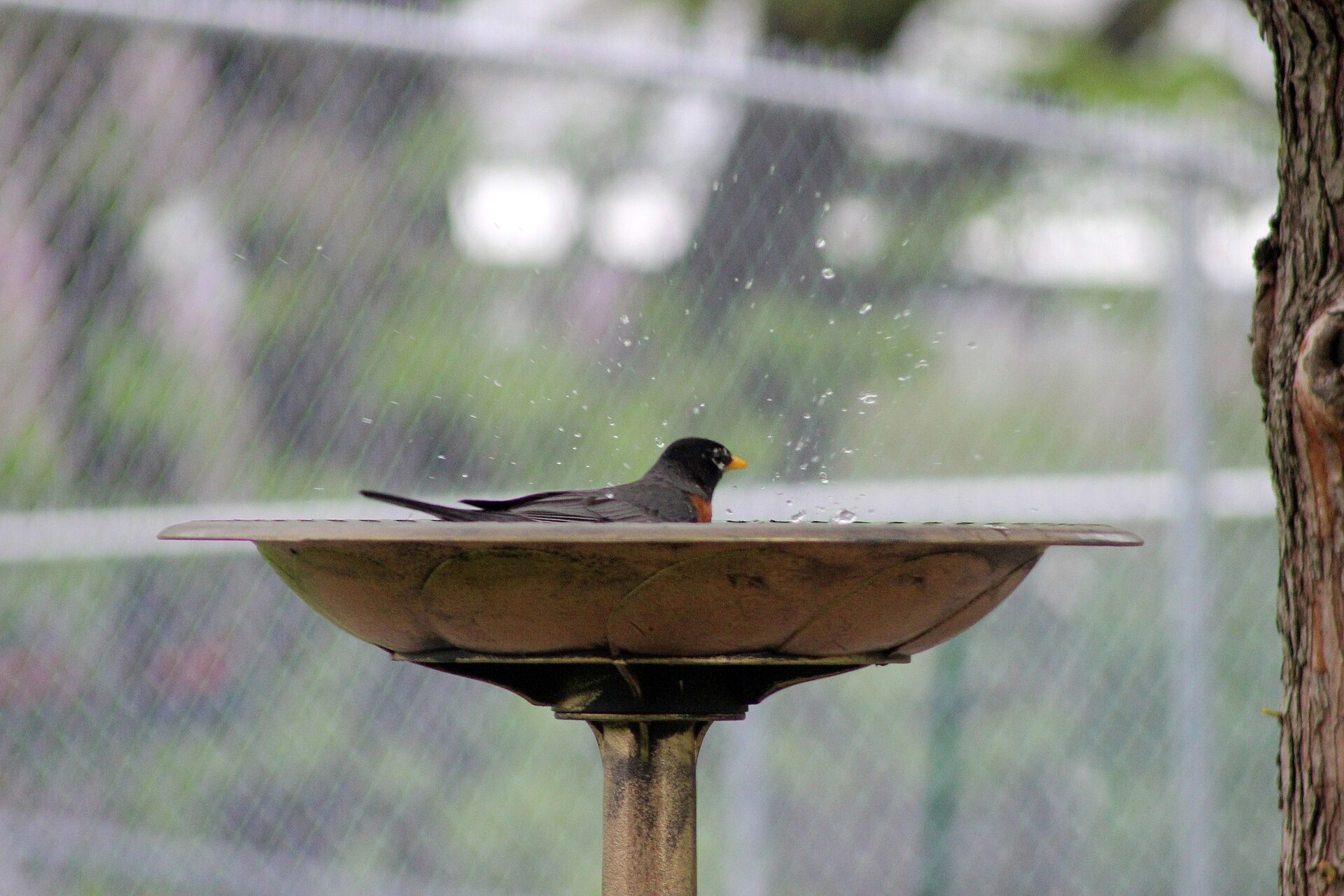


American Robin vs Varied Thrush (Turdus migratorius vs Ixoreus naevius): The Complete Backyard Identification Guide
Quick Answer: The Fastest Way to Tell Them Apart
Two orange-breasted thrushes — one of the lawn, one of the deep forest. Three rules:
- Breast band: a bold black (or dusky gray) band across the orange chest = Varied Thrush; a clean unbanded orange breast = American Robin.
- Face and wings: an orange eyebrow stripe and orange wing bars on a blue-gray back = Varied Thrush; white broken eye-rings and plain brown-gray wings = robin.
- Setting: striding across open lawn = robin; slipping through shadowy conifer forest floor = Varied Thrush.
At-a-Glance Comparison Table
The two thrushes, side by side. KEY rows separate fastest.
| Feature | American Robin | Varied Thrush |
|---|---|---|
| Scientific Name | Turdus migratorius | Ixoreus naevius |
| Length | 7.9–11 in (20–28 cm) | 7.9–10.2 in (20–26 cm) |
| Wingspan | 12.2–15.8 in (31–40 cm) | 13.4–15.0 in (34–38 cm) |
| Weight | 2.7–3.0 oz (77–85 g) | 2.3–3.5 oz (65–100 g) |
| Overall Shape | Upright thrush with a longish tail | Stocky thrush, shaped like a robin |
| Male Plumage KEY | Gray back, brick-red breast, dark head with white eye arcs, yellow bill | Slate-gray above, orange eyebrow and wing bars, orange breast crossed by a black band |
| Female Plumage KEY | Like the male but paler, with a duller head and breast | Browner version of the male with a gray-brown breast band |
| Bill Shape | Straight, slender yellow bill | Slender dark bill |
| Tail | Medium dark tail with white corners | Medium tail with pale corners |
| Core Range KEY | Nearly all of North America; lawns, parks and woods | Pacific Northwest forests; winters down the coast and irregularly inland |
| Migration | Northern birds migrate; southern birds resident; flocks roam in winter | Short-distance migrant; winter visitor to lowland yards |
| Feeder Presence | Not a seed eater — visits for soaked raisins, mealworms and birdbaths | Winter ground feeder on scattered seed and suet crumbs; loves berry shrubs |
| Favorite Foods | Earthworms, insects, berries and fruit | Berries, insects, earthworms, seeds in winter |
| Song KEY | Cheerful rising-falling phrases: “cheerily, cheer-up, cheerio” | A haunting single sustained whistle, then silence, then a note on a new pitch |
| Flight Call | Sharp “tut-tut-tut” alarms and a thin “seep” | A soft, low “took” |
| Population Trend | Abundant; the default lawn bird of America | Common in Northwest forests; irruptive in winter |
Male Field Marks, Side by Side
American Robin — Male
- Brick-red breast on a gray-backed, dark-headed thrush.
- White eye arcs and yellow bill.
- Runs, stops, and cocks its head on lawns.
Varied Thrush — Male
- Orange eyebrow + black breast band on a slate-gray thrush.
- Orange wing bars flash in flight.
- The “winter robin” of Northwest yards.
Female & Juvenile Marks, Side by Side
American Robin — Female
- Paler version of the male.
- Same upright lawn-hunting posture.
- White corners flash on the tail in flight.
Varied Thrush — Female
- Browner and duller, band gray-brown.
- Same orange eyebrow and wing bars.
- Feeds quietly in leaf litter.
Part-by-Part Anatomy Breakdown
Same family, same size — completely different pattern:
| Body Part | American Robin | Varied Thrush |
|---|---|---|
| Breast Band | None — solid orange breast | Bold black band (male) or dusky gray band (female) |
| Eyebrow | Broken white eye arcs | Bold orange eyebrow stripe |
| Wings | Plain gray-brown, no bars | Two broad orange wing bars |
| Back (M) | Warm gray-brown | Blue-gray, matching the crown |
| Bill | Yellow | Dark and slim |
| Throat | White-streaked dark throat | Orange, framed by the dark band and mask |
| Habitat | Open lawns, parks, orchards | Damp conifer forest floor and shaded ravines |
Song & Call Comparison
American Robin
Song: cheerful phrases — cheerily, cheer-up, cheerio — among the first voices of dawn.
Calls: sharp tut-tut-tut alarms at dusk roost time.
Varied Thrush
Song: eerie single sustained whistles on different pitches — the voice of coastal forests.
Calls: a soft low took from the understory.
Range & Seasonal Presence
The American Robin breeds continent-wide from Alaska and Canada to Mexico and winters across most of the US — the most familiar thrush on the continent.
The Varied Thrush breeds in the wet conifer forests of the Pacific Northwest and Alaska and winters down the Pacific coast, when it drops into shaded yards, parks and ravines. In irruptive winters it wanders inland, sometimes appearing at feeders far east of its normal range.
Feeder Behavior & Favorite Foods
- American Robin: takes soaked raisins, chopped apples, suet crumbles and mealworms; ignores seed entirely.
- Varied Thrush: in winter it visits feeders for sunflower chips, cracked corn and suet, and strips berries from ornamental shrubs — a winter-only guest at most yards.
- Best habitat: robins want open lawn and fruiting shrubs; Varied Thrushes want deep shade, conifers, leaf litter and berry bushes like holly and madrone.
- Water: both bathe readily; a shaded ground bath suits the forest-loving Varied Thrush best.
Temperament & Flock Behavior
American Robins are bold, visible and noisy — the classic dawn singer perched high and exposed.
Varied Thrushes are quiet, shy forest birds; even in winter yards they feed in shadow, flush low and fast, and vanish into the trees at the first disturbance.
6-Step Backyard ID Checklist
- Breast band. Black or dusky band across the orange = Varied Thrush; unbanded = robin.
- Eyebrow. Orange stripe over the eye = Varied Thrush; white broken eye-ring = robin.
- Wing bars. Orange wing bars = Varied Thrush; plain wings = robin.
- Bill color. Dark bill = Varied Thrush; yellow bill = robin.
- Habitat. Deep conifer shade = Varied Thrush; open lawn = robin.
- Song. Long eerie single tones at different pitches = Varied Thrush; cheerful caroled phrases = robin.
Frequently Asked Questions
- Breast Band: Black or dusky band = Varied Thrush; clean orange = robin.
- Eyebrow: Orange eyebrow = Varied Thrush; white eye arcs = robin.
- Wings: Orange wing bars = Varied Thrush; plain = robin.
- Bill: Dark = Varied Thrush; yellow = robin.
- Habitat: Conifer shadows = Varied Thrush; open lawns = robin.
- Song: Eerie sustained tones = Varied Thrush; cheerful phrases = robin.