
American Robin vs Wood Thrush

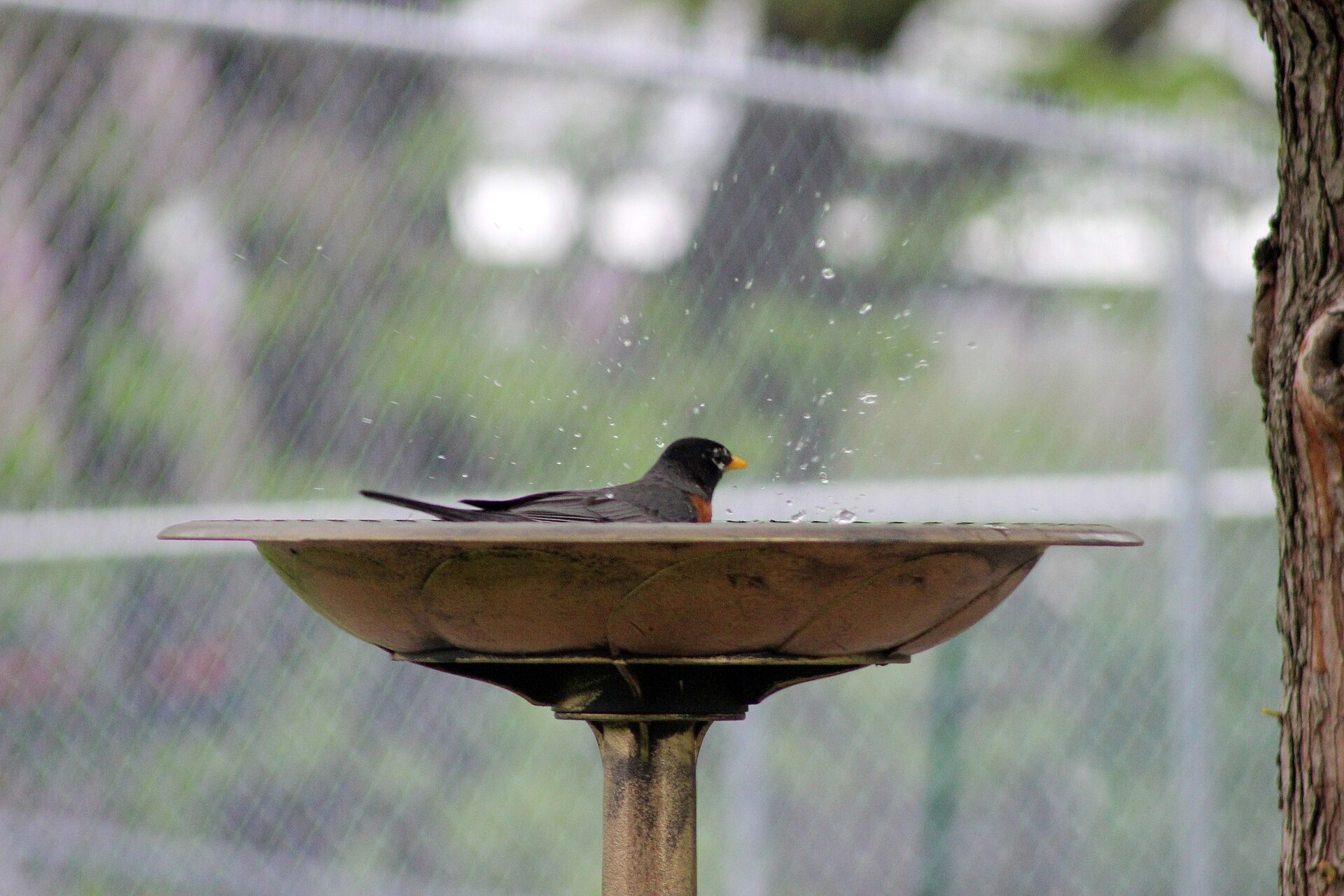


American Robin vs Wood Thrush (Turdus migratorius vs Hylocichla mustelina): The Complete Backyard Identification Guide
Quick Answer: The Fastest Way to Tell Them Apart
Two true thrushes — one of the lawn, one of the deep woods. Three rules:
- Breast: solid brick-orange, unspotted = robin; white breast covered in large round dark spots = Wood Thrush.
- Crown: dark gray head = robin; rufous-orange crown fading to a brown back = Wood Thrush.
- Habitat: open lawn in plain sight = robin; shady forest floor and wooded ravines = Wood Thrush.
At-a-Glance Comparison Table
The lawn thrush and the forest thrush, side by side. KEY rows separate fastest.
| Feature | American Robin | Wood Thrush |
|---|---|---|
| Scientific Name | Turdus migratorius | Hylocichla mustelina |
| Length | 7.9–11 in (20–28 cm) | 7.8 in (20 cm) |
| Wingspan | 12.2–15.8 in (31–40 cm) | 13.0 in (33 cm) |
| Weight | 2.7–3.0 oz (77–85 g) | 1.4–1.8 oz (40–51 g) |
| Overall Shape | Upright thrush with a longish tail | Plump forest thrush with a rufous crown and spotted breast |
| Male Plumage KEY | Gray back, brick-red breast, dark head with white eye arcs, yellow bill | Rufous-orange crown and nape, brown back, white breast covered in large round dark spots (sexes alike) |
| Female Plumage | Like the male but paler, with a duller head and breast | Identical to the male |
| Bill Shape | Straight, slender yellow bill | Slim, dark |
| Tail | Medium dark tail with white corners | Short, rufous-brown |
| Core Range KEY | Nearly all of North America; lawns, parks and woods | Eastern deciduous forests — damp woods, ravines and wooded suburbs |
| Migration | Northern birds migrate; southern birds resident; flocks roam in winter | Long-distance migrant; winters in Central America |
| Feeder Presence KEY | Not a seed eater — visits for soaked raisins, mealworms and birdbaths | Rarely uses feeders; visits wooded yards with leaf litter and berry shrubs |
| Favorite Foods | Earthworms, insects, berries and fruit | Insects and earthworms from leaf litter; berries in fall |
| Song KEY | Cheerful rising-falling phrases: “cheerily, cheer-up, cheerio” | The flute of the forest: clear, hollow “ee-oh-lay” phrases with trilled endings |
| Flight Call | Sharp “tut-tut-tut” alarms and a thin “seep” | A rapid “pit-pit-pit” |
| Population Trend | Abundant; the default lawn bird of America | Declining with forest fragmentation and nest parasitism |
Male Field Marks, Side by Side
American Robin — Male
- Brick-red breast on a gray-backed, dark-headed thrush.
- White eye arcs and yellow bill.
- Runs, stops, and cocks its head on lawns.
Wood Thrush — Male
- Rufous crown fading to brown on the back.
- White breast with big round dark spots.
- Sings flutelike phrases at dawn and dusk in deep woods.
Female & Juvenile Marks, Side by Side
American Robin — Female
- Paler version of the male.
- Same upright lawn-hunting posture.
- White corners flash on the tail in flight.
Wood Thrush — Female
- Identical to the male.
- Forages quietly in leaf litter.
- The largest round spots of any eastern thrush.
Part-by-Part Anatomy Breakdown
Both are Turdidae — size and pattern split them:
| Body Part | American Robin | Wood Thrush |
|---|---|---|
| Breast | Solid brick-orange | White with large, round, dark spots |
| Crown & Nape | Dark gray-black | Rufous-orange — the brightest part of the bird |
| Back | Gray-brown | Warm brown |
| Size | 10 in, long-legged | 7.8 in, plumper and smaller |
| Eye-ring | Broken white arcs | Plain buffy face, large dark eye |
| Foraging | Runs across open lawns | Hops through shaded leaf litter |
| Song | Cheerful caroled phrases | Flutelike “ee-oh-lay” with trilled endings |
Song & Call Comparison
American Robin
Song: cheerful phrases — cheerily, cheer-up, cheerio — among the first voices of dawn.
Calls: sharp tut-tut-tut alarms at dusk roost time.
Wood Thrush
Song: clear, flutelike ee-oh-lay phrases with trilled endings — the signature sound of eastern summer woods.
Calls: a rapid pit-pit-pit when alarmed.
Range & Seasonal Presence
The American Robin breeds continent-wide in open and wooded habitats alike, wintering across most of the US.
The Wood Thrush breeds in eastern deciduous forest — damp woods, ravines and wooded suburbs with big trees — and winters in Central America. Heavily wooded yards in the East can host a singing male all summer.
Feeder Behavior & Favorite Foods
- American Robin: soaked raisins, fruit, mealworms, ground bath.
- Wood Thrush: rarely visits feeders; wooded yards attract it with leaf litter, native berry shrubs (dogwood, spicebush) and shady ground cover.
- Water: a shaded ground bath draws both species in summer.
- Habitat over feeders: for the Wood Thrush, an unbroken canopy and undisturbed leaf litter matter far more than food offerings.
Temperament & Flock Behavior
American Robins are bold, visible and loud — the public face of the thrush family.
Wood Thrushes are reclusive — they forage quietly in shade and deliver the most beautiful song in eastern woods from hidden perches at dawn and dusk.
6-Step Backyard ID Checklist
- Breast. Solid orange = robin; white with big round spots = Wood Thrush.
- Crown. Dark gray = robin; rufous-orange = Wood Thrush.
- Size. Big and long-legged = robin; smaller and plumper = Wood Thrush.
- Habitat. Open lawn = robin; shaded forest floor = Wood Thrush.
- Song. Caroling = robin; flutelike “ee-oh-lay” = Wood Thrush.
- Season. Year-round in much of the US = robin; May–September only = Wood Thrush.
Frequently Asked Questions
- Breast: Solid orange = robin; white with round spots = Wood Thrush.
- Crown: Dark gray = robin; rufous-orange = Wood Thrush.
- Size: Bigger and longer-legged = robin.
- Habitat: Lawn = robin; forest floor = Wood Thrush.
- Song: Caroling = robin; flutelike “ee-oh-lay” = Wood Thrush.
- Season: Wood Thrush is a summer bird — gone by fall.