
Common Myna


Common Myna (Acridotheres tristis): Complete Identification, Habitat Guide & Sound Library
Quick Answer: How to Attract & Identify the Common Myna
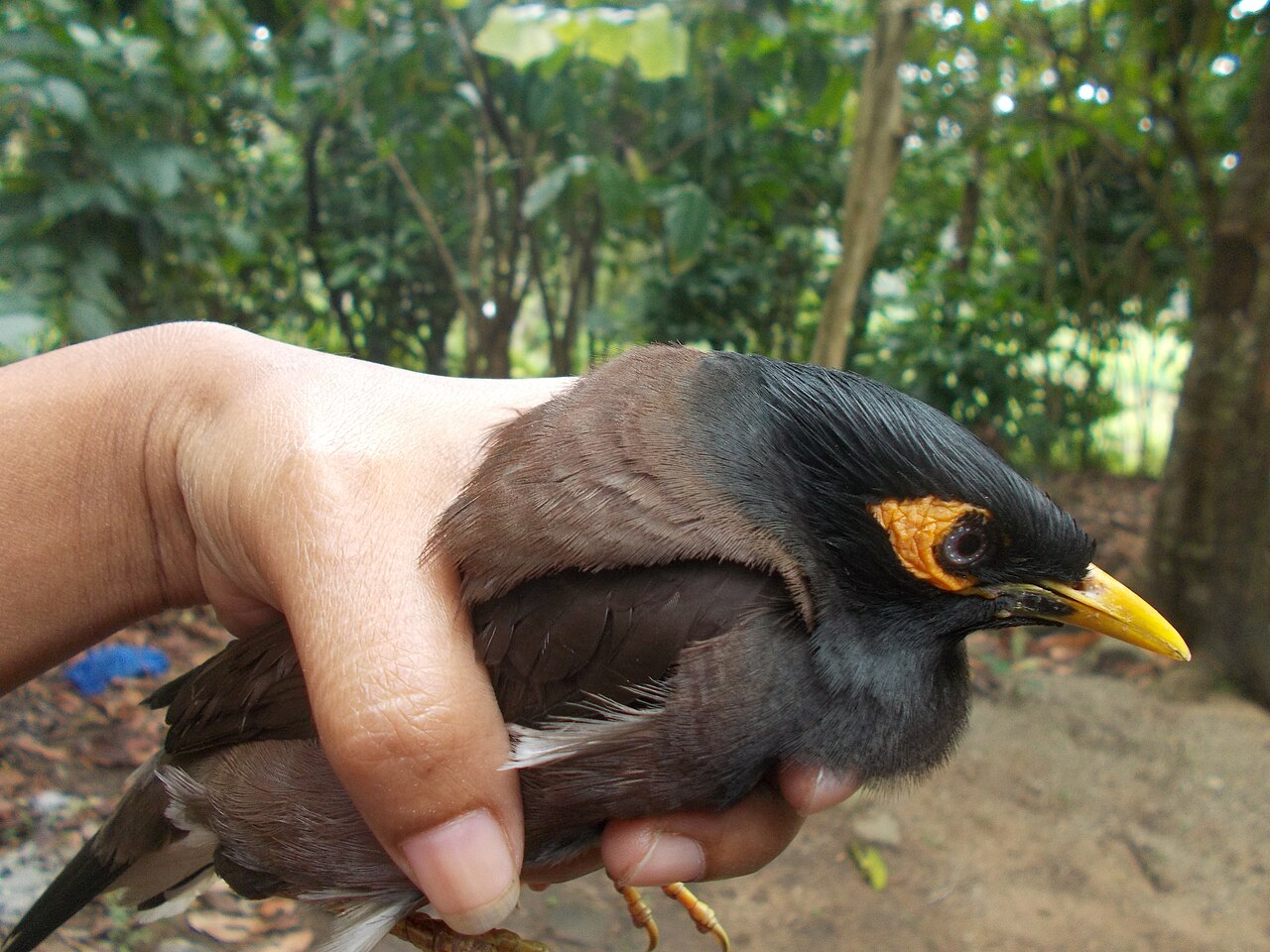
The Common Myna (Acridotheres tristis) is the bold, yellow-masked strutter of Hawaiian towns — a chocolate-brown introduced starling with a black head, bright yellow bill and eye-skin, and flashing white wing patches. Its voice is a loud, varied medley of chirps, whistles, and squawks. It eats everything — crumbs, fruit, insects, pet food — and bullies smaller birds at feeders. Manage it with weight-sensitive feeders, covered pet food, and crumb-free patios. It shares the townscape with the Zebra Dove and the Java Sparrow.
Species Physical Profile & Morphometrics
The Common Myna belongs to the starling family (Sturnidae) — a native of South Asia introduced to Hawaii in 1865 to control sugarcane insects, now abundant on all the main islands, with a second population established in South Florida.
The identification formula: brown body + black head + yellow bill and eye patch + white wing patches. Nothing else in Hawaii or Florida matches it. It struts rather than hops, and its noisy confidence around people is itself a field mark.
Essential Morphometric Field Marks:
- Body Length & Mass: 9.1 to 9.8 inches (23–25 cm) and 2.9 to 4.9 ounces (82–140 grams) — a stocky, robin-sized bird built for the sidewalk.
- Wingspan: Wings are broad and rounded, each flashing a large white patch in flight — the in-air signature.
- Bill Structure & Color: A stout, sharp, bright yellow bill — an omnivore’s tool for crumbs, fruit, insects, and eggs alike.
- Color Pattern: Chocolate-brown body, black head and throat, white undertail coverts, yellow bill, legs, and bare skin patch behind the eye.
- Male vs. Female: Sexes look identical; males average slightly larger and sing the more elaborate dawn songs from the roost tree.
The sidewalk boss: black-headed and yellow-masked, strutting the cafe patio with head-bobbing confidence, lifting into the palms with a flash of white wings when the crumbs run out.
The identical partner — same mask, same strut — she stuffs a cavity nest with paper, grass, and stolen scraps and defends the hole against every starling-sized rival in the block.
Common Myna Vocalization Guide (3 Field Recordings)
The Common Myna is loud and endlessly varied: chirps, whistles, squawks, growls, and croaks, delivered in a conversational medley — the dawn chorus of a roost tree is a wall of sound. All recordings below are real field audio via Wikimedia Commons — no simulations. For a deeper library, browse xeno-canto: Common Myna.
1. The Medley
2. The Roost Chorus
3. The Alarm Squawk
Habitat, Range & the Built World
The Common Myna lives in the human landscape: cities, towns, resorts, farms, roadsides, and shopping centers — anywhere with open ground to strut, food scraps to find, and cavities to nest in. In Hawaii it reaches from the beach to mountain towns; it avoids only dense forest and high wet slopes.

The Islands’ Loudest Immigrant
Released in Hawaii in 1865 to fight sugarcane armyworms — a job it did well — the species spread to every main island. A separate population has lived in South Florida since the 1980s, centered on the Miami suburbs.
For yards: mynas arrive on their own — the question is never how to attract them but how to keep them from monopolizing the feeder. Smart feeder choice, covered scraps, and protected cavities keep the balance.
Backyard Behavioral Patterns & Social Dynamics
The Common Myna is a bold omnivorous strutter that thrives on the human landscape. Four behaviors explain most of what you will observe:
🚶 The Strut
Mynas walk with a confident, head-bobbing strut — they do not hop — covering lawns and parking lots like they own the lease.
🍟 The Omnivore
Crumbs, fruit, insects, geckos, eggs, pet food — if it is edible, a myna eats it; outdoor pet bowls are a particular draw.
🌳 The Communal Roost
At dusk they gather in roosts of hundreds in a single tree — the noise at sundown is legendary, then sudden silence.
🕳️ The Cavity Boss
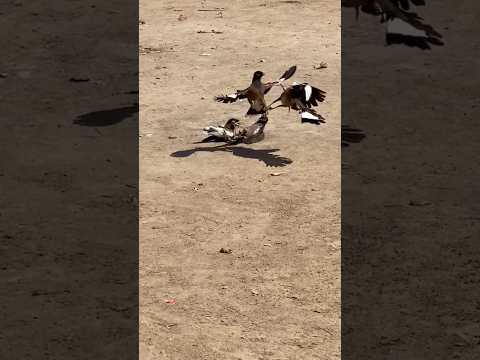
They nest in any hole — palms, eaves, vents, nest boxes — and aggressively evict other cavity nesters, a real conservation concern for natives.
Problem: “Mynas Chase Every Other Bird Away. What Should I Do?”
The three most common Common Myna puzzles all have proven answers:
First, the feeder takeover: mynas dominate open trays — switch to weight-sensitive feeders and tube feeders with short perches that small birds use and mynas cannot; skip ground scattering during myna rush hours. Second, the patio pirates: crumbs and pet food are the draw — feed pets indoors and clear tables promptly; a myna that finds nothing stops visiting. Third, the cavity eviction: if mynas evict nesters from a box, use entrance holes sized for the target species (1 1/8 inches or smaller) — a myna cannot squeeze in, and the small birds reclaim the box.
Method 1: Outsmart the Bully — Feeder Design & Timing
Keep the small birds fed and the mynas frustrated:
-
Use Weight-Sensitive Feeders
Feeders that close under a heavy bird’s weight feed finches and sparrows while shutting mynas out.
-
Choose Short-Perch Tubes
Tube feeders with small perches suit small clingers; a stocky myna cannot balance to feed.
-
Skip Open Ground Scattering
Open trays and lawn scatter are myna buffets — keep seed in enclosed dispensers while mynas are active.
-
Cover Pet Food
Feed dogs and cats indoors, or use covered bowls — outdoor kibble is the number-one myna attractant in town.
Method 2: Protect the Small Birds — Cavities & Cover
Give natives and small birds the edge:
-
Size Nest Box Holes Small
Entrances of 1 1/8 inches or less admit small birds and exclude mynas — the cheapest conservation hardware there is.
-
Seal Unwanted Cavities
Screen vents and seal eave gaps where you do not want nests — a myna pair claims any open hole.
-
Plant Dense Native Shrubs
Thick shrubby cover gives small birds refuge from bullying — open yards favor the bold, shrubby yards favor the small.
-
Enjoy Them Honestly
Mynas are charismatic, intelligent birds — watch the strut and the roost chorus with appreciation while keeping them off the feeder.
Tool Solution: Recommended Hardware for Common Myna
Equipment matched to outsmarting a bold feeder bully:
Weight-Sensitive Feeder
A feeder whose ports close under a heavy bird — small birds dine, mynas get nothing, balance restored.
- • Mechanism: Weight-activated
- • Result: Myna-proof
- • Bonus: Squirrel-resistant too
Small-Hole Nest Box
A box with a 1 1/8-inch entrance — chickadee-sized birds nest safely where no myna can follow.
- • Entrance: ≤ 1 1/8 in
- • Excludes: Mynas & starlings
- • Bonus: Native cavity nesters
Covered Patio & Pet Bowls
Indoor pet feeding and crumb-free tables — the attractant removal that convinces mynas to patrol elsewhere.
- • Rule: No outdoor kibble
- • Habit: Clear tables fast
- • Result: Fewer mynas
Frequently Asked Questions
- Species Profile: The Common Myna (Acridotheres tristis) is a 9.1–9.8 inch, 2.9–4.9 ounce starling (Sturnidae), band code COMY — the bold strutter of Hawaii and South Florida.
- ID in One Look: Brown body, black head, yellow bill and eye-skin, white wing flashes, strutting walk.
- The Sound: A loud varied medley — and a wall of sound at the dusk roost; real field recordings above.
- Range & Habit: Introduced in 1865, now on every Hawaiian island plus the Miami suburbs; omnivorous and fearless.
- Management Formula: Weight-sensitive feeders, small-hole nest boxes, covered pet food, crumb-free patios.
- The Honest View: A clever, charismatic bird worth watching — just not worth feeding.
Bird Watching Log
Species: Common Myna (Acridotheres tristis)
| Common Myna (Flock Size: ___ — Strutting Seen: Yes / No — At Pet Food: Yes / No — Roost Tree Noted: ___ — Date & Time: ___) | |