
American Robin vs Spotted Towhee

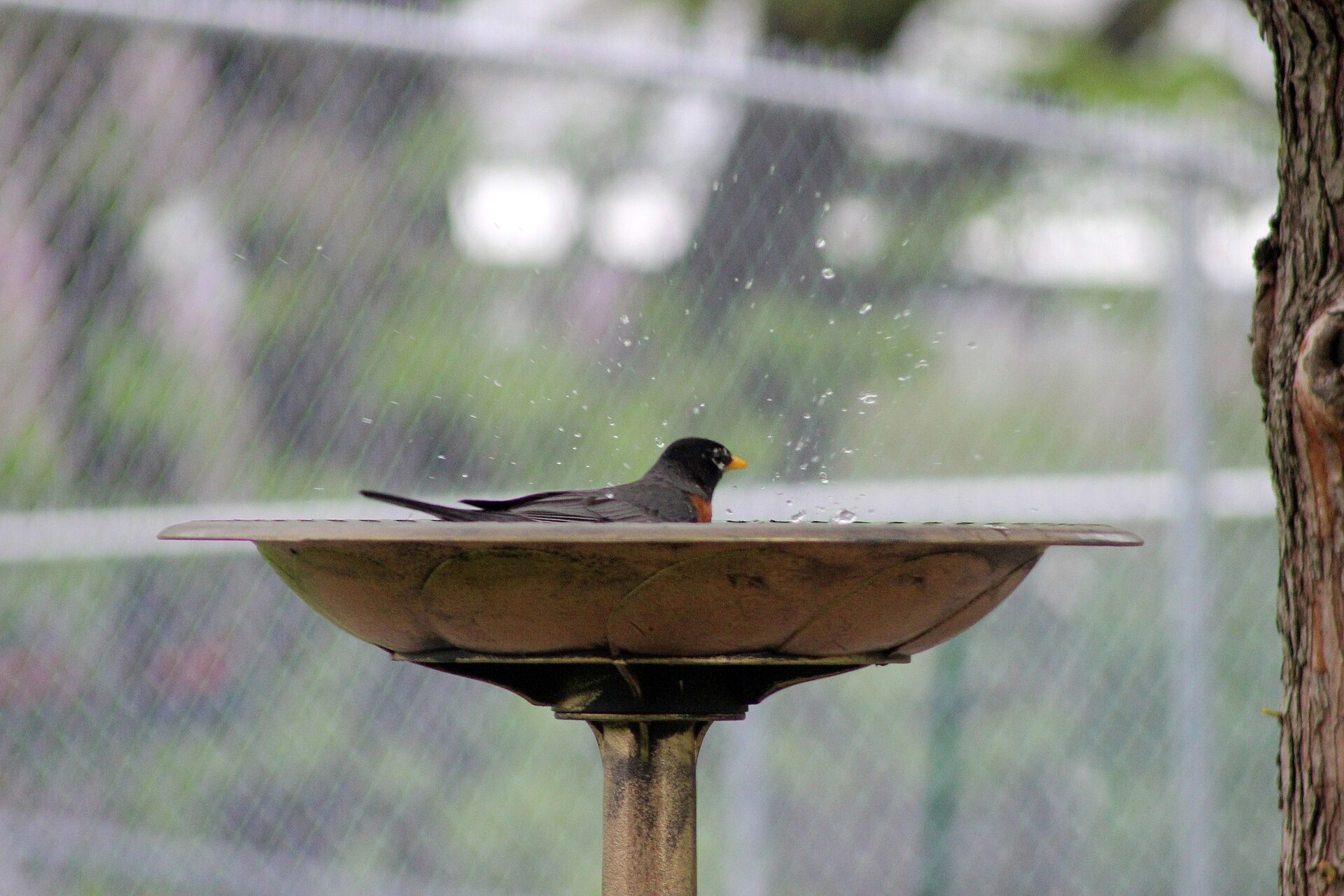


American Robin vs Spotted Towhee (Turdus migratorius vs Pipilo maculatus): The Complete Backyard Identification Guide
Quick Answer: The Fastest Way to Tell Them Apart
Both flash orange in the garden — and confuse plenty of beginners. Three rules:
- Upperparts: plain gray-brown back and head = robin; jet-black hood and back spangled with white wing spots = Spotted Towhee (male).
- Breast pattern: solid orange from throat to belly = robin; black hood ending at the breast with orange only on the flanks = Spotted Towhee.
- Where it feeds: striding across open lawn after worms = robin; double-scratching in leaf litter under shrubs = Spotted Towhee.
At-a-Glance Comparison Table
Robin vs towhee, side by side. KEY rows separate fastest.
| Feature | American Robin | Spotted Towhee |
|---|---|---|
| Scientific Name | Turdus migratorius | Pipilo maculatus |
| Length | 7.9–11 in (20–28 cm) | 8.3 in (21 cm) |
| Wingspan | 12.2–15.8 in (31–40 cm) | 10.6–11.8 in (27–30 cm) |
| Weight | 2.7–3.0 oz (77–85 g) | 1.2–1.8 oz (33–50 g) |
| Overall Shape | Upright thrush with a longish tail | Large, long-tailed ground sparrow |
| Male Plumage KEY | Gray back, brick-red breast, dark head with white eye arcs, yellow bill | Black head, back and hood; white-spotted wings, rufous flanks, white belly, red eye |
| Female Plumage KEY | Like the male but paler, with a duller head and breast | Same pattern as the male but dark brown where he is black |
| Bill Shape | Straight, slender yellow bill | Thick black conical bill |
| Tail | Medium dark tail with white corners | Long black tail with bold white corners |
| Core Range | Nearly all of North America; lawns, parks and woods | West of the Plains — chaparral, thickets and forest edges |
| Migration | Northern birds migrate; southern birds resident; flocks roam in winter | Western birds largely resident; interior birds migrate short distances |
| Feeder Presence KEY | Not a seed eater — visits for soaked raisins, mealworms and birdbaths | Ground-scratches under feeders for sunflower and millet |
| Favorite Foods | Earthworms, insects, berries and fruit | Seeds and insects from leaf litter |
| Song KEY | Cheerful rising-falling phrases: “cheerily, cheer-up, cheerio” | A buzzy trill: “drink-your-tea” in the East’s cousin; Spotted gives harsh chips and trills |
| Flight Call | Sharp “tut-tut-tut” alarms and a thin “seep” | A nasal, cat-like “mew” from thickets |
| Population Trend | Abundant; the default lawn bird of America | Common in western brushy habitats |
Male Field Marks, Side by Side
American Robin — Male
- Brick-red breast on a gray-backed, dark-headed thrush.
- White eye arcs and yellow bill.
- Runs, stops, and cocks its head on lawns.
Spotted Towhee — Male
- Black hood over a white-spotted back.
- Rufous flanks + clean white belly + red eye.
- Double-scratch jumps in leaf litter.
Female & Juvenile Marks, Side by Side
American Robin — Female
- Paler version of the male.
- Same upright lawn-hunting posture.
- White corners flash on the tail in flight.
Spotted Towhee — Female
- Dark brown replaces the male’s black.
- Same white wing spots and rufous flanks.
- Cat-like mewing call from dense brush.
Part-by-Part Anatomy Breakdown
The orange is shared — everything else is different:
| Body Part | American Robin | Spotted Towhee |
|---|---|---|
| Hood / Head (M) | Dark gray head, no hood, white eye arcs | Solid jet-black hood with red eyes |
| Back (M) | Plain gray-brown | Black with rows of bold white spots |
| Breast Pattern | Solid orange throat to belly | Black chest, orange-rufous flanks, white belly |
| Eyes | Dark, framed by white arcs | Brilliant red |
| Bill | Slim, yellow | Thick black seed-cracking cone |
| Tail | Medium, dark, no white | Long, black, flashing white corners |
| Foraging Gait | Walks and runs upright on lawns | Hops and double-scratches in litter |
Song & Call Comparison
American Robin
Song: cheerful phrases — cheerily, cheer-up, cheerio — among the first voices of dawn.
Calls: sharp tut-tut-tut alarms at dusk roost time.
Spotted Towhee
Voice: harsh chips and a buzzy trill; the contact call is a nasal mew.
Behavior: rustles leaves loudly — sounds bigger than it is.
Range & Seasonal Presence
The American Robin breeds from Alaska to Mexico and winters across most of the US — the default orange-breasted bird of lawns, parks and gardens everywhere.
The Spotted Towhee is the western towhee, living in thickets, chaparral and brushy yards from the Pacific coast to the Great Plains; northern birds winter south into the Southwest. East of the Plains its place is taken by the nearly identical Eastern Towhee.
Feeder Behavior & Favorite Foods
- American Robin: rarely eats seed — offer soaked raisins, chopped fruit, suet crumbles and especially live or dried mealworms; a ground bath with moving water is the most reliable robin magnet.
- Spotted Towhee: a genuine feeder bird — scratches for sunflower chips, millet and cracked corn on the ground or on low platforms near dense cover.
- Best habitat: robins want mown lawn plus berry shrubs; towhees want an unmown corner — brush piles, leaf litter and dense shrubs.
- Water: both bathe daily; towhees prefer baths screened by overhanging branches.
Temperament & Flock Behavior
American Robins are confident and conspicuous — the first singers at dawn, striding across open lawns in full view.
Spotted Towhees are skulking but noisy — you hear the frantic double-scratch rustle in the leaves long before the bird shows itself, then a flash of black, white and orange under the shrubs.
6-Step Backyard ID Checklist
- Back pattern. Plain gray-brown = robin; black with white spots = Spotted Towhee.
- Hood. No hood, white eye arcs = robin; black hood with red eyes = Spotted Towhee (male).
- Orange placement. Across the whole breast = robin; only on the flanks = Spotted Towhee.
- Bill. Slim yellow = robin; thick black cone = Spotted Towhee.
- Foraging style. Walking the lawn = robin; double-scratching under shrubs = Spotted Towhee.
- Song. Cheerful whistled phrases = robin; a buzzy trill after two sharp notes (“drink-your-tea”) = Spotted Towhee.
Frequently Asked Questions
- Back: White-spangled black = towhee; plain gray-brown = robin.
- Hood: Black hood + red eyes = towhee; white eye arcs = robin.
- Orange: Whole breast = robin; flanks only = towhee.
- Bill: Slim yellow = robin; thick black cone = towhee.
- Foraging: Lawn-walking = robin; leaf-litter double-scratch = towhee.
- Song: Cheerful phrases = robin; “drink-your-tea” trill = towhee.