
Pine Siskin


Pine Siskin (Spinus pinus): Complete Identification, Feeder Guide & Call Library
Quick Answer: How to Attract & Identify Pine Siskins
The Pine Siskin (Spinus pinus) is a tiny, heavily streaked finch — just 4.3–5.5 inches — with a thin, sharply pointed bill and hidden flashes of yellow in the wings and tail. It breeds in the conifer belt of Canada, Alaska, and the western mountains, and it is famously irruptive: when the northern cone crop fails, siskins flood south in dense, chattering flocks that can swarm feeders from coast to coast. The giveaway sound is a coarse, rising buzzy “zzzzzzz” mixed into constant nasal chatter. Attract them with fresh Nyjer in a mesh sock or fine-port tube feeder plus black oil sunflower chips, keep stations scrupulously clean (crowded siskin flocks are prone to salmonellosis), and offer open water.
Species Physical Profile & Morphometrics
The Pine Siskin belongs to the true finch family (Fringillidae), genus Spinus — the same group as the American Goldfinch and the Lesser Goldfinch. It is the streaked member of the trio, built for prying tiny seeds out of conifer cones and catkins.
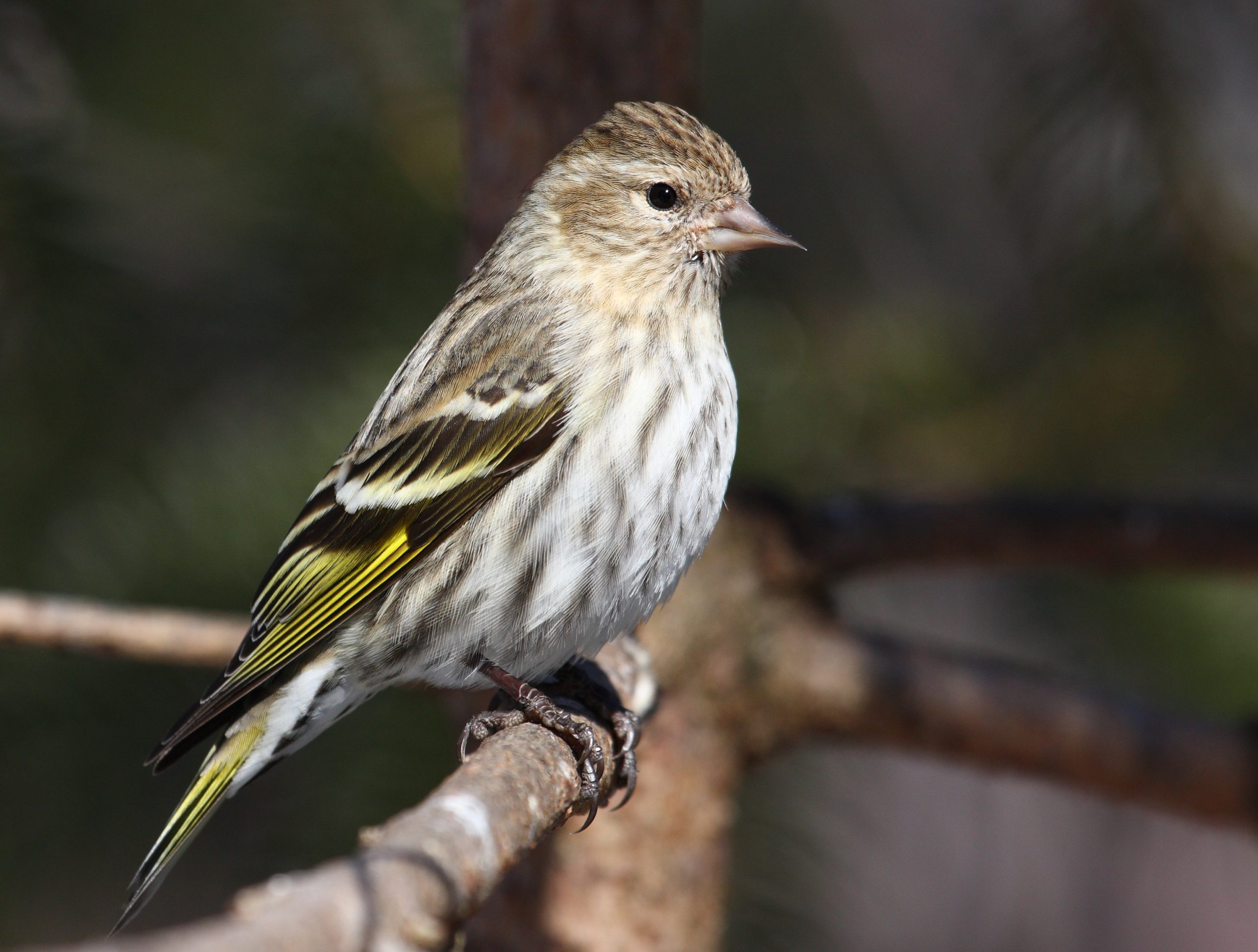
Its signature combination is streaks plus a needle bill plus yellow flashes: the whole body is densely streaked in brown and buff, the bill is thinner and sharper than any other feeder finch, and a stripe of yellow edging runs through the wing and tail feathers — hidden at rest, blazing in flight.
Essential Morphometric Field Marks:
- Body Length & Mass: 4.3 to 5.5 inches (11–14 cm) and 0.4 to 0.6 ounces (12–18 grams) — goldfinch-sized but slimmer and sharper-looking.
- Wingspan: About 7.1 to 8.7 inches (18–22 cm), driving a bouncy, undulating flock flight.
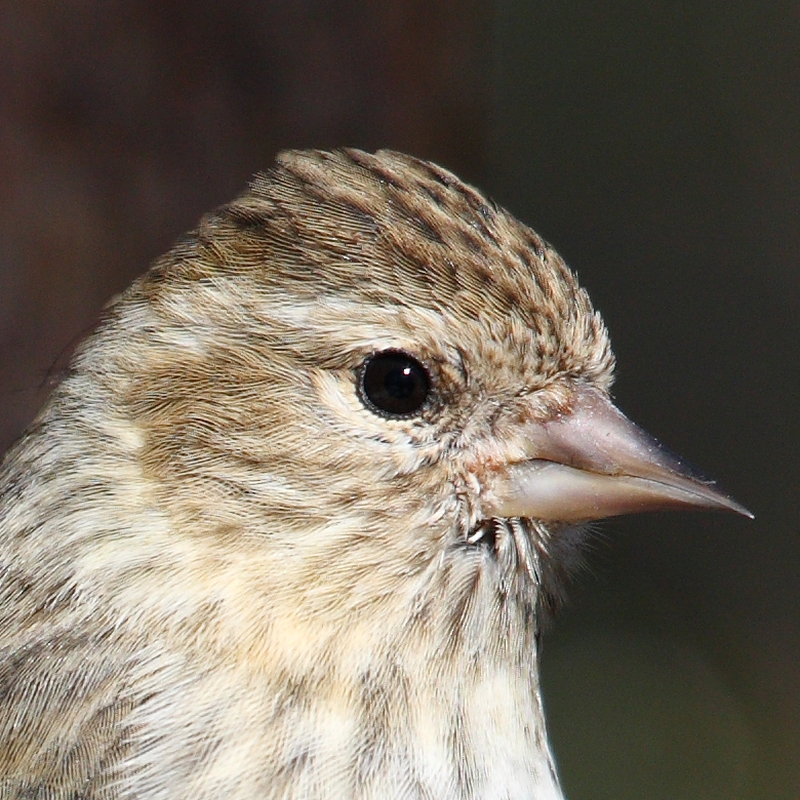
- Bill Structure: A thin, sharply pointed conical bill — visibly finer than a House Finch’s or goldfinch’s — precision tooling for prying seeds from cones and Nyjer ports.
- Color Pattern: Heavy brown streaking over the entire body, including the belly; yellow edging in the wings and base of the tail that flashes in flight and shows as a wing stripe at rest. Both sexes look alike; some males show brighter yellow.
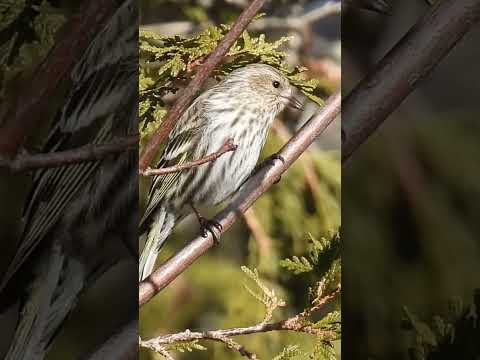
A blur of fine brown streaks from crown to belly, with a pale wing bar and that diagnostic yellow edging along the flight feathers. At rest the yellow shows as a narrow stripe on the folded wing; in flight the wings and tail base flash unmistakable yellow.
Against a female House Finch: the siskin is smaller, sharper-billed, and carries yellow in the wing. Against a winter goldfinch: goldfinches are smooth and unstreaked below. Against a redpoll: redpolls wear a red forehead patch and black chin. Streaks + needle bill + yellow = siskin.
Pine Siskin Vocalization Guide (2 Field Recordings + 1 Simulation)
The signature sound of the species is a coarse, rising buzz — a drawn-out “zzzzzzz” (zree) that climbs in pitch and stands out from every other feeder bird. The rest of the vocabulary is a constant dry, nasal “tit-a-tit” chatter that keeps the flock in contact. The first two cards below are real field recordings shared under Creative Commons licenses; the third is a clearly labeled acoustic simulation of the rising buzz. For more wild audio, browse xeno-canto: Pine Siskin.
1. Real Recording — Flock Feeding in Alders
2. Real Recording — Foraging in a City Park
3. Call Simulation — The Rising “Zzzzzzz” Buzz
Habitat, Range & the Irruption Cycle
Pine Siskins are birds of coniferous and mixed forest: spruce, fir, pine, hemlock, and the alders and birches along northern streams. They breed across Canada, Alaska, and the western mountains, with year-round pockets along both coasts — and in winter they can appear almost anywhere in the United States.

Everywhere Some Years, Nowhere Others
The map tells the story: a huge blue winter band covers nearly the whole country, because siskins are irruptive nomads. When the northern spruce and fir cone crop fails, flocks pour south — sometimes by the millions — and swarm feeders in states that may not see them again for years.
In those winters they mix freely with American Goldfinches, Lesser Goldfinches, and House Finches, roaming from yard to yard wherever seed is most reliable.
Backyard Behavioral Patterns & Social Dynamics
The Pine Siskin is a tiny, fearless, hyper-social finch. Four behaviors explain most of what you will observe:
🌀 The Irruption Nomad
Siskins follow the cone and seed crop, not the calendar. One winter they blanket your county; the next they are gone entirely. A yard that hosts them in December may lose the whole flock by March.
🐦 The Shoulder-to-Shoulder Flock
Where one siskin feeds, fifty may follow. They pack onto a single mesh sock until it sways, bicker softly, and flush and return as one bird — which is exactly why feeder hygiene matters so much for this species.
🤸 The Cone Acrobat
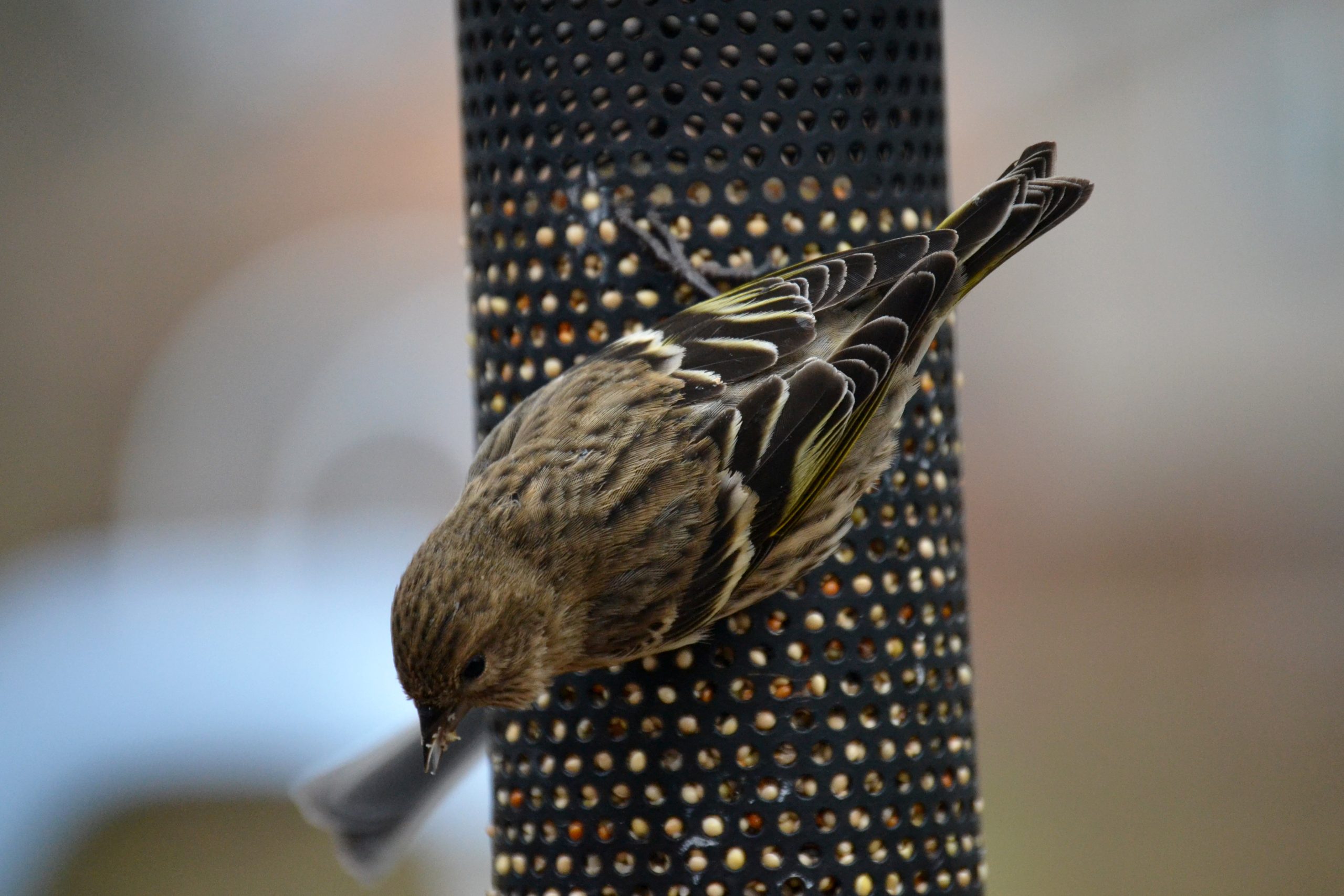
Built to work conifer cones, siskins cling at any angle — even upside down — to seed heads, catkins, and feeder mesh. Watch one hang from a sweetgum ball and you are seeing the exact motion it uses on a spruce cone.
🧂 The Salt & Mineral Seeker
Siskins are famous for gathering at road salt, mineral licks, and even wood ash — an unusual craving among songbirds. In winter, a shallow dish of grit near the feeder can be a real draw.
Problem: “Streaky Finches Swarmed My Feeder — Then Vanished. What Were They?”
The three most common Pine Siskin puzzles all have simple explanations:
First, the identification gap: a flock of small brown streaky birds gets written off as “female House Finches” or “sparrow something” — check for the finer, needle-like bill and the yellow stripe in the wing, and listen for the rising buzz. Second, the disappearance: irruptive flocks are nomads; they strip the local seed and move on, sometimes mid-winter, and some years they never arrive at all. Third, the sick bird: crowded siskin flocks are prone to salmonellosis, and a puffed-up, tame, slow siskin at the feeder is the warning sign — scrub feeders with a 10% bleach solution every week or two, rake the ground below, and spread stations out so the flock does not feed shoulder-to-shoulder. Identify them once, keep the station clean, and an irruption year becomes the highlight of the winter.
Method 1: Set the Table — Nyjer & Sunflower Chips, Done Right
Design for a small, streaked, hyper-social flocking finch:
-
Make Fresh Nyjer the Main Course
Nyjer (“thistle”) seed is the siskin magnet — tiny, oil-rich, and sized for that needle bill. Serve it in a mesh sock or fine-port tube feeder and buy small bags often: stale Nyjer gets refused. Our lab-tested roundup of the Best Tube Feeders for Small Birds includes dedicated finch models.
-
Back It Up with Black Oil Sunflower Chips
Black oil sunflower and hulled chips are the reliable second course — high fat for cold snaps, and they keep siskins fed when the Nyjer sock is shoulder-to-shoulder.
-
Expect a Crowd — and Plan for It
Siskins arrive in flocks, so hang more than one station and space them apart. Multiple small feeders beat one crowded one: less squabbling, less droppings buildup, and a healthier flock.
-
Offer Water Year-Round
Siskins drink constantly and bathe in groups. A shallow bath near the feeders draws them even when seed is plentiful; in freezing weather a heated bird bath can outdraw every feeder in the yard.
Method 2: Trees, Seed Heads & a Clean Station
Work with the bird’s wild habits:
-
Favor Conifers, Alders, and Birches
If you are planting, spruces, pines, alders, and birches are siskin habitat in a nutshell — cones and catkins feed them, and dense conifer cover shelters the flock between feeding runs.
-
Let Weedy Seed Heads Stand
Thistles, asters, coneflowers, and dandelions gone to seed are wild siskin food. Skip the fall cut-down and the garden becomes a second feeder through the coldest months.
-
Put Out Grit and Minerals in Winter
A shallow dish of coarse sand, crushed eggshell, or grit plays to the siskin’s famous salt-and-mineral craving — an easy, free way to make your yard stand out to a passing flock.
-
Clean Like the Flock Depends on It
Dense siskin flocks spread salmonellosis fast. Scrub feeders with a 10% bleach solution every one to two weeks, rinse and dry fully, and rake hulls and droppings from beneath the station.
Tool Solution: Recommended Hardware for Pine Siskins
Equipment matched to a small, clinging, flocking seed specialist:
Nyjer Mesh Sock / Finch Tube
A mesh sock or fine-port tube filled with fresh Nyjer — the one setup an irruption flock will mob by the dozen, with birds clinging at every angle.
- • Seed: Fresh Nyjer (buy small, often)
- • Style: Mesh or micro-port tube
- • Capacity: Hang two or more
Tube Feeder with Sunflower Chips
A multi-port tube filled with black oil sunflower chips — spreads the flock out, adds high-fat fuel for cold snaps, and keeps traffic moving when the sock is full.
- • Seed: Black oil chips, hulled
- • Ports: 4–6 perches
- • Mess: Near zero
Shallow Heated Bird Bath
A shallow, gently sloped bath with a thermostatic heater — siskins drink and bathe in groups, and open winter water pulls the whole mixed finch flock in close.
- • Depth: 1–2 in, gently sloped
- • Winter: Thermostatic heater
- • Placement: Near shrubs, off the lawn
Frequently Asked Questions
- Species Profile: The Pine Siskin (Spinus pinus) is a tiny 4.3–5.5 inch, 12–18 gram true finch (Fringillidae) — heavily streaked all over, with a needle-fine bill and yellow flashes in the wings and tail.
- The Irruption Bird: It breeds in the northern conifer belt and floods south only when the cone crop fails — expect swarms some winters and none in others.
- Know the Call: A coarse, rising “zzzzzzz” buzz plus constant nasal “tit-a-tit” chatter — you will hear an arriving flock before you see it.
- Feeder Formula: Fresh Nyjer in a mesh sock or fine-port tube, black oil sunflower chips at a second station, spaced apart, plus open water.
- Hygiene Matters: Crowded siskin flocks are prone to salmonellosis — scrub feeders with 10% bleach every one to two weeks and rake the ground below.
- Look-Alike Check: Streaks on the belly rule out goldfinches; the fine, pointed bill rules out House Finches; yellow in the wing seals it.
Bird Watching Log
Species: Pine Siskin (Spinus pinus)
| Pine Siskin (Yellow Wing Flash Seen? Y / N — Flock Size: ____________________________) | |