
Crissal Thrasher


Crissal Thrasher (Toxostoma crissale): Complete Identification, Habitat Guide & Sound Library
Quick Answer: How to Attract & Identify the Crissal Thrasher
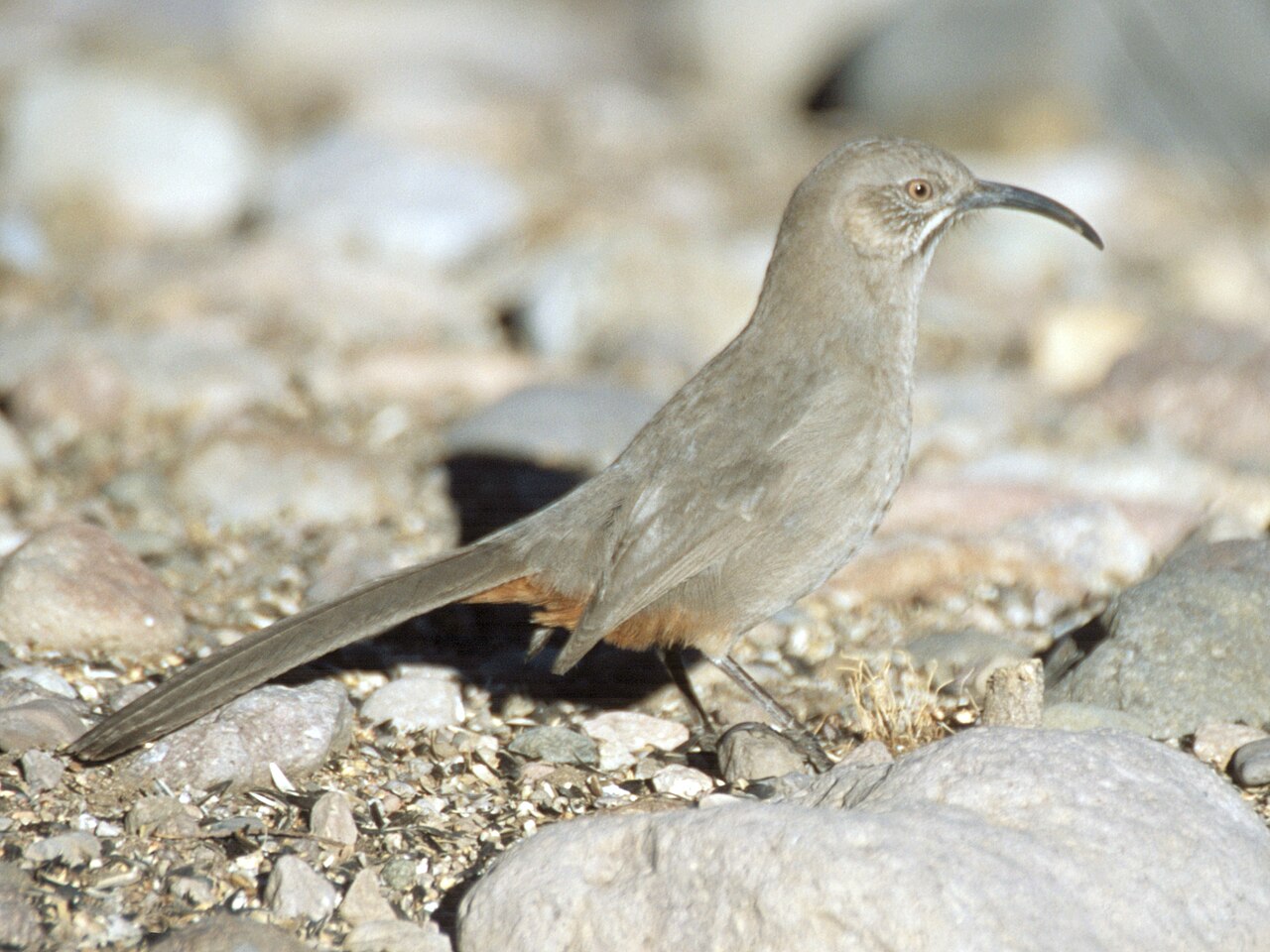
The Crissal Thrasher (Toxostoma crissale) is the reclusive big thrasher of southwestern mesquite bosques — plain gray-brown with a long, deeply curved bill and a rich chestnut patch under the tail that names it. Its song is a rich, varied thrasher medley delivered from deep cover. It forages on the ground in dense thickets and never migrates. Desert yards attract them with dense mesquite, native thickets, and ground litter. They share the bosque with the Curve-billed Thrasher and the Cactus Wren.
Species Physical Profile & Morphometrics
The Crissal Thrasher belongs to the mockingbird family (Mimidae) and is a year-round resident of dense desert thickets — mesquite bosques, willow-cottonwood understory, and saltbush flats — across the Southwest.
The identification formula: big plain gray-brown + deeply curved bill + chestnut undertail patch + dense thicket. The Curve-billed Thrasher shows spotting and favors open desert; the Crissal is unspotted, darker-billed, and thicket-bound.
Essential Morphometric Field Marks:
- Body Length & Mass: 10.2 to 12.6 inches (26–32 cm) and 1.9 to 2.6 ounces (54–74 grams) — second only to the California Thrasher in bulk.
- Wingspan: 12.6 inches (32 cm); flight is weak and reluctant — a low dash between thickets at most.
- Bill Structure & Color: A long, deeply decurved black bill — the excavation tool for deep litter and soil.
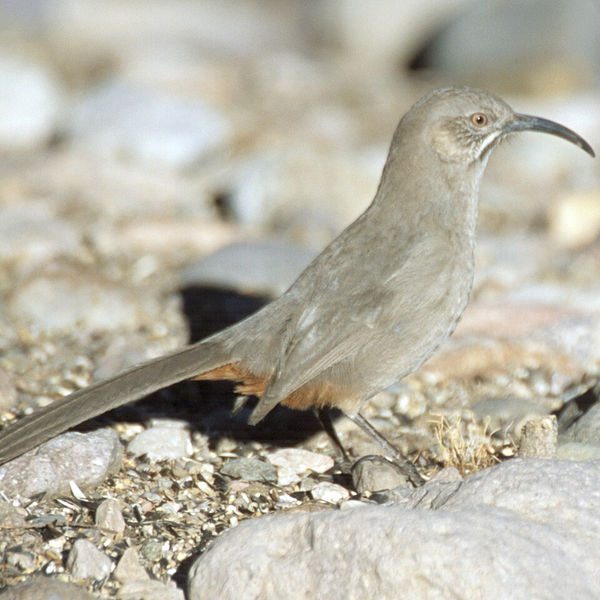
- Color Pattern: Plain gray-brown above and below, slightly paler on the throat, with a rich chestnut crissum — the single splash of color.
- Male vs. Female: The sexes look alike — both sing, both forage the litter, and both stay on territory all year.
The thicket baritone: singing his rich doubled phrases from deep inside the mesquite, chestnut patch flashing as he hops.
Identical in plumage — she incubates in the thorny heart of the bosque while he patrols and sings from interior perches.
Crissal Thrasher Vocalization Guide (0 Field Recordings)
The Crissal Thrasher’s song is a rich, varied medley with doubled phrases — a true thrasher performance from deep cover. All recordings below are real field audio via Wikimedia Commons — no simulations. For a deeper library, browse xeno-canto: Crissal Thrasher.
1. The Bosque Medley
2. The Dawn Interior
3. The Churrr Call
Habitat, Range & the Mesquite Bosque
The Crissal Thrasher lives in dense desert thickets: mesquite bosques, willow and cottonwood understory along washes, and saltbush flats — cover so thick the bird is almost never seen in the open.

The Recluse of the Thicket
Range covers the Southwest from California and Utah through Arizona and New Mexico to Texas, resident all year in the densest available desert cover.
For backyard birders: desert yards adjoining mesquite thickets or wash vegetation can host a resident pair — you will hear the doubled-phrase song long before you see the bird.
Backyard Behavioral Patterns & Social Dynamics
The Crissal Thrasher is a deep-cover ground forager with a rich voice. Four behaviors explain most of what you will observe:
🌳 The Thicket Recluse
It lives inside dense thickets — foraging, nesting, and singing within cover, crossing open ground only in quick dashes.
⛏️ The Deep Digger
It excavates deep litter and soft soil with the sickle bill — insects, spiders, and seeds from under the bosque floor.
🎶 The Doubled Phrase
The song repeats each phrase twice — the classic thrasher pattern, rich and varied, from an interior perch.
📍 The Permanent Resident
It never migrates — pairs hold the same thicket year-round for years.
Problem: “How Do I See a Crissal Thrasher? What Should I Do?”
The three most common Crissal Thrasher puzzles all have proven answers:
First, the invisible singer: the bird sings from inside the thicket, not on top of it — sit quietly at the thicket edge at dawn and watch interior gaps; patience beats pursuit every time. Second, the thrasher split: check spotting and habitat — Crissal is unspotted with a chestnut undertail in dense thickets; Curve-billed is spotted in open desert; the chestnut crissum, when glimpsed, is decisive. Third, the bare-yard problem: yards that clear undergrowth and rake litter never hold them — let the mesquite grow shaggy and the litter deep, and the recluse moves in.
Method 1: Set the Table — Dense Mesquite & Deep Litter
Design for a thicket-bound ground forager:
-
Keep Mesquite Shaggy
Unpruned, dense mesquite and native shrubs — the thicket structure this bird requires.
-
Leave the Litter Deep
No raking under the bosque — the digging floor is the pantry.
-
Protect Wash Vegetation
Willow, cottonwood understory, and saltbush — the corridors that connect territories.
-
Skip the Insecticide
Ground insects are the whole diet — sprayed desert is silent desert.
Method 2: Build the Habitat — Ground Safety & a Quiet Drink
Keep cover dense and cats inside, and the pair stays for years:
-
Keep Cats Indoors
Ground-foragers in thickets are cat prey — the deadliest yard hazard for this species.
-
Offer Ground Water at Cover
A shallow dish beside the thicket — used daily in the hot months.
-
Never Clear Understory
Underbrush removal is permanent eviction — shaggy is the goal.
-
Listen at Dawn
First light is song time — the doubled phrases locate the territory from a hundred yards.
Tool Solution: Recommended Hardware for Crissal Thrasher
Equipment matched to a thicket-dwelling thrasher:
Dense Native Thicket
Unpruned mesquite, wolfberry, and saltbush — the bosque structure a Crissal Thrasher calls home.
- • Plants: Mesquite & natives
- • Rule: Never thin
- • Bonus: Towhees & wrens too
Deep Undisturbed Litter
Leaf litter and debris under the shrubs — the excavation grounds of a foraging pair.
- • Rule: No raking
- • Depth: Natural build
- • Bonus: Sparrows scratch here
Shallow Dish at the Thicket Edge
Ground water within a dash of cover — the daily errand that brings the recluse into view.
- • Depth: 1–2 inches
- • Placement: Beside cover
- • Bonus: Doves & quail too
Frequently Asked Questions
- Species Profile: The Crissal Thrasher (Toxostoma crissale) is a 10.2–12.6 inch, 1.9–2.6 ounce mimid (Mimidae), band code CRTH — the chestnut-vented recluse.
- ID in One Look: Plain gray-brown, deep sickle bill, chestnut under the tail, inside the thicket.
- The Sound: Rich doubled-phrase medley from deep cover; real field recordings above.
- Range & Habit: Southwestern desert thickets; resident all year; nests low in thorny shrubs.
- Feeder Formula: Thickets and litter — feeders are ignored entirely.
- The Recluse Rule: Clear the understory and you evict the bird — shaggy mesquite is everything.
Bird Watching Log
Species: Crissal Thrasher (Toxostoma crissale)
| Crissal Thrasher (Chestnut Crissum Seen: Yes / No — Sickle Bill Seen: Yes / No — Doubled Song Heard: Yes / No — Thicket Intact: Yes / No — Date & Time: ___) | |