
Great-tailed Grackle


Great-tailed Grackle (Quiscalus mexicanus): Complete Identification, Habitat Guide & Sound Library
Quick Answer: How to Attract & Identify the Great-tailed Grackle
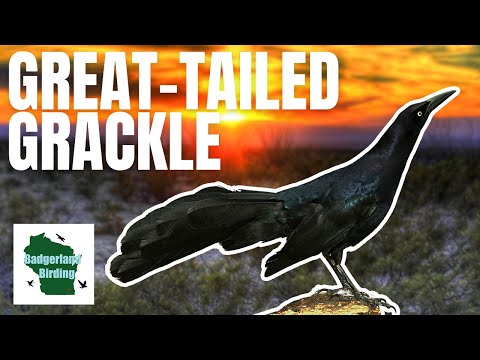
The Great-tailed Grackle (Quiscalus mexicanus) is the big iridescent showman of the Southwest — the male glossy purple-black with a piercing yellow eye and an enormous keel-shaped tail; the female half his size and warm brown. The voice is a wild repertoire of whistles, clacks, and electronic squeals. It thrives in towns, parks, and marshes and is expanding its range northward. At feeders it takes corn, sunflower, and suet on platforms — manage with weight-sensitive feeders if flocks dominate. They share the lot with the Common Grackle and the Brewer’s Blackbird.
Species Physical Profile & Morphometrics
The Great-tailed Grackle belongs to the blackbird family (Icteridae) and is a southwestern native expanding rapidly — from Texas and the Southwest into the Great Plains and up the California coast.
The identification formula: big male with keel tail + yellow eye + iridescent purple gloss. The Common Grackle is smaller and shorter-tailed and lives east; the Boat-tailed Grackle is coastal Gulf and Atlantic with a rounder eye and duller gloss. Females are warm brown and half the male’s size.
Essential Morphometric Field Marks:
- Body Length & Mass: Males 15 to 18.1 inches (38–46 cm) and 3.7 to 6.7 ounces (105–190 grams) — females are half the size at 12 to 15 inches.
- Wingspan: 18.9 to 22.8 inches (48–58 cm); flight is strong and level, the great tail trailing like a rudder.
- Bill Structure & Color: A long, heavy black dagger bill — omnivore hardware for grain, insects, eggs, and fries.
- Color Pattern: Male — iridescent purple-blue-black with yellow eye; female — warm brown above, buff below, same yellow eye.
- Male vs. Female: The most size-dimorphic blackbird — he is twice her bulk, iridescent where she is brown; both carry the yellow eye.
The parking-lot peacock: tail spread in a great fan, head thrown back, blasting a rising whistle that rattles the strip mall.
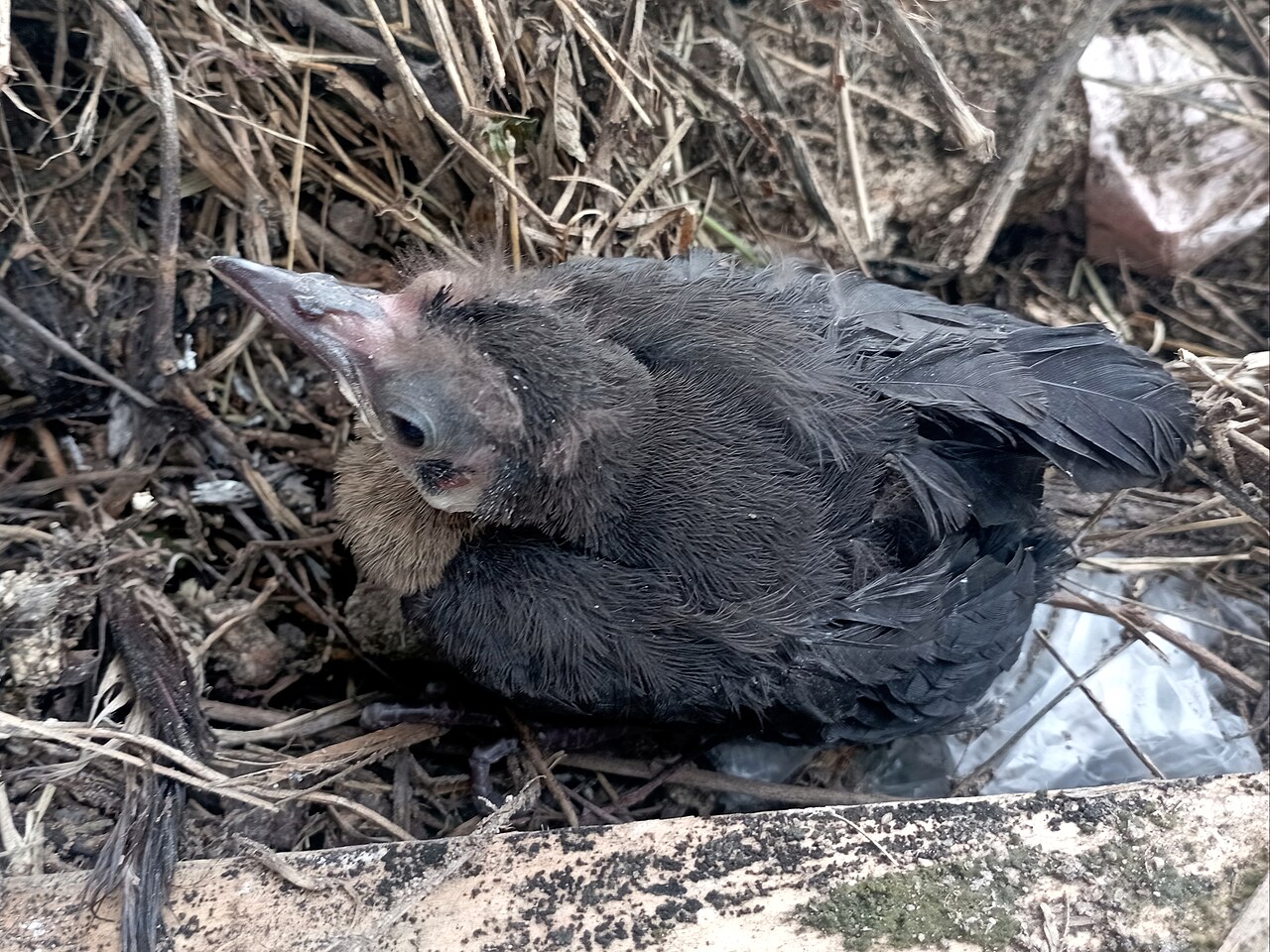
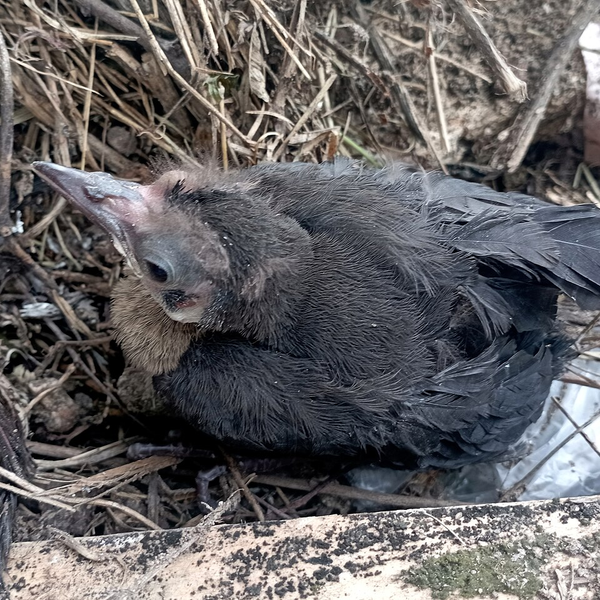
Half his size, warm brown — she weaves the nest in marsh vegetation or a park tree and raises the brood on insects and scavenged plenty.
Great-tailed Grackle Vocalization Guide (3 Field Recordings)
The Great-tailed Grackle’s voice is a wild repertoire — clear rising whistles, clacks, squeals, and electronic crackles. All recordings below are real field audio via Wikimedia Commons — no simulations. For a deeper library, browse xeno-canto: Great-tailed Grackle.
1. The Rising Whistle
2. The Electronic Squeal
3. The Flock Chorus
Habitat, Range & the Great Expansion
The Great-tailed Grackle lives in wetlands, parks, towns, and farmland across the Southwest — and expands yearly, following irrigation, lawns, and fast food north and west from its Mexican heartland.

The Bird That Follows the Sprinklers
Range centers on Texas, the Southwest, and Mexico, but breeding birds now reach the Great Plains, Colorado, and coastal California — one of North America’s fastest range expansions.
For backyard birders: southwestern yards are already grackle country — platform feeders, lawns, and water features all draw them; management, not attraction, is the usual question.
Backyard Behavioral Patterns & Social Dynamics
The Great-tailed Grackle is an opportunist with a peacock streak. Four behaviors explain most of what you will observe:
🦚 The Tail Display
The male displays with tail spread, wings drooped, and head skyward — the full peacock routine on a parking lot stage.
🍟 The Omnivore
It eats everything — grain, insects, fish, eggs, nestlings, and unattended fries — the ultimate southwestern opportunist.
🌆 The Urban Roost
Flocks of hundreds to thousands roost in town trees — a nightly wall of whistles at sunset.
🧭 The Expansion
The species marches north and west every decade — irrigation and suburbia pave its way.
Problem: “How Do I Manage Great-tailed Grackles? What Should I Do?”
The three most common Great-tailed Grackle puzzles all have proven answers:
First, the feeder takeover: grackles empty open feeders and intimidate songbirds — switch to weight-sensitive or caged feeders, serve safflower (they dislike it), and stop scattering seed on the ground. Second, the roost noise: dusk roosts are loud but seasonal — they shift with the weeks; wait them out rather than harassing a protected native bird. Third, the nest predation worry: grackles do take eggs and nestlings — keep them from dominating by never feeding them deliberately during songbird nesting season, and let the marsh edges stay wild and defended.
Method 1: Set the Table — Songbird Feeders, Grackle-Resistant
Design feeding for the birds you want to keep:
-
Use Weight-Sensitive Feeders
Perch-closing mechanisms — grackle weight shuts the port; chickadees feed on.
-
Serve Safflower
Grackles dislike safflower — cardinals and finches take it happily.
-
Stop Ground Scatter
No seed on the ground or open trays — open platforms are grackle buffets.
-
Feed Suet in Cages
Caged suet feeders — woodpeckers in, grackles out.
Method 2: Understand the Bird — Native, Expanding & Loud
Management aside, this is a native success story worth watching:
-
Learn the Displays
Tail fan, sky-point, whistle — the spring display is world-class street theater.
-
Watch the Expansion
New records every year — your sighting may be a county first in the northern states.
-
Expect the Seasonal Shift
Roosts form and dissolve with the seasons — a loud block this month is quiet next.
-
Keep Them Wild
Never hand-feed — habituated grackles become parking-lot beggars and nest predators.
Tool Solution: Recommended Hardware for Great-tailed Grackle
Equipment matched to life with a big grackle:
Weight-Sensitive Feeder
Perch-closing feeders — the songbirds eat; the grackle’s own weight shuts the door.
- • Feature: Adjustable weight
- • Effect: Grackle-resistant
- • Bonus: Squirrel control too
Safflower
Bitter to grackles, beloved by cardinals — the peace treaty in seed form.
- • Feed: Safflower
- • Users: Cardinals & finches
- • Decliners: Grackles & starlings
Caged Suet Feeder
Wire cage around the suet cake — woodpeckers and nuthatches pass, grackles bounce off.
- • Feature: Wire cage
- • Users: Woodpeckers
- • Bonus: Weather protection
Frequently Asked Questions
- Species Profile: The Great-tailed Grackle (Quiscalus mexicanus) is a 15–18.1 inch, 3.7–6.7 ounce icterid (Icteridae), band code GTGR — the parking-lot peacock.
- ID in One Look: Huge keel tail, yellow eye, iridescent purple gloss; female half-sized and brown.
- The Sound: Rising whistles, clacks, and electronic squeals; real field recordings above.
- Range & Habit: Southwestern native expanding fast; towns, parks, and marshes.
- Feeder Formula: Weight-sensitive feeders and safflower — manage, do not surrender.
- The Expansion Story: Following sprinklers and suburbs northward — your sighting may be a county record.
Bird Watching Log
Species: Great-tailed Grackle (Quiscalus mexicanus)
| Great-tailed Grackle (Keel Tail Seen: Yes / No — Yellow Eye Seen: Yes / No — Rising Whistle Heard: Yes / No — Feeder Managed: Yes / No — Date & Time: ___) | |