
Lawrence’s Goldfinch


Lawrence’s Goldfinch (Spinus lawrencei): Complete Identification, Habitat Guide & Sound Library
Quick Answer: How to Attract & Identify the Lawrence’s Goldfinch
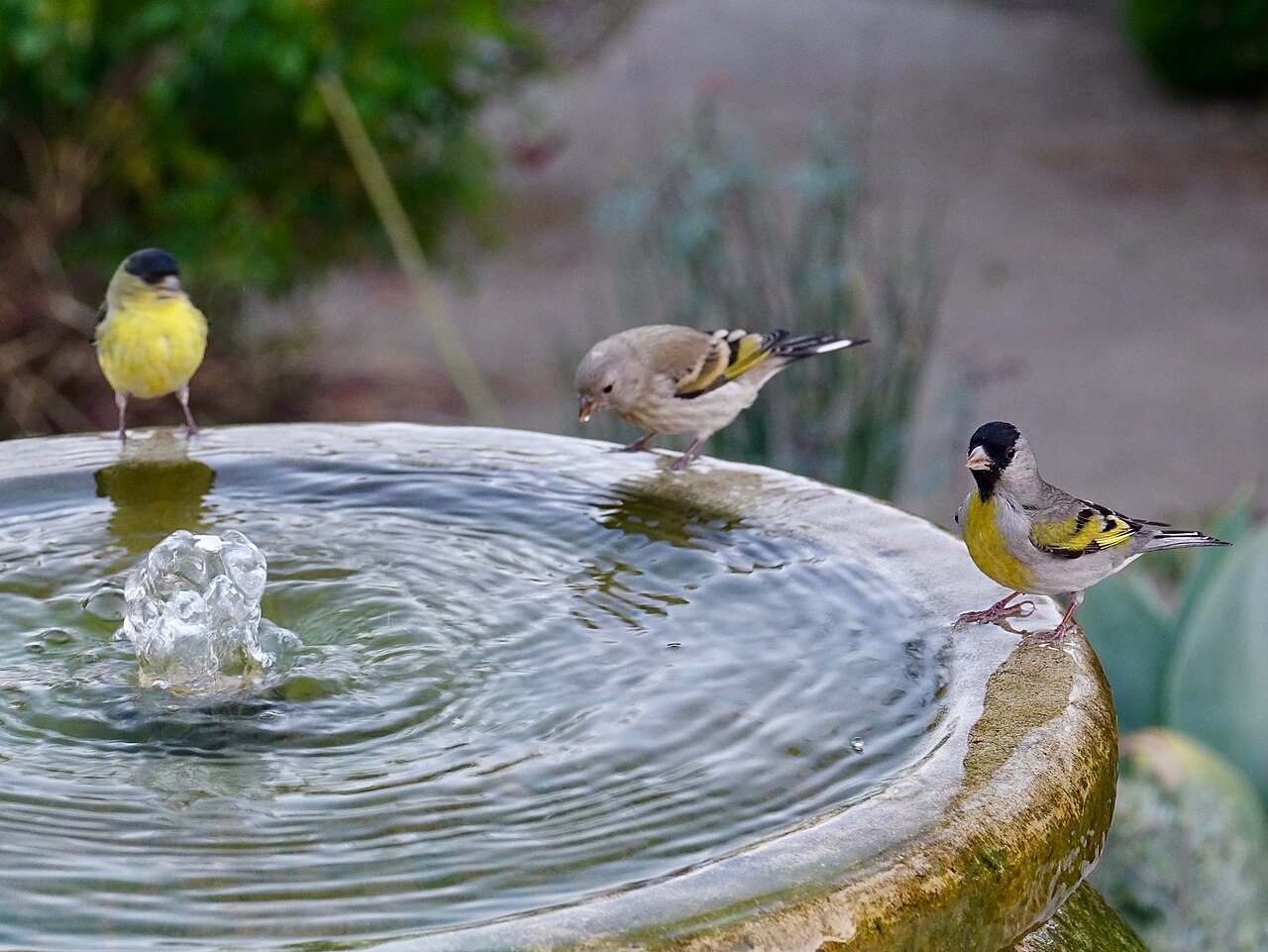
The Lawrence’s Goldfinch (Spinus lawrencei) is the erratic gray-and-yellow goldfinch of California’s dry hills — soft gray above, a yellow chest patch, a neat black face, and broad yellow wing bars. It wanders with the seed crop and visits nyjer feeders in good years. The calls are tinkling, bell-like notes — higher and sweeter than other goldfinches. Dry-country yards attract them with nyjer socks, sunflower chips, and native seeding plants. They share the hills with the Lesser Goldfinch and the House Finch.
Species Physical Profile & Morphometrics
The Lawrence’s Goldfinch belongs to the finch family (Fringillidae) and breeds almost entirely in California’s oak and chaparral hills — an erratic wanderer whose numbers swing with the wildflower seed crop.
The identification formula: gray body + yellow chest patch + black face + yellow wing bars. Lesser Goldfinches are green-backed with full black caps; American Goldfinches are brighter yellow with black wings. The gray-and-yellow combination is Lawrence’s alone.
Essential Morphometric Field Marks:
- Body Length & Mass: 4.3 to 4.7 inches (11–12 cm) and 0.3 to 0.4 ounces (8–11 grams) — the small, neat goldfinch of the dry hills.
- Wingspan: 8.3 inches (21 cm); flight is bounding and flock-tight, wing bars flashing over the chaparral.
- Bill Structure & Color: A stubby pinkish conical bill — the seed cracker, paler than its cousins’.
- Color Pattern: Gray body, yellow chest patch, black face and forehead, yellow wing bars and tail edges; females duller with less black.
- Male vs. Female: He wears the sharp black face and bigger yellow patch; she is softer gray with a hint of the pattern — both flock and tinkle alike.
The gray gentleman: perched on a dried thistle, black mask neat, chest patch glowing, tinkling softly to the flock.
Softer gray, fainter mask — she weaves the tiny cup in a hillside oak and shares the seed-harvest errands.
Lawrence’s Goldfinch Vocalization Guide (0 Field Recordings)
The Lawrence’s Goldfinch’s calls are tinkling, bell-like notes — higher and sweeter than other goldfinches. All recordings below are real field audio via Wikimedia Commons — no simulations. For a deeper library, browse xeno-canto: Lawrence’s Goldfinch.
1. The Tinkling Call
2. The Flock Twitter
3. The Flight Song
Habitat, Range & the Seed-Crop Nomad
The Lawrence’s Goldfinch lives in dry oak woodland, chaparral edges, and weedy hillsides — almost entirely within California and Baja — wandering erratically wherever the seed crop is richest.

The Goldfinch That Follows the Flowers
Range centers on California’s coast ranges and Sierra foothills; in poor seed years the birds scatter to Arizona and the Southwest, in good years they swarm the home hills.
For backyard birders: dry-country California yards with nyjer feeders and seeding native plants can host flocks in the right years — an unpredictable and prized visitor.
Backyard Behavioral Patterns & Social Dynamics
The Lawrence’s Goldfinch is a seed-tracking nomad with a tinkling voice. Four behaviors explain most of what you will observe:
🌾 The Seed Tracker
It follows the wildflower seed crop — numbers boom where fiddlenecks and thistles seed heavily.
🧦 The Nyjer Guest
It visits nyjer socks and tube feeders — often in tight flocks that empty a feeder in a day.
🔔 The Tinkling Flock
The calls are high bell notes — the sweetest voice in the goldfinch family.
🏜️ The Dry-Country Choice
It favors dry open hills over the wetter west — the goldfinch of California’s rain-shadow country.
Problem: “How Do I Attract Lawrence’s Goldfinches? What Should I Do?”
The three most common Lawrence’s Goldfinch puzzles all have proven answers:
First, the identity check: gray body plus yellow chest patch plus black face is Lawrence’s — Lesser Goldfinches are green-backed with a full black cap; Americans are bright yellow with black wings. Second, the absent years: the species is genuinely erratic — an empty feeder for two winters is normal; the flock arrives when the seed crop does. Third, the feeder timing: they visit most in late winter and spring when wild seed runs out — keep nyjer fresh through May in dry country and the nomads will find you.
Method 1: Set the Table — Nyjer & Sunflower Chips
Design for a nomadic seed specialist:
-
Hang Nyjer Socks
Fresh nyjer in socks or fine tubes — the classic goldfinch draw, best in late winter and spring.
-
Offer Sunflower Chips
Hulled sunflower on platforms — accepted readily when flocks arrive.
-
Keep Water Close
A shallow bath beside the feeders — dry-country birds drink hard.
-
Spread the Stations
Several small feeders — flocks share better with multiple ports.
Method 2: Build the Habitat — Native Seed Crop
Grow the food that brings the nomads home:
-
Plant Seeding Natives
Fiddleneck, tarweed, native thistles — the wild crop that drives the species’ wanderings.
-
Leave Seed Heads Standing
No fall cleanup of seeding plants — the standing crop feeds the flock.
-
Keep Weedy Edges
Unmowed margins — the wild seed bank of a dry-country yard.
-
Skip the Herbicide
Herbicides erase the seed crop — a sprayed hillside is an empty one.
Tool Solution: Recommended Hardware for Lawrence’s Goldfinch
Equipment matched to an erratic goldfinch:
Nyjer Sock or Tube
Fresh nyjer in a fine feeder — the goldfinch magnet, stocked through spring in dry country.
- • Feed: Nyjer seed
- • Style: Sock or fine tube
- • Bonus: Lesser goldfinches too
Sunflower Chip Platform
Hulled sunflower on a platform — the second choice when the flock mob fills the socks.
- • Feed: Sunflower chips
- • Style: Platform
- • Bonus: All finches & sparrows
Shallow Bird Bath
Water beside the feeders — dry-hill finches drink daily and bathe in crowds.
- • Depth: 1–2 inches
- • Placement: Near feeders
- • Bonus: All seedeaters
Frequently Asked Questions
- Species Profile: The Lawrence’s Goldfinch (Spinus lawrencei) is a 4.3–4.7 inch, 0.3–0.4 ounce finch (Fringillidae), band code LAGO — the erratic gray goldfinch.
- ID in One Look: Gray body, yellow chest patch, black face, yellow wing bars.
- The Sound: High tinkling bell notes; real field recordings above.
- Range & Habit: California-centered nomad tracking the seed crop; erratic in the Southwest.
- Feeder Formula: Nyjer socks, sunflower chips, and a bath beside them.
- The Patience Rule: Empty for years, mobbed in April — keep the socks up and wait.
Bird Watching Log
Species: Lawrence’s Goldfinch (Spinus lawrencei)
| Lawrence’s Goldfinch (Black Face Seen: Yes / No — Chest Patch Seen: Yes / No — Tinkling Heard: Yes / No — Flock Size: ___ — Date & Time: ___) | |