
Common Ground Dove


Common Ground Dove (Columbina passerina): Complete Identification, Habitat Guide & Sound Library
Quick Answer: How to Attract & Identify the Common Ground Dove
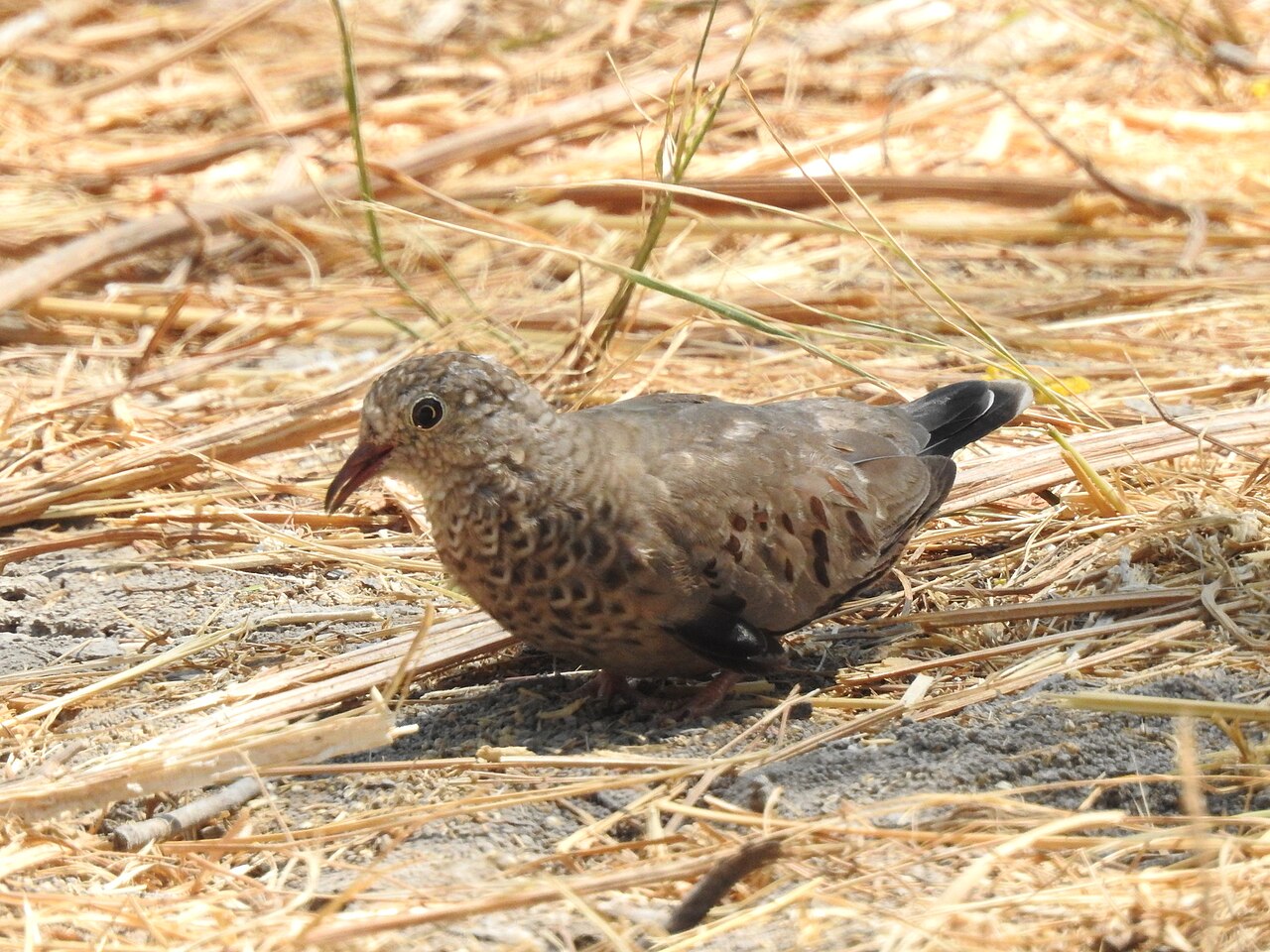
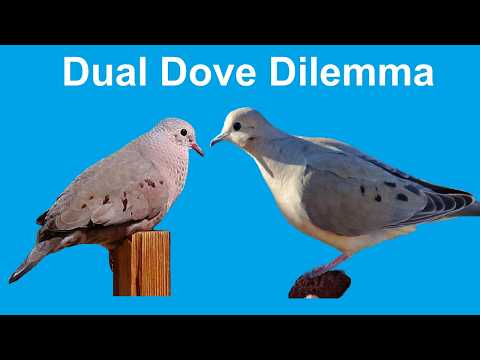
The Common Ground Dove (Columbina passerina) is America’s smallest dove — sparrow-sized, short-tailed, and quiet, with a scaled breast, a pinkish bill tipped in black, and a startling flash of rufous wings in flight. It lives year-round across the Deep South and Southwest, walking open sandy ground for tiny seeds. The voice is a soft, rising coo repeated every few seconds. Southern yards attract them with scattered millet on bare ground, low platform trays, and shallow water. They share the ground with the Mourning Dove and the Inca Dove.
Species Physical Profile & Morphometrics
The Common Ground Dove belongs to the pigeon and dove family (Columbidae) and is the smallest dove in the United States — half the size of a Mourning Dove. It is a permanent resident of the southern tier, from Florida and the Gulf Coast to southern Arizona and California.
The identification formula: tiny size + short tail + scaled breast + pinkish bill. The Inca Dove is larger, long-tailed, and scaled all over the body; the Mourning Dove dwarfs it. In flight, the ground dove’s rufous primaries flash like a tiny meadowlark’s tail — the clincher.
Essential Morphometric Field Marks:
- Body Length & Mass: 5.9 to 7.1 inches (15–18 cm) and 1.0 to 1.4 ounces (28–40 grams) — truly sparrow-sized, plump with a small head and short square tail.
- Wingspan: 10.4 inches (26 cm); flight is low, quick, and direct with rapid wingbeats, usually a short dash to the nearest cover.
- Bill Structure & Color: A small pinkish bill with a dark tip — delicate seed-picking forceps; the pink base is visible at feeder distance and unique among U.S. doves.
- Color Pattern: Gray-brown overall, males pinkish-gray on the head and breast, females duller brown; the breast and neck feathers are dark-edged in a scaled pattern, with black spots on the wings and rufous primaries hidden until flight.
- Male vs. Female: The male is pinker-gray on the head and breast; the female is browner and plainer — a subtle pair, usually seen shuffling along the ground together.
The pink-washed walker: soft gray-pink head and scaled breast, mincing across the patio on short legs, pausing to deliver his gentle rising coo from a low perch.
The browner half — same tiny frame and scaled breast in duller tones — she lays two white eggs in a flimsy saucer on the ground or a low shrub, and the pair takes turns keeping watch.
Common Ground Dove Vocalization Guide (1 Field Recording)
The Common Ground Dove’s voice is a soft, rising coo — coo-WOO — repeated every two or three seconds with monk-like patience. All recordings below are real field audio via Wikimedia Commons — no simulations. For a deeper library, browse xeno-canto: Common Ground Dove.
1. The Rising Coo
2. The Patient Repetition
3. Pair Contact Notes
Habitat, Range & the Sandy South
The Common Ground Dove lives in open, sandy country: scrubby fields, garden edges, roadsides, citrus groves, and open pine woods with bare ground. It is a bird of yards and farm edges as much as wild scrub — anywhere seeds lie on open soil and a shrubby escape cover stands nearby.

The Southern Ground Walker
The range hugs the southern tier: Florida and the Gulf Coast, through Texas and the desert Southwest to southern Arizona and California’s Imperial Valley, then deep into Mexico. It does not migrate — the birds in your yard are the same individuals all year.
For backyard birders: anywhere in the southern tier, a yard with bare sandy patches, scattered seed, and a shrubby edge can host a resident pair — they are among the most loyal yard birds on the continent, often nesting in the same garden year after year.
Backyard Behavioral Patterns & Social Dynamics
The Common Ground Dove is a tiny, loyal ground-feeder — a patio bird that asks for little. Four behaviors explain most of what you will observe:
🚶 The Ground Walker
True to the name, it walks rather than hops, shuffling over sandy soil on short legs, picking up tiny seeds one by one — watch the patio, not the feeder pole.
🔥 The Rufous Surprise
On the ground it looks plain gray-brown — but when it flushes, the wings flash rich rufous-red, one of the most surprising color reveals in backyard birding.
💑 The Loyal Pair
Pairs are strongly bonded and resident — the same couple works the same yard all year, feeding within a few feet of each other and duetting softly at dawn.
🌱 The Tiny-Seed Specialist
It takes very small seeds — millet, grass seed, doveweed — too small for larger doves to bother with; scattered fine seed on bare ground is its ideal table.
Problem: “I Hear the Soft Cooing but the Tiny Doves Never Come to My Feeders. What Should I Do?”
The three most common Common Ground Dove puzzles all have proven answers:
First, the feeder mismatch: ground doves rarely land on hanging feeders — scatter fine millet directly on bare ground or a low tray within a step of shrub cover, and they will find it within days. Second, the look-alike confusion: young Mourning Doves and Inca Doves fool many observers — size settles it; a dove the size of a sparrow with a short tail is a ground dove, and the rufous wing flash confirms it. Third, the disappearing pair: a resident pair that vanishes has usually been spooked by a cat or a hawk — keep seed close to dense cover, move the bath into the open, and the pair typically re-establishes within a few weeks.
Method 1: Set the Table — Fine Seed on Bare Ground
Design for a tiny ground-walking dove:
-
Scatter Fine Millet
White proso millet scattered thin on bare soil or a ground tray — seed small enough for their delicate bills, refreshed every day or two.
-
Use Low Platform Trays
A low tray a few inches off the ground beside dense shrubs — off the dirt but still ground-style feeding they accept readily.
-
Keep a Bare Patch
Ground doves need open bare soil to feed — leave an unmulched sunny patch near cover instead of wall-to-wall lawn or bark.
-
Offer Shallow Water
A very shallow dish of water at ground level — an inch deep is plenty; they drink morning and evening like clockwork.
Method 2: Build the Habitat — Cover Edges & Safe Ground
Protect the ground, and the pair stays all year:
-
Plant Dense Low Shrubs
Low, dense cover — dwarf yaupon, rosemary, lantana — within a quick dash of the feeding patch; escape cover is the price of a feeding visit.
-
Keep Cats Indoors
Ground-feeding doves are cat magnets — indoor cats are the single biggest gift you can give a resident pair.
-
Leave Edges Untidy
Grass seed heads, weed patches, and leaf edges provide natural seed — a perfectly groomed yard holds no food for a ground dove.
-
Avoid Pesticides on Lawns
Treated lawns kill the seed-producing weeds and insects ground doves rely on — a chemical-free patch is a stocked pantry.
Tool Solution: Recommended Hardware for Common Ground Dove
Equipment matched to a tiny ground-feeding dove:
Ground Tray & Fine Millet
A low platform tray with white proso millet — the exact combination that turns a wandering pair into daily visitors.
- • Food: White proso millet
- • Style: Low ground tray
- • Placement: Beside shrub cover
Shallow Ground Water Dish
An inch-deep water dish at ground level near cover — ground doves visit water with clockwork regularity at dawn and dusk.
- • Depth: About one inch
- • Placement: Open, near cover
- • Care: Refresh daily
Native Grass & Weed Patch
An unsprayed patch of seeding grasses and doveweed — the natural food that keeps a pair resident year-round.
- • Plants: Native grasses, doveweed
- • Season: Year-round
- • Bonus: Sparrows & towhees too
Frequently Asked Questions
- Species Profile: The Common Ground Dove (Columbina passerina) is a 5.9–7.1 inch, 1.0–1.4 ounce dove (Columbidae), band code COGD — America’s smallest dove.
- ID in One Look: Sparrow-sized, short-tailed, scaled breast, pinkish dark-tipped bill, rufous wing flash in flight.
- The Sound: A soft rising coo-WOO repeated every few seconds; real field recordings above.
- Range & Habit: Permanent resident of the southern tier; walks bare sandy ground near shrubby cover; fiercely loyal to a good yard.
- Feeder Formula: Fine millet on bare ground or a low tray, shallow ground water, dense cover within a dash, and no cats.
- The Hidden Rust: Plain on the ground, rufous-winged in flight — the small reward for a careful look.
Bird Watching Log
Species: Common Ground Dove (Columbina passerina)
| Common Ground Dove (Pair Seen: Yes / No — Rufous Flash: Yes / No — Cooing Heard: Yes / No — At Ground Seed: Yes / No — At Water: Yes / No — Date & Time: ___) | |