
Golden-crowned Kinglet


Golden-crowned Kinglet (Regulus satrapa): Complete Identification, Habitat Guide & Sound Library
Quick Answer: How to Attract & Identify the Golden-crowned Kinglet
The Golden-crowned Kinglet (Regulus satrapa) is one of North America’s smallest songbirds — a four-inch, six-gram acrobat with a flame-orange crown bordered in black and a boldly striped face. It hover-gleans insects from conifer needles, never still, and its voice is a thin, high tsee-tsee-tsee accelerating into a chatter. Breeding in northern and mountain conifers, it winters in yards across the country, where suet crumbs, peanut butter smears, and dense evergreens attract it. It winters alongside the Black-capped Chickadee and the Red-breasted Nuthatch.
Species Physical Profile & Morphometrics
The Golden-crowned Kinglet belongs to the kinglet family (Regulidae) — tiny, hyperactive insect-eaters. It breeds in northern and high-elevation conifer forest and winters broadly across the U.S., often in mixed flocks with chickadees.
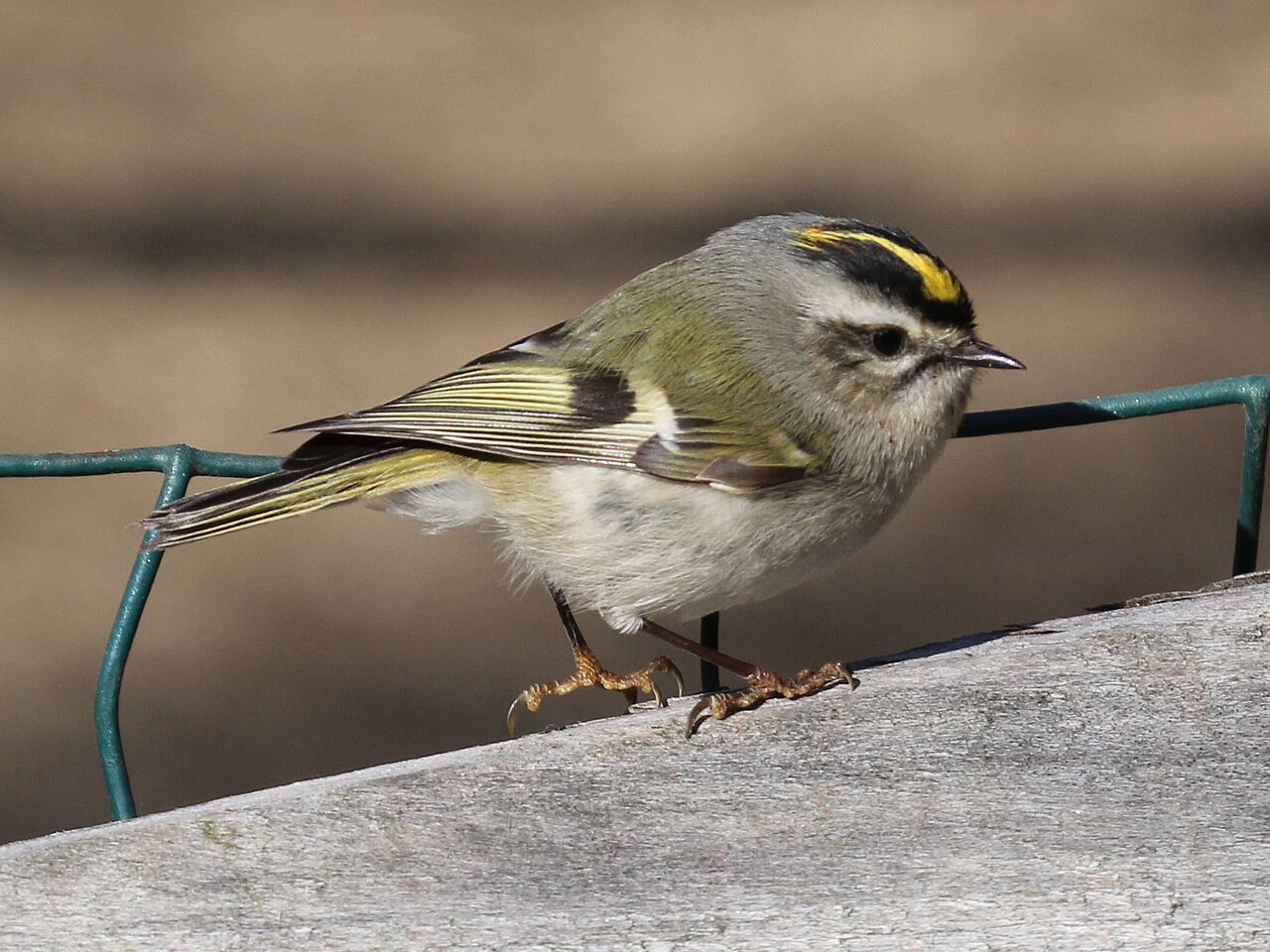
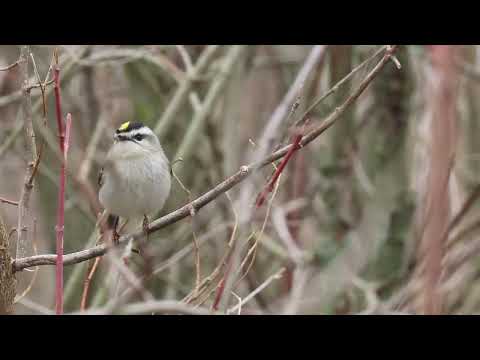
The identification formula: tiny size + striped face + golden-orange crown with black border. The Ruby-crowned Kinglet has a plain face with a bold white eye ring and a hidden red crown; the Golden-crowned’s striped face and visible golden crown are on display all year.
Essential Morphometric Field Marks:
- Body Length & Mass: 3.1 to 4.3 inches (8–11 cm) and 0.1 to 0.3 ounces (4–7 grams) — twenty kinglets weigh about as much as one cardinal.
- Wingspan: 5.5 to 7.1 inches (14–18 cm); flight is a flickering dart between branch tips, and it hovers like a tiny hummingbird at needle clusters.
- Bill Structure & Color: A thin, black, needle-pointed bill — precision tweezers for picking aphids and moth eggs from conifer needles.
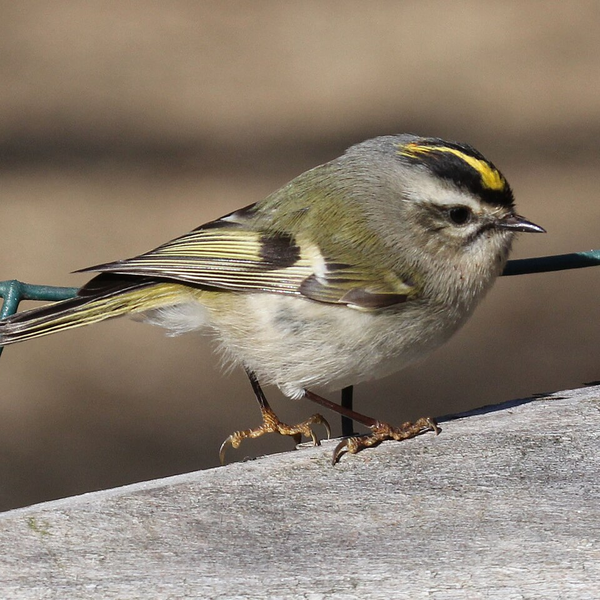
- Color Pattern: Olive-gray above, pale below, two white wing bars, a face striped black and white, and a golden-orange crown — fiery orange in the male, yellow in the female — bordered in black.
- Male vs. Female: The male’s crown center is orange, the female’s yellow — visible when the bird tilts its head, which is constantly.
The flame-crowned mite: six grams of restless energy, crown flashing orange as he hover-gleans the spruce tips, singing a song far too thin for his bravery.
The yellow-crowned partner — equally tireless — she builds a hanging cup of moss and spiderweb high in a spruce and broods up to nine eggs in a nest the size of a teacup.
Golden-crowned Kinglet Vocalization Guide (3 Field Recordings)
The Golden-crowned Kinglet’s voice is thin and very high — a series of tsee notes accelerating into a chatter, near the top of human hearing. All recordings below are real field audio via Wikimedia Commons — no simulations. For a deeper library, browse xeno-canto: Golden-crowned Kinglet.
1. The High Tsee
2. The Accelerating Song
3. The Winter Chorus
Habitat, Range & the Conifer Belt
The Golden-crowned Kinglet breeds in spruce-fir forest across the northern states, Canada, and down the western mountains. In winter it spreads through woodlands, parks, and yards nationwide — any stand of conifers or dense shrubs can hold a foraging band.

The Nation’s Winter Mite
Breeding range covers the northern forest belt and western mountains; winter range spreads across most of the Lower 48. The same bird that nested in a Maine spruce may glean your Georgia yard in January.
For backyard birders: October through April, any yard with conifers or dense shrub cover can host a wandering band — suet crumbs and stillness bring them to arm’s length.
Backyard Behavioral Patterns & Social Dynamics
The Golden-crowned Kinglet is a hover-gleaning, cold-defying bundle of metabolism. Four behaviors explain most of what you will observe:
🕊️ The Hover-Gleaner
It hovers at needle tips and hangs upside down, picking aphids and insect eggs from conifers — hummingbird feeding style on a songbird body.
🔥 The Cold Survivor
At six grams it survives northern winters by eating constantly and huddling with flockmates at night — a tiny furnace that never switches off.
👥 The Flock Follower
In winter it joins chickadee and nuthatch bands — find the flock, and the kinglets are the smallest, fastest birds in it.
🌲 The Conifer Loyalist
Breeding territories are in spruce and fir; even in winter it favors conifers and dense evergreens over bare hardwoods.
Problem: “A Tiny Hyperactive Bird Won’t Sit Still Long Enough to Identify. What Should I Do?”
The three most common Golden-crowned Kinglet puzzles all have proven answers:
First, the blur: kinglets never sit still — watch the feeding style, not the bird; hovering at needle tips and hanging upside down identifies a kinglet, and the striped face versus plain face with eye ring separates Golden-crowned from Ruby-crowned. Second, the hearing gap: the calls sit near the top of human hearing — if they are silent to you, trust your eyes and watch for the smallest, fastest bird in the winter flock. Third, the feeder question: kinglets are insect-eaters, but in winter they visit suet crumbs and peanut butter smeared on bark — smear a trunk near cover and wait quietly; they feed at arm’s length from a patient watcher.
Method 1: Set the Table — Suet, Peanut Butter & Shelter
Design for a tiny winter insect-eater:
-
Smear Peanut Butter on Bark
Plain peanut butter in bark crevices — a proven winter draw for kinglets, mimicking the bark foraging they do naturally.
-
Offer Suet Crumbs
Crumbled suet on a tray or stump — fine particles suit a six-gram bird better than a whole cage.
-
Plant Dense Evergreens
Spruce, fir, arborvitae, and juniper — foraging structure and storm shelter; a yard without evergreens rarely holds kinglets.
-
Keep the Yard Spray-Free
No insecticides — the winter flock follows micro-insect life on bark and needles.
Method 2: Build the Habitat — Cover, Water & Winter Refuge
Shelter the smallest, and they winter at your side:
-
Build a Conifer Corner
A cluster of dense conifers is a kinglet’s night roost and storm refuge — the single best winter habitat feature.
-
Provide Unfrozen Water
A heated or refreshed daily bath — tiny birds lose heat fast and need liquid water within reach of cover.
-
Leave Leaf Litter at Edges
Litter under shrub borders shelters the overwintering insects kinglets pick from bark and stems.
-
Be a Quiet Watcher
Kinglets are fearless if you are still — sit motionless near the smeared trunk and they will forage at arm’s length.
Tool Solution: Recommended Hardware for Golden-crowned Kinglet
Equipment matched to a tiny winter acrobat:
Suet Crumb Tray
Crumbled suet on a low tray near cover — fine fuel for a bird that must eat all day to survive the night.
- • Food: Suet crumbs, peanut butter
- • Placement: Near evergreens
- • Season: October–April
Heated Bird Bath
Liquid water in freezing weather — a survival resource that concentrates every small bird in the neighborhood.
- • Feature: Heated
- • Placement: Near cover
- • Season: Winter
Evergreen Plantings
Spruce, fir, and arborvitae — the storm shelter and foraging board that keep kinglets through the cold months.
- • Trees: Spruce, fir, juniper
- • Structure: Dense to the ground
- • Bonus: Chickadees & nuthatches
Frequently Asked Questions
- Species Profile: The Golden-crowned Kinglet (Regulus satrapa) is a 3.1–4.3 inch, 0.1–0.3 ounce kinglet (Regulidae), band code GCKI — the flame-crowned mite of the conifers.
- ID in One Look: Tiny and restless, striped face, golden-orange crown bordered in black.
- The Sound: Thin high tsee notes accelerating into a chatter; real field recordings above.
- Range & Habit: Breeds in northern spruce-fir; winters in yards nationwide; hover-gleans conifer needles.
- Feeder Formula: Suet crumbs, peanut butter on bark, dense evergreens, unfrozen water.
- The Furnace: Six grams surviving a northern night — watch closely and you are watching a miracle of metabolism.
Bird Watching Log
Species: Golden-crowned Kinglet (Regulus satrapa)
| Golden-crowned Kinglet (Crown Color: Orange / Yellow — Striped Face: Yes / No — Hovering Seen: Yes / No — With Flock: Yes / No — Date & Time: ___) | |