
Willow Ptarmigan


Willow Ptarmigan (Lagopus lagopus): Complete Identification, Habitat Guide & Call Library
Quick Answer: How to Attract & Identify the Willow Ptarmigan
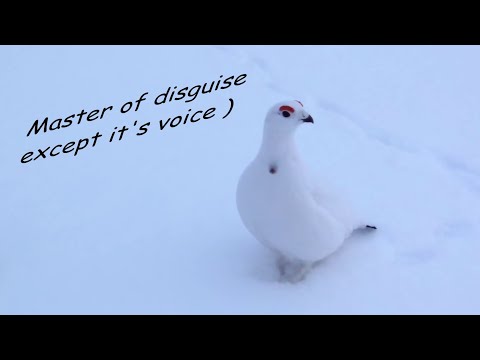
The Willow Ptarmigan (Lagopus lagopus) — the state bird of Alaska — is the grouse that does the impossible twice a year: snow-white in winter, rusty brown in summer, molting head to toe to match the tundra. Chicken-sized and chicken-tame, it walks Alaska’s willow flats on feathered snowshoe feet, barking its famous raspy go-back, go-back calls. Around rural Alaska homes and villages, ptarmigan wander yards in winter flocks, eating willow and birch buds off the shrubs at the woodpile’s edge. It needs no feeder — native willow and birch cover plus a watchful eye for winter flocks is the whole strategy. Its wide-open neighbors include the Canada Jay and the Common Redpoll.
Species Physical Profile & Morphometrics
The Willow Ptarmigan belongs to the grouse family (Phasianidae) — the Arctic-and-tundra branch of the chicken clan. It is the most widespread and abundant of the three ptarmigan species and the one most likely to stroll through an Alaskan yard, road pullout, or village edge.
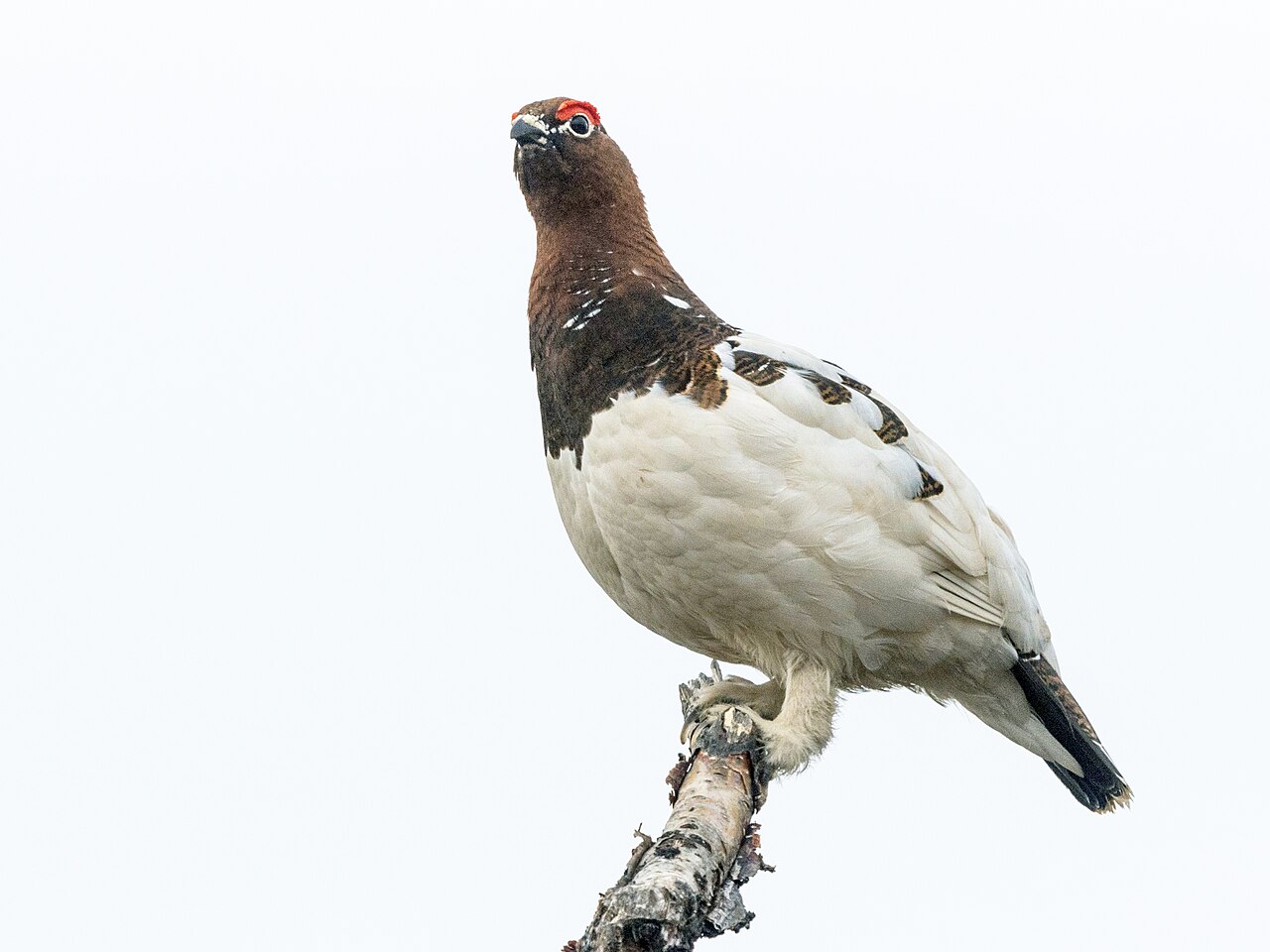
The identification formula changes with the season: in winter, an all-white grouse with black tail feathers and black bill; in summer, a rusty-brown bird with white wings and belly. The Rock Ptarmigan overlaps but is smaller and finer-billed, and males keep a black eye-stripe in winter; the White-tailed Ptarmigan is smaller still, with a white (not black) tail. Size, bill heft, and habitat — lowland willow flats — point to Willow.
Essential Morphometric Field Marks:
- Body Length & Mass: 13.8 to 16.9 inches (35–43 cm) and 15.2 to 28.2 ounces (430–800 grams) — chicken-shaped and chicken-sized, males averaging larger.
- Wingspan: 21.3 to 23.6 inches (54–60 cm); flight is a loud whirring burst followed by a long glide on stiff wings — explosive escape, never commuting.
- Bill Structure & Color: A short, stout black bill, heavier than the Rock Ptarmigan’s — built for nipping willow buds, catkins, and twigs, the winter staples.
- Color Pattern: Winter: pure white with black outer tail feathers. Summer male: rich rusty head, neck, and breast with white wings; summer female and juveniles mottled brown-buff for perfect tundra camouflage. Both sexes flash a red eyebrow comb, the male’s much larger.
- Male vs. Female: In breeding season the male is rusty-headed with a big flaring red comb; the female is mottled golden-brown — one of the best-camouflaged nesting birds on earth. In winter both are white, the male slightly larger with a bolder comb.
The red-combed herald: rusty head and neck, white wings, and a swollen scarlet eyebrow comb he flares during his barking, tail-fanned territorial displays — the famous go-back, go-back, go-back of spring tundra and village edges alike.
The invisible nester — mottled golden-brown summer plumage that disappears against tundra sedge. She incubates a large clutch (often 8–10 eggs) in a shallow ground scrape, and leads the chicks to buds and berries within hours of hatching.
Willow Ptarmigan Vocalization Guide (1 Field Recording)
The Willow Ptarmigan’s voice is one of the funniest and most beloved sounds of the North: a raspy, barking go-back, go-back, go-back-now, delivered by displaying males, plus clucks, growls, and a squealing krrr alarm. All recordings below are real field audio via Wikimedia Commons — no simulations. For a deeper library, browse xeno-canto: Willow Ptarmigan.
1. The Go-Back Song
2. The Cackling Flush
3. The Quiet Clucks
Habitat, Range & the Willow Flats
The Willow Ptarmigan lives in lowland tundra and subarctic scrub: willow flats, birch thickets, sedge meadows, and brushy tundra edges across Alaska and northern Canada. Unlike the mountain-loving Rock Ptarmigan, it stays low, keeping to the willow bottoms that feed it. Around bush communities and rural homesteads it treats village edges, yards, and road shoulders as just more scrub — especially in winter flocks.

Alaska’s Everywhere Bird
The Willow Ptarmigan rings the subarctic, and in North America its stronghold is Alaska and northern Canada — from the Arctic slope through the interior to the Alaska Peninsula. It does not migrate south; it shifts locally between breeding scrub and wintering willow bottoms, sometimes gathering in flocks of hundreds.
For Alaska backyard birders the map says it all: nearly anywhere in the state with willows has ptarmigan. Winter is viewing season around homes — flocks move into village edges and rural yards to work the buds, roosting in snow burrows between feeding bouts.
Backyard Behavioral Patterns & Social Dynamics
The Willow Ptarmigan survives the Arctic year without migrating — camouflage, snowshoes, and snow burrows instead. Four behaviors explain most of what you will observe:
🎨 The Double Molt
Twice a year the ptarmigan remakes itself: snow-white for winter, rusty-brown for summer — with the wings staying white year-round. The changeover happens patch by patch, so spring and fall birds look like walking checkerboards.
🐇 The Hare’s Feet
The scientific name Lagopus means hare-foot: dense feathers cover the legs and toes, working as snowshoes and insulation. A ptarmigan walks on top of snow that swallows other birds, and scratches down through crust to reach buds.
🕳️ The Snow Burrow
On the coldest nights ptarmigan dive into soft snow and sleep in burrows, insulated from wind and hidden from owls and foxes. In the morning the flock erupts out of what looked like empty snowfield.
👥 The Winter Flock
Outside the breeding season ptarmigan gather in flocks from a dozen to over a hundred, drifting across the willow flats like slow weather. Winter flocks near homes are trusting — stand still and they may feed to within a few paces.
Problem: “I Never See Ptarmigan Until They Explode From Under My Feet. What Should I Do?”
The three most common Willow Ptarmigan viewing puzzles all have proven answers:
First, the invisible bird: ptarmigan rely on camouflage and freeze rather than flee — scan the base of willow shrubs for the round shape and the moving head, not for the whole bird; in winter look for the black tail and bill against the white. Second, the exploding flush: a whirring eruption means you walked past a crouched bird — slow down, watch twenty feet ahead, and give the flock space; birds that flush gently return quickly, birds chased hard leave the area for days. Third, the wrong-season yard: if ptarmigan visit in winter and vanish in summer, that’s normal — they move to breeding territories on open tundra; keep the willow and birch edges of your lot uncut and the flock will be back with the first snows. Dogs should be leashed in flush season: an explosion of wings is irresistible and exhausting for the birds.
Method 1: Set the Table — Buds, Not Birdseed
Design for a bud-eating Arctic grouse:
-
Leave Willow & Birch Standing
The ptarmigan’s winter diet is willow and birch buds, twigs, and catkins — a yard bordered by native shrubs is already a feeder. Never clear-cut the scrubby edges; they are the pantry.
-
Skip the Feeder Entirely
Ptarmigan don’t use bird feeders — seed mixes are ignored, and bread or scraps can harm them. The honest offering is habitat: native shrubs, unmowed edges, and peace.
-
Provide Grit Access
Like all grouse, ptarmigan need small gravel for their gizzards — an unpaved driveway edge or a bare gravel patch they can visit safely is why so many are seen on quiet rural roads.
-
Plant Berry-Producing Shrubs
In late summer and fall ptarmigan shift to berries: blueberry, crowberry, and cranberry plants in the yard edges feed the flock while the shrubs feed you.
Method 2: Share the Yard — Living With a Wild State Bird
Protect the bird, and it rewards you all winter:
-
Leash Dogs Near Flocks
A flushed flock in midwinter burns survival calories — keep dogs leashed or under voice control where ptarmigan feed, and the birds will stay yard-tame all season.
-
Slow Down on Rural Roads
Ptarmigan pick grit on road shoulders at dawn and dusk and flush late — driving slow on village roads in winter is the easiest conservation act in Alaska.
-
Mark Big Windows
Flushing flocks occasionally strike glass — visible markers on picture windows facing the willow edge prevent the commonest yard accident.
-
Photograph From Cover
Winter flocks tolerate a still, quiet observer at remarkably close range — sit against the woodpile with a thermos and let the flock drift past; the show beats any feeder.
Tool Solution: Recommended Hardware for Willow Ptarmigan
Equipment matched to a wild Arctic grouse (habitat over hardware):
Native Willow & Birch Border
No seed required: a standing border of willow and birch is a year-round ptarmigan feeder, shelter, and viewing blind in one.
- • Food: Buds, catkins, twigs
- • Style: Native shrubs, uncut
- • Placement: Yard edges & windbreaks
Native Berry Shrubs
Blueberry, crowberry, and low-bush cranberry — the fall fattening diet of the flock and a fine harvest for the household too.
- • Food: Native berries
- • Season: Late summer–fall
- • Bonus: Feeds thrushes & bears-free zones
Window Markers & Warm Seat
Decals on big glass plus a sheltered viewing seat facing the willow edge — the entire equipment list for enjoying a winter flock.
- • Safety: Visible window markers
- • Comfort: Sheltered observation spot
- • Timing: Dawn & dusk in winter
Frequently Asked Questions
- Species Profile: The Willow Ptarmigan (Lagopus lagopus) is a 13.8–16.9 inch, 15.2–28.2 ounce Arctic grouse (Phasianidae), band code WIPT — Alaska’s state bird since 1955.
- ID in One Look: Winter: snow-white grouse with black tail and bill; summer: rusty-brown with white wings; feathered hare-foot toes year-round.
- The Sound: A raspy, speech-like go-back, go-back, go-back from displaying males, plus cackling flushes and flock clucks; real field recordings above.
- Range & Habit: Alaska and northern Canada year-round; lowland willow flats and tundra scrub, visiting rural yards and village edges in winter flocks.
- Feeder Formula: Habitat only — standing willow and birch, native berry shrubs, grit access, and no seed feeders.
- The Survival Kit: Double seasonal molt, feathered snowshoe feet, and snow-burrow roosting let it winter where other birds cannot.
Bird Watching Log
Species: Willow Ptarmigan (Lagopus lagopus)
| Willow Ptarmigan (Plumage: White / Mottled / Rusty — Flock Size: ___ — Red Comb Seen: Yes / No — Go-Back Heard: Yes / No — Habitat: Willow / Roadside / Yard) | |