
Clark’s Nutcracker


Clark’s Nutcracker (Nucifraga columbiana): Complete Identification, Habitat Guide & Sound Library
Quick Answer: How to Attract & Identify the Clark’s Nutcracker
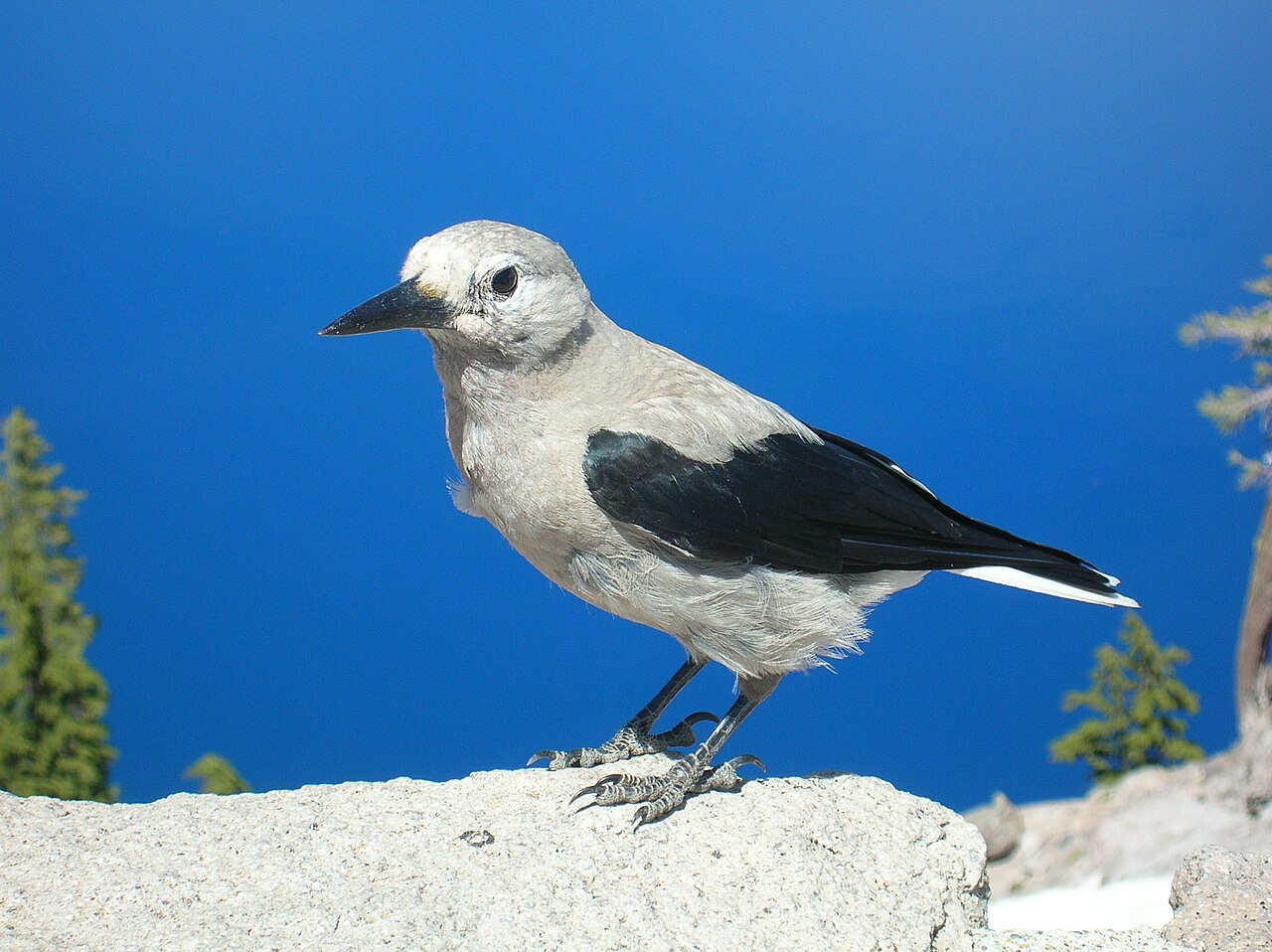
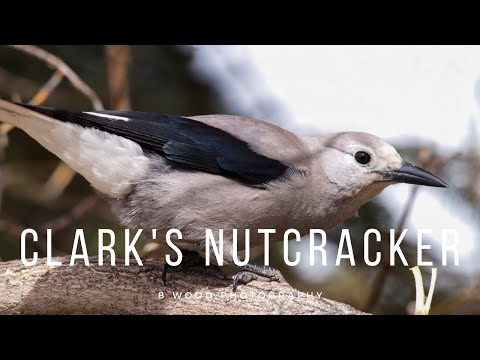
Clark’s Nutcracker (Nucifraga columbiana) is the gray forester of the high mountains — a crow-sized corvid, pale gray with black wings flashing white patches and a white-bordered tail, armed with a dagger bill for pine seeds. Each fall one bird buries tens of thousands of whitebark pine seeds and remembers most of the caches for months — the forgotten ones grow into forests. The voice is a harsh, grating kraaa. Mountain yards attract them with whole peanuts, sunflower, platform feeders, and standing pines. They share the heights with the Steller’s Jay and the Common Raven.
Species Physical Profile & Morphometrics
Clark’s Nutcracker belongs to the crow and jay family (Corvidae) and lives in high mountain conifer forest across the West, tied to whitebark, limber, and pinyon pines. It wanders altitudinally and occasionally irrupts to lowlands in poor cone years.
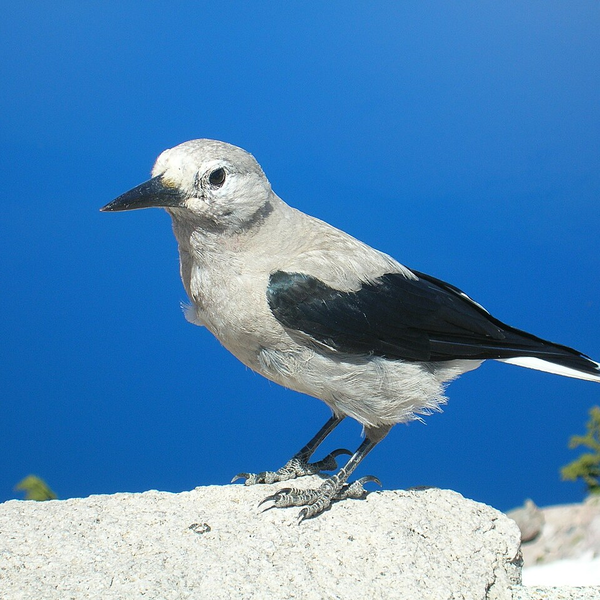
The identification formula: gray body + black wings with white patches + white outer tail + dagger bill. Nothing else in the mountains matches it — a mockingbird is half the size, a magpie is pied the other way around. The harsh kraaa from a ridgetop seals it.
Essential Morphometric Field Marks:
- Body Length & Mass: 10.6 to 11.8 inches (27–30 cm) and 3.7 to 5.7 ounces (106–161 grams) — jay-sized, long-winged, and buoyant on mountain winds.
- Wingspan: 24.0 inches (61 cm); flight is crow-like and strong, riding updrafts along ridges with flashing white wing patches.
- Bill Structure & Color: A long, straight, dagger-strong black bill — capable of hammering into closed pine cones and husking seeds at production-line speed.
- Color Pattern: Pale gray body, black wings with a bold white patch at the secondaries, black central tail framed by white outer feathers — crisp pied pattern at any distance.
- Male vs. Female: The sexes look identical; pairs share the caching and feeding work, and both parents provision nestlings from buried stores.
The ridge runner: gray against the wind, white wing patches flashing, commuting between a cone-bearing pine and a caching slope with a throat pouch full of the forest’s future.
Identically dressed — gray, black, and white — she incubates in a stick nest high in a conifer in early spring, fed from seed caches buried months before under what is now snow.
Clark’s Nutcracker Vocalization Guide (2 Field Recordings)
The Clark’s Nutcracker’s voice is a harsh, grating kraaa — a ragged squawk that carries across canyons. All recordings below are real field audio via Wikimedia Commons — no simulations. For a deeper library, browse xeno-canto: Clark’s Nutcracker.
1. The Grating Kraaa
2. The Calling Flight
3. The Quiet Side
Habitat, Range & the Whitebark Heights
Clark’s Nutcracker lives in high-elevation conifer forest: whitebark and limber pine stands near treeline, pinyon woodland, and montane forest across the West. In poor cone years whole populations descend to lowland towns and feeders — the irruption years every mountain birder remembers.

The Treeline Forester
The range follows the western mountain ranges from British Columbia to Arizona and New Mexico — wherever whitebark, limber, or pinyon pines grow. Most years it stays in the mountains; in cone-crop failure years it irrupts, appearing in lowland towns far from any ridge.
For backyard birders: mountain and foothill yards within the range can host nutcrackers at platform feeders with peanuts and sunflower — and lowland yards should watch for them in irruption autumns when the high-country crop fails.
Backyard Behavioral Patterns & Social Dynamics
The Clark’s Nutcracker is a seed-caching memory athlete — a bird that plants forests. Four behaviors explain most of what you will observe:
🧠 The Perfect Memory
One bird buries up to 30,000+ seeds in thousands of caches each fall and remembers most locations for months — under snow, across a whole mountainside.
👜 The Seed Pouch
A throat pouch under the tongue carries dozens of seeds per trip — the commuting sack between cone crop and caching slope.
🌲 The Forest Planter
Forgotten caches germinate — whitebark pine forests exist because nutcrackers plant them; some groves trace entirely to buried seeds.
🥜 The Feeder Commuter
At feeders it behaves as in the forest — grab, fly, bury, return; a peanut platform will be emptied into the hillside within the hour.
Problem: “A Nutcracker Emptied the Peanut Feeder and Buried Everything. What Should I Do?”
The three most common Clark’s Nutcracker puzzles all have proven answers:
First, the vanishing peanuts: this is the species’ nature — it is caching, not wasting; every buried peanut is a potential retrieval or a planted tree. Put out what you are happy to donate to the hillside, and enjoy watching where it buries them. Second, the sudden appearance: nutcrackers at lowland feeders signal an irruption year — the mountain cone crop failed; feed consistently through such autumns, because the visitors are genuinely hungry. Third, the crow confusion: at distance a nutcracker reads as a small pale crow — look for the white wing patches and tail border in flight; no crow shows them.
Method 1: Set the Table — Peanuts, Sunflower & Open Platforms
Design for a caching mountain corvid:
-
Offer Whole Peanuts
Unsalted peanuts in the shell on a platform — the perfect cacheable package; watching the bird fly off to bury each one is the whole show.
-
Add Black-Oil Sunflower
Sunflower on large trays — handled fast, cached faster; refill in the morning and let the commute begin.
-
Provide Water
A mountain yard water source — at altitude, open water draws everything, nutcrackers included.
-
Accept the Caching
Do not discourage burying — it is the behavior that makes the species; a lawn dotted with forgotten peanuts is a future pine nursery.
Method 2: Build the Habitat — Conifers & the Long View
Keep the pines standing, and the forester keeps working:
-
Protect Cone-Bearing Pines
Whitebark, limber, pinyon, and ponderosa pines — the cone trees are the economy; never cut a producing tree.
-
Keep Snags for Perches
Dead tops and snags are the ridgetop stages where nutcrackers call and survey caching grounds.
-
Leave Soil Open
Open, disturbed soil patches — roadcuts, banks, garden edges — are preferred caching ground; let the bird dig.
-
Watch Irruption Autumns
September–November in poor cone years: keep peanuts stocked and watch mountain species appear at lowland feeders.
Tool Solution: Recommended Hardware for Clark’s Nutcracker
Equipment matched to a seed-caching mountain corvid:
Platform Peanut Feeder
A large platform with unsalted in-shell peanuts — the cacheable staple that turns a flyover into a regular commute.
- • Food: In-shell peanuts, sunflower
- • Style: Large open tray
- • Behavior: Grab & cache
Mountain Water Source
A kept-full basin in high country — open water at altitude draws every species on the ridge.
- • Depth: Two inches
- • Care: Scrub weekly
- • Winter: Heated at altitude
Native Cone Pines
Whitebark, limber, or pinyon pine on the lot — the only feeder that also reforests the mountain.
- • Trees: Whitebark, pinyon, limber
- • Timeline: Generational
- • Bonus: Whole montane community
Frequently Asked Questions
- Species Profile: The Clark’s Nutcracker (Nucifraga columbiana) is a 10.6–11.8 inch, 3.7–5.7 ounce corvid (Corvidae), band code CLNU — the gray forester of the western high country.
- ID in One Look: Gray body, black wings with white patches, white-bordered tail, dagger bill.
- The Sound: A harsh, grating kraaa carrying across the ridges; real field recordings above.
- Range & Habit: Western high mountains; buries tens of thousands of pine seeds and remembers the caches; irrupts to lowlands in lean years.
- Feeder Formula: Platform peanuts and sunflower, mountain water, open caching soil, standing cone pines.
- The Legacy: Whitebark pine forests grow where nutcrackers forget — hosting one hosts the future forest.
Bird Watching Log
Species: Clark’s Nutcracker (Nucifraga columbiana)
| Clark’s Nutcracker (Wing Patches Seen: Yes / No — Caching Seen: Yes / No — Kraaa Heard: Yes / No — At Peanuts: Yes / No — Date & Time: ___ — Elevation: ___) | |