
Yellow-headed Blackbird
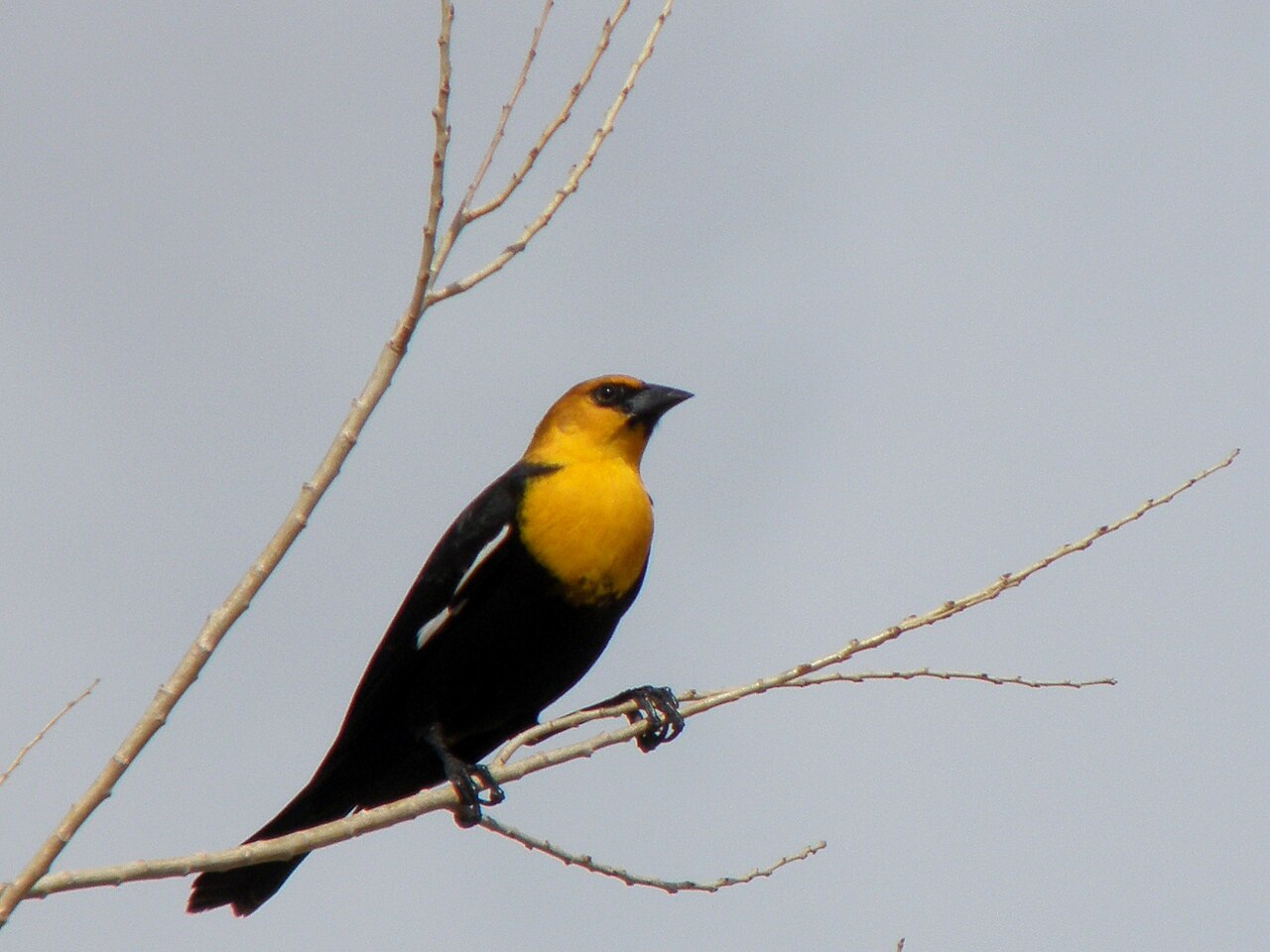
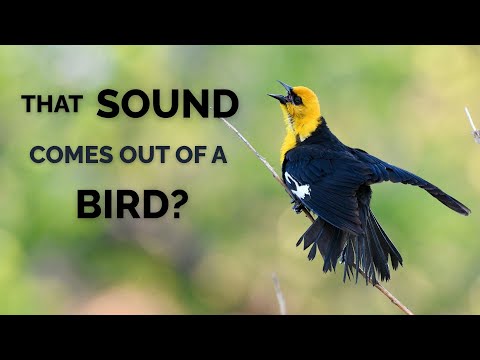


Yellow-headed Blackbird (Xanthocephalus xanthocephalus): Complete Identification, Habitat Guide & Sound Library
Quick Answer: How to Attract & Identify the Yellow-headed Blackbird
The Yellow-headed Blackbird (Xanthocephalus xanthocephalus) is the golden-headed blackbird of western marshes — the male blazing yellow on the head and breast, black elsewhere, with a white wing patch; the female brown and buff. Its song is a rusty-hinge croak — one of the least musical and most memorable sounds of the marsh. It nests over water in cattails and winters in huge southwestern flocks. It visits platform feeders in migration and winter for sunflower and corn. They share the marsh with the Red-winged Blackbird and the Common Grackle.
Species Physical Profile & Morphometrics
The Yellow-headed Blackbird belongs to the blackbird family (Icteridae) and breeds in deep-marsh cattail stands across the western half of the continent, wintering in the Southwest and Mexico.
The identification formula: black body + golden head + white wing patch — nothing else comes close. Females are brown with a buffy-yellow face and breast; bobolinks are smaller and grassland-bound. The rusty-hinge song clinches it.
Essential Morphometric Field Marks:
- Body Length & Mass: 8.3 to 10.2 inches (21–26 cm) and 1.6 to 3.5 ounces (44–100 grams) — a big, heavy-bodied blackbird.
- Wingspan: 16.5 inches (42 cm); flight is direct and powerful, white wing patches flashing over the marsh.
- Bill Structure & Color: A pointed black dagger bill — built for seeds, insects, and the occasional marsh snail.
- Color Pattern: Male — black body, golden-yellow head and breast, white wing patch; female — dusky brown with buffy-yellow face and chest.
- Male vs. Female: Strongly dimorphic — he is the golden marshal patrolling the cattail tops; she is the brown shadow weaving the nest deep in the stand.
The golden marshal: clinging to a cattail top, leaning forward and squeezing out a rusty-hinge croak like a gate that needs oil.
Brown and buff — she weaves the basket nest to standing reeds over the water and provisions it with marsh insects.
Yellow-headed Blackbird Vocalization Guide (3 Field Recordings)
The Yellow-headed Blackbird’s song is a harsh, strangled croak — the famous rusty hinge of the western marsh. All recordings below are real field audio via Wikimedia Commons — no simulations. For a deeper library, browse xeno-canto: Yellow-headed Blackbird.
1. The Rusty Hinge
2. The Check Call
3. The Marsh Chorus
Habitat, Range & the Cattail Stand
The Yellow-headed Blackbird breeds in deep-water cattail and bulrush marshes across the western half of the continent — prairie potholes, lake edges, and irrigation wetlands — nesting in woven baskets over the water.

The Marshal of the Deep Marsh
Breeding range spans the West and prairie pothole country from Canada to the central states; winter takes the population to the Southwest and Mexico, where flocks of thousands work feedlots and farm fields.
For backyard birders: properties adjoining cattail ponds and marshes host colonies in summer; in migration and winter, platform feeders with sunflower and cracked corn can draw flocks to rural yards.
Backyard Behavioral Patterns & Social Dynamics
The Yellow-headed Blackbird is a marsh colonialist with an honest croak. Four behaviors explain most of what you will observe:
🌾 The Cattail Basketeer
The nest is a woven basket bound to standing reeds over water — a cradle that rises and falls with the marsh.
🚪 The Rusty Hinge
The song is a strangled croak — delivered leaning forward from the cattail top, tail spread, golden head thrown back.
👑 The Marsh Bully
Males dominate Red-winged Blackbirds at the deep end of the marsh — the biggest bird takes the best real estate.
❄️ The Feedlot Winter
In winter it joins huge mixed blackbird flocks at feedlots and fields — thousands strong across the Southwest.
Problem: “How Do I Host Yellow-headed Blackbirds? What Should I Do?”
The three most common Yellow-headed Blackbird puzzles all have proven answers:
First, the feeder surprise: golden-headed flocks at spring feeders are migrants pausing, not invaders — they move on within days; enjoy the show and top up the platform. Second, the marsh management: colonies vanish when cattails are burned or cut before August — manage marsh vegetation only in late summer or fall, after the young have flown. Third, the budget winter flock: southwestern winter flocks can empty feeders daily — serve cracked corn on a ground platform away from your premium seed, and the marsh birds dine on their own tab.
Method 1: Set the Table — Water, Cattails & Grain
Design for a marsh colonialist:
-
Protect the Cattail Stand
Deep-water cattails and bulrush — the nesting substrate; manage only after August.
-
Offer Platform Grain
Cracked corn and sunflower on a platform — the migration and winter fare.
-
Keep Water Levels Steady
Stable marsh levels protect nests — drawdowns strand the woven baskets.
-
Leave Winter Stubble
Unharvested field edges and stubble — the foraging ground of the winter flock.
Method 2: Build the Habitat — Spring Arrival & Winter Flocks
Match the yard to the season, and the golden heads appear:
-
Watch the April Push
Males arrive first in spring — the first golden heads hit cattail tops with the marsh thaw.
-
Expect the Fall Staging
Late summer flocks gather before migration — reed beds fill with thousands at dusk.
-
Serve the Winter Crowd
Ground platforms with corn in the Southwest — winter flocks feed where the pickings are easy.
-
Learn the Croak
The rusty hinge is unmistakable — the ugliest beautiful song in the marsh announces the colony.
Tool Solution: Recommended Hardware for Yellow-headed Blackbird
Equipment matched to a marsh blackbird:
Cattail Marsh or Pond Edge
Standing water with cattails — the breeding and staging habitat this species is built for.
- • Feature: Deep marsh
- • Rule: No cutting before August
- • Bonus: Red-wings & rails too
Ground Platform with Corn
Cracked corn on an open platform — the fuel stop for spring migrants and winter flocks.
- • Feed: Cracked corn
- • Placement: Open ground
- • Bonus: Doves & sparrows too
Black Oil Sunflower
Platform-served sunflower — accepted readily when flocks pause at the yard.
- • Feed: Black oil sunflower
- • Feeder: Platform
- • Bonus: All seedeaters
Frequently Asked Questions
- Species Profile: The Yellow-headed Blackbird (Xanthocephalus xanthocephalus) is an 8.3–10.2 inch, 1.6–3.5 ounce icterid (Icteridae), band code YHBL — the golden marshal of the marsh.
- ID in One Look: Golden head on a black body, white wing patch, cattails.
- The Sound: The famous rusty-hinge croak; real field recordings above.
- Range & Habit: Western marsh breeder; winters in Southwestern feedlot flocks.
- Feeder Formula: Platform corn and sunflower in migration — marsh in summer.
- The Marsh Rule: Never cut cattails before August — the woven nests ride the reeds.
Bird Watching Log
Species: Yellow-headed Blackbird (Xanthocephalus xanthocephalus)
| Yellow-headed Blackbird (Golden Head Seen: Yes / No — Wing Patch Seen: Yes / No — Rusty Hinge Heard: Yes / No — Cattail Stand Active: Yes / No — Date & Time: ___) | |