
Gila Woodpecker



Gila Woodpecker (Melanerpes uropygialis): Complete Identification, Feeder Guide & Call Library
Quick Answer: How to Attract & Identify Gila Woodpeckers
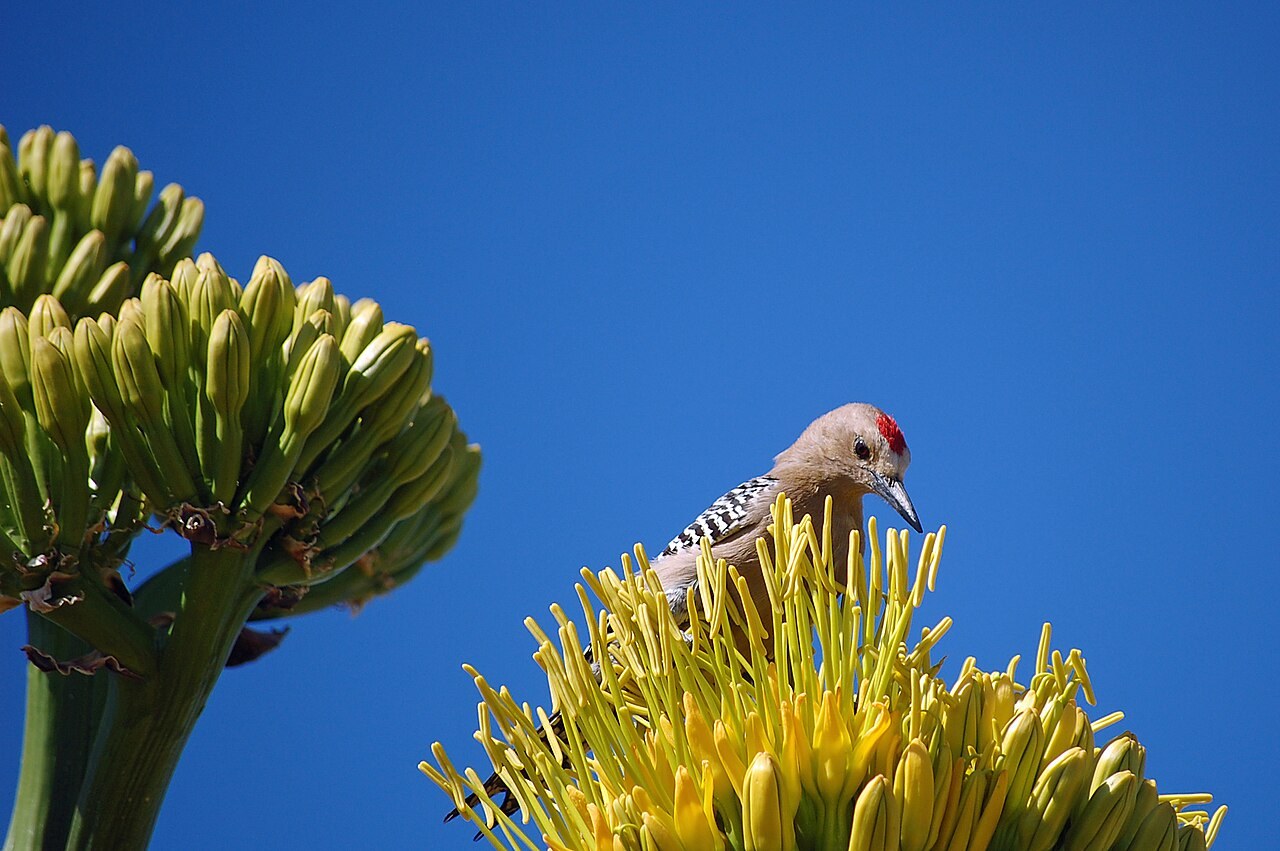
The Gila Woodpecker (Melanerpes uropygialis) is the Sonoran Desert’s signature woodpecker — a plain tan head and breast over a black-and-white zebra-barred back, with the male wearing a small red patch on the crown and both sexes flashing white wing patches in flight. It chisels nest cavities into saguaro cacti — the cactus seals each hole with a hard “boot” — and abandoned holes house Elf Owls and other desert birds. To attract it: hang a suet cage, set out orange halves, and expect it to find your hummingbird feeder. Listen for the loud rolling “churr-churr-churr” carrying across the yard. It is a year-round resident, so an Arizona or southern Nevada yard can host the same pair in every season, alongside the Gilded and Northern Flickers.
Species Physical Profile & Morphometrics
The Gila Woodpecker is a mid-sized member of the woodpecker family (Picidae) and the desert Southwest’s representative of the genus Melanerpes — the same clan as the Red-bellied Woodpecker of the East, with the same barred back and bold feeder manners. Its toolkit is classic woodpecker: a stout, pointed chisel bill, stiff tail feathers for bracing against cactus ribs and bark, and two-toes-forward zygodactyl feet for gripping vertical surfaces.
The identification formula: tan head and breast + zebra-barred back and wings + white wing patches in flight + (male) a small red crown patch — usually on a saguaro, calling loudly.
Essential Morphometric Field Marks:
- Body Length & Mass: about 8 to 10 inches (20–25 cm) and 1.8 to 2.6 ounces (51–74 grams) — robin-sized, noticeably larger than a Downy Woodpecker.
- Wingspan: about 16 inches (41 cm); the bold white wing patches flash in the bounding, undulating flight between cacti.
- Bill Structure & Color: A dark, stout, sharply pointed bill — long enough to probe saguaro blossoms and chisel nest holes into cactus flesh or soft wood.
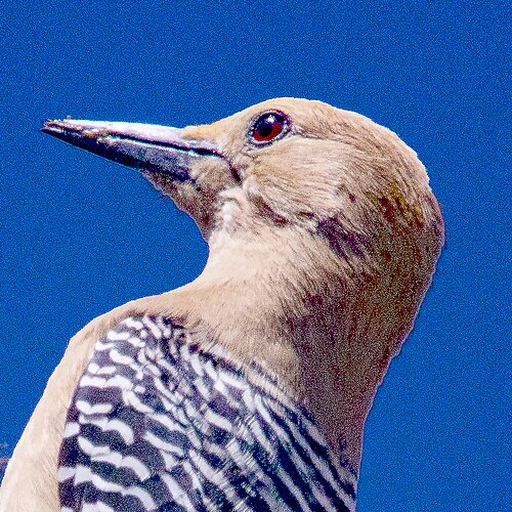
- Color Pattern: Head, neck, and breast plain grayish-tan; back, wings, and central tail barred black-and-white in a fine zebra pattern; rump barred; white wing patch conspicuous in flight. Juveniles are duller, with barring extending onto the crown.
- Male vs. Female: The one reliable mark — the male has a small red patch on the crown; the female’s head is entirely tan. Otherwise the sexes share the same zebra back and tan front.
Red-topped and loud: the male carries a small scarlet patch on the crown, brightest in breeding condition. He does most of the territorial drumming in spring — often, to a homeowner’s dismay, on a metal chimney cap or gutter that amplifies the roll across the neighborhood.
Plain-headed but just as bold: the female’s head is entirely tan, no red. She excavates, incubates, and hauls food to the nest with equal energy, and she is every bit as likely to commandeer the hummingbird feeder or the suet cage.
Gila Woodpecker Vocalization Guide (3 Clearly Labeled Simulations)
This is one of the loudest voices of the desert suburbs: a rolling, throaty “churr” or “churr-churr-churr” is the everyday call, and sharp “pip” or “yick” notes run into quick series when the bird is excited. Drumming is delivered on cacti, dead branches, and resonant metal. No freely licensed field recording of this species is currently archived on Wikimedia Commons, so all three cards below are clearly labeled acoustic simulations built to published descriptions; for real wild audio, browse xeno-canto: Gila Woodpecker.
1. Call Simulation — The Rolling Churr
2. Drum Simulation — The Territorial Roll
3. Call Simulation — The Yick Series
Habitat, Range & the Saguaro Belt
The Gila Woodpecker belongs to the Sonoran Desert and its edges — saguaro-studded desert uplands, mesquite bosques, cottonwood-lined washes, and the irrigated neighborhoods of Tucson, Phoenix, and their suburbs, where palms and citrus stand in for native trees.

Arizona to Southern Nevada
The range centers on Arizona’s saguaro belt and spills into southeastern California, southern Nevada, extreme southwest Utah, and southwest New Mexico, continuing south through Sonora into western Mexico. It is a permanent resident — pairs defend the same territory all year, and the birds at your December suet cage are the ones that nested in your saguaro in April.
In desert cities it thrives: planted palms, citrus, and hummingbird feeders have made suburban Phoenix and Tucson some of the easiest places in America to watch a woodpecker at arm’s length.
Backyard Behavioral Patterns & Social Dynamics
The Gila Woodpecker is the bold landlord of the desert yard. Four behaviors explain most backyard encounters:
🌵 The Cactus Carpenter
The bird chisels nest cavities into saguaro cacti (and desert willow, mesquite, cottonwood, or palm). The saguaro seals the wound with a hard callus — a leathery “boot” — and the bird typically lets a fresh cavity cure for months before nesting in it.
🏘️ The Neighborhood Landlord
Abandoned Gila cavities become premium real estate: Elf Owls, Ferruginous Pygmy-Owls, Purple Martins, ash-throated flycatchers, and finches all raise families in old Gila holes. One pair’s carpentry supports a whole desert housing market.
🍬 The Sugar-Water Raider
Gilas are notorious hummingbird-feeder thieves, clinging acrobatically to the ports and lapping sugar water — and they raid saguaro blossoms and agave flowers for nectar in the wild. Fruit matters too: saguaro and prickly pear fruit, mistletoe berries, and backyard citrus.
🥜 The Feeder Boss
At suet cages and platform feeders, the Gila is assertive and dominant, displacing smaller birds with a flick of that rolling call. It forages low as well as high — gleaning insects from bark, cactus skin, and even the ground.
Problem: “A Woodpecker Is Raiding My Hummingbird Feeder — and Hammering My Chimney. What Do I Do?”
The three most common Gila Woodpecker complaints all have easy answers:
First, the hummingbird-feeder raids: the bird wants the sugar water, and it will empty a feeder fast. Give it its own station — a shallow dish of nectar or an orange half on a platform — and hang the hummingbird feeder where a big bird cannot cling comfortably; bee guards on the ports slow it down too. Second, the metal drumming: hammering on chimney caps, gutters, or street signs is territorial advertising, not feeding or damage — a springtime ritual that fades after nesting begins. A temporary strip of foam pipe insulation or burlap over the favorite noisemaker usually convinces the bird to move its stage. Third, the holes in your saguaro: relax. The cactus seals each cavity with a hard “boot” and keeps growing; the nest hole does not kill it, and last year’s hole may already be housing an Elf Owl.
Method 1: Set the Table — Suet, Fruit & Sugar Water
Design for a bold omnivore that already loves backyard stations:
-
Hang a Suet Cage
Suet is the most dependable draw — a standard cage on a tree trunk or post, refilled year-round. Gilas visit in every season, not just winter, and insect-blend cakes match their mixed diet.
-
Offer Orange Halves and Fruit
Orange halves spiked on a branch or feeder peg echo the species’ cactus-fruit habit — and they may also pull in orioles and Verdins that share the desert yard.
-
Set Out a Nectar Dish of Their Own
A shallow dish of sugar water (1 part sugar to 4 parts water) on a platform gives the raider its own supply — and takes pressure off the hummingbird feeder. Refresh daily in desert heat.
-
Provide Water
In the low desert, a shallow bird bath is magnetic — drinking and bathing traffic spikes on hot afternoons, and water draws the whole guild from doves to Gilded Flickers.
Method 2: Build the Habitat — Saguaros & Desert Trees
Feed the habitat, and the Gilas follow:
-
Keep Every Saguaro You Have
A yard saguaro is a future nest site — the species’ whole nesting strategy is built around it. Never remove a cactus for the nest holes; the booted cavity harms nothing and shelters owls after the woodpeckers move out.
-
Plant Native Desert Trees
Mesquite, palo verde, desert willow, and ironwood provide foraging bark, perch sites, and (when mature or softened) excavation substrate. Native trees also grow the insects the birds glean.
-
Leave Dead Limbs and Snags
A dead mesquite limb or standing snag is both a drumming stage and nest real estate. Where safety allows, prune conservatively and leave the dead wood the woodpeckers want.
-
Go Easy on Pesticides
Ants, beetles, and grasshoppers gleaned from bark and cactus skin are the protein half of the diet — an unsprayed yard feeds the bird twice: insects directly, and the fruit and nectar that follow healthy desert plants.
Tool Solution: Recommended Hardware for Gila Woodpeckers
Equipment matched to a bold, clinging, sweet-toothed desert woodpecker:
Trunk-Mounted Suet Cage
A standard single or double suet cage hung on a trunk or sturdy post — vertical clinging is this bird’s natural feeding posture, and a trunk-side cage is the layout it reads instantly.
- • Food: Insect-blend or peanut suet cakes
- • Style: Standard cage, trunk-adjacent
- • Placement: Shade helps in desert summer
Platform Feeder with Fruit & Nectar Dish
A drained platform stocked with orange halves and a shallow sugar-water dish — gives the Gila its own dessert station and keeps the hummingbird feeder for the hummingbirds.
- • Food: Orange halves, sugar water 1:4
- • Style: Open platform, easy cling access
- • Placement: A few yards from the hummer feeder
Shallow Bird Bath
A shallow basin refreshed daily — in the Sonoran summer, open water outdraws any seed. Place it near cover and watch the whole desert guild cycle through, woodpeckers included.
- • Depth: 1–2 in, gently sloped
- • Summer: Refresh daily; shade slows algae
- • Placement: Open ground beside cover
Frequently Asked Questions
- Species Profile: The Gila Woodpecker (Melanerpes uropygialis) is an 8–10 inch, 51–74 gram woodpecker (Picidae) of the Sonoran Desert — tan head and breast, zebra-barred back, white wing patches.
- ID in One Look: The male carries a small red crown patch; the female’s head is plain tan. The zebra back plus a saguaro perch settles it instantly.
- A Permanent Resident: No migration — pairs hold year-round territories from Arizona to southern Nevada and southeastern California, south into Mexico.
- The Sound: A loud rolling “churr-churr-churr,” sharp “yick” series, and drumming on cacti, dead limbs, and metal chimney caps.
- Feeder Formula: A trunk-side suet cage, orange halves, a nectar dish of its own, and water year-round — plus shade in the desert summer.
- The Cactus Carpenter: Its saguaro nest holes heal into hard “boots” that don’t hurt the cactus — and become homes for Elf Owls, martins, and flycatchers.
Bird Watching Log
Species: Gila Woodpecker (Melanerpes uropygialis)
| Gila Woodpecker (Male Red Cap: Yes / No — At Suet: Yes / No — At Nectar / Fruit: Yes / No — Drumming Heard: Yes / No) | |