
Varied Thrush


Varied Thrush (Ixoreus naevius): Complete Identification, Feeding Guide & Winter Backyard Handbook
Quick Answer: How to Attract & Identify Varied Thrushes
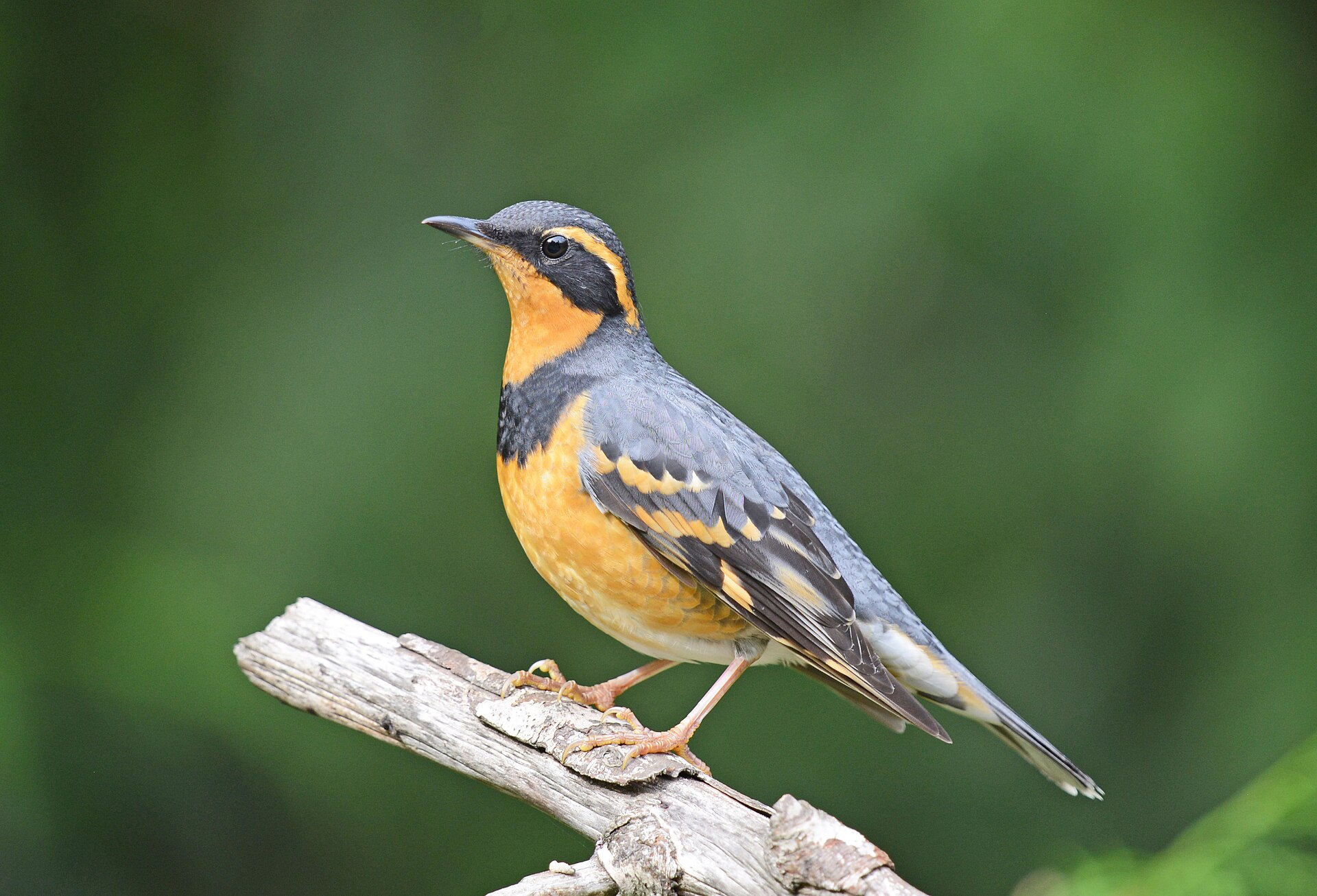
The Varied Thrush (Ixoreus naevius) is the robin-sized thrush of the Pacific Northwest’s wet coniferous forest — slate and pumpkin-orange, with an orange eyebrow and a black band across the chest — best known for an eerie, single-note song that echoes through the fog. To bring one to a lowland yard: offer sunflower chips, suet crumbles, and mealworms on a ground tray near dense cover, keep a leaf-litter corner unraked, and plant native berry shrubs — visits peak from late fall through early spring. It shares the winter garden with the American Robin and the Spotted Towhee.
Species Physical Profile & Morphometrics
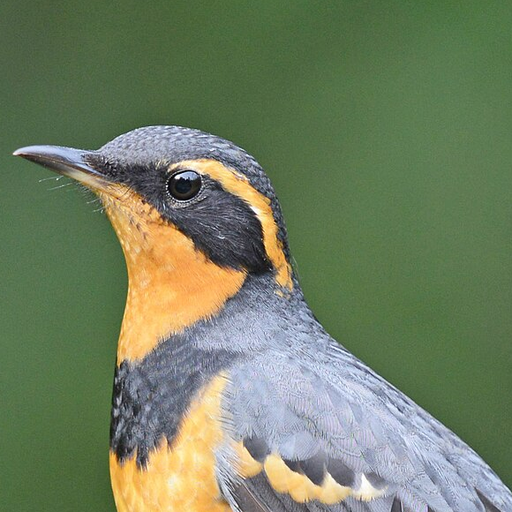
The Varied Thrush is a robust, robin-shaped member of the thrush family (Turdidae) — the only living species in its genus (Ixoreus). The male’s pattern is unmistakable: slate blue-gray above, rich orange below, an orange eyebrow stripe over a black mask, a broad black band across the breast, and two orange wing bars.
The identification formula: robin shape + orange eyebrow + black necklace. The American Robin shares the orange breast but has a plain gray head, a yellow bill, white around the vent, and no black chest band; the Varied Thrush’s dark bill, orange brow, and bold wing bars settle it at a glance. Females repeat the pattern in olive-brown and gray with a fainter, often incomplete band.
Essential Morphometric Field Marks:
- Body Length & Mass: about 7.5 to 10.2 inches (19–26 cm) and 2.3 to 3.5 ounces (65–100 grams) — squarely in American Robin territory, with the same pot-bellied, long-legged stance.
- Wingspan: about 13.4 to 15.0 inches (34–38 cm); flight between perches is direct with rapid wingbeats, and the orange wing bars flash on every stroke.
- Bill Structure & Color: A slim, straight, dark bill — straw-colored at the base of the lower mandible — built for flipping leaves and plucking ground prey, not cracking seed.
- Color Pattern: Male: slate-gray crown, back, and tail; orange supercilium, throat, and breast; black ear patch and chest band; orange-barred wings. Female: brown-olive where he is slate, band gray-brown and often broken, wing bars pale orange.
- Male vs. Female: The male is the high-contrast copy; the female is the same design washed in brown. Juveniles are scaly-breasted with orange wing bars — already recognizably “varied.”
The voice of the dark forest: he sings his strange, sustained notes from the top of a tall spruce or hemlock at dawn and dusk, usually hidden in the foliage. In winter he drops into lowland yards and defends a feeding patch with surprising ferocity.
The quiet builder: browner and duller, with the necklace reduced to a gray wash. She alone builds the moss-and-twig cup on a horizontal conifer branch 10–15 feet up and incubates the 3–5 pale blue, brown-dotted eggs.
Varied Thrush Vocalization Guide (3 Field Recordings)
The song is a slow series of single, long, buzzy whistles — one note sustained about two seconds, a silence, then another note at a completely different pitch, echoing through wet conifer forest like a tuning fork in fog. The bird’s two-sided syrinx sounds two tones at once, giving each note its metallic blur. All three recordings below are real field audio from British Columbia, contributed to iNaturalist under CC BY licenses — two breeding-season songs from Strathcona’s mountain rainforest and one autumn call from the Victoria area. For a deeper library, browse xeno-canto: Varied Thrush.
1. The Rainforest Dawn Song
2. The Neighbor’s Answer
3. The Autumn “Took”
Habitat, Range & the Human Landscape
The Varied Thrush belongs to the wet, shaded coastal rainforest: mature hemlock, spruce, and fir with a damp, mossy floor — plus interior wet belt forest in northern Idaho and northwest Montana. It breeds from Alaska and the Yukon south through British Columbia to northwestern California. In winter it trades elevation for latitude, pouring downslope into lowland towns, parks, orchards, and berry-rich backyards.
Alaska to California, Coast First
Wintering birds hug the Pacific slope from coastal Alaska to southern California, gathering in loose flocks around food. In irruption years — abundance peaks that run on a rough two-to-five-year cycle — wanderers turn up far east of the Rockies, giving surprised feeders owners from the Midwest to New England a once-in-a-decade yard bird.
Backyards score best with mature trees overhead, dense shrubby cover, damp ground, and leaf litter left in place. A shaded corner with a ground tray of sunflower chips and a berry thicket is precisely a winter Varied Thrush’s idea of home.
Backyard Behavioral Patterns & Social Dynamics
The Varied Thrush is a shy forest bird that becomes a surprisingly bold winter yard bird. Four behaviors explain most backyard encounters:
🍂 The Kick-Back Forager
On the ground it feeds like a towhee: hop forward, scratch the leaf litter aside with both feet at once, then hop back to inspect the bare spot for beetles, worms, and spiders. An unraked leaf pile under your shrubs is a Varied Thrush cafeteria — you will hear the rustling before you see the bird.
🎵 The Invisible Singer
Males sing from the very top of tall conifers at dawn and dusk, deep in the foliage — the long, eerie notes carry hundreds of yards while the singer stays invisible. Hearing the song daily from your treeline in spring means a territory includes your yard.
👑 The Feeder Boss
Shy in the forest, pugnacious at the winter tray: a Varied Thrush will claim a feeding area and rush at robins, jays, and its own kind to hold it. If one bird seems to own your ground feeder for a month, that is normal — offering two feeding spots 20 feet apart spreads the peace.
❄️ The Irruptive Wanderer
Numbers pulse on a rough two-to-five-year cycle, and in peak years birds wander far beyond the Pacific slope — a Varied Thrush at a feeder in the Midwest or New England is a celebrated rarity. Along the coast, “irruption” simply means the winter flock in your yard is bigger.
Problem: “I Hear That Eerie Whistle but Never See the Bird — and When One Did Show Up, It Hit My Window. What Do I Do?”
The two most common Varied Thrush frustrations have honest answers:
First, the invisible singer: you are not missing him — he is designed to be missed. Males sing motionless from the dense top of a spruce or hemlock, often 100 feet up, at first and last light. Don’t chase the sound; instead watch the ground at your shrub line on drippy mornings, when foraging birds come into the open. Second, window strikes: winter Varied Thrushes are among the most collision-prone yard birds — they flee low and fast from ground feeding spots straight into reflective glass. Feed on a tray either within 3 feet of the window (too close to build speed) or more than 30 feet away, add decals or screens to the glass along the escape line, and keep cats indoors while winter flocks are in the neighborhood. One more truth: if your yard is open lawn with no cover, the thrush will visit your neighbor’s shrubs instead — cover is the whole game.
Method 1: Feed the Forest Floor
Design for a ground-feeding, leaf-flipping forest thrush:
-
Serve at Ground Level
A ground tray or low platform feeder is the whole trick — Varied Thrushes rarely climb to hanging feeders. Place it beside dense shrubs so the bird can dart for cover, exactly where it would naturally forage.
-
Stock the Right Foods
Sunflower chips, suet crumbles, mealworms, and chopped apple or raisins — soft, insect-and-fruit-like fare. Whole seeds in the shell slow them down; hulled chips disappear first.
-
Leave the Leaves
Keep a leaf-litter corner unraked under shrubs or trees through fall and winter. The invertebrates it shelters are the natural draw, and watching a thrush kick leaves aside is half the reward.
-
Feed Early and Late
Varied Thrushes are crepuscular feeders — first on the ground tray at gray dawn and again near dusk. Restock late in the day so the morning shift finds it full.
Method 2: Plant the Berry Thicket
The winter flock follows fruit — grow it:
-
Choose Native Berry Shrubs
Elderberry, salmonberry, Oregon grape, huckleberry, madrone, and serviceberry anchor the wild winter diet. A mixed native hedge feeds the flock from October through February without a single refill.
-
Layer the Cover
Thrushes need a dense shrub layer next to open feeding ground — plant or preserve thickets along the fence line and leave the approach corridor shaded. Open lawn alone will not hold them.
-
Keep Water Open
A shallow ground-level bath, heated in freezing snaps, is heavily used by winter thrushes — they drink and bathe on the ground, not at pedestal baths they can’t watch from.
-
Make Windows Safe
Before the winter flock arrives, treat the glass near feeding areas with decals, tape grids, or external screens — spacing marks no more than 2 inches apart. This species hits windows more than most; prevention is the kindest attraction strategy.
Tool Solution: Recommended Hardware for Varied Thrushes
Equipment matched to a ground-feeding, cover-loving, winter-visiting thrush:
Ground Tray / Low Platform Feeder
A mesh-bottom tray on short legs, set beside dense cover — rain drains through, sunflower chips and suet crumbles stay dry, and the thrush feeds at the level its feet were built for.
- • Food: Sunflower chips, suet crumbles, mealworms
- • Style: Low platform, drainage mesh
- • Placement: Beside shrubs, 3 ft or 30+ ft from glass
Suet Crumble Cage on a Low Pole
A simple suet cage hung low — 3 to 4 feet — near the shrub line, loaded with crumbly insect-or-berry suet. In hard freezes this is the calorie source that keeps a winter flock returning to the same yard.
- • Cake: Insect or berry blend
- • Mount: 3–4 ft, near cover
- • Season: November through February
Ground-Level Heated Bird Bath
A shallow basin set on the ground with a thermostatic heater — winter thrushes bathe at ground level, and open water in a cold snap pulls the whole neighborhood flock within view of your chair.
- • Depth: 1–2 in at the edge
- • Extras: Thermostat-controlled heater
- • Placement: Ground level near shrubs
Frequently Asked Questions
- Species Profile: The Varied Thrush (Ixoreus naevius) is a 7.5–10.2 inch, 65–100 gram thrush (Turdidae) of the Pacific coastal rainforest — slate and pumpkin-orange male with a black necklace, band code VATH.
- ID in One Look: Robin shape + orange eyebrow + black breast band + orange wing bars; the American Robin lacks all four marks. The female is the same bird in brown.
- The Voice of the Rainforest: Long, single, buzzy whistles, each at a different pitch, sung unseen from conifer tops at dawn and dusk — all three recordings above are real British Columbia field audio.
- Short-Distance & Irruptive: Winters along the Pacific slope from Alaska to California in loose flocks; every few years wanderers reach the Midwest and East Coast.
- Feeder Formula: Ground tray with sunflower chips, suet crumbles, and mealworms beside dense cover — plus unraked leaf litter and native berry shrubs.
- Safety First: A top window-collision species in winter — feed within 3 feet of glass or beyond 30 feet, and mark the windows along the escape line.
Bird Watching Log
Species: Varied Thrush (Ixoreus naevius)
| Varied Thrush (Single / Pair / Flock: ___ — Ground Tray Visited: Yes / No — Leaf-Litter Foraging: Yes / No — Singing at Dawn/Dusk: Yes / No) | |