
American Kestrel


American Kestrel (Falco sparverius): Complete Identification, Nest Box Setup & Call Library
Quick Answer: How to Attract & Identify American Kestrels
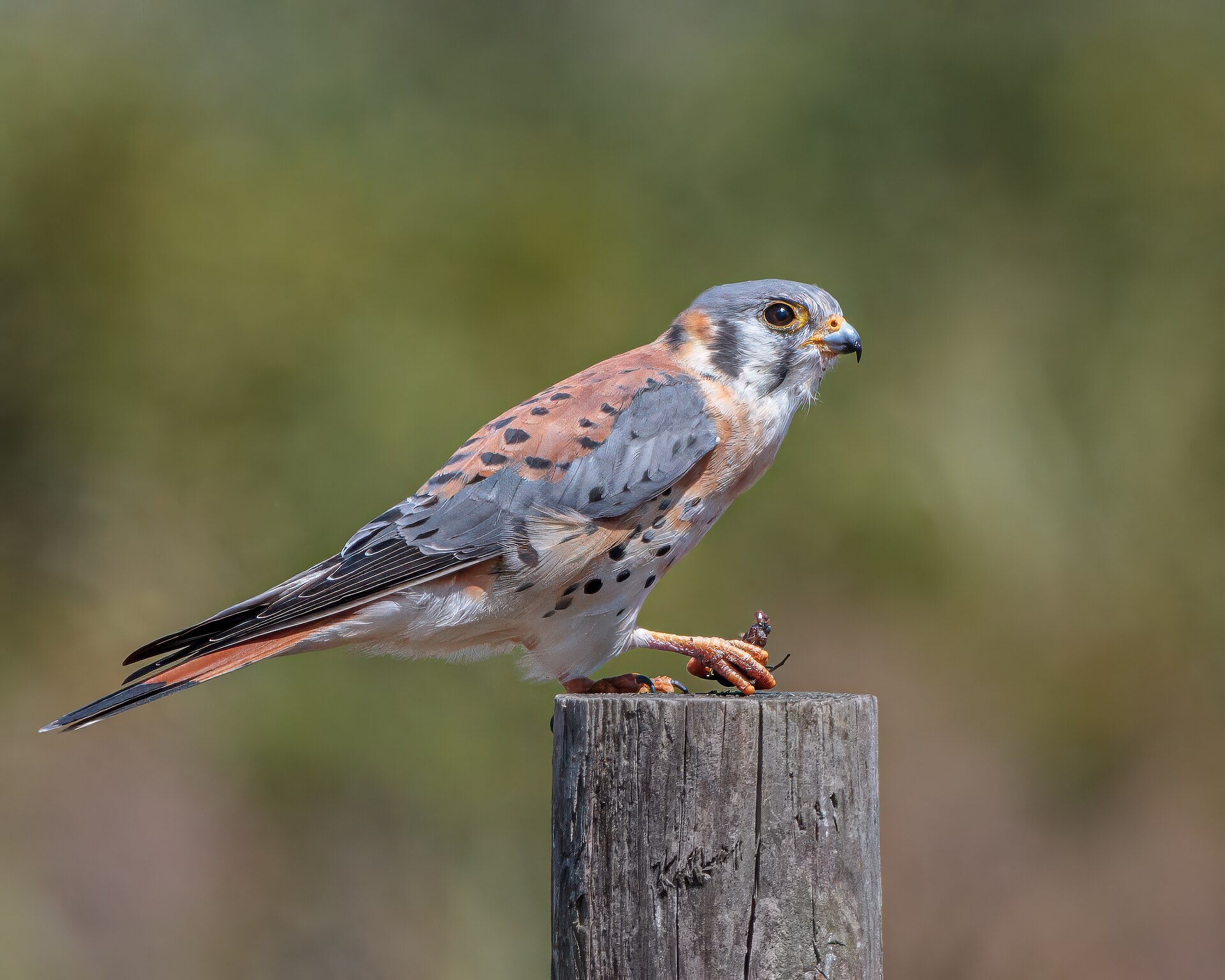
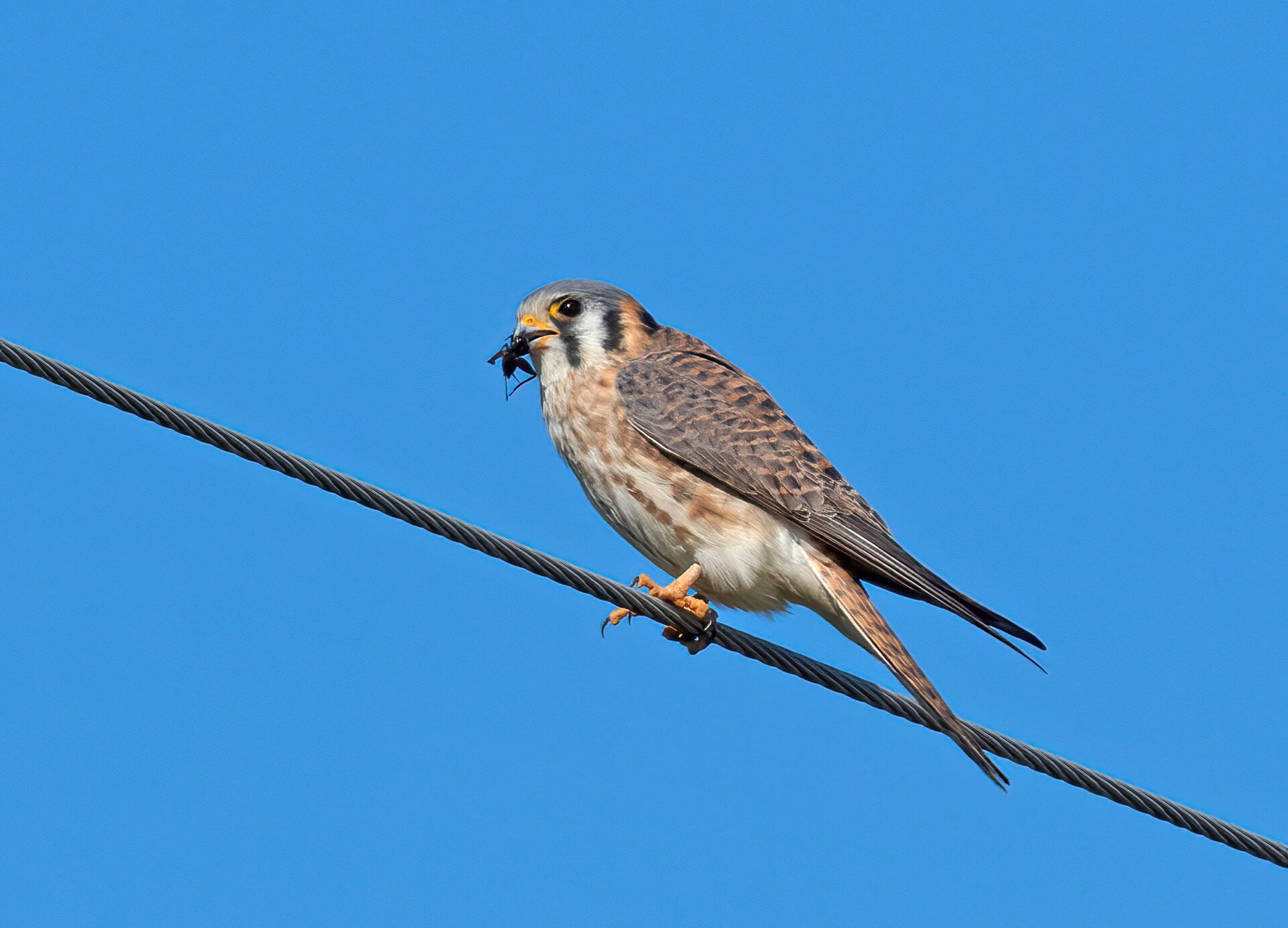
The American Kestrel (Falco sparverius) is North America’s smallest falcon — jay-sized, with a white face marked by two black mustache stripes, a rufous back and tail, and (on males) slate-blue wings. It hunts insects and voles from wires and fence posts, or by hovering in place over open grass. Attract a pair with a kestrel nest box mounted 10–30 feet up facing open ground — they nest in cavities they cannot dig, and a good box gets used. In winter they share the yard with the Sharp-shinned Hawk; the kestrel’s mustached face and hovering flight separate them instantly.
Species Physical Profile & Morphometrics
The American Kestrel belongs to the falcon family (Falconidae) — note the pointed wings and the notched “tomial tooth” on the bill, a falcon trademark the accipiter hawks lack. It is also one of the few North American raptors where male and female wear obviously different plumage.
The identification formula: jay-sized falcon + twin black mustache marks on a white face + rufous back and tail + upright wire perching + hovering flight. Nothing else on the continent combines all five.
Essential Morphometric Field Marks:
- Body Length & Mass: 8.7 to 12.2 inches (22–31 cm) and 2.8 to 5.8 ounces (80–165 grams) — between a Blue Jay and a Mourning Dove, with females about 10 to 15 percent larger than males.
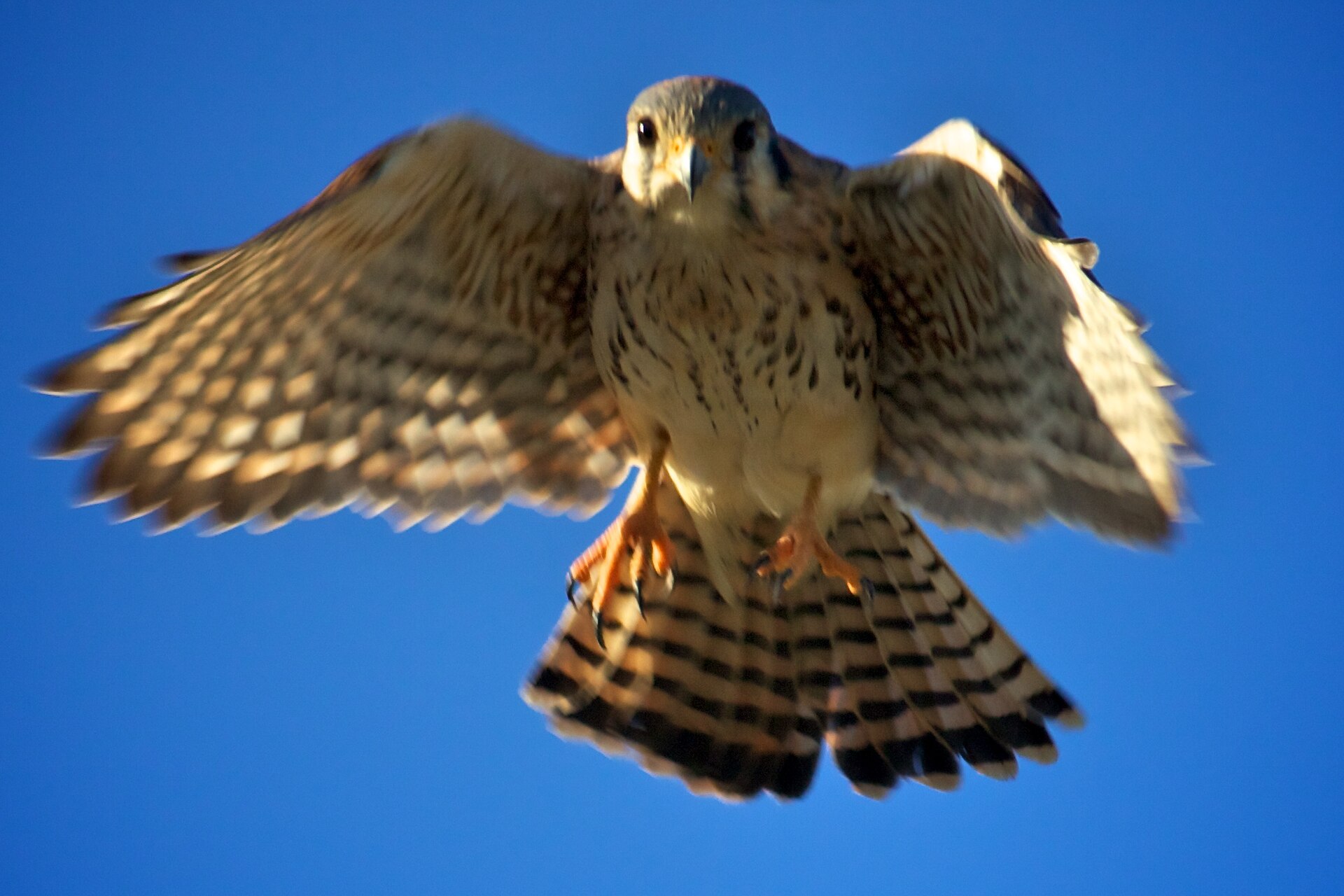
- Wingspan: 20.1 to 24.0 inches (51–61 cm); wings are long and pointed (falcon-style), and flight is light and buoyant with quick wingbeats — and the famous hover when hunting into the wind.
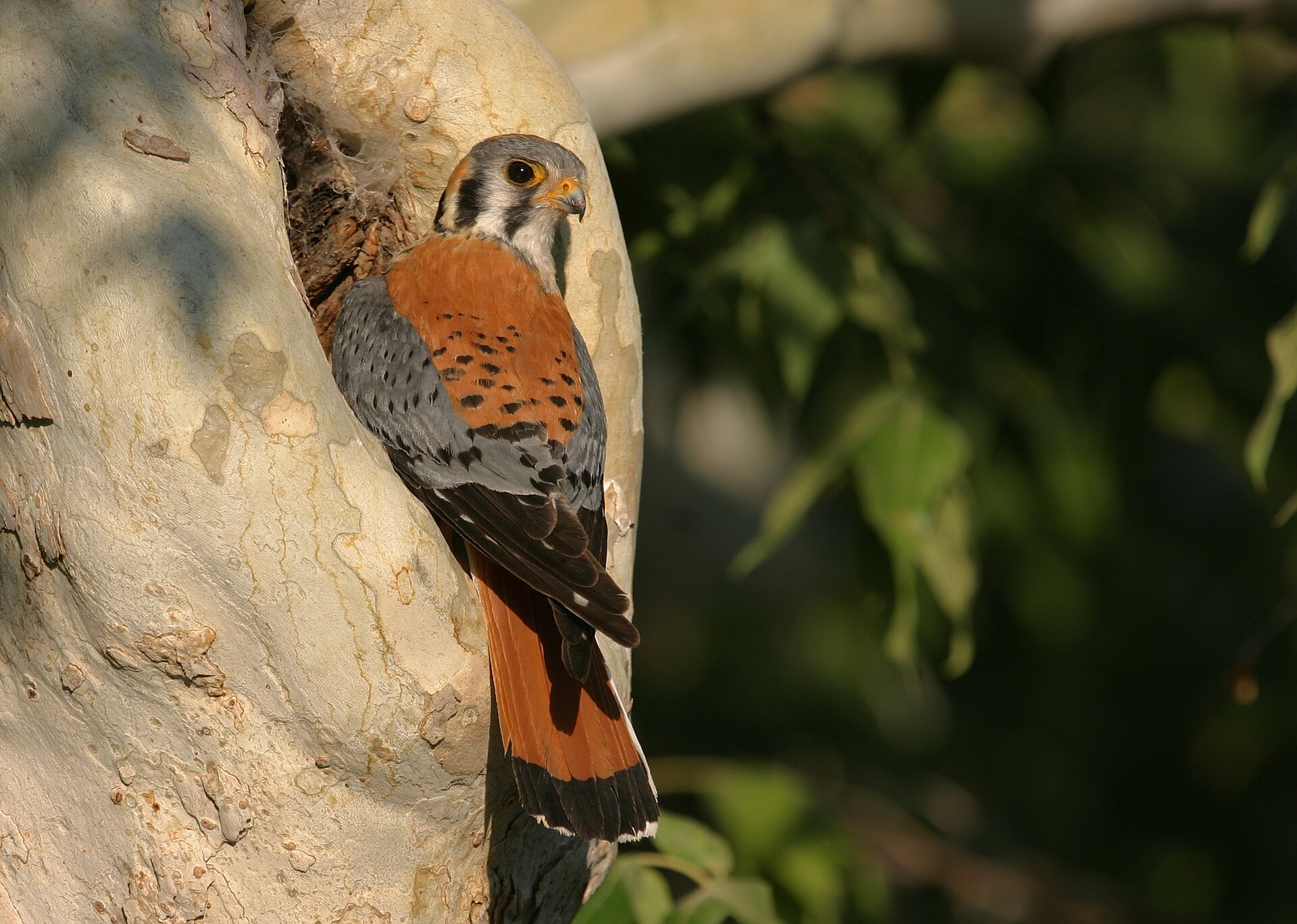
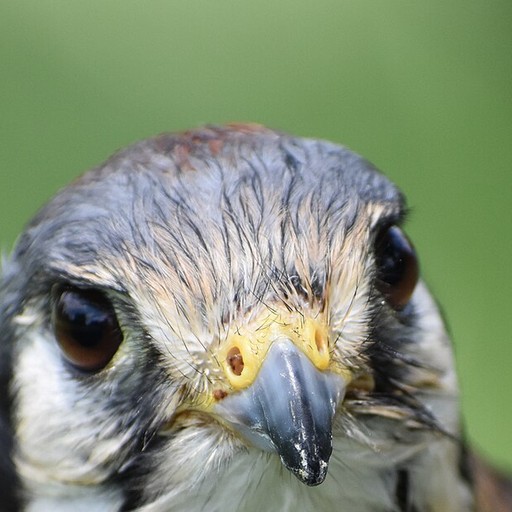
- Bill & Head Pattern: A small hooked bill with a tomial tooth; the head is white-faced with two vertical black marks — one behind the eye, one at the cheek — plus a rufous crown patch in adults.
- Color Pattern: Males: slate-blue wing coverts, rufous back and tail with a broad black subterminal tail band, and a cream breast lightly spotted with black. Females: rufous-brown throughout the wings and back, barred with black, and a streaked buffy breast. Both sexes pump the tail after landing.
- Juveniles: Young birds resemble the adult female but with heavier streaking below; males molt into blue wings by their first breeding season.
The blue-winged half — no other small U.S. raptor combines slate-blue wings with a rufous back. The male’s breast is creamy with neat black spots, and in spring he courts with noisy killy-killy calls and food deliveries to the female at the cavity.
The rufous half — warm brown wings barred with black, a streaked breast, and a multi-banded rufous tail instead of the male’s single black band. Females are slightly larger, and in winter they dominate the southernmost territories while males winter farther north.
American Kestrel Vocalization Guide (3 Field Recordings)
The call is a shrill, rapid killy-killy-killy — piercing and far-carrying, and the usual way a nesting pair announces itself. All three recordings below are real field audio, shared under free licenses via Wikimedia Commons — no simulations. For a deeper library, browse xeno-canto: American Kestrel.
1. The Killy-Killy
2. Pair Interaction
3. Excited Series
Habitat, Range & the Backyard Life
The American Kestrel is a bird of open country: meadows, pastures, farm edges, desert scrub, road rights-of-way, and big mowed yards — anywhere with short grass full of insects and voles, plus elevated perches to hunt from.

The Continental Falcon
Kestrels breed from Alaska and Canada to Tierra del Fuego, and across most of the United States they are present year-round. Northern birds migrate, southern birds stay put, and winter brings a fresh influx to the southern states — there is no month and almost no state without them.
The limiting factor in most suburbs is not food but cavities: kestrels nest in old woodpecker holes, natural hollows, and crevices they cannot excavate themselves. That single fact is why nest boxes work so well — you are supplying the one scarce resource.
Backyard Behavioral Patterns & Social Dynamics
Four behaviors make the kestrel one of the most watchable raptors on the continent:
🪁 The Hover-Hunter
Facing into the wind, a kestrel hovers in place on rapidly beating wings, head locked downward, then drops straight onto a grasshopper or vole. It is the only small falcon on the continent that kites habitually — see the hover, and the ID is done.
🔌 The Wire Sitter
Kestrels hunt from conspicuous perches — roadside wires, fence posts, snag tops — bobbing and pumping their tails while they scan. A driveway patrol of the neighborhood wires at dawn often turns up the local bird on the same perch day after day.
🏠 The Box Tenant
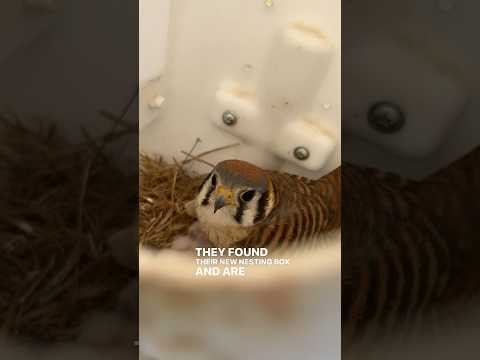
Unable to excavate their own cavities, kestrels readily adopt properly sized nest boxes — and return to productive boxes year after year. A successful box in an open yard can fledge three to five young each summer, all hunting your grasshoppers by July.
🦗 The Free Exterminator
A hunting kestrel is pest control you never pay for: grasshoppers, crickets, beetles, mice, and voles form the bulk of its diet. Gardeners and small farmers with a resident pair notice the difference by midsummer.
Problem: “A Tiny Falcon Keeps Hovering Over My Yard Like a Helicopter — What Is It, and Can I Get It to Stay?”
Good news on both counts — that is an American Kestrel, and yes, you can very likely keep it:
The hover is diagnostic: no other small U.S. raptor hangs motionless in midair over open grass the way this falcon does. If it is working your yard, your grass already holds the grasshoppers and voles it needs — half the habitat equation is solved. The other half is a nest site. Kestrels cannot dig their own cavities; they depend on old woodpecker holes and hollow limbs, which tidy suburban yards rarely offer. That is your opening: a properly built kestrel nest box — roughly an 8-by-8-inch floor, 12 to 18 inches deep, 3-inch entrance hole — mounted 10 to 30 feet high with an open approach, and filled with a few inches of wood shavings, stands an excellent chance of adoption by the very bird you are watching. Add a tall dead snag or a perch pole near the box, skip the lawn insecticides that strip out its prey base, and by next spring you may be watching killy-killy courtship from your porch.
Method 1: The Kestrel Nest Box Program
The single most effective way to bring breeding kestrels to a property:
-
Build or Buy to Spec
Kestrels are particular: a box with roughly an 8-by-8-inch floor, 12 to 18 inches of interior depth, and a 3-inch round entrance hole. Add 2 to 3 inches of wood shavings — kestrels build no nest and lay directly on the shavings. Skip perches on the box front; they only help starlings.
-
Mount It High, Facing Open Ground
10 to 30 feet up on a pole, barn wall, or isolated tree, with the entrance facing an open hunting area and a clear flight path in. Boxes over short grass, pasture, or meadow edge outperform boxes in deep woods every time.
-
Guard Against Predators and Starlings
Fit poles with a metal predator baffle against raccoons and snakes, and check the box weekly in spring: European Starlings compete hard for kestrel boxes, and removing their early nest material (legal, as starlings are unprotected exotics) keeps the box open for the falcons.
-
Clean Out After Fledging
Once the young leave in summer, remove the old debris and refresh the shavings — kestrels return to boxes they know, and a clean box in fall is ready for the first scouts of February. Expect occupancy to improve in the second and third years.
Method 2: Hunting Habitat — Feeding a Falcon Without a Feeder
Kestrels will never visit a seed feeder; you feed them by managing the ground:
-
Keep Some Grass Short — and Some Rough
Kestrels hunt over short, open turf where prey is visible, but the prey itself breeds in rougher patches. A mix of mowed lawn with a meadow edge or rough strip along the fence line produces both hunting ground and the insects and voles to hunt.
-
Add Perch Posts
A tall dead snag, a fence line, or a simple T-post perch overlooking the hunting ground gives the bird its office. Perches save the hawk energy versus hovering, and a kestrel with a good perch over good grass is a kestrel that stays.
-
Spray Nothing
Broad-spectrum insecticides strip out the grasshoppers and crickets that are this falcon’s bread and butter, and rodenticides poison the vole-eaters directly. A chemical-free yard is the difference between a flyover and a resident.
-
Provide Winter Water
Kestrels drink and bathe like any bird: a shallow bath kept ice-free in an open, cat-proof spot adds winter value to the yard, and watching a falcon bathe is its own reward.
Tool Solution: Recommended Hardware for American Kestrels
Equipment matched to a cavity-nesting, perch-hunting small falcon:
Kestrel Nest Box
A cedar or pine box built to kestrel spec: roughly 8×8 in floor, 12–18 in deep, 3-inch entrance, side cleanout door, and drainage and ventilation holes. Fill with 2–3 inches of wood shavings — never sawdust.
- • Entrance: 3 in round hole
- • Mount: 10–30 ft high
- • Facing: Open hunting ground
Pole Mount + Predator Baffle
A smooth metal pole with a conical or stovepipe baffle below the box — the standard defense against raccoons, snakes, and cats climbing to the nest. Pole mounting also frees you from depending on a perfectly placed tree.
- • Pole: 12–20 ft metal
- • Baffle: Cone or stovepipe
- • Spacing: Away from overhanging limbs
Hunting Perch Post
A simple 6–10 ft T-post or dead branch erected over the hunting lawn gives a kestrel its lookout office — the difference between a bird that passes through and one that clocks in daily. Place it within sight of the box.
- • Height: 6–10 ft
- • Placement: Over short grass
- • Bonus: Used by bluebirds too
Frequently Asked Questions
- Species Profile: The American Kestrel (Falco sparverius) is an 8.7–12.2 inch, 2.8–5.8-ounce falcon (Falconidae), band code AMKE — North America’s smallest and most colorful falcon.
- ID in One Look: White face with twin black mustache marks, rufous back and tail; males add slate-blue wings, females are rufous-barred throughout. Perched birds pump their tails; hunting birds hover.
- The Sound: A shrill, rapid killy-killy-killy that carries across open country — constant around a spring nest box. Three real field recordings above.
- Range & Habit: Year-round across most of the U.S. in meadows, pastures, and big open yards; northern birds migrate, and winter brings southern states an influx. Cavities are the limiting resource — hence nest boxes.
- Attraction Formula: A spec-built kestrel box (8×8 floor, 3-inch hole) mounted 10–30 feet up facing open ground, a baffled pole, perch posts over short grass, and zero insecticides or rodenticides.
- The Payoff: A resident pair is free pest control — grasshoppers, crickets, and voles all summer — plus front-row seats to one of the most watchable hunting styles of any raptor on the continent.
Bird Watching Log
Species: American Kestrel (Falco sparverius)
| American Kestrel (Mustache Marks Seen: Yes / No — Wing Color: Blue / Rufous — Hovering Seen: Yes / No — Killy Call Heard: Yes / No) | |