
Black-headed Grosbeak



Black-headed Grosbeak (Pheucticus melanocephalus): Complete US Backyard Identification, Feeder Guide & Vocalization Library
Quick Answer: How to Attract & Identify Black-headed Grosbeaks
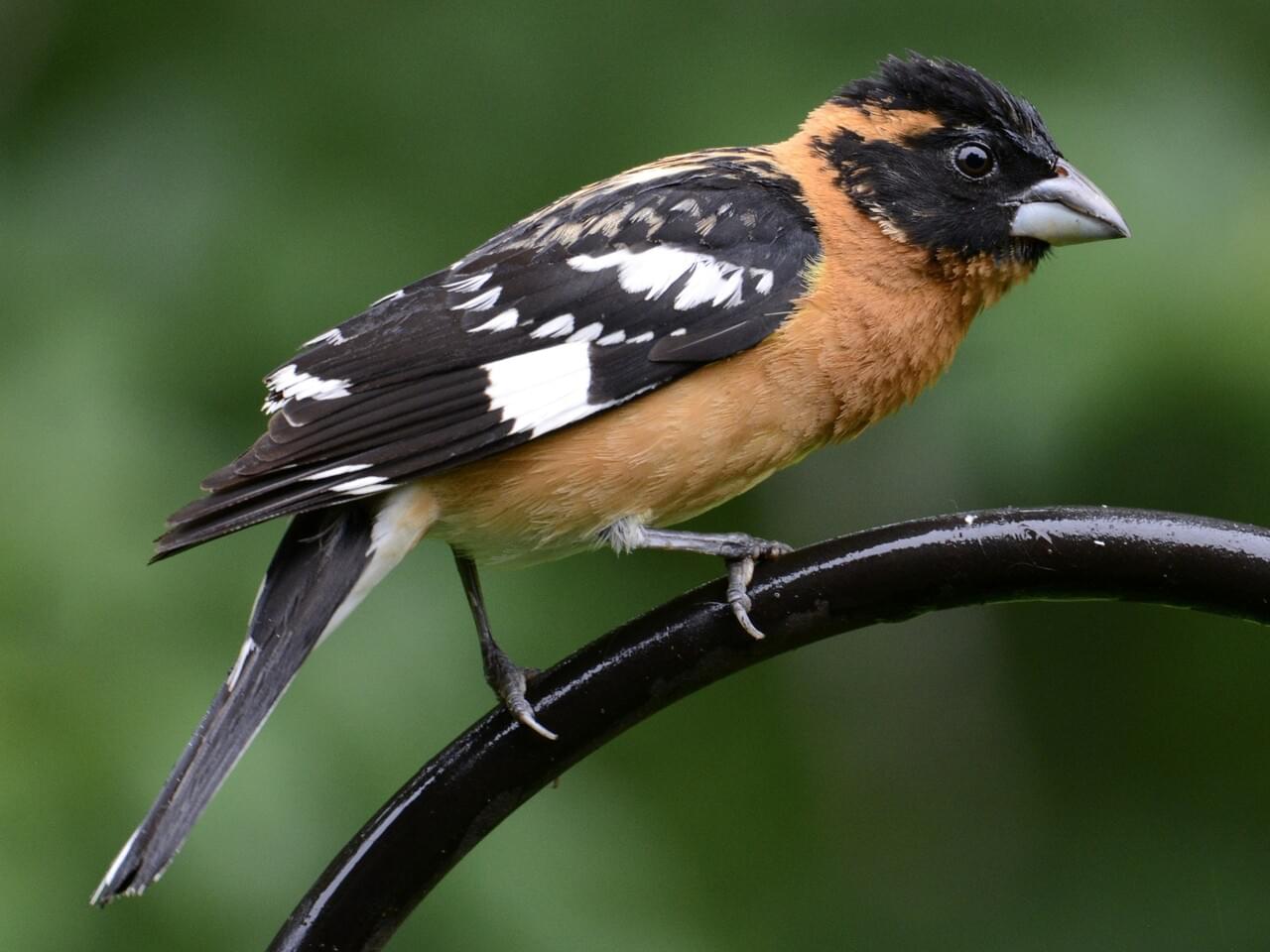
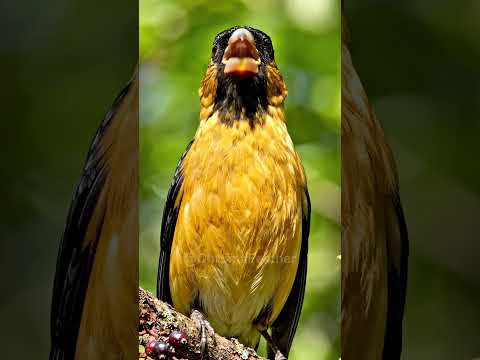
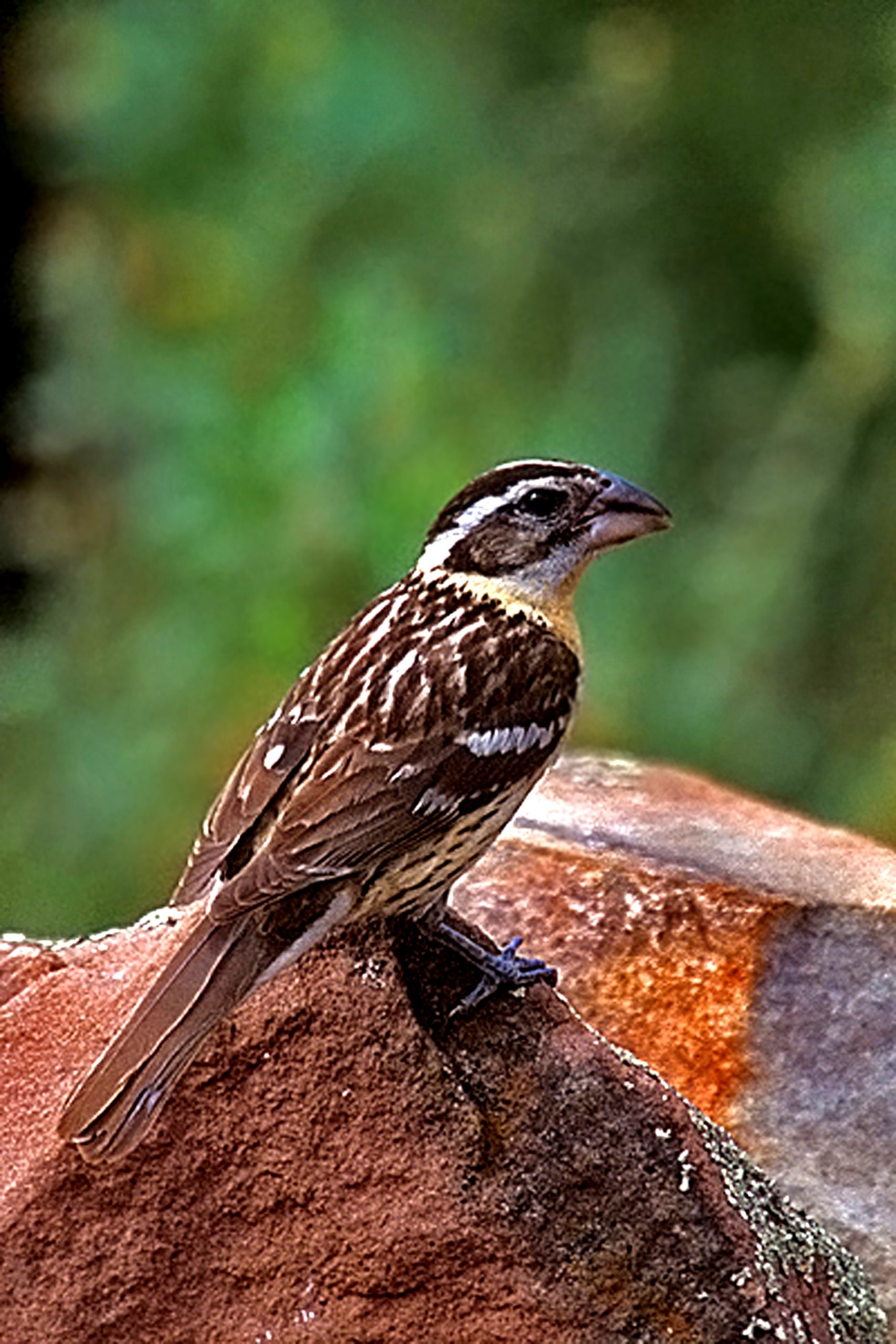
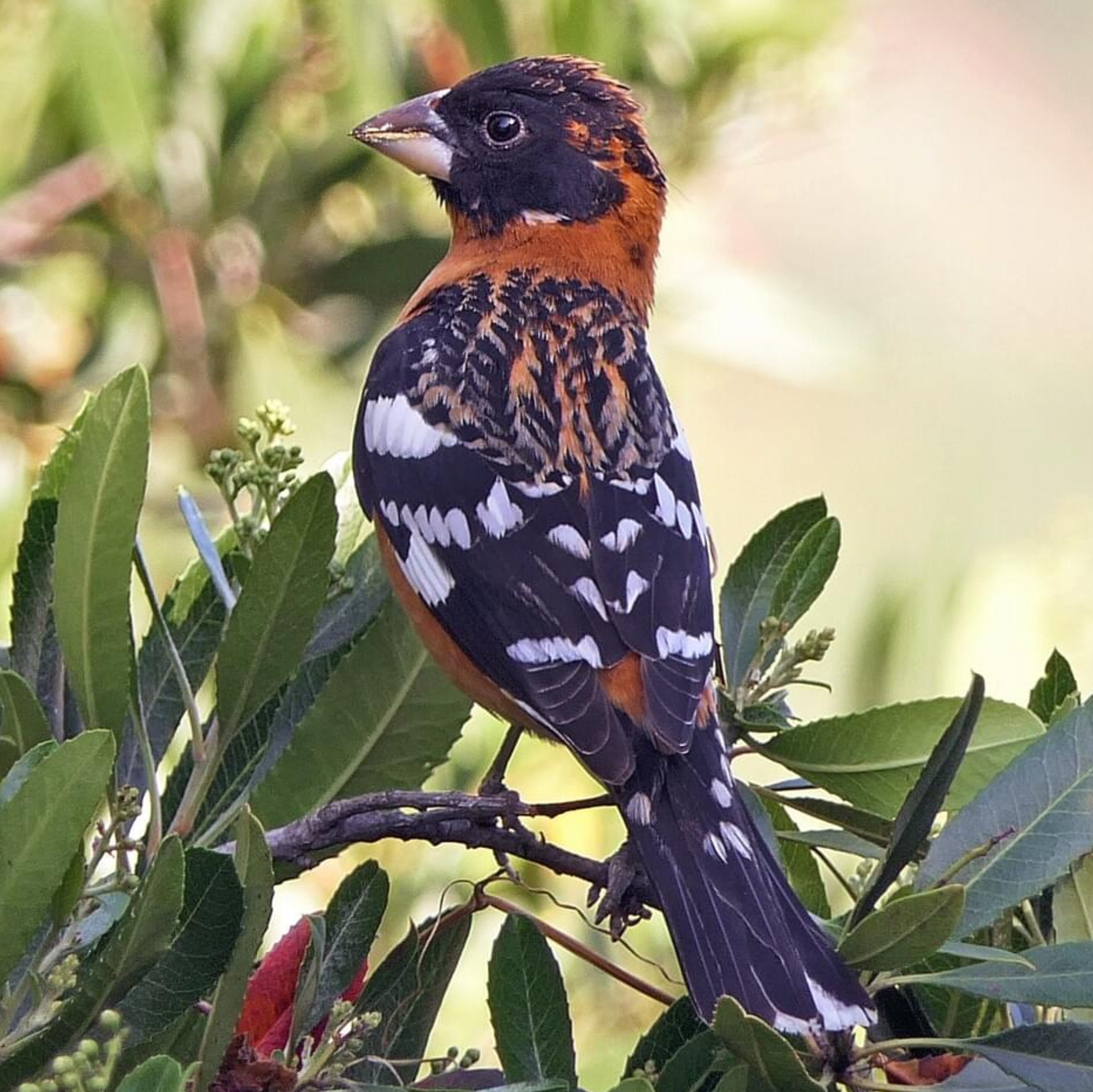
The Black-headed Grosbeak (Pheucticus melanocephalus) is a robust, robin-sized Western songbird identified by its enormous pale-horn conical beak, glowing tawny cinnamon-orange breast, jet-black hood, and bold white wing patches (females are cryptically streaked brown with strong white eyebrow stripes). Unlike eastern Northern Cardinals, Black-headed Grosbeaks are seasonal Neotropical migrants that arrive across the Western United States (Pacific Coast, Rocky Mountains, and Southwest) in late April to breed throughout the summer. To reliably attract them, place a wide, firm wooden platform tray or heavy hopper feeder 5 to 6 feet high mounted on a rigid metal post, loaded with black-oil sunflower seeds, raw sunflower chips, high-energy suet blocks, and fresh berries near mature oak, aspen, or conifer canopy trees.
Species Physical Profile & Morphometrics
Representing the Western counterpart of the eastern Rose-breasted Grosbeak, the Black-headed Grosbeak is built with an exceptionally deep chest, thick neck, and a massive crushing beak engineered to crack tough pine nuts, sunflower seeds, and armored hardwood forest beetles.
When identifying backyard visitors in the West, note that males superficially share color palettes with the smaller Spotted Towhee, but towhees possess slender dark seed bills and stark white bellies rather than heavy pale-horn beaks and golden-yellow bellies. Along Great Plains river corridors, Black-headed Grosbeaks freely interbreed with Rose-breasted Grosbeaks, yielding hybrid individuals with intermediate salmon-rose or buffy breast wash.
Essential Morphometric Field Marks:
- Body Length & Mass: Measures 7.1 to 7.9 inches (18–20 cm) with an adult mass averaging 1.2 to 1.8 ounces (34–52 grams), possessing substantial physical bulk comparable to a Western Tanager or Robin.
- Wingspan: Spans 12.0 to 13.0 inches (30–33 cm), providing swift maneuverability through dense montane riparian woodlands and mixed pine-oak forests.
- Bill Structure: Extraordinarily stout and bulbous conical beak colored pale chalk-horn, often showing a slightly darker slate culmen along the top ridge and a pale ivory lower jaw.
- Underwing Linings: Striking in flight: both adult males and females flash brilliant lemon-yellow underwing coverts and bright yellow armpit feathers that contrast against dark wing edges.
Showcases a dramatic Western palette: solid jet-black crown, nape, and cheeks, set against an electric rich tawny cinnamon-orange breast, collar, and rump. The belly glows lemon-yellow, while the black wings and tail are handsomely patterned with crisp white checkerboard spots and dual white wing bars.
Superbly camouflaged for nest defense: warm grayish-brown upperparts with heavy dark streaks, a warm buff breast washed with fine cinnamon tones and flank streaking, and a broad white supercilium (eyebrow) bordered by a distinct pale midline crown stripe.
Grosbeak Vocalization Library (4 Key Sounds)
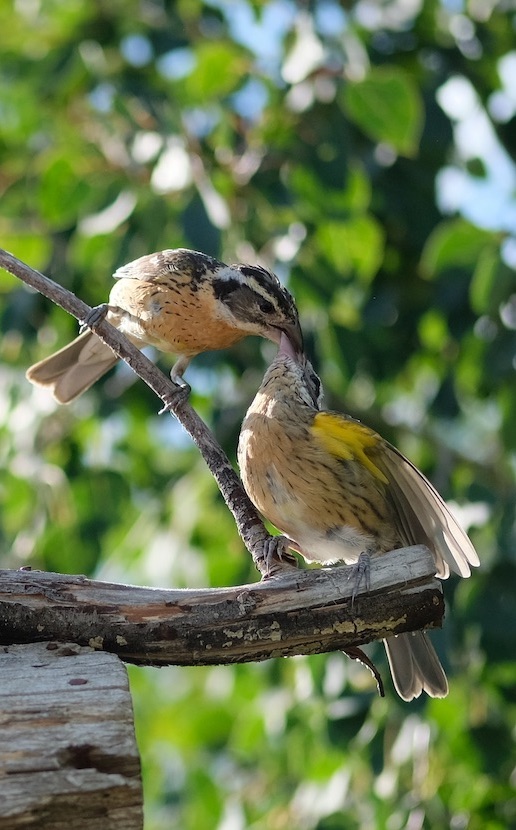
Celebrated as one of the most musical songbirds in Western North America, the Black-headed Grosbeak delivers an exuberant, rolling whistled caroling song that birders describe as “an American Robin in a hurry who had professional vocal training.” In fascinating social cooperation, both the male and the female take turns singing directly on the nest while brooding eggs.
1. Exuberant Caroling Song
2. Sharp “Ik” Contact Call
3. Female Nest Exchange Song
4. Courtship Flutter Churr
Western US Range & Neotropical Summer Biology
In the United States, Black-headed Grosbeaks occupy mixed oak-pine woodlands, montane riparian river valleys, aspen groves, suburban canyon edges, and leafy foothill gardens throughout the American West, from the Pacific Coast eastward across the Great Basin and Rocky Mountain states.

Blue = Wintering Grounds (Mexico)
Green = US Spring/Fall Migration Corridor.
Western US Foothills: Spring Arrival & Nesting Cycles
Wintering in the subtropical highland forests of Mexico, Black-headed Grosbeaks travel north along Western mountain ranges and coastal flyways, typically arriving in California, Oregon, Washington, Colorado, Utah, Arizona, and New Mexico between mid-April and early May.
Upon arrival, exhausted migrants seek suburban yards situated near canyon bottoms or riparian streams. They visit feeders voraciously alongside fellow Western migrants like Western Tanagers, Lazuli Buntings, and Spotted Towhees before dispersing into open deciduous tree canopies to construct loosely woven twig nests.
Backyard Behavioral Patterns & Social Dynamics
Watching Black-headed Grosbeaks in a Western yard reveals intriguing biological adaptations and gentle feeder routines:
🦋 Monarch Butterfly Chemical Immunity
In an extraordinary physiological feat, Black-headed Grosbeaks are among the few birds immune to the cardenolide (cardiac glycoside) toxins stored in Monarch butterflies. In Western overwintering groves and summer yards, they consume large quantities of Monarchs without cardiovascular illness.
🤝 Equal Shared Incubation & Nest Singing
Male Black-headed Grosbeaks perform roughly 40% of all daytime egg incubation duties. Strikingly, males frequently sing their full, joyous caroling song while seated directly on the eggs—a rare avian behavior that communicates nest coordination to their mate.
🫐 Summer Berry & Suet Craving
While seed-cracking is their specialty, grosbeaks are passionate fruit lovers. In midsummer, adult pairs guide their fledglings to backyard suet cages and fruit bushes, happily gorging on serviceberries, mulberries, elderberries, and soft suet cakes to build fat for late summer molting.
🌲 Riparian & Canyon Tree Staging
Grosbeaks are naturally cautious when approaching feeders. They usually perch in a tall staging branch (such as an oak, cottonwood, or ponderosa pine) 10 to 15 feet away, pausing to scan the lawn for domestic cats or Cooper’s Hawks before dropping down to eat.
Problem: Why Black-headed Grosbeaks Bypass Backyard Feeders
Many Western bird watchers hear the lovely caroling songs of Black-headed Grosbeaks in their neighborhood trees, yet the birds never touch down on their feeders. This absence is almost always caused by physical feeder design flaws:
At 35 to 52 grams, a grosbeak is three to four times the weight of an American Goldfinch or Chickadee. Grosbeaks possess rigid, forward-facing perching feet and cannot balance on swaying plastic tube feeders with short 1-inch pegs, nor can they hang upside down from flimsy wire suet bags. When a hanging feeder tilts sharply under their weight, grosbeaks feel unstable and immediately retreat to the safety of high branches. Furthermore, cheap mixed seeds dominated by red milo, cracked corn, and wheat grains offer poor caloric value, causing these energy-hungry migrants to seek wild foraging elsewhere.
Method 1: Install Wide-Perch Platform Trays & Heavy Wooden Hoppers
Equip your Western yard with mechanically stable feeding stations that support large-bodied songbirds:
-
Deploy Expansive Open Platform Trays or Fly-Through Feeders
Mount an open wooden platform tray or a cedar fly-through shelter measuring at least 12 by 12 inches. This gives heavy grosbeaks an expansive, completely level surface where they can sit horizontally and crack large seeds comfortably.
-
Anchor to Rigid 1-Inch Galvanized Steel Poles
Do not hang feeders from thin, wind-whipped tree branches. Mount your wooden platform or heavy cedar hopper directly onto a 1-inch diameter galvanized steel pole set 5 to 6 feet above the turf, equipped with a metal stovepipe baffle beneath the platform to deter Western gray squirrels and chipmunks.
-
Position Near Deciduous Staging Branches
Place your feeding post 10 to 15 feet from native trees or large shrubs (such as scrub oaks, cottonwoods, or willows). This gives grosbeaks a secure intermediate perch to scan for neighborhood predators before descending to feed.
-
Ensure Fresh Morning Seed Supplies
Grosbeaks are active dawn foragers. Keep feeding platforms swept clean and replenished with fresh seeds before sunrise, especially during the peak arrival window from late April through May.
Method 2: High-Fat Seed Formulations, Suet Cakes & Summer Berries
Tailor your offerings to match the massive crushing bill and summer fruit cravings of Western grosbeaks:
-
Discard Filler Grains (Milo, Wheat, and Oats)
Commercial grocery store wild bird blends often contain over 50% red milo, wheat, and filler grains. Grosbeaks flick these onto the ground, attracting mice, rats, and nuisance ground pests. Feed only single-ingredient premium seeds.
-
Supply 100% Black-Oil Sunflower Seeds & Raw Sunflower Chips
Black-oil sunflower seed is the ultimate fuel for Black-headed Grosbeaks. Their heavy beaks effortlessly shear the hulls to extract the high-lipid kernel (28% crude fat, 16% protein). Offering coarse hulled sunflower chips eliminates ground shell debris entirely.
-
Offer Pure White Safflower Seed to Repel Nuisance Competitors
If squirrels, European Starlings, or Brewer’s Blackbirds dominate your tray, switch exclusively to pure white safflower seed (Carthamus tinctorius). Grosbeak beaks crush the hard bitter hulls with ease, while squirrels and blackbirds find the taste distasteful.
-
Incorporate High-Energy Suet Cakes & Fresh Summer Fruits
Unlike eastern cardinals, Black-headed Grosbeaks eagerly consume suet. Hang rigid cage suet feeders filled with peanut or berry suet blocks, and pin fresh orange halves or cups of fresh blackberries and mulberries on your platform to provide quick summer energy.
Tool Solution: Recommended Hardware for Black-headed Grosbeaks
Heavy-duty backyard equipment engineered for large, heavy-bodied Western songbirds:
Cedar Open Platform Tray with Metal Mesh
Heavyweight rot-resistant Western red cedar tray featuring an expanded mesh drainage floor and an open, unobstructed landing perimeter.
- • Deck Surface: 16 x 13 in flat landing space
- • Drainage: Powder-coated perforated steel screen
- • Mount: 1-inch Pole Mount & Post Ready
Golden Safflower & Sunflower Heart Blend
A 50/50 mix of thin-hulled nutra-safflower and coarse sunflower hearts delivering concentrated energy with zero lawn waste.
- • Purity: 100% Edible (Zero Waste Shells)
- • Pest Resistance: Squirrel & Starling Proof
- • Fat Content: 34% Concentrated Lipids
Pedestal Bird Bath with Water Dripper
Shallow textured stone basin equipped with a continuous dripping mister to attract high-flying Western migrants via moving water ripples.
- • Water Depth: 1.5 in (Safe for songbirds)
- • Acoustic Draw: Gentle surface water ripple
- • Perch Rim: Textured slip-free stone edge
Frequently Asked Questions
1. Install Wide Wooden Platforms: Grosbeaks weigh up to 52 grams and feel unstable on small, swinging plastic tube feeders. Mount a wide cedar platform tray or sturdy hopper feeder 5 to 6 feet high on a rigid steel post.
2. Offer Black-Oil Sunflower & Safflower Seeds: Their massive crushing beaks easily crack black-oil sunflower seeds, coarse sunflower chips, and white safflower seeds. Safflower is especially effective for keeping nuisance squirrels and starlings off the feeder.
3. Hang Suet Cakes & Fresh Summer Fruit: Unlike eastern cardinals, Black-headed Grosbeaks love suet. Provide high-fat peanut or berry suet cakes, halved fresh oranges, and bowls of fresh blackberries or elderberries during breeding season.
4. Provide Moving Water Near Deciduous Canopies: Position a shallow bird bath with a dripper or mister within 10 to 15 feet of mature trees (oaks, aspens, pines, or cottonwoods). The acoustic sound of dripping water reliably lures high-canopy grosbeaks down into your yard.
• The Exuberant Caroling Song: Commonly described by ornithologists as sounding like “an American Robin in a hurry who had professional vocal lessons.” It consists of an energetic, rapid, fluid series of sweet, whistled musical phrases that rise and fall continuously without long pauses. Both males and females sing, and males famously carol while warming eggs on the nest.
• The Diagnostic “Ik” Call: When foraging in tree crowns, they emit a sharp, high-pitched metallic note sounding like “ik” or “spik”—very similar to pruning shears cutting twigs or rubber sneakers squeaking abruptly on a hardwood gymnasium floor.
- Species Profile: The Black-headed Grosbeak (Pheucticus melanocephalus) is a 7–8 inch Western songbird identified by its massive pale bill, male black hood, tawny cinnamon breast, and female sparrow-like striping.
- Western US Summer Resident: Spends spring and summer breeding across the Pacific Coast, Rocky Mountains, and Southwest from late April through August before wintering in Mexico.
- Feeder Hardware Needs: Stocky 40+ gram bodies require wide, firm wooden platform trays or heavy hopper feeders mounted on rigid 1-inch steel poles rather than flimsy tube feeders.
- Dietary Favorites: Thrives on black-oil sunflower seeds, raw sunflower chips, pure white safflower seeds, suet cakes, and fresh summer berries (elderberries and blackberries).
- Musical Marvel & Nest Singing: Sings an operatic, rapid whistling caroling song and an abrupt metallic “ik” call; both males and females sing while incubating eggs on the nest.
- Toxin Immunity: Possesses rare natural biochemical resistance to cardiac toxins, allowing them to freely consume Monarch butterflies in Western habitats.
Bird Watching Log
Species: Black-headed Grosbeak (Pheucticus melanocephalus)
| Black-headed Grosbeak (Western US Region: ____________________________) | |